Short Stories Read in July

I made it a personal goal to try to read ONE HUNDRED short stories in the month of July. I'll italicize my favorites.

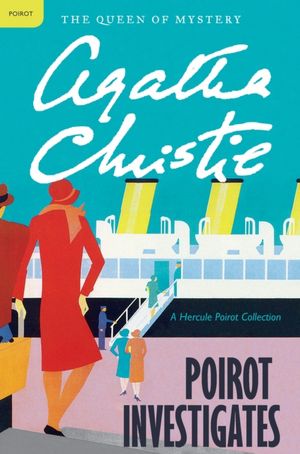
From Agatha Christie's Poirot Investigates
  1. The Adventure of the Western Star
  2. The Tragedy at Marsdon Manor
  3. The Adventure of the Cheap Flat
  4. The Mystery of Hunter's Lodge
  5. The Million Dollar Bond Robbery
  6. The Adventure of the Egyptian Tomb
  7. The Jewel Robbery at the Grand Metropolitan
  8. The Kidnapped Prime Minister
  9. The Disappearance of Mr. Davenheim
  10. The Adventure of the Italian Nobleman
  11. The Case of the Missing Will
  12. The Veiled Lady
  13. The Lost Mine
  14. The Chocolate Box
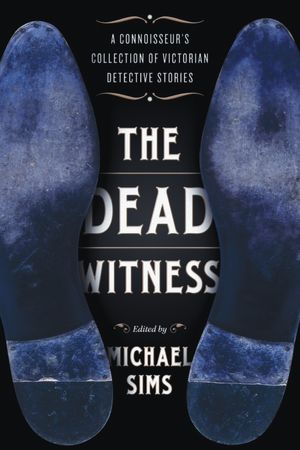
 From The Dead Witness
  1. The Secret Cell by William E. Burton
  2. The Murders in the Rue Morgue by Edgar Allen Poe
  3. On Duty With Inspector Field by Charles Dickens
  4. The Diary of Anne Rodway by Wilkie Collins
  5. You Are Not Human, Monsieur d'Artagnan by Alexandre Dumas, pere
  6. Arrested on Suspicion by Andrew Forrester Jr.
  7. The Dead Witness, or, The Bush Waterhole by W.W. (Mary Fortune)
  8. The Mysterious Human Leg by James McGovan (William Crawford Honeyman)
  9. The Little Old Man of Batignolles by Emile Gaboriau
  10. The Science of Deduction by Arthur Conan Doyle
  11. The Whitechapel Mystery by Anonymous
  12. The Assassin's Natal Autograph by Mark Twain
  13. The Murder at Troyte's Hill by C.L. Pirkis
  14. The Haverstock Hill Murder by George R. Sims
  15. The Stolen Cigar-Case by Bret Harte
  16. The Absent-Minded Coterie by Robert Barr
  17. The Hammer of God by G.K. Chesterton
  18. The Angel of the Lord by Melville Davisson Post
  19. The Crime at Big Tree Portage by Ernest Bramah
  20. The Case of Padages Palmer by Harvey O'Higgins
  21. An Intangible Clue by Anna Katherine Greene
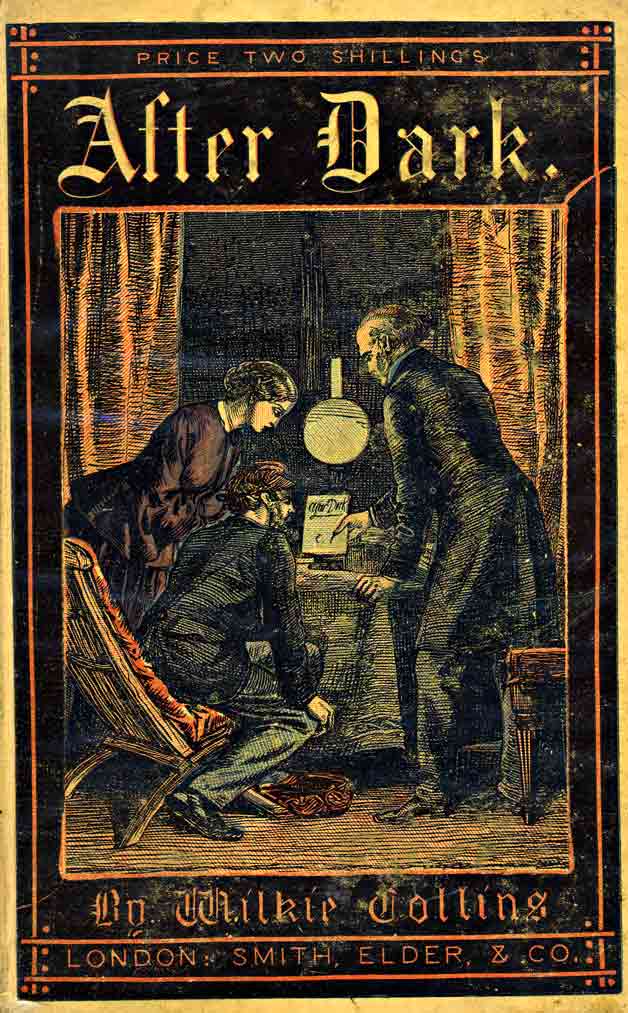
From After Dark by Wilkie Collins
  1. The Traveller's Story of a Terribly Strange Bed (1852)
  2. The Lawyer's Story of a Stolen Letter (1854)
  3. The French Governess's Story of Sister Rose (1855)
  4. The Angler's Story of The Lady of Glenwith Grange (new for After Dark)
  5. The Nun's Story of Gabriel's Marriage (1853)
  6. The Professor's Story of the Yellow Mask (1855)
From The End of the World: Stories of the Apocalypse
  1. The Hum by Rick Hautala
  2. We Can Get Them For You Wholesale by Neil Gaiman
  3. The Big Flash by Norman Spinrad
  4. Kindness by Lester Del Rey
From The Stories of Ray Bradbury
  1. The Man Upstairs
  2. Touched With Fire
  3. The Emissary
  4. The Jar
  5. The Small Assassin
  6. The Next in Line
  7. Jack-in-the-Box
  8. The Leave-Taking
  9. Exorcism
  10. The Happiness Machine
  11. Calling Mexico
  12. The Wonderful Ice Cream Suit
  13. Dark They Were, and Golden-Eyed
  14. The Strawberry Window
  15. A Scent of Sarsaparilla
  16. The Picasso Summer
  17. The Day It Rained Forever
  18. A Medicine for Melancholy
  19. The Shoreline at Sunset
  20. Fever Dream
  21. The Town Where No One Got Off
  22. All Summer in a Day 
  23. Frost and Fire
  24. The Anthem Sprinters
  25. And So Died Riabouchinska
  26. Boys! Raise Giant Mushrooms In Your Cellar!
  27. The Vacation
  28. The Illustrated Woman
  29. Some Live Like Lazarus
  30. The Best of All Possible Worlds
  31. The One Who Waits
  32. Tyrannosaurus Rex
  33. The Screaming Woman
  34. The Terrible Conflagration Up At the Place
  35. Night Call, Collect
  36. The Tombling Day
  37. The Haunting of the New
  38. Tomorrow's Child
  39. I Sing the Body Electric
  40. The Women
  41. The Inspired Chicken Motel
  42. Yes, We'll Gather At the River
  43. Have I Got a Chocolate Bar For You!
  44. A Story of Love  
  45. The Parrot Who Met Papa
  46. The October Game
  47. Punishment without Crime
  48. A Piece of Wood
  49. The Blue Bottle
  50. Long After Midnight
  51. The Utterly Perfect Murder
  52. The Better Part of Wisdom
  53. Interval in Sunlight
  54. The Black Ferris
  55. Farewell Summer
  56. McGillahee's Brat
  57. The Aqueduct
  58. Gotcha!
  59. The End of the Beginning 
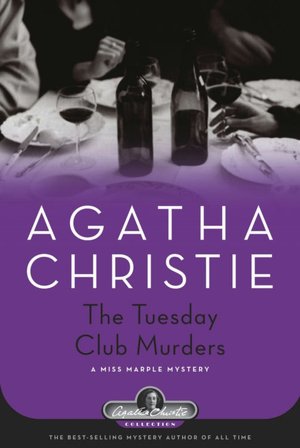
From The Tuesday Club Murders by Agatha Christie
  1. The Tuesday Night Club
  2. The Idol House of Astarte
  3. Ingots of Gold
  4. The Blood-Stained Pavement
  5. Motive v. Opportunity
  6. The Thumb Mark of St. Peter
  7. The Blue Geranium
  8. The Companion
  9. The Four Suspects
  10. A Christmas Tragedy
  11. The Herb of Death
  12. The Affair at the Bungalow
  13. Death by Drowning

© 2012 Becky Laney of Becky's Book Reviews

2012 Challenge Completed: Victorian Celebration

A Literary Odyssey hosted this two-month celebration of all things Victorian!

1. Becoming Queen Victoria: The Tragic Death of Princess Charlotte and the Unexpected Rise of Britain's Greatest Monarch. Kate Williams.
2. The Princess and the Goblin. George MacDonald. 1872. 259 pages.
3. The Light Princess. George MacDonald. 1864. 110 pages.
4. Cousin Henry. Anthony Trollope. 1879. 336 pages.
5. Magnificent Obsession: Victoria, Albert, and the Death that Changed the British Monarchy. Helen Rappaport. 2012. St. Martin's Press. 352 pages.
6. Dombey and Son. Charles Dickens. 1846-1848. 880 pages.
7. Diary of a Pilgrimage by Jerome K. Jerome
8. A Book of Cheerful Cats and Other Animated Animals
9. Murder in the First Class Carriage by Kate Colquhoun
10. Lin McLean by Owen Wister
11. The Yard by Alex Grecian
12. The Gathering Storm by Robin Bridges
13. Wild Romance by Chloe Schama
14. Suspicions of Mr. Whicher by Kate Summerscale
15. Idle Thoughts for an Idle Fellow by Jerome K. Jerome
16. The Princess and the Curdie by George MacDonald
17. Mrs. Robinson's Disgrace: The Private Diary of A Victorian Lady. Kate Summerscale.
18. Lorna Doone. R.D. Blackmore.
19. Lady Audley's Secret. Mary Elizabeth Braddon.
20. Clocks. Jerome K. Jerome.
21. Black Beauty. Anna Sewell.
22. After Dark. Wilkie Collins.
23. The Dead Witness: A Connoisseur's Collection of Victorian Detective Stories. Edited by Michael Sims

© 2012 Becky Laney of Becky's Book Reviews

A Passion for Victory

A Passion for Victory: The Story of the Olympics in Ancient and Early Modern Times. Benson Bobrick. 2012. Random House. 160 pages.

I definitely enjoyed reading Benson Bobrick's A Passion for Victory: The Story of the Olympics in Ancient and Early Modern Times. In this nonfiction book for children and teens, Bobrick chronicles the Olympic games.

In the first two chapters, Bobrick focuses on the Olympic Games in Greek and Roman times. He gives just enough detail to be fascinating. The games were definitely quite different than modern games! Including the fact that the boxing, I believe, could prove to be to the death.

Chapter three focuses on the movement in the nineteenth century to bring back the Olympic games. Chapter four focuses on the first few Olympic games of modern times: 1896 (Greece), 1900 (Paris), 1904 (St. Louis, Missouri). The 1900 and 1904 games were not ideal because of their combination with World Fairs. For example, the book points out that they spread out the events over five and half months. No opening or closing ceremonies. Not that the games were all bad, by any means. This was the first Olympics offering women's events (tennis, croquet). And archery, diving, and rowing made their debut. In fact, it seems like almost every Olympics held offered new sports, new events. (Similarly, some might disappear.) The 1904 games only had participants from twelve countries, but, most of the athletes were American, which could be why America won over 200 medals that year. If the 1900 games were too long--five months--the 1904 games might arguably have been too short--just six days! The chapter also focuses on prejudices and such bringing up the World's Fair and the exhibitions.

The marathon also included the first black South Africans (two Tswana tribesmen) to compete in the Olympics--though they weren't supposed to be in the race at all. They were part of the Boer War exhibit but had joined the race for fun. Even so, one finished ninth, and the other came in twelfth. The first to arrive at the finish line was Frederick Lorz, who had actually dropped out. (After the first nine miles, he had flagged down his manager, who gave him a lift for the rest of the way in his car.) But when he crossed the finish line on foot, he was hailed as the winner. He was soon found out, of course, but the real winner, Thomas Hicks, (a Briton running for the United States), deserved the prize even less. He had been doped up by his trainers, who gave him a near-fatal dose of strychnine sulfate mixed with egg yolk and brandy. Unable to cross the line on his own, he had to be supported in the last stretch and was rushed to a hospital, where he spent several days in intensive care. (65)

The fifth chapter chronicles the Olympic Games of 1908 through 1932. It also highlights the 1906 Intercalated Olympic Games. This one-time event gave the games new life. It was here that the opening ceremony and closing ceremonies made their debut. Several paragraphs--or several pages--are dedicated to each Olympics. All fascinating stuff! I couldn't hope to cover it all! Readers learn how each Olympics helped contribute to the Olympics we have today. For example, the 1920 Olympics set in place many lasting traditions including the Parade of Nations in the opening ceremonies and the medal ceremonies with the raising of the flags for the three winners and the National Anthem for the gold medal winner. Of course, some attention is paid to the athletes and winners. The star of this chapter, in my opinion, is Jim Thorpe.

The sixth chapter focuses on the 1936 games in Berlin, and the star, as you might have guessed, is Jesse Owens. This chapter, of course, deals with world politics and racism, etc.

The Epilogue focuses, for the most part, on the war years. But, it also highlights the film Olympia which was innovative and creative. The book discusses how this inspired the way the games was captured and shared. On a much sadder note, it mentions just a handful of Olympians whose lives were lost in the Holocaust.

Overall, this is one fascinating book! It has dozens--if not hundreds--of I didn't know that facts for readers to discover. So many intriguing stories, so many incredible details. I would definitely recommend this one!!!

I just loved it!!! I did NOT want it to end. I wanted more, needed more. I would have loved to learn about the games from 1948 to present day. But. This book is great at what it promises readers. 

Read A Passion for Victory
  • If you're a fan of the Olympics
  • If you're a fan of sports and/or history and/or politics
  • If you're interested in how sports have been celebrated and recorded in ancient and modern history

© 2012 Becky Laney of Becky's Book Reviews

Final Fifteen: Ray Bradbury Stories

To visit the other posts in the series: first twelve, next twenty-six, next three, next ten, next twelve, next-to-last twenty-two.

The Parrot Who Met Papa
The kidnapping was reported all around the world, of course. 
A story about an oh-so-talkative parrot who knew Ernest Hemingway and possibly knew Hemingway's secrets.

The October Game
He put the gun back into the bureau drawer and shut the drawer.
A despicable horror story. Okay, the main character is the one who is despicable. But still.

Punishment without Crime
"You wish to kill your wife?" said the dark man at the desk.
A futuristic story where a man kills a robot-version of his wife and pays the consequences for it--even though no human life is lost.

A Piece of Wood
"Sit down, young man," said the Official.
A disturbed young man...with an unique gift of sorts...is on a mission for world peace.

The Blue Bottle
The Sundials were tumbled into white pebbles.
Short story set on Mars.

Long After Midnight
The police ambulance went up into the palisades at the wrong hour.
A short story about a tragic suicide.

The Utterly Perfect Murder
It was such an utterly perfect, such an incredibly delightful idea for murder, that I was half out of my mind all across America.
A man decides almost thirty years after the teasing and bullying to get back at his "friend" from childhood days.

The Better Part of Wisdom
The room was like a great warm hearth, lit by an unseen fire, gone comfortable. 
A grandfather visits his son, Tom, and meets Tom's friend, Frank. The grandfather has decided to go and visit all his family in his last days--instead of waiting and hoping that they will come to him. He has quite a long chat with his grandson.

Interval in Sunlight
They moved into the Hotel de Las Flores on a hot green afternoon in late October.
A short story about a toxic marriage.

The Black Ferris
The carnival had come to town like an October wind, like a dark bat flying over the cold lake, bones rattling in the night, mourning, sighing, whispering up the tents in the dark rain.
A short story with a very similar feel to Something Wicked This Way Comes.

Farewell Summer
Farewell Summer.
Grandma looked it.
Grandpa said it.
Douglas felt it.
Farewell summer.
A short story about a bad dream...

McGillahee's Brat
In 1953 I had spent six months in Dublin, writing a screenplay. I had not been back since.
Yet another short story set in Dublin.

The Aqueduct
It leapt over the country in great stone arches.
A horror story, of sorts.

Gotcha!
They were incredibly in love. They said it. They knew it. They lived it. When they weren't staring at each other they were hugging. When they weren't hugging they were kissing.
A relationship begins to decline after the woman SCARES the guy horribly and traumatically. 

The End of the Beginning
He stopped the lawn mower in the middle of the yard, because he felt that the sun at just that moment had gone down and the stars come out.
A story about the start of a space program.

© 2012 Becky Laney of Becky's Book Reviews
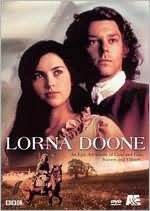
Sunday Salon: Watching Lorna Doone

I recently watched the 2000 adaptation of Lorna Doone starring Richard Coyle as John Ridd and Amelia Warner as Lorna Doone. (Also notable, Martin Clunes as Jeremy Stickles, and Aidan Gillen as Carver Doone). This historical romance was quite lovely! I do love period dramas! And I'd definitely recommend this one to anyone who loves period dramas and historical romance--even if you've never read the book or plan on reading the book.

It is quite fast-paced, especially when compared with the novel! It is romantic and exciting and oh-so-intense. Especially the ending.
I just LOVED Richard Coyle as John Ridd. Then again, I tend to LOVE Richard Coyle. And Aidan Gillen made a dramatic, oh-so-dangerous villain. He made Carver Doone so much more interesting, I thought. A truly memorable villain!

I thought this film did a great job with the characters, the characterization!!! And the romance was lovely. 

Have you seen this one, what did you think?

© 2012 Becky Laney of Becky's Book Reviews

Library Loot: Fifth Trip in July

New Loot:
  • Blood and Roses: One Family's Struggle and Triumph During England's Tumultuous Civil War by Helen Castor
  • A Finders-Keepers Place by Ann Haywood Leal
  • Insignia by S.J. Kincaid
  • Something Wicked This Way Comes by Ray Bradbury
  • Under the Never Sky by Veronica Rossi
  • The Clocks by Agatha Christie
  • Death in the Clouds by Agatha Christie
  • The Mirror Crack'd From Side to Side by Agatha Christie

Leftover Loot:
  • Freddy and the Dragon by Walter Brooks
  • Freddy and Mr. Camphor by Walter R. Brooks
  • The Red Queen by Philippa Gregory
  • Deadweather and Sunrise by Geoff Rodkey
  • The King's Speech by Mark Logue and Peter Conradi
  •  The Unfortunate Son by Constance Leeds
  • The Stories of Ray Bradbury  
  • The Tuesday Club Murders by Agatha Christie
  • The Rise and Fall of Mount Majestic by Jennifer Trafton
 Library Loot is a weekly event co-hosted by Claire and Marg that encourages bloggers to share the books they’ve checked out from the library. If you’d like to participate, just write up your post-feel free to steal the button-and link it using the Mr. Linky any time during the week. And of course check out what other participants are getting from their libraries.    

© 2012 Becky Laney of Becky's Book Reviews

The Kingdom

The Kingdom. Bryan Litfin. 2012. Crossway. 448 pages.

From the prologue: The rulers of the earth took counsel together, and the Pact they made defined the centuries to come. 

The Kingdom concludes the Chiveis Trilogy by Bryan Litfin. The first two novels in the series are The Sword and The Gift. The trilogy has an interesting premise. It explores a post-apocalyptic Europe beginning several centuries after "the end of the world as we know it." In this world, Christianity has both fallen into decay (just naturally--slowly but surely--been forgotten with the passing of each generation) and been outlawed. In the first novel, Ana and Teo discovered--by chance--a copy of the Old Testament. This presumably being the only known copy in existence. The two learn that it is only the first half of the Sacred Writings. And, of course, they WANT to find the second half, the second testament. But they hardly know where to begin. But just because their knowledge is incomplete, doesn't mean that they aren't eager--very, very eager--to share what they do know. For this is the first they've heard of a Creator God--Deu or Deus, as they call Him. And they're drawn to Him, trusting in Him, in His goodness, in his justice, in his righteousness. Teo in addition to being an incredibly brave, strong, oh-so-handsome soldier, is, of course an extremely brilliant scholar who speaks two or three languages, at least--including some of the ancient languages. Chiveis is the country (nation) where they both live. But it is immoral and corrupt. And the 'state religion' is idolatrous. The High Priestess, let's say, LOVES power, and loves the control she has over others. She's definitely into cruelty and torture. So when Teo and Ana begin spreading the good news--what they know of it--she is most displeased. The two end up being exiled. The second novel follows the two after their exile. Their true mission (which they sometimes forget about) is to find the New Testament, the Second Testament. This second novel introduces readers to two or three other countries or regions. It introduces at least one or two new villains to the general story, and, essentially has hundreds of pages worth of torture for the reader to endure alongside the characters. The bad news? They find the New Testament only to lose it to their enemy. The good news? The message and content of the New Testament is NOT lost after all. The book concludes with Teo hard at work translating this one into several different languages so they can spread the good news to all countries and nations. Which brings us to the third novel....

...Ana and Teo have finally, finally admitted they have feelings for one another. And they've finally found a community of believers who are eager to share in their work in evangelism. Actually, Ana and Teo fit into their already-present community. Teo may have many qualities to be a leader--of sorts--in the Christian community, since he's so brilliant and can translate the New Testament in just a few short months into several different languages, but he's not trying to take the role of the Papa in Roma. This novel begins with the couple preparing to be separated for many months--Teo seeking to travel to another country in search of Knights of the Cross, to see if they still remember what "the cross" means, to see if they are still loyal to the Papa. What Teo learns in his journeys--and what Ana learns as well--is that WAR is coming, that there are powers that be coming together united in hatred for the Christian faith.

How do I feel about The Kingdom? How do I feel about the trilogy? Well, I'm not sure there's an easy answer. It does have an interesting premise, in a way. And the books do give me something to think about. But. The characters annoy me just as often as they satisfy me. And essentially all three books are high on torture and "intense" situations that seem like desperate this-is-it close calls. Perhaps because of the high-frequency of these dramatic moments, perhaps because the characters always seem to come away safe, I never truly worried. I was also annoyed with the "romance" in this one. I felt Ana's love for Teo strained her common sense at times, and the same with Teo. Because Teo was so in love with Ana, he had his stupid moments.

Read The Sword, The Gift, The Kingdom
  • If you're a Christian looking to read post-apocalyptic and/or dystopian fiction
  • If you're a Christian looking to read a "what if" novel, the what if being WHAT IF the Scriptures were lost, WHAT IF the Scriptures were newly discovered, etc., 
  • If you like premise-driven fiction, without a doubt, the trilogy offers readers a chance to think, to contemplate.

© 2012 Becky Laney of Becky's Book Reviews