Tampilkan postingan dengan label Houghton Mifflin Harcourt. Tampilkan semua postingan

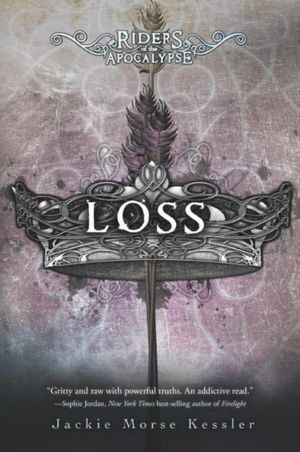
Loss (YA)

Loss. (Riders of the Apocalypse #3) Jackie Morse Kessler. 2012. Houghton Mifflin Harcourt. 272 pages.

The day before Death came for Billy Ballard...
...Billy was on the ground, getting the snot pounded out of him. Again. No special reason this time; maybe it was because it was Tuesday, or because Eddie Glass didn't like Billy's hair.

This is the third novel in Jackie Morse Kessler's Riders of the Apocalypse series. The first two books are Hunger and Rage. Hunger was a novel about a young teen girl with an eating disorder becoming Famine; Rage was a novel about a trouble teen girl, a girl who cuts herself, becoming War. The third novel is about a GUY who has spent years of his life being bullied becoming Pestilence. (For the record, the books do stand alone; you don't need to read them in a certain order; each book is about a different Rider of the Apocalypse.)

The hero of Loss is Billy Ballard. And he's going to have to become confident in the role of hero fast if he's going to stand a chance at saving the world from self-destruction, at stopping the end of the world. He's going to have to face what is troubling him--everything that is troubling him. At home, he's having to deal with a grandfather with Alzheimer's disease. Every room, every window, must be locked. And the front door itself must be "hidden" so that the grandfather can't escape and get lost and cause problems. Soon after the novel opens, readers see what happens when the Mom is careless when she comes in from work. The two are soon rushing through the streets, yelling as they search, needing to find him before something horrible happens. And that something horrible does almost happen--but Billy is there just in time. It was the closest of close calls. And it makes Billy "a hero" in the eyes of his best friend, a girl Billy wishes was his actual girlfriend. But. Billy feels silly thinking himself a hero when he's too scared to go to school, too afraid to go to his classes, his gym class, his locker room. He spends his life dreading every moment he's out of the house; considering what his home life is like--taking care of a grumpy, sometimes-violent grandfather who does not remember him, does not love him, does not want him around--that is saying a lot. But everything changes, everything goes topsy-turvy, everything becomes surreal when Billy is greeted by Death and given the Bow of the Conqueror, of Pestilence. Billy has a chance to wield power, destructive power. But he doesn't necessarily have to do it recklessly or irresponsibly.

Loss will best work for readers who don't require their fiction to make sense 100% of the time. In other words, for those that can accept a certain flowing ever-changing magic-realism, poetical, fantastical dream-state. While Billy does interact in the real world after assuming his bow and the 'office' of Pestilence, most of it does occur in Billy's mind. The imagery and allusions are powerful, in a way, and are incredibly creative. But. At the same time, it didn't quite work...for this reader. It was not quite my personal style.

Though the author uses some biblical imagery in these novels, the whole concept of the (four) riders of the Apocalypse, I can't say that the books are ever faith-friendly. In particular, this book has bothered me more than the others. True, it has been a few years since I've read them, and true, it's possible that I didn't just mention it in my reviews. In general, my philosophy is that I don't expect books to "be biblical" or to meet certain moral standards if they're obviously secular or mainstream. (If, like in Irises, they have characters that profess faith, then, that's somewhat different.) Loss is definitely, definitely a secular book. Yes, it may be using imagery from Revelation, but not in a biblical way. The viewpoint is not biblical. I found it disturbing--actually extremely offensive--when the author has "the Conqueror" say twice:
"Death is in all things," the Conqueror continued, babbling now, his words like wasps in Billy's ears. "He is the alpha and the omega, and we exist only on his whim. And he is done with whimsy!" (229, 243)
At one point Death says, "I'm not a god. Those come and go. I'm more like a permanent fixture." (48)

The novel also holds an unbiblical view of good and evil. In Kessler's novel, for example, and it won't be the first or last time this is done, I know, but good and evil are presented as equal, equal in terms of strength and power and forces and influences. Both good and evil being in eternal opposition forever and ever and ever without end. Neither good nor evil being able to overcome the other. The war between the two resulting not in their losses exactly, but in human losses.

Personally, I liked the first two books better than this one. I think this one is the weirdest one; I think it requires the biggest stretch to suspend your disbelief. I think it takes the most work to understand the surreal storyline which occurs mainly in a weird dream-memory-mind state.

Read Loss
  • If you're a fan of the series
  • If you enjoy magic realism and fantasy
© 2012 Becky Laney of Becky's Book Reviews

The Wicked and The Just (YA)

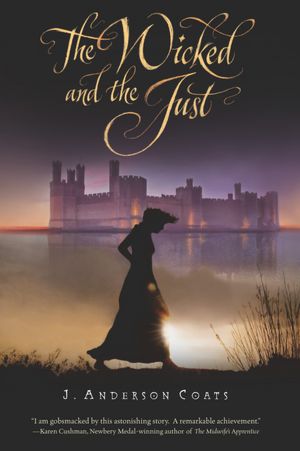
The Wicked and The Just. J. Anderson Coats. 2012. Houghton Mifflin Harcourt. 352 pages. 


Tonight at supper, over capon and relish, my father ruined my life. He smiled big, scrubbed his lips with the end of his cloak, and said, "We're moving house." 

I think there is a good chance you will like The Wicked and the Just more than I did. I seem to be in the minority on this one. Apparently I liked all the wrong characters, disliked all the wrong characters, and got my sympathies misplaced. If you happen to believe that there is one right way to read a novel. (I'm not saying that I do, just that some do.)

The Wicked and the Just is set in Wales in 1294. One of our narrators is Cecily, who provides the "English" perspective; the other narrator is Gwenhwyfar, who provides the Welsh perspective. I think I might be the only reader who sympathized more with Cecily and preferred her narrative. Did I love Cecily? No, not exactly. Did I like her? A little. Do I find her perfect and without fault? Hardly! How did I feel about Gwen? Well, I'm in the minority, but I did NOT like her at all, not even a little bit. I really, really, really did not like her narrative. Especially towards the end, after IT happens. I really HATED her. I did.

The King is encouraging the English to move to Wales and settle it. Cecily's father feels his chances are better in Wales than England--he can live cheaper, have better status and opportunity, etc. (He does not have his own estate to inherit or manage because he is a younger son.) The Welsh are not happy to be "managed" or "governed" by the English. They do not "enjoy" the rules and regulations the English put in place. They do not like the added-burden of having the English around. The past few years have been hard ones--famine, I believe--and having the English around telling them how to sell and trade, when to sell and trade, and deciding what is "fair" is too much. The English have the first and last word on what justice looks like, and there are differences depending on if you're Welsh or English. The English are treated preferentially. No doubt about it.

S
P
O
I
L
E
R

The novel is working towards a VIOLENT response to the injustice. There will be blood spilled. A LOT of blood. For the Welsh "rebels" will band together, form an uprising, and slaughter the English. Yes, slaughter. There will be bodies everywhere. Not just a few of the leaders, not just the government, not just the men. But of everyone. Why did they have to die? Because they were there, because they were English. Did it matter how they lived? What kind of person they were? No. Of course not. Everyone must die. The English must be "taught" a lesson. Cecily witnesses the violent slaughter of her father. It is horrific. And by my reckoning, that was not JUSTICE. The slaughter of a whole town is NOT JUSTICE. It is murder. How do two wrongs make a right? Ever?!  So what does this mean for Cecily? Don't expect mercy or compassion from the so-called heroine, Gwen. You won't find it. 

The character I happened to like best of all--better than Cecily, better than Gwen--is Gruffydd.

Read The Wicked and the Just
  • If you enjoy historical fiction set in medieval times
  • If you enjoy reading about peasant revolutions and uprisings
  • If you are looking for fiction set in Wales
© 2012 Becky Laney of Becky's Book Reviews

Grave Mercy (YA/Adult)

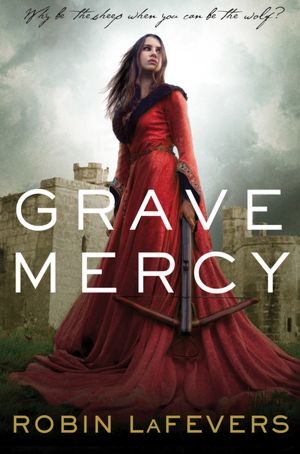
Grave Mercy. Robin LaFevers. 2012. Houghton Mifflin Harcourt. 560 pages.
Brittany 1485
I bear a deep red stain that runs from my left shoulder down to my right hip, a trail left by the herbwitch’s poison that my mother used to try to expel me from her womb. That I survived, according to the herbwitch, is no miracle but a sign I have been sired by the god of death himself.
I am told my father flew into a rage and raised his hand to my mother even as she lay weak and bleeding on the birthing bed. Until the herbwitch pointed out to him that if my mother had lain with the god of death, surely He would not stand idly by while my father beat her.
I risk a glance up at my husband-to-be, Guillo, and wonder if my father has told him of my lineage. I am guessing not, for who would pay three silver coins for what I am? Besides, Guillo looks far too placid to know of my true nature. If my father has tricked him, it will not bode well for our union. That we are being married in Guillo’s cottage rather than a church further adds to my unease.
I feel my father’s heavy gaze upon me and look up. The triumph in his eyes frightens me, for if he has triumphed, then I have surely lost in some way I do not yet understand. Even so, I smile, wanting to convince him I am happy—for there is nothing that upsets him more than my happiness.
Wow. If you're looking for two words: assassin nuns. Of course, our heroine, Ismae isn't a nun in the Catholic church. No, she's in a special nunnery, the nuns live to serve Death whom they call St. Mortain, and she's received very special training. They've taught her to kill, to be an assassin. The nuns are loyal to the Duchess of Brittany, and the victims are often her political enemies--foreign or domestic--those that pose the greatest threat to Brittany's independence.

While we do see her first few jobs carried out, most of the novel focuses on one job in particular. The abbess wants her to team up with Duval, the Duchess' older brother and her most trusted friend and advisor. She's to pose as his mistress, and travel with him to the Duchess' household. There she will "help him" find any possible traitors. He doesn't exactly trust her, he knows exactly what she's capable of, and who she serves. He knows that if given orders, she'd kill him to please her Lord. She doesn't exactly trust him either. Though the marque hasn't appeared on him yet--the special sign or symbol that she sees on her victims before they're killed--she knows that he could be lying to her, that his loyalty to the Duchess could be an act. But both know that it is of the utmost importance to protect the Duchess, and to find any traitors and uncover any conspiracies, if that means working together, so be it. Of course, this means spending a LOT of time with one another...

...the time will come when Ismae must choose who to trust and who to believe...

Politics. Romance. Drama. Dysfunctional Families. Poison. Murder. Betrayal. Mystery. Suspense.

This one probably won't please every reader. Some may not be able to get past the premise of old or ancient religions continuing to exist under the guise of Christianity. And this one isn't squeaky clean. For those that have no tolerance whatsoever when it comes to sensuality. (I would consider it mild up until the very end when their relationship changes.) But. For those that can, well, this is one COMPELLING read. My favorite character happens to be Duval. I just LOVED him. I did. He was such a swoon-worthy hero!!! And our heroine, Ismae, is quite strong and resourceful. I loved the drama. I loved the history. I loved seeing the court life and family drama play out. I enjoyed the setting, the characters, the writing. It worked really well for me.

Favorite quotes:
"Are you drunk?" I try to put as much scorn into my words as he did.
"No. Yes. Perhaps a little. Definitely not enough." The bleakness is back and he turns to stare into the flames.
I am torn between wanting to leave him to wallow in his despair and wanting to rush to his side and chase that look from his eyes. That I long to do this appalls me, sets panic fluttering against my ribs.
"I suggest you return to your room," Duval says, his gaze still fixed woodenly on the fire. "Unless you have come to practice your lessons of seduction on me?" His mouth twists in bitter amusement. "That could well entertain me till sunrise."
I jerk my head back as if I have been slapped. "No, milord. I had thought only to pray for your soul if Madame Hivern had seen fit to poison you. Nothing more." And with that, I turn and flee the room, then bolt the door against the disturbing glimpse of both his soul and mine. Whatever games are being played here, he is master at them, and I will do well to remember that. (155)
"What is my fair assassin so afraid of? I wonder."
"I'm not afraid."
Duval tilts his head to the side. "No?" He studies me a long moment, then rises out of his chair. I hold my breath as he crosses to my bed. "Are you afraid I will draw closer, perhaps?" His voice is pitched low, little more than a purr. My breath catches in my throat, trapped by something I long to call fear but that doesn't feel like fear at all. (174)
His smile flashes, quick and surprising in the darkness. "When one consorts with assassins, one must expect to dance along the edge of a knife once or twice. I bid you good night." (218)
Read Grave Mercy
  • If you're a fan of Robin LaFevers
  • If you're a fan of historical romance, with a fantasy feel to it (mythology/supernatural)
  • Also if you're a fan of mystery/suspense/political thrillers

© 2012 Becky Laney of Becky's Book Reviews

My Mixed-Up Berry Blue Summer (MG)

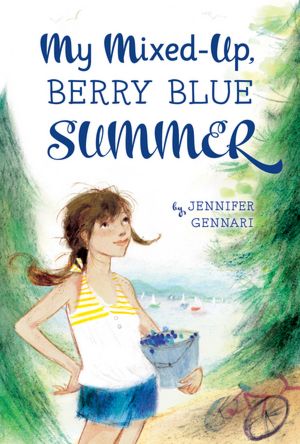
My Mixed-Up Berry Blue Summer. Jennifer Gennari. 2012. Houghton Mifflin Harcourt. 119 pages.

Unlike some people, Lake Champlain was a friend I could count on. I knew her every mood--sometimes she was flat like a cookie sheet, and other times she was whipped up like meringue on a butterscotch pie. That was the way I felt, too. Ever since Eva had moved in with Mom and me last month, I was as changeable as the lake.

June Farrell isn't quite having a perfect summer. Her mom's girlfriend, Eva, has moved in with them. And soon afterwards the two announce their plans to get married--Vermont's new civil union law has just been put in place. June isn't the biggest Eva fan. Sure she wants her Mom to be happy. But if she's honest, June doesn't quite feel comfortable around Eva, at least not yet. There is some personality clashing going on...

And the town's mood has definitely changed in recent months. There is a campaign, a movement, to "take back Vermont" and to undo what's been done. There are many in the town who are not exactly thrilled with Vermont's new law, and who feel it is their right to let this be known. Mainly through putting up signs and flyers about their campaign to "take back Vermont." But also through distributing a list of businesses owned and operated by gays so that those businesses can be boycotted in the future.

June is embarrassed that her mom's business is on that list. And that they are temporarily at least losing some of their customers. And she's also not thrilled that some of her friends parents are part of this campaign. That is that their political views do not match up with her family's. She doesn't want to lose friends because of this. But at the same time, she doesn't know if she's still welcome. She doesn't feel comfortable when her friends' parents express their views on homosexuality. Everything seems so complicated now, whereas just a few months ago, things seemed to be going so well.

This book isn't just about family drama and a tension-filled town. It is also about pies and the joy of baking.

Read My Mixed-Up Berry Blue Summer
  • If you're looking for lgbt books for elementary age children; the book is about how an eleven year old handles having two moms planning a wedding/civil union.
  • If you're looking for a little politics in your fiction;
  • If you're looking for books with young heroines who love to bake

© 2012 Becky Laney of Becky's Book Reviews

Looking for Me (MG)

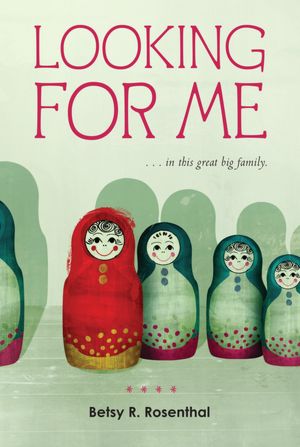
Looking for Me. Betsy R. Rosenthal. 2012. Houghton Mifflin Harcourt. 176 pages.

Edith of No Special Place

I'm just plain Edith.
I'm number four, 
and should anyone care,
I'm eleven years old,
with curly black hair.

Squeezed / between / two / brothers,
Daniel and Ray,
lost in a crowd,
will I ever be more
than just plain Edith,
who's number four?

In my overcrowded family
I'm just another face.
I'm just plain Edith
of no special place.

I tend to assume that verse novels will be easy reads. And if by easy you just mean quick, then such is the case with Looking For Me. But there is emotional depth in this one. And the subject matter makes this one anything but easy--on the emotions. You might just be brought to tears. Of course, not every reader is so easily touched. But. Still it's best to be prepared.

Looking for Me is set in the 1930s during the Depression. It stars a very, very large Jewish family. Twelve children. Yes, twelve children. Edith has two older sisters and an older brother, but it is Edith who is the "little mother" to her younger siblings. She does take her family for granted, and at times, it is easy for Edith to be full of complaints. Which I suppose is only human. What Edith is missing is her own identity. Though others may think of her in certain ways, she's having a hard time deciding for herself just who she is, who she is beyond one of many daughters, beyond one of many sisters. Who is she apart from her role in the family? Does she have a voice? Does she have a choice?

I liked this one. I did. I'm not sure it is for every reader. I know that some people just don't like verse novels and can't understand why the stories are just not written in ordinary prose. And other readers do like verse novels. But even if you love verse novels, you might not like historical fiction. So. As I said, this one may not be for everyone, but I liked it well enough. It was definitely a difficult read--and it did bring me very, very close to tears.

Read Looking for Me
  • If you like historical verse novels
  • If you are looking for Jewish children's books
  • If you are looking for books set during the Depression
  • If you are looking for family books
  • If you don't mind really, really sad books

© 2012 Becky Laney of Becky's Book Reviews

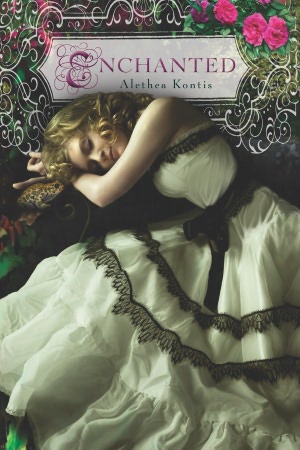
Enchanted (YA) (Spoilers)

Enchanted. Alethea Kontis. 2012. Houghton Mifflin Harcourt. 320 pages.

My name is Sunday Woodcutter, and I am doomed to a happy life. I am the seventh daughter of Jack and Seven Woodcutter, Jack a seventh son and Seven a seventh daughter herself. 

I have mostly positive things to say about Enchanted. I do have something negative to say, something that kept me from truly enjoying this one completely. But I think I'll save that for the end of the review.

The good news. If you enjoy fairy tales, then you should give Enchanted a try. This one isn't a retelling of one story specifically, more like a retelling of a dozen. With snippets from each fairy tale.
The more fairy tales you know, the more you'll recognize. Would the book have been better if the author had stuck just to one or two fairy tales? I'm not sure. That is NOT my place to say, really. Because while it could feel a bit scattered, it was scattered in a fun way. If that makes sense. If something is going to be crazy, you should try to see it as a good kind of crazy, right? And many of the details--especially details about some of her sisters--made me want more. (Monday and Thursday, I think were the sisters I was most interested in.) This story focuses mainly on Sunday and Wednesday. Though Saturday does come into a few chapters at least. Friday, I believe, is the one that interested me least. Though I'm not sure that's her fault.

Anyway, the good news is that this is, for the most part, a playful novel with an interesting premise. The premise is that Sunday Woodcutter, the seventh daughter, has a magical gift. I would feel horrible revealing this, but, it is on the book jacket. And this is a fantasy fairy-tale retelling, so "gifts" from fairies shouldn't be completely unexpected, right? Well, Sunday's gift is that her words come true. At first she believes that she only has this power through the written word--through her written stories. Which is SOMETHING to deal with--for better or worse.

So the novel begins with Sunday befriending a frog. And since the frog is a talking frog, and since Sunday isn't completely clueless, she has a very, very strong suspicion that this frog is an enchanted frog, perhaps even a prince. But what she doesn't guess--and won't really get around to guessing--is that this Prince is the enemy of her family.

There are a couple of charming things about this one. It did hold my interest. BUT. It was also confusing. I kept hoping that the big reveal would actually clarify things for me. But. No. That wasn't really the case. This could be a matter of me being a sloppy reader and just not getting it. But. I've read in other reviews that other readers had trouble making sense of things too. And that it was very confusing.

S
P
O
I
L
E
R

So. The big thing that confused me had to do with the Prince's father, the Prince's nameless father. It seems that NO ONE can remember his first name, and that there are also many other fuzzy details about this king and his reign. I wasn't sure if the King himself was evil through-and-through, or, if perhaps he was trapped or ensnared by this evil-evil fairy godmother, Sorrow. Or a bit of both. But the even bigger thing that confused me was the Prince's mental state. The "voices" he heard each and every night. Someone begging, begging, begging to be killed so they could be set free. Where was the voice coming from? Was it some message his father was trying to send him? Or was it some message from his mother? Or was it a message from someone else? At first, I thought it might be that there was something good in his father still remaining and that he wanted his son to find out the truth and set him free. But then after the big reveal, I became less sure. And when we learn the fate of his mother, well, I didn't know what to think of anything. (Same with Wednesday. Her role in all this.)

Anyway, the truth is that what I did understand, I did enjoy. But there was so very much I didn't understand, or understand fully.

Read Enchanted
  • If you like fairy tales
  • If you like fantasy
  • If you like mysteries 
© 2012 Becky Laney of Becky's Book Reviews

Two 2012 Board Books

I Love To Eat (J'aime manger; Me encanta comer) Amelie Graux. 2012. Houghton Mifflin Harcourt. 12 pages.

I Love To Eat is a simple board book, a touch-and-feel board book, that highlights familiar words. For example, I Love To Eat highlights familiar words like: high chair, bib, sippy cup, glass, fork, spoon, bowl, cereal, little jar, peas, bottle, and cookie. Each word, each item has a touch-and-feel aspect to it. (The peas are sticky, for example, the little jar is hard plastic, the bottle has a soft plastic feel, etc. But this board book goes above and beyond. It doesn't just give these words in English, each word is in English, French, and Spanish. The book is very simple. There is no story to it. But I can't help liking this one because it is so simple. I like learning how to say these words in French and Spanish. (Little peas is le petit pot in French.) 

Read I Love To Eat
  • If you are looking for simple board books to share with little ones
  • If you are looking for board books in French and/or Spanish
I Love To Sleep (J'aime dormir; Me encanta dormir) Amelie Graux. 2012. Houghton Mifflin Harcourt. 12 pages. 

I Love to Sleep is a simple board book. I am always looking for good touch-and-feel books to recommend to parents, and these two books definitely qualify. This board book highlights familiar words associated with the bedtime routine: bottle, pacifier, toy, diaper, music player, book, pajamas, blankie, mobile, crib, night light, and sleep sack. Each word is presented in English, French, and Spanish. Each word or item has a touch-and-feel aspect to it. And trust me, the touch-and-feel elements are WONDERFUL on this one. I just LOVED the oh-so-soft cover. The little boy's blue pajamas are so very, very soft. The pacifier also has a very pleasant feel to it! The diaper truly does make a scratchy noise when you rub it. While I Love To Sleep may not have enough story to be an official bedtime story book, I do like it and do recommend it.

Read I Love To Sleep
  • If you are looking for a simple board book to share with little ones
  • If you are looking for board books in French and/or Spanish

© 2012 Becky Laney of Becky's Book Reviews

Radiate (YA)

Radiate. Marley Gibson. 2012.  Houghton Mifflin Harcourt. 416 pages.

You know how you always think there's something...more?

Months before her Senior year in high school, our heroine, Hayley Matthews decides to give up marching band and try out for the varsity cheerleading squad. She isn't sure she'll make it, even though she knows how to tumble and is a fast-learner when it comes to dance. She makes the team--to her delight--and then her real struggles begin. But don't worry, these struggles all work together for her good.

ETA: The author thinks there should be a spoiler alert for my review, and I'm happy to comply. There is nothing in my review that the reader wouldn't learn for themselves after the first few chapters, or even after the prologue, but if you want to truly pick this one up knowing nothing about it. Don't read the rest of the review. Just don't. 

I'm not sure I like the prologue to Radiate. I'm not saying I hate it. I don't. It's just that sometimes you don't want to be told on page one that a book is a cancer-book. (Okay, it's not page one, but it is in the first few pages.) Not when there are chapters--quite a handful of chapters--to be read before she even goes to the doctor about a suspicious lump and a pain that just won't go away.

So our heroine Hayley is making new friends in the days and weeks following the announcement that she's now on the squad. And surprise, surprise the boy that she's liked since forever knows who she is now. And he can't stop flirting with her. Fortunately, Hayley is so smitten, so very, very smitten, that she fails to see he has any personality, any depth, any genuineness to him. Unfortunately--at least for this reader--I found little charm or charisma. In fact, I saw right away that he was so not the one for Hayley. That there was no way in the world he could possibly be there for Hayley when things got rough. But the lack of depth in the boyfriend is partially made well by the fact that there's a cute boy next door that has just come back to town. A boy that she grew up with. A boy that seems to genuinely see Hayley as a real person and not an object.

Did I like Radiate? Well. I'm not sure. On the one hand, it's hard not to cheer for a cheerleader who overcomes such harsh obstacles. She shows determination and courage, there is a real genuineness to her, a sincerity that makes her anything but shallow. But at the same time, the book lacks other developed characters. I had a hard time with most of the minor characters--including the boyfriend and the rest of the cheerleaders, for the most part. The family, on the other hand, had a little more depth. I felt there was definite potential there. I could see how this family functioned--or didn't function, as the case may be. For everything I liked about the novel--and there were quite a handful of things I liked about it--I found little things that didn't quite work for me. One thing that bothered me--and it's a thing that may not bother other readers at all--was the fact that this family was displayed as a Christian family, our heroine, so we're told is a Christian. Yet the novel itself uses language I wouldn't feel comfortable recommending to Christian readers. (Though it's miles away from being Nick & Norah's Infinite Playlist!)

Read Radiate
  • If you're looking for a happy-ending Cancer book
  • If you're looking for a YA book with a realistic school setting
  • If you love reading about cheerleaders and football games
  • If you love stories about how the boy-next-door is a much better catch than that oh-so-secret-crush you've had for years and years

© 2012 Becky Laney of Becky's Book Reviews

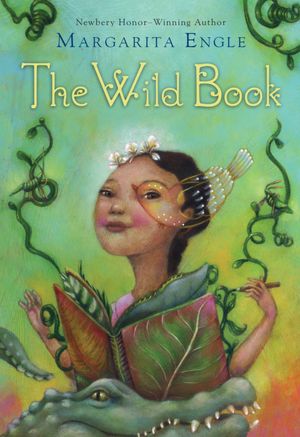
The Wild Book

The Wild Book. Margarita Engle. 2012. Harcourt. 144 pages.

I really do love Margarita Engle's verse novels set in Cuba. They almost always impress me. I love her poetry. I love the emotion behind the poems. The way she tells a story. The Wild Book is no exception. Set in Cuba in the early twentieth century, the heroine is based on Engle's grandmother. (I believe the novel is set around 1912?)

Josefa, or "Fefa", is our eleven year old, word-blind heroine. Her inability to read isn't from lack of focus or desire. More than anything, Fefa wants to be able to read and write. She's dyslexic at a time when no one really understood what that meant. Her mother gives her a present, a blank book, and tells her to practice, to take things slow, slow, slow. To keep trying. To not give up. And that is just what our heroine does. She writes--as slowly and carefully as she can--about her life. And it's an interesting time to be sure....since Cuba has won its independence from Spain and is being occupied by the United States...a time with many dangers and risks.

Guessing

I memorize all the little
guess-me riddles
in my schoolbook:


A bird has a little white
treasure chest
that everyone knows
how to open
but no one can close.
An egg!


Why does an unlucky shrimp
swim backwards?
To return to a time 
before he lost his luck!


I dream up new riddles
and write them all down
in my wild book.


My slow handwriting
with its careful swirls
and loops
has almost grown 
beautiful.


Am I patient?
What has changed?


When I write riddles,
the pen in my hand
feels mysterious.


I feel as powerful
as a girl in a fairy tale,
a brave girl who climbs
dangerous towers
and sips water
from magic wells.


Is this how it feels
to be smart? (46-47)

Read The Wild Book
  • If you're a fan of Margarita Engle
  • If you're a fan of verse novels
  • If you're looking for historical fiction set in Cuba
  • If you're looking for books with dyslexic characters

© 2012 Becky Laney of Becky's Book Reviews

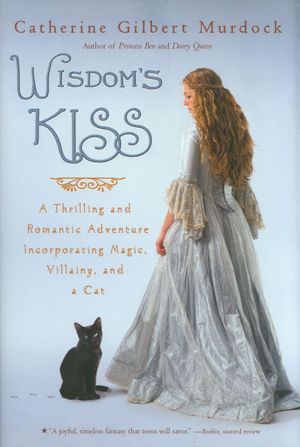
Wisdom's Kiss (YA)

Wisdom's Kiss. Catherine Gilbert Murdock. 2011. Houghton Mifflin Harcourt. 304 pages.


Trudy's sight revealed itself one warm summer night when the child was no older than three.

Wisdom's Kiss is good example of an almost novel. Perhaps I would have enjoyed this one more if I'd read Princess Ben. Perhaps I would have known more what to expect from this fantasy novel by Catherine Gilbert Murdock. Perhaps I would have cared more going into it, connected with the characters more. I don't know. I haven't read Princess Ben, though I've been meaning to read it for more than a few years now.

It is an almost for me because while I almost cared about the characters, I didn't quite. And I almost cared about the story, but I didn't quite. And I almost found the writing wonderful, but I also found it a little much.

There are many, many, many narrators in Wisdom's Kiss. (Would I have loved it more if they'd been fewer?) The narrator we meet first is a maid named Fortitude, "Trudy." She's head over heels in love with Tips, a "soldier" with a secret who doesn't really want to come back home just yet even though that's not what he's telling her in his (messy) letters to his childhood friend. This maid, for better or worse, is made a "Lady" when the Queen Mother, Benevolence, and her second granddaughter, Wisdom (Dizzy) travel through their mountain village. Wisdom is getting married soon, and the oyster-disaster at a previous inn leaves her much in need of another lady in waiting. Ben also appreciates Trudy for who she is. So reluctantly Trudy joins the royal procession on their way...

Wisdom's Kiss is a fantasy novel. And it feels like it. Which is a good thing, I think. I think I would have preferred this one if it had been presented more traditionally. While this one wasn't a difficult read, I discovered as I kept reading that I just didn't care about any of the characters. And I'm not sure I was 'liking' the right characters, the characters I was meant to like. (Was Dizzy supposed to be so....unpleasant?! Was I supposed to feel sympathetic towards her? Was I supposed to be happy that she got Tips instead of Trudy?! Because I just found her to be selfish and spoiled.)

Read Wisdom's Kiss
  • If you're a fan of fantasy novels for young adults
  • If you're a fan of romance-fantasy novels
  • If you like your fantasy to be a little quirky

© 2012 Becky Laney of Becky's Book Reviews

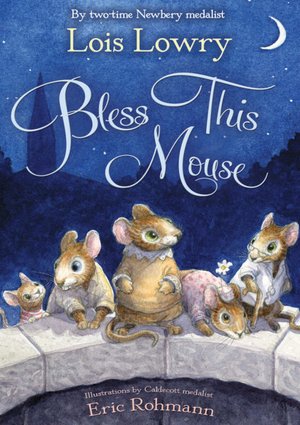
Bless This Mouse (MG)

Bless This Mouse. Lois Lowry. Illustrated by Eric Rohmann. 2011. Houghton Mifflin Harcourt. 160 pages.

Hildegarde sighed, a loud, squeaking, outraged sort of sigh, when she was informed that a new litter of mouselets had been born in the sexton's closet. Such bad timing! Such bad placement!

Bless This Mouse is such a charming book; it's completely delightful. The illustrations by Eric Rohmann just delighted me from the start. They are cute, but, they're also old-fashioned. They match the text oh-so-well.

Hildegarde is the Mouse Mistress of Saint Bartholemew's. It is her responsibility--her duty--to make sure that all the church mice are able to live together peaceably with the humans. She encourages the mice to be respectful. Not one of her mice would dare chew or nibble on a Bible. Why some of her mice even know the words to the hymns. No, her main duty is to make sure that the humans don't realize the truth--that the church is home to several hundred mice. She fears the Great X above all else.

But when some of the mice get foolish, it may just be up to Hildegarde and some of her finest, bravest, smartest friends to save the mice from the terrifying Great X.

I liked this one. I really, really liked it. It was just one of those oh-so-satisfying reads.

If you like animal fantasy, then Bless This Mouse is a must read!

Read Bless This Mouse
  • If you're a fan of Lois Lowry
  • If you're a fan of animal fantasy
  • If you're a fan of children's books
  • If you're looking for a family-friendly, faith-friendly read aloud

© 2012 Becky Laney of Becky's Book Reviews

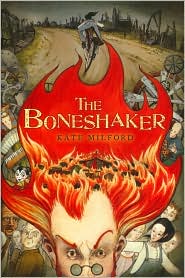
Rereading Boneshaker

The Boneshaker. Kate Milford. 2010. May 2010. Houghton Mifflin Harcourt. 372 pages.

Strange things can happen at a crossroads. It might look like nothing but a place where two dusty roads meet, but a crossroads can be something more. A crossroads can be something special, a compass with arms reaching to places you might never find the way to again; places that might exist, or might have existed once, or might exist someday, depending on whether or not you decide to look for them.
But whatever else it might be, a crossroads is a place where you choose.


I have now read Kate Milford's The Boneshaker three times. (The first time was in July 2010, the second in December 2010). I can now truly say that this is indeed one of my favorite, favorite historical fantasy novels. Not that it's fully, completely fantasy. It is set in the real world, in a small American town in 1913. And many details do feel authentic for the time period. But. There are characters that have had showdowns with the devil himself. (Think The Devil Went Down To Georgia.) And there is something more--much more--to the traveling carnival that has come to town.

Almost everything from my original review still rings true:

Read this book. Now. Why? Because this book is so very, very good. It's one of those books where the moment you finish it, you want to start it all over again. You don't want it to be over. You want to keep experiencing it.

What did I love about this book? The characters, the story, the storytelling, the setting, the atmosphere, the descriptions. It was such an amazing blend of history, mystery, and fantasy. The Boneshaker is set in 1913, in Arcane, Missouri. This is a town that for whatever reason makes travelers uneasy. It's not a place most would stop and see for fun, for pleasure. Perhaps it's a little too close for comfort to the Old Village, the first settlement of the crossroads that was abandoned several generations before the novel opens. So while Arcane may not seem like much--at least to the outsider--it is home to our heroine, Natalie Minks. She's very smart, very curious. She likes to know how things work. She's fascinated by machines. And she loves spending time with her father who is a mechanic--a bicycle mechanic mostly, though he fixes anything with wheels for the most part.

Arcane doesn't see many strangers. But one day a stranger shows up in town--his wheel broke, you see--and this stranger is none other than Dr. Jake Limberleg. He has a medicine show. The full name is Dr. Jake Limberleg's Nostrum Fair and Technological Medicine Show. And while he's waiting for his wheel to be fixed--so he can go on his way, Arcane was not a planned stop by any means--he decides to go ahead and open up his show, his fair. There are a handful of people in the community who are skeptical about this man and his team of 'doctors' of 'experts.' Among these is Natalie. She may be the cleverest one of them all. She may be the only one able to solve this mystery. But can she do it in time?

The Boneshaker is so compelling. It had me from hello. The characters, the storytelling, the writing, I thought all of it was so well done. Kate Milford made me care about these characters, and she kept me hooked from start to finish.


Read The Boneshaker
  • If you like historical fiction, historical fantasy, historical mysteries
  • If you like stories with a bit of supernatural to them--not TOO much, just enough and no more
  • If you like strong heroines that are on their way to developing their full potential (Loved her resourcefulness, her curiosity, her courage, her determination)
  • If you love stories with well-developed, fascinating characters
  • If you love stories with atmosphere, with a strong setting,
  • If you love stories with mysteriously creepy traveling carnivals or medicine shows

© 2012 Becky Laney of Becky's Book Reviews

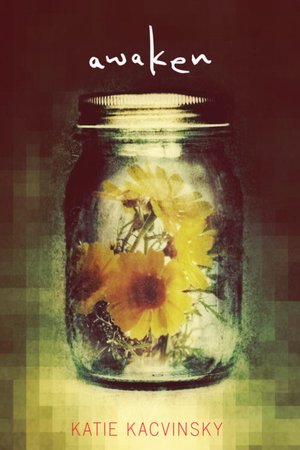
Awaken (YA)

Awaken. Katie Kacvinsky. 2011. Houghton Mifflin Harcourt. 320 pages.

My mom gave me an old leather-bound journal for my seventeenth birthday. At first the blank pages surprised me, as if the story inside was lost or had slipped out. She explained sometimes the story is supposed to be missing because it's still waiting to be written. Leave it to my mom to give me something from the past to use in the future.

Is Awaken a science fiction novel? Perhaps if you consider all books set in the future to be science fiction. Awaken is set in 2060. If I were to tell you the novel reads more like social commentary, would that frighten you away?

The premise of Awaken is simple. Maddie, our heroine, lives in a world where EVERYTHING is digital. Everyone--no matter your age--is always plugged into technology. If you're going for a walk with a friend--chances are, it's not a real walk, and you're not seeing your friend face to face. If you're meeting your friends at the coffee shop--same thing. And book club. And on those rare occasions when you do leave your house, when you do meet people, your technology isn't all that far away from you. You can be in the same room with someone and still be miles away from them--if your focus remains elsewhere.

The premise of Awaken is that people have forgotten how to LIVE their lives. They have forgotten what it was like to really feel, to really experience, to do. People have gotten comfortable--too comfortable choosing what is convenient, what is safe, what is known.

So the novel focuses on what happens when Maddie decides to start living life, what happens when she chooses to go out of the house, to start meeting people, to start hanging out with others. Of course, it's a bit more complex than that! Maddie's father isn't just anybody. He's SOMEBODY. And the strict rules are there for a reason--even though readers may not learn that for quite a while.

Read Awaken
  • If you like reading novels set in the future--like Rash, like Scored, like Surviving Antarctica: Reality TV 2083.
  • If you like reading books that challenge you to think
  • If you like your dystopia with a focus on education
  • If you like your dystopia with a hint of romance

© 2012 Becky Laney of Becky's Book Reviews

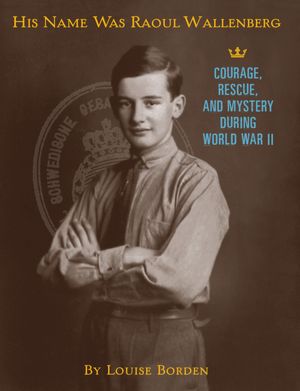
His Name Was Raoul Wallenberg

His Name Was Raoul Wallenberg: Courage, Rescue, and Mystery During World War II. Louise Borden. 2012. Houghton Mifflin Harcourt. 144 pages.

Look closely
at this faded school picture from Sweden.
Find the student whose number is 19
and match 19 to his signature.
Read it aloud. Let it echo.
Raoul Wallenberg.
It's a name for the world to remember.
Now you,
and others,
can become the storytellers
of this boy's remarkable life...

Read. This. Book. It is just amazing, powerful, compelling, and all sorts of wonderful! It is a nonfiction book written in verse. The verse makes it read very quickly. And the verse helps the story resonate even more, in my opinion. Though to be honest, prose or verse, I'd be caring about this story anyway. Yes, I do have a special interest in almost anything connected to World War II. But I think this story isn't just for those that already care, that are already fascinated by the subject. I think this is a book that can bring awareness or new awareness to the subject.

This book was very fascinating, very emotional. The heart of this one focuses on his time in Hungary during the end of World War II. He was a Swedish diplomat sent to Nazi-occupied Hungary to help as many Jewish people as he could. He issued special schutzpasses. What is a schutzpasse? Well, it was an "official" or official-looking document that promised Swedish protection to the person(s) listed. And at least for a time--it worked. It was saving lives. It was making a difference. Of course this project took the work of many, many individuals. But Raoul Wallenberg was the leader, the one who made it all work. As the end of the war drew nearer, as the government changed, as the threat of Communists increased, much did change and would continue to change as the Communists did indeed liberate Budapest. But with the Communists came the mystery...

I'd definitely recommend this one!

Read His Name Was Raoul Wallenberg
  • If you are interested in World War II,
  • If you are interested in learning more about Gentiles rescuers during the Holocaust
  • If you are interested in Sweden or Hungary
  • If you like compelling nonfiction

© 2012 Becky Laney of Becky's Book Reviews

Tales of Very Picky Eaters

Tales For Very Picky Eaters. Josh Schneider. 2011. Houghton Mifflin Harcourt. 50 pages.

"I can't eat broccoli," said James. "It's disgusting." 

The hero of this early reader is a young boy named James. He has definite opinions on what he will eat and on what he won't eat. And he won't change his mind...or will he?! In five very short chapters, James is tested. The five chapters are: "Tale of Disgusting Broccoli," "Tale of the Smelly Lasagna," "Tale of the Repulsive Milk," "Tale of the Lumpy Oatmeal," and "Tale of the Slimy Eggs." At least four of the five are silly and over-the-top adventures in eating...or non-eating...as the case may be. How silly is silly?! Well, how about a troll living in the basement that cooks lasagna...or...growing oatmeal that will overrun the house if it doesn't get eaten every day?! Yes, these stories can be very, very silly indeed.

Read Tales for Very Picky Eaters
  • If you have a picky eater of your own
  • If you enjoy sharing early readers with the young ones in your life
  • If you like funny stories

© 2012 Becky Laney of Becky's Book Reviews