Tampilkan postingan dengan label Nonfiction. Tampilkan semua postingan

The Story of the Trapp Family Singers

The Story of the Trapp Family Singers. Maria Augusta Trapp. 1949/2001. HarperCollins. 320 pages.

Somebody tapped me on the shoulder. I looked up from the workbooks of my fifth graders, which I was just correcting, into the lined, old face of a little lay sister, every wrinkle radiating kindness. "Reverend Mother Abbess expects you in her private parlor," she whispered. Before I could close my mouth, which had opened in astonishment, the door shut behind the small figure. Lay sisters were not supposed to converse with candidates for the novitiate.

This is the true story that "inspired" my favorite musical The Sound of Music. For the most part, the book is fascinating--especially the first half of the book. Readers meet the young woman sent to be governess to a retired sea captain with many children. In the book, she's to be governess only to one of his daughters, the rest either have nursemaids, attend schools, or have their own tutors. There are definitely some big differences between the book and the movie--between truth and fiction. (For example, the names of the children are different, as is the chronology of the story. The couple married years before Hitler came to power; they married in 1927!) They began singing together as a family out of love for music, yes, but also out of financial necessity.

The book chronicles:

Maria's first eight or nine months as a governess, particular attention is paid to their first Christmas
Maria's new role as wife and mother
Austria's changing economy and politics in the 1930s
The family's flight from Austria and immigration to the United States
The family's first experiences in America as they go on tour and learn English
The family's (forced) return to Europe--fortunately, only for a few months.
The family's return to the United States, their continuing tours
The family's settling down in America (a bit more about their tours, building of their house, building of their music camp)
The private life of the family (recollections of holidays, feast days, birthdays, Christmases, vacations, etc.)

The book is great on capturing the family's dependence on God, their reliance on God to deliver them and provide for them no matter the circumstance. The book is also great at capturing a specific time, place, and culture. For anyone curious about what it was like to be living in Austria in the 1920s and 1930s, this is a must read. For those interested in the immigrant experience during this time period, it is just a fascinating account! To see American culture--and language--from this outside perspective. The book was published in 1949, but it was up to date--so readers do get perspective on World War II from their perspective, also what the family tried to do to help Austria after the war was over.

I really LOVED this one!!!

Favorite quotes:
One of the greatest things in human life is the ability to make plans. Even if they never come true--the joy of anticipation is irrevocably yours. That way one can live many more than just one life. (214)
One night I tenderly consulted by private calendar, "time eaters" we had called them at school, and it showed only thirteen more days in exile. The next morning I started spring cleaning. Under my direction the maids were taking down the curtains and proceeding to brush the walls, when I saw the three youngest children knock on the door of the study. It didn't take long and out they came again. Running over to me as I stood on a ladder washing a big crystal chandelier, they yelled from afar: "Father says he doesn't know whether you like him at all!" "Why, of course, I like him," I answered, somewhat absentmindedly, because I had never washed a chandelier before. I noticed only vaguely that the children disappeared behind the study door again. That same night I was arranging flowers in several big, beautiful oriental vases. This was the last touch, and then the spring cleaning was over, and it had been really successful. When I had arrived at the last vase, the Captain came in. Stepping over to me, he stood and silently watched what I was doing with the peonies. Suddenly he said, "That was really awfully nice of you." An altogether new tone in his voice, like the deep, rich quality of a low bell, made me look up, and I met his eyes, looking at me with such warmth that I lowered mine immediately again, bewildered. Automatically I asked what was so nice of me, as I only remembered that awful letter. "Why," he said, astonished, "didn't you send word to me through the children that you accepted the offer, I mean, that you want to marry me?" Scissors and peonies fell to the floor. "That I want to--marry you?" "Well, yes. The children came to me this morning and said they had had a council among themselves, and the only way to keep you with us would be that I marry you. I said to them that I would love to, but I didn't think you liked me. They ran over to you and came back in a flash, crying that you had said, 'yes I do.' Aren't we engaged now?" Now I was out of gear. I absolutely did not know what to say or what to do; not at all. The air was full of an expectant silence, and all I knew was that in a few days I would be received into my convent, and there stood a real, live man who wanted to marry me. (57-58)
Read The Story of the Trapp Family Singers
  • If you enjoy biography and memoirs
  • If you love The Sound of Music
  • If you want to learn more about Austria/Europe in the 1920s, 1930s
© 2012 Becky Laney of Becky's Book Reviews

A Passion for Victory

A Passion for Victory: The Story of the Olympics in Ancient and Early Modern Times. Benson Bobrick. 2012. Random House. 160 pages.

I definitely enjoyed reading Benson Bobrick's A Passion for Victory: The Story of the Olympics in Ancient and Early Modern Times. In this nonfiction book for children and teens, Bobrick chronicles the Olympic games.

In the first two chapters, Bobrick focuses on the Olympic Games in Greek and Roman times. He gives just enough detail to be fascinating. The games were definitely quite different than modern games! Including the fact that the boxing, I believe, could prove to be to the death.

Chapter three focuses on the movement in the nineteenth century to bring back the Olympic games. Chapter four focuses on the first few Olympic games of modern times: 1896 (Greece), 1900 (Paris), 1904 (St. Louis, Missouri). The 1900 and 1904 games were not ideal because of their combination with World Fairs. For example, the book points out that they spread out the events over five and half months. No opening or closing ceremonies. Not that the games were all bad, by any means. This was the first Olympics offering women's events (tennis, croquet). And archery, diving, and rowing made their debut. In fact, it seems like almost every Olympics held offered new sports, new events. (Similarly, some might disappear.) The 1904 games only had participants from twelve countries, but, most of the athletes were American, which could be why America won over 200 medals that year. If the 1900 games were too long--five months--the 1904 games might arguably have been too short--just six days! The chapter also focuses on prejudices and such bringing up the World's Fair and the exhibitions.

The marathon also included the first black South Africans (two Tswana tribesmen) to compete in the Olympics--though they weren't supposed to be in the race at all. They were part of the Boer War exhibit but had joined the race for fun. Even so, one finished ninth, and the other came in twelfth. The first to arrive at the finish line was Frederick Lorz, who had actually dropped out. (After the first nine miles, he had flagged down his manager, who gave him a lift for the rest of the way in his car.) But when he crossed the finish line on foot, he was hailed as the winner. He was soon found out, of course, but the real winner, Thomas Hicks, (a Briton running for the United States), deserved the prize even less. He had been doped up by his trainers, who gave him a near-fatal dose of strychnine sulfate mixed with egg yolk and brandy. Unable to cross the line on his own, he had to be supported in the last stretch and was rushed to a hospital, where he spent several days in intensive care. (65)

The fifth chapter chronicles the Olympic Games of 1908 through 1932. It also highlights the 1906 Intercalated Olympic Games. This one-time event gave the games new life. It was here that the opening ceremony and closing ceremonies made their debut. Several paragraphs--or several pages--are dedicated to each Olympics. All fascinating stuff! I couldn't hope to cover it all! Readers learn how each Olympics helped contribute to the Olympics we have today. For example, the 1920 Olympics set in place many lasting traditions including the Parade of Nations in the opening ceremonies and the medal ceremonies with the raising of the flags for the three winners and the National Anthem for the gold medal winner. Of course, some attention is paid to the athletes and winners. The star of this chapter, in my opinion, is Jim Thorpe.

The sixth chapter focuses on the 1936 games in Berlin, and the star, as you might have guessed, is Jesse Owens. This chapter, of course, deals with world politics and racism, etc.

The Epilogue focuses, for the most part, on the war years. But, it also highlights the film Olympia which was innovative and creative. The book discusses how this inspired the way the games was captured and shared. On a much sadder note, it mentions just a handful of Olympians whose lives were lost in the Holocaust.

Overall, this is one fascinating book! It has dozens--if not hundreds--of I didn't know that facts for readers to discover. So many intriguing stories, so many incredible details. I would definitely recommend this one!!!

I just loved it!!! I did NOT want it to end. I wanted more, needed more. I would have loved to learn about the games from 1948 to present day. But. This book is great at what it promises readers. 

Read A Passion for Victory
  • If you're a fan of the Olympics
  • If you're a fan of sports and/or history and/or politics
  • If you're interested in how sports have been celebrated and recorded in ancient and modern history

© 2012 Becky Laney of Becky's Book Reviews

Mrs. Robinson's Disgrace

Mrs. Robinson's Disgrace: The Private Diary of A Victorian Lady. Kate Summerscale. 2012. Bloomsbury. 304 pages.

In the evening of 15 November 1850, a mild Friday night, Isabella Robinson set out for a party near her house in Edinburgh.

Did I enjoy this one as much as Kate Summerscale's The Suspicions of Mr. Whicher? No. Not even close. But that doesn't mean it wasn't interesting and at times thought-provoking. Mainly it made me very thankful to be living in this century. So what is Mrs. Robinson's Disgrace about? A little bit of everything:

science, evolution, "modern" medicine, mental illness and insanity, phrenology, homeopathic medical treatments, marriage, divorce, adultery, double standards, court systems, scandals, conformity and nonconformity, women's roles and women's rights, diaries and journals, creative act of writing, famous authors, famous books, etc.

Mrs. Robinson kept a diary. In her diary she wrote about the men--married and single, young and old--whom she fancied. She was a married woman, a mother of three. And it might not have been exactly mature to write about each man she had a crush on--some of them were her son's tutors--and to record each interaction--mainly conversations in a group setting, perhaps a walk or outside excursion--again in a group setting often with the children or others. What she wrote about one married man, a Dr. Edward Lane, went beyond that. She was seeking treatment at Moor Park, a health resort where Lane practiced his methods. She wrote of a handful of private walks where they kissed and confessed longings. She wrote of an interlude in his study and another in a carriage. Several years later, her husband read his wife's diary and discovered that his wife hated him--completely and absolutely--and lusted after all these other men. He sought a divorce with his wife's stolen diary as the only proof or witness to adultery. But was the diary enough proof to condemn his wife and grant him the divorce?

The first half of Mrs. Robinson's Disgrace is a reconstruction of events leading to the diary's discovery. Readers learn very briefly about Isabella's childhood and upbringing, about her first marriage and first son. Then readers learn of her marriage to Mr. Robinson and the birth of their two sons. They learn of her disgust and hatred of her husband. They learn of her delight in seeking out the company of handsome, intelligent, often-younger, sometimes-married men. They read of her interest in science and medicine and literature; Also of her complete rejection of God and Christianity. She's encouraged, for example, by George Combe and phrenology. His reading of her skull confirms--in her mind--her particular weaknesses. Though later he goes a long way in distancing himself from her and seems repulsed and worried when he learns that she has written about him quite a lot in her diary. Readers learn about Mrs. Robinson's "uterine disease." Turns out that "uterine disease" is code for a woman being insane.

The second half of Mrs. Robinson's Disgrace is a reconstruction of the divorce trial in the courts. Readers learn about the three (or so) lawyers involved in the case. Those representing Mr. Robinson, Mrs. Robinson, and Mr. Lane. Particular attention is paid to the defense of Mrs. Robinson. In addition, it chronicles what the press said about the case, etc. It concludes with the verdict and the aftermath of the case.

One thing I liked about Mrs. Robinson's Disgrace is that readers do get to decide on their own how they feel about it. She presents the facts, but lets readers make up their minds as to what those facts mean. Was she insane? Was she telling the truth? Was she embellishing and exaggerating things for her diary? Did she know if she was? Did she see the diary as being truth or fiction or a blend of the two? Was Mr. Lane lying? Was he trying to cover up his indiscretions and protect his family and reputation? Or was he a victim of one woman's obsession?

Read Mrs. Robinson's Disgrace
  • If you want to be equally disturbed and fascinated 
  • If you have a wide interest in all things Victorian; Summerscale does ramble and introduce many off topic subjects. 


© 2012 Becky Laney of Becky's Book Reviews

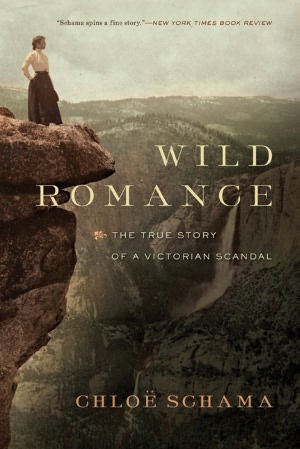
Wild Romance

Wild Romance: The True Story of a Victorian Scandal. Chloe Schama. 2010. Walker & Company. 249 pages.

Loved the first half of this nonfiction book on the life of Theresa Longworth, but, the second half which chronicles her world-travels after her oh-so-famous trials left me bored.

I picked up Wild Romance: A Victorian Story of a Marriage, a Trial, and a Self-Made Woman because I'm a fan of Victorian literature. I've read a handful of novels that fall into the "inspired-by" category. Authors whose works deal with irregular marriages--Irish, Scottish, etc. Marriages whose legitimacy was sometimes called into question. Since in some cases, just saying "We're married" with no paperwork, no witnesses, no priest or clergyman could do the job. At the time, there was definitely debate about what made a marriage or union legal or illegal.

In the case of Theresa Longworth, she "married" allegedly married on two different occasions in two different countries, a man named William Charles Yelverton. In the moment, I suppose, he was willing enough. The couple traveled together as man and wife for a short time at least. But when the two separated, I believe he was in the military, he changed his mind. He found someone new, someone with money to marry. And marry he did. Theresa finding out after a very difficult illness that "her" husband was now married to someone else...and he was claiming that they'd never, ever been married. Furthermore, he started saying that she was chasing him, had been chasing him for years and years, and that she was the one who wanted a more intimate arrangement.

The first half of this one follows their "courtship" and "marriage" leading up to a handful of trials in a handful of countries. And these court cases meant big, big, big publicity. Especially for her, she had a way of winning the public's support...but not so much anyone else. Some thought his new wife was much, much classier mainly because she stayed quiet and stayed at home.

So the book gives readers very detailed accounts of their correspondence. And in a way, the book encourages readers to make up their own minds. Was Theresa Longworth pursuing him? Was she going above and beyond what was allowed of ladies of the time? Was there something indiscreet and shameful in her letters to him? Was she ever grounded in reality? Was William Charles Yelverton a jerk? Did he ever mean to do right by Theresa? Was lying to her about being married the only way he saw of getting her into bed?

The second half of the book, for better or worse, lets readers know what happened next in her life. And what happened next is that she started traveling the world. All over the world. She wrote about her travels and had them published. (She also wrote two novels, though reviews were mixed at best.)

The book concludes by discussing how this real-life court case inspired dozens of novels of the time. 

Read Wild Romance
  • If you're a fan of Victorian literature; particularly of Wilkie Collins.
  • If you're interested in history; if you're interested in this time period
  • If you're interested in court cases and scandals and he-said, she-said dramas
  • If you're interested in travel writing, in following the chronicles of a woman traveler during this time period.
© 2012 Becky Laney of Becky's Book Reviews

The Suspicions of Mr. Whicher

The Suspicions of Mr. Whicher: A Shocking Murder and the Undoing of a Great Victorian Detective. Kate Summerscale. 2008. Walker. 360 pages.

On Sunday, 15 July 1860, Detective-Inspector Jonathan Whicher of Scotland Yard paid two shillings for a hansom cab to take him from Millbank, just west of Westminster, to Paddington station, the London terminus of the Great Western Railway. 

 The Suspicions of Mr. Whicher is such a compelling book! How many (adult) nonfiction books have you read that you can honestly say you've read in one sitting? How many have you read that are nearly impossible to put down? I've read plenty that are good--great even; I've read plenty that I've found fascinating and enjoyable, such as Becoming Queen Victoria. But this one is just as captivating and suspenseful as a mystery or detective story.

The Suspicions of Mr. Whicher is a TRUE must read, if you enjoy detective or mystery fiction. If you find sensation novels thrilling, then, this one will prove a real treat. The author even spends a great deal of time discussing how real life court cases, real life crimes were influencing the fiction of popular authors, authors like Wilkie Collins, Charles Dickens, Mary Elizabeth Braddon, etc. The author discusses the characters and plots of these novels even quoting from them at times.

The Suspicions of Mr. Whicher is a nonfiction chronicle of a horrible murder. The murder occurs at Road Hill, in the Kent home, in June 1860. Within weeks, one of England's best detectives, Mr. Whicher, is on the case. He has opinions as to who did it. He has a definite suspect in mind; unfortunately, in the week after the arrest, he is not able to find enough evidence to make a case to bring the suspect to trial, and the person is released. (I'm trying SO hard not to spoil this one by using pronouns or names!!) It's a big disappointment to Whicher who feels that he did name the right person, but, Whicher loses some of his reputation at least because public opinion has gone against him and his suspect. In fact, the case has received so much attention that there are hundreds of letters coming in from people who feel they know who really did it based on piecing together clues from the newspaper.

The Suspicions of Mr. Whicher is about:
  • Mr. Jonathan Whicher before, during, and after this case or investigation
  • The Kent family before, during, and after this murder, trial, and investigation
  • The detective-police system/procedure in Britain at this time
  • A handful of other "big" cases during the 1860s 
I definitely loved this one!!! I'd easily recommend it to people who love Jane Eyre, The Moonstone, Woman in White, Bleak House, etc.

Read The Suspicions of Mr. Whicher
  • If you love fascinating, captivating, compelling nonfiction; nonfiction that reads like a novel but is well-researched.
  • If you have an interest in the Victorian period
  • If you are interested in sensation, mystery, or detective stories

© 2012 Becky Laney of Becky's Book Reviews

Murder in The First-Class Carriage

Murder in the First-Class Carriage. The First Victorian Railway Killing. Kate Colquhoun. 2011. Overlook Press. 352 pages. 

 Murder in the First-Class Carriage is a nonfiction account of "the first Victorian railway killing." The murder occurred in July of 1864. The victim, Mr. Briggs, was found after the discovery of the hat and all the blood. (His body was found on the railway tracks). The railway car--he'd been supposedly alone in the car--was covered in blood, and one of the only clues was a hat that didn't belong to the victim. It wasn't the only clue--a watch chain, I believe, was missing as well.

Money was offered as a reward for information, and many, many, many people came to share information. But most turned out to be false information or irrelevant information. But. Eventually the detectives were satisfied with a suspect, they chose to follow a particular lead ignoring all others that didn't quite match up. This took them on a little chase across the Atlantic. The alleged murderer having bought passage on a ship to the United States. So the detectives followed him, and arrested him in America. And this story captured attention in America as well even after the suspect returned to England to await his trial.

For me the most interesting aspect of the novel was the trial itself, the book focuses on the three days of trial and the oh-so-short jury deliberation. Readers get to view the legal system of the time, and get a unique perspective on the court system. Readers can "hear" the prosecutor and defense attorney make their cases and arguments. Readers can "hear" the witnesses on the stand. The last chapter or perhaps the last two chapters focus on the pros and cons of capital punishment, or at the very least the pros and cons of public execution versus private execution.

While this one did prove compelling--in places--I wouldn't say that it was that fascinating or compelling throughout the whole book. It worked, in places, but in other places it dragged a bit.

Read Murder in The First-Class Carriage
  • If you're a fan of mystery novels
  • If you're interested in true crime, true court cases, etc.
  • If you're interested in this time period--the Victorian era, the 1860s
  • If you're a fan of nonfiction

© 2012 Becky Laney of Becky's Book Reviews

Four Picture Book Biographies

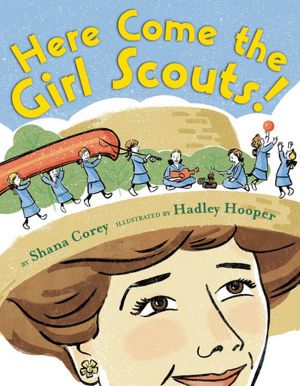
Here Come the Girl Scouts!: The Amazing All-True Story of Juliette "Daisy" Gordon Low and Her Great Adventure. By Shana Corey. Illustrated by Hadley Hooper. 2012. Scholastic. 40 pages.

Daisy was a girl with gumption. Daisy grew up in Savannah, Georgia, at a time when proper young ladies were supposed to be dainty and delicate. But Daisy came from a family of pathfinders and pioneers. She wanted adventure and excitement! Delicate? thought Daisy. Bosh! How boring! 

There was so much to love about Shana Corey's picture book biography of Juliette Gordon Low, founder of the Girl Scouts. I loved the text. It was informative, true, but very kid-friendly.
Daisy and her friend Professor Walter Hoxie worked together to write a handbook for the Girl Scouts. The girls read the book and learned all sorts of interesting things such as: How to find the time by the stars or by the sun, how to cure hams, how to secure a burglar with eight inches of cord, how to brush your teeth if a crocodile takes your toothbrush, how to stop a runaway horse, how to get the skin off a sardine. 

I loved the illustrations, thought the style was great! I loved the quotes on each spread, the author's note reveals that many of these quotes come from the very first Girl Scouts Guide published in 1913. Overall, I thought it was very well done! Interesting, informative, relevant, and just fun!

Read Here Come the Girlscouts!
  • If you're interested in learning more about the Girl Scouts, and the founder of the Girl Scouts, Juliette Gordon Low
  • If you are looking for great biographies to share with children
  • If you are looking for a book that highlights the contribution by women to society
Those Rebels, John and Tom. By Barbara Kerley. Illustrated by Edwin Fotheringham. 2012. Scholastic. 48 pages.

 The true story of how one gentleman--short and stout--and another--tall and lean--formed a surprising alliance, committed treason, and helped launch a new nation. When John Adams and Thomas Jefferson were young, they were very different. John skipped school to fly kites and shoot marbles. He loved swimming, hunting, wrestling--and the occasional boxing match, just for kicks. Tom didn't skip school. He skipped recess--to study Greek grammar. He loved dancing, playing the violin, and reading all the books in his father's library. When John and Tom grew up, they were even more different.

I definitely enjoyed this one. While this one isn't my favorite, favorite picture book biography by Barbara Kerley, I still think it's a great book. (I happen to LOVE, LOVE, LOVE The Extraordinary Mark Twain and What To Do About Alice.) I think the book is informative--there is so much information included for a picture book--but avoids being boring. I think the narrative is strong, which is what it needs to be if you're going to hold a reader's attention.
And then there were all those taxes! A tax on sugar. On coffee and tea. On glass, on pain, and on calico cloth. Newspapers, contracts, even decks of cards! King George and his government taxed them all. They thought America was nothing but a big fat piggy bank to be turned upside down and shaken for coins. And so, in the fall of 1774, a group of Americans planned a meeting in Philadelphia--a Continental Congress--to figure out what to do about it. Something had to change!


I also enjoyed the illustrations by Edwin Fotheringham. Overall, I thought this was a good book about two of the founding fathers, John Adams and Thomas Jefferson, a good introduction to the Declaration of Independence. The book does not try to tell every little thing about each man, instead it focuses on how their friendship and cooperation helped lead the way to freedom. By showing that two men--men who held very different ideas on many subjects--could come together with a common goal and accomplish quite a bit!

Read Those Rebels, John and Tom

  • If you're looking for picture book biographies to share with young children (K-3?)
  • If you're looking for patriotic picture books to celebrate America, the fourth of July, etc.
  • If you're looking for strong values--friendship, cooperation, teamwork, compromising, listening, etc.
  • If you're a fan of Barbara Kerley
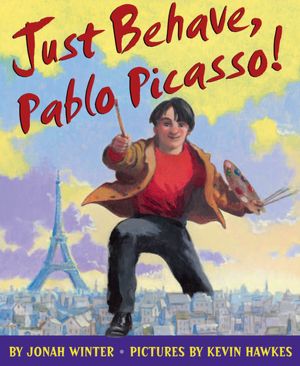
Just Behave, Pablo Picasso! By Jonah Winter. Illustrated by Kevin Hawkes. Scholastic. 48 pages.


One day the world is a peaceful, lovely landscape painting....
The next day--BLAM!--Pablo bursts through the canvas, paintbrush in hand, ready to paint something fresh and new. 

Just Behave, Pablo Picasso is quite an introduction to the artist. It is very creative in its telling, it almost feels too fun to be truly nonfiction. (If that makes sense!) I think it's written in such a way that it will appeal to young readers, it definitely has more of a storybook feel to it. It does cover at least a handful of Picasso's periods as an artists--his styles, moods, techniques, etc. His blue period, his rose period, cubism, etc. It discusses how his art was "received" by the world, by the critics, it discusses how this didn't really have an effect on him, how he did want he wanted, when he wanted, and didn't let anyone tell him what to paint, or how to paint.
All anyone wants is for him to keep painting the same old picture, over and over. Well, guess what? He doesn't want to, he doesn't have to, and he's not going to! HAH! Back in his studio, Pablo starts working on something even more outlandish than his last painting. "Why can't you keep painting beautiful pictures?" asks his wife. "Why can't you keep making art that makes sense?" "The world today doesn't make sense," says Pablo. "Why should I make pictures that do?" And sure enough, much of the world around Pablo doesn't make sense. Everything is changing all the time. New things are being invented: cars, airplanes, telephones, bombs. "But Pablo," says a fellow artist, "your new painting doesn't look real." "Everything you can imagine," says Pablo, "is real."
 I liked this one. I thought it very creative. I thought it would probably make the best read aloud out of all of the picture book biographies I'm reading today.

Read Just Behave, Pablo Picasso
  • If you're looking for a kid-friendly, reader-friendly introduction to the artist Pablo Picasso
  • If you're looking for art-appreciation picture books
Bon Appetit! The Delicious Life of Julia Child. Jessie Hartland. 2012. Random House. 48 pages. 

She bubbled over with effervescence, spoke as if she had marbles in her mouth, and gleefully hammed it up in front of the camera. 
She joined a spy mission during World War II...and later moved to Paris and learned to cook. She wrote a classic French cookbook that still sells oodles of copies. She created and starred in a pioneering TV show loved by millions. How did a gangly girl from Pasadena do it? This is her story.

I really, really, really wanted to LOVE Bon Appetit! I did. But it didn't quite work for me. On the one hand, I really appreciated the amount of information. Julia Child was a very INTERESTING and FASCINATING character, in many ways, one-of-a-kind. And this book is great at capturing that. This isn't just a book highlighting her life, here we get details big and small. But, on the other hand, this one was so very, very, very busy. The way this one is presented makes this one a challenge to read--a challenge to read to yourself, I couldn't imagine trying to read this one aloud to someone else. The design was just very cluttered, very busy. I never knew if I was supposed to read left to right, or up and down. (Some pages were more confusing than others.) There was just a lot of text, a lot of information to be absorbed or processed. And the art was fun, in its way. There is something charming about it. But. There was something about this one that made it an almost for me. I do think this one is for an older audience as well.

Read Bon Appetit
  • If you're a fan of Julia Child
  • If you're looking for children's books about cooking
  • If you want a little French--okay a LOT of French in your picture book
  • If you're looking for a quirky picture book biography


© 2012 Becky Laney of Becky's Book Reviews

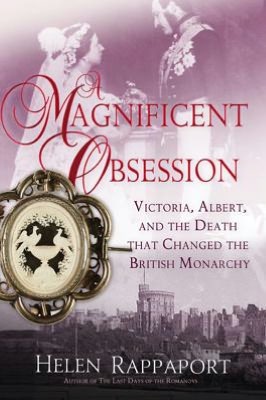
Magnficient Obsession

Magnificent Obsession: Victoria, Albert, and the Death that Changed the British Monarchy. Helen Rappaport. 2012. St. Martin's Press. 352 pages.

 A Magnificent Obsession is a nonfiction book that chronicles the last year of Prince Albert's life--focusing on his work load, health problems, and the tedious family dramas that weighed on him. In great detail it shares with readers what the last few weeks of his life were like, day by day, night by night, who visited him, who nursed him, what he ate or didn't eat, the number of hours he slept or didn't sleep, the bulletins the family released to the press, etc. Readers get a glimpse of what this experience might have been like for his wife, Queen Victoria, and his daughter, Princess Alice, who was his chief nurse. After his death, readers get a glimpse of private and public mourning. The rest of the book focuses on the first ten (or perhaps eleven?) years after his death. It discusses the Queen's private and public life. The way the people felt about the Queen. It focuses on the people's doubts and worries, etc. The book concludes with the Queen regaining some popularity with the people. The last chapter, unfortunately, goes in a direction I didn't quite care for, but, for the most part I found this one interesting. I wouldn't quite say compelling. Because if I'm being honest, I was curious but not THAT curious. It was informative without a doubt, but not necessarily written in such a way to make it fascinating.

Why didn't I like the last chapter? Well, the way I read the text--this may not have been the author's intent--I felt Rappaport was saying that Queen Victoria was great because her husband died; her husband's death freed her to become the strong, independent, vibrant monarch she could have been or should have been all along. That she only became QUEEN when Albert died, before she was a weak woman, a woman whose reign was weakened by her private life; that being a wife and mother made her a weak monarch or a monarch in name only. That her so-called "obsessive" love (devotion, passion) for her husband made her weak and dependent and pliable. I must not be alone in my interpretation because a Library Journal review reads along the lines that it wasn't until her husband's death that "she was allowed" to emerge as a great monarch. Albert's death is made to be this great thing that transforms Victoria into a great woman. And that talk just bothered me. And I'm almost sure it would have bothered her as well. I imagine Queen Victoria was VERY strongly opinionated, and I'm sure she'd have something to say here.

Read Magnificent Obsession: Victoria, Albert, and The Death That Changed the British Monarchy
  • If you are interested in history, particularly the 1860s and early 1870s
  • If you are interested in the British royal family
© 2012 Becky Laney of Becky's Book Reviews

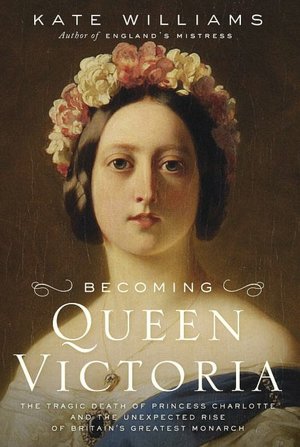
Becoming Queen Victoria

Becoming Queen Victoria: The Tragic Death of Princess Charlotte and the Unexpected Rise of Britain's Greatest Monarch. Kate Williams. 2010. Random House. 464 pages. 

I absolutely LOVED this book!!! In fact, I think it's a true must-read. I should probably add some clarification: I LOVE history, I LOVE literature or classics, I love historical novels and historical romances. For anyone who reads classics written or published during nineteenth century--from 1800 on--this one could prove to be oh-so-enlightening! For anyone who reads historical novels (or historical novels with a touch of romance) set during this time period, this book could prove quite interesting!!! Whether you're a fan of books set during the Regency or Victorian periods, this one could help you connect the dots. Will every reader want to connect the dots between real life and fiction? I'm not sure. For me, it was everything I wanted and more!!!

The first half of this one is setting the stage for Victoria. This includes focusing in on the royal family a good three to four decades before her reign. It means discussing George III, George IV, and William IV. It means discussing all of the brothers (and some of the sisters) of the royal family. It means focusing in on their dysfunction, their failures, their messes. One big story in this section is the marriage of George IV and Queen Caroline. It was a BIG, BIG, BIG mess. Oh, how these two hated one another! They did have one daughter, Princess Charlotte. She was the heir to the throne, no question about it. She was the future of the kingdom, and she was loved, beloved. She married Leopold of Saxe-Coburg, who later became King Leopold I of the Belgians, and their wedding was a HUGE affair. But this fairy-tale wedding, fairy-tale marriage, was not to be. No, they didn't fall out of love. No, they weren't torn apart by scandals. She died in childbirth. Reading about that was truly scary. Why? Well, readers get detailed descriptions of medical treatments, of the art or science of medicine at the time. And not only in the chapter about Charlotte, but in the treatment for the other royals too. And it is scary, scary stuff! So what did Charlotte's death mean to the nation?! It meant EVERYTHING. All of these royal brothers with no legitimate heir to the throne, with no real marriages to speak of amongst them, it meant they had to rush, rush, rush to the altar to marry women almost half their age; it meant that they were in great competition to have children. Of course, it wasn't just a matter of being the first to have a child, their rank mattered too. (Duke of Clarence ranking more than Duke of Kent, Duke of Kent ranking more than Duke of Cumberland, Duke of Cumberland ranking more than Duke of Cambridge, etc.) And this book explores those years, the rivalries, the politics, the scandals, the gossip.

But this one is, of course, about Queen Victoria. Readers learn about her father, the Duke of Kent, and her mother, Victoria, the sister of Leopold, a Saxe-Coburg. Readers learn about her earliest years--from birth on. Readers learn details great and small about her upbringing, the big and small events that marked her life and led to the greatest of them all, her inheriting the throne and leading a nation for over sixty years. The last chapters deal with her marriage to Albert, to their relationship--personal and private. Some attention (very brief in comparison with other periods of her life) is given to her having so many children. But this is almost more of an epilogue to the book than a genuine source of information.

For anyone who loves history, who loves the details behind history--big and small, gossipy and matter-of-fact, then this one is for you. While I wouldn't say the royal family's dysfunction is celebrated or rejoiced in, it definitely plays a big, big role in this one. And Queen Victoria is seen as saving the monarchy, restoring some sanity to it.

Read Becoming Queen Victoria
  • If you love historical fiction, this nonfiction book about Queen Victoria and Princess Charlotte might just prove fascinating and enlightening.
  • If you love nineteenth-century classics and would like to get some context into their background
  • If you love a good biography with lots of detail
  • If you are interested in anything and everything royal

© 2012 Becky Laney of Becky's Book Reviews

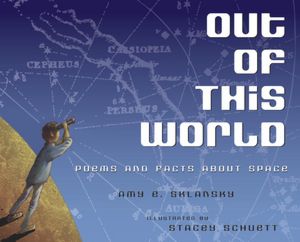
Out of This World

Out of This World: Poems and Facts About Space. Amy Sklansky. Illustrations by Stacey Schuett. 2012. Random House. 40 pages.

Yesterday, I reviewed Jane Yolen's poetry collection, Bug Off! And while I liked it to a certain extent, I didn't really love it. Out of This World, however, is a poetry book that I just LOVED. It's a great collection of space-themed poems. I loved the variety of poems, the types of poetry and the different subjects. There are poems about the sun, the moon, the stars, the solar system; there are poems about astronauts, space travel, space suits, etc.

Some poems are quite short:
Moon

Marvelous
Opaque
Orb.
Night-light for the world.
 Others are a bit longer. The longest being "Vacation Destination," a poem about a boy who fantasizes about traveling to different planets on his vacation. Some rhyme, some don't. I think there is enough variety to please every kind of reader. I don't even think you have to be a fan of poetry.

My favorite poems include: "Moon," "Countdown," "Packing for the Moon," "Left Behind," and "Sun."

Each poem is complemented by an informative paragraph or two (or three). These facts are just fascinating, and they provide balance and substance to the poems.

Read Out of This World
  • If you are interested in space, space travel, etc.
  • If you are in science or astronomy
  • If you are a poetry fan
  • If you're looking for a reader-friendly poetry book

© 2012 Becky Laney of Becky's Book Reviews

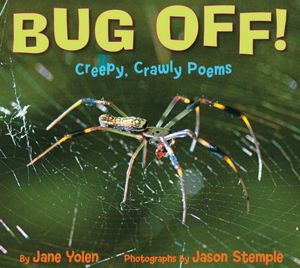
Bug Off: Creepy, Crawly Poems

Bug Off! Creepy, Crawly Poems. Jane Yolen. Photographs by Jason Stemple. 2012. Boyds Mill Press. 32 pages.

I had low expectations for Bug Off! For one, I do not like insects. I don't like looking at insects, photos of insects. Even in a photograph, some can still make me squirm. And poetry is hit or miss for me, most of the time. So what did I think about Jane Yolen's Bug Off? Well, I liked it. It wasn't perfect. I'm not claiming that all thirteen poems are amazingly, wonderfully worthy. But the fact that each poem is followed by a nonfiction (prose) paragraph with detailed information on each insect, the fact that these paragraphs usually have at least one or two facts that are fascinating, it helps to make up for some of the more mediocre poems. In other words, I can be unimpressed by an insect's particular poem, but fascinated by the nonfiction prose about that insect. And then, of course, there are times where I enjoyed both.

The thirteen poems:
  • Oh, Fly
  • Praying Mantis on the Prowl
  • Butterfly to a Flower
  • An Army of Ants
  • Honey Bee Mine
  • Lovebug Alone
  • Daddy Very Long Legs
  • Spider to the Poet
  • Dragonfly Lights
  • Pop! Goes the Tick
  • The No-Spot Ladybug in Court
  • Grasshopper Green
  • Swarm
My favorite poems were "An Army of Ants," "Butterfly to a Flower," and "Grasshopper Green."

Here is one stanza from An Army of Ants
An army of ants, an army of ants,
A-walk on a stalk, everyone in a trance;
Over and under a number of plants.
Too busy for beauty, not even a glance. 
Here is one stanza from Grasshopper Green
Greener than the grass he swings on,
Greener than the stalk he clings on,
Greener than the grass he sings on,
Green, green, green.
Some new-to-me facts...
  • Many butterflies can taste food with their feet
  • The number of spots a ladybug has depends on the number of spots its parents had
  • The lovebug can fly as high as 1,500 feet in the air which is higher than the Empire State Building
Read Bug Off!
  • If you're a teacher looking for a book about insects to share with your students
  • If you're a teacher looking for creative poetry and nonfiction to share with your students
  • If you have an interest in insects
  • If you have an interest in nature photographs

© 2012 Becky Laney of Becky's Book Reviews

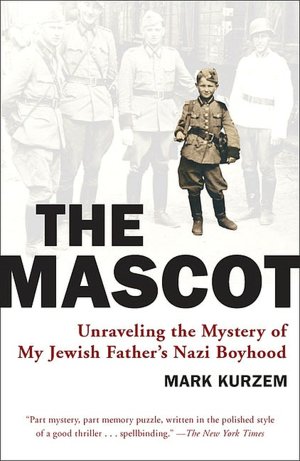
The Mascot

Mascot: Unraveling the Mystery of My Jewish Father's Nazi Boyhood. Mark Kurzem. 2007. Penguin. 432 pages.

If I'm ever asked, "What's your father like?" a simple answer always escapes me. Even though I can look back on a lifetime spent in his company, I have never been able to take his measure. One part of him is a shy, brooding Russian peasant who shows a certain air of naivete, if not gullibility, with strangers. Then there is another side: alert, highly gregarious, and astonishingly worldly. His unexpected appearance on my doorstep in Oxford one May afternoon in 1997 left me more mystified than ever.

The Mascot is such a powerful and compelling biography. It is not your traditional biography--Holocaust or not. It is the story of how one man's past is revealed, how a father chooses to share his memories--some quite vivid, others very vague or fuzzy--with his adult son. The father's life is revealed to his son in a series of conversations and through the son's research to validate his father's story.

Mark, our narrator, always knew his father had his secrets. His father had a brown bag he carried with him everywhere. No one was allowed to see this bag's contents. But. Occasionally, the father would share with his family--his wife and sons--stories from the past. On these occasions, he'd pull out a photograph, an article, an item from the bag. Mark suspected that these stories were just that--stories, being part fact, part embellishment.

But one day his father tries to tell him the truth, the whole truth, the whole UGLY truth about his past. Pieces and fragments. A memory here and there. What is certainly understandable is just how much is missing, how much he doesn't know about who he is and where he comes from.

He was told by his rescuers (Latvian police men or Latvian soldiers?) that he was found in the woods or forest. Alone. Wandering. Obviously struggling to survive. He was taken in by the soldiers and "adopted" into their company. They gave him a name. They gave him a birthday. They gave him a small uniform--from 1941 to 1945 he was given three uniforms. Though he was taken into one man's home--"adopted" (though not legally) by a husband and wife--he stayed connected or associated with a unit of soldiers. He witnessed things NO CHILD of five, six, seven, eight, or nine should EVER witness. He saw men, women, children, babies being killed--in one instance herded together into a building which was then set on fire.

Though he doesn't remember his name--his family name, the names of his brother and sister, father and mother--or the name of his village, the name of his country--he does remember one thing: he witnessed the slaughter of his mother, his younger brother, his baby sister. He witnessed the slaughter of an entire neighborhood or village. At the time, he didn't realize this violence, this bloody slaughter, was because they were Jewish. In fact, his very "Jewishness" was buried deep inside him. At times he seemed aware that he too was Jewish, that his life was at risk if his Jewishness was revealed. But at the same time, the only way he could cope with his present--with his new reality, his new identity, the company he was keeping--was forced to keep in a way--was to bury his 'true' Jewish identity and become the boy others wanted/needed him to be. To survive, he had to deny so very very much.

So the story Mark hears from his father is fragmented, in a way, with very few clues. But it is emotional and intense. Almost too much for him to handle. In fact, it is almost too much for him--the father--to handle. And at one point, he asks himself and he asks his son why. Why bother remembering the past? What good--if any--can come from remembering, from seeking to remember, from uncovering the truth, from piecing everything together, from telling and sharing his story with his family, his friends, his community. For those expecting a clear answer to this, you might be disappointed. The truth is not that black and white. A son and father learn much about one another. The family is at times strengthened, but at other times put under great stress and pressure--by all this. There were things that seemed a little shocking to me, for one, that there were certain organizations (if organizations is the right word?) that denied and rejected his story. Who told him that he was NOT Jewish, that he did NOT suffer during the war, that his story was not part of the Holocaust. Still others (sometimes just individuals, other times groups of individuals) who denied his story, who essentially said that his story was all lies, that it could not happen, did not happen. I think this shocked the son as well, that people could hear the story, see the photographs, and come to the conclusion that this small child (he was found at the age of five) was a willing participant in the war, that he voluntarily joined the enemy, that he was a Nazi just like the others--the adult soldiers. Was he ethically responsible for the actions taken by others? True, you might argue, that the soldiers were trying to "train" him to be a little Nazi, a good, little soldier. But what choice--if any--would he have had? 

Read The Mascot
  • If you can't get enough nonfiction about World War II (like me)
  • If you enjoy reading Jewish books; Holocaust books.
  • If you are interested in family dynamics (relationships); this one is great at exploring a father-son relationship.
  • If you are interested in history and research; this one provides a behind-the-scenes look at how research is done in a very practical, personal way. (Research isn't just about getting a grade.)
  • If you enjoy biographies.

© 2012 Becky Laney of Becky's Book Reviews

The Pleasures of Reading in an Age of Distraction

The Pleasures of Reading In An Age of Distraction. Alan Jacobs. 2011. Oxford University Press. 176 pages.

I was not exactly the target audience for The Pleasures of Reading In an Age of Distraction. I don't exactly struggle with reading, with finishing books. Do I struggle with individual books now and then? Sure. I think everyone does. There are books that you pick up and realize--either on page ten, page thirty, page eighty-eight--that it's just not working, that you have NO INTEREST in picking that book up and finishing it. At least not anytime in the near-future. But who says you have to finish a book just because you started it? It doesn't matter if you borrowed it from the library, received it for review, or bought it yourself. Your time is too valuable to waste on a not-for-you-right-now book.

So the target audience of this one is former readers or want-to-be readers. Those who "want" to be reading, but who find themselves unable to stay focused on reading, those who instead of losing themselves deeply in a book, giving in to the experience of reading, stay distracted or too-aware of the world around them.

Also he addresses those who feel guilty or stressed. Those who burden themselves down with the notion that they have to read certain books because someone said that they should. Those who are weighed down with the idea that only a few, elite books are worth reading. Those who feel that books have to be read academically, analytically.

The Pleasures of Reading In An Age of Distraction is one long ramble. Some might see the word ramble and think I mean something negative by it. I don't. I really don't. Ramble is not a bad word! Jacobs doesn't exactly stay on-task exactly. He jumps from subject to subject to subject to subject. Sometimes he returns to a part earlier in his argument. But for the most part, he's just casually, comfortably rambling about how wonderful, how marvelous, how thrilling it is to read a book for the pure delight, pure joy, pure pleasure of it. He doesn't dismiss entertainment or enjoyment. He doesn't think that this is a 'lesser' form of reading.

If you've been turned off from reading in the past, Jacobs is there to encourage you to try again. To try reading for yourself and only for yourself. To let reading be fun again.

There is also much discussion of the idea of "Whim" reading. Letting yourself be guided by pure Whim. In other words, let your reading take you where it naturally takes you. Don't worry about reading from lists--lists made by others. He may have defined Whim more precisely at one point, but essentially, it is knowing yourself, knowing what you need, knowing what will give you delight.

"not to teach, not to criticize, just for love" (15)
"just because he liked to, wanted to, couldn't help himself" (15)
"let one part of our nature follow its natural desires" (16)
"it's never too late to begin this new life as a free reader" (24)
"it should be normal for us to read what we want to read, to read what we truly enjoy reading" (33)
"it can guide us because it is based in self-knowledge" (41)

I definitely loved parts of this one. There were paragraphs that just were wonderful. I'm not sure the whole book is a love, love, love for me. But I'd definitely recommend this one.

Read The Pleasures of Reading In An Age of Distraction
  • If you like reading books about reading
  • If you want validation that reading is something that is supposed to be joyful and delightful
  • If you want permission to stop reading books that you don't like
© 2012 Becky Laney of Becky's Book Reviews

Making the List: A Cultural History of the American Bestseller 1900-1999

Making the List: A Cultural History of the American Bestseller 1900-1999.  Michael Korda. 2001. Barnes & Noble. 256 pages.

Making the List is a good example of a book that makes for good skimming. This is not one you need to read word-for-word. And the better you are at skimming, the more forgiving you are as a reader, well, the more you'll enjoy this one. The book has a couple of weaknesses. One, Michael Korda is a little too fond of mentioning Michael Korda and Michael Korda's time on the bestseller list. He mentions the title of one of his 'bestselling books' as often as he can. Or at least it felt like it. It feels intrusive on the text to be discussing the statistics and patterns of trends and genres or discussing the popularity of certain authors through the decades, and then suddenly the text becomes all-about-him either as an author or as a publisher, someone inside the publishing field. Some of his commentary feels a little odd, a little too random. Once he begins his job in the late fifties, I believe, he couldn't resist mentioning which books came from his publisher, how he felt about those books, his reaction to a book making it or not making it on the list. I don't know about all readers, but this reader, didn't want to know anything and everything he could possibly say on every book that made the list.

But. Making the List remains an interesting book. It is interesting because of what it has to offer readers: a list of fiction and nonfiction from each year. It is interesting because it does the work for you. You might be able to find the information online at various places--but it would probably be work. And it would definitely take more time and energy. And reading the lists is in itself interesting. To see which authors were repeats. To see how many years a book could stay on the list. To see which 'genres' dominated year by year, decade by decade. To see some strange titles--fiction and nonfiction. To see which books and authors became forgotten by time, by the reading public. To see which books are still in print. To see how many books were adapted into plays or movies. To see how many books were children's books (Pollyanna, etc.) To see the tension between "literary" books and "popular" books. It was interesting at a very basic level to see how many I'd read.

Read Making the List: A Cultural History of the American Bestseller, 1900-1999
  • If you like lists
  • If you like participating in reading challenges, particularly challenges that challenge you to find books from specific years, decades, etc.
  • If you're always looking for older books, classic books, titles that may be available for free online 
  • (This would probably be only a quarter of the list, but still, it may give you ideas.)


© 2012 Becky Laney of Becky's Book Reviews

The Great Influenza

The Great Influenza. The Story of the Deadliest Pandemic in History. John M. Barry. 2004. Penguin. 546 pages. 

From the prologue: The Great War had brought Paul Lewis into the navy in 1918 as a lieutenant commander, but he never seemed quite at ease when in his uniform. It never seemed to fit quite right, or to sit quite right, and he was often flustered and failed to respond properly when sailors saluted him. Yet he was every bit a warrior, and he hunted death. When he found it, he confronted it, challenged it, tried to pin it in place like a lepidopterist pinning down a butterfly, so he could then dissect it piece by piece, analyze it, and find a way to confound it. He did so often enough that the risks he took became routine. Still, death had never appeared to him as it did now, in mid-September 1918. Row after row of men confronted him in the hospital ward, many of them bloody and dying in some new and awful way. He had been called here to solve a mystery that dumbfounded the clinicians. For Lewis was a scientist. Although a physician he had never practiced on a patient. Instead, a member of the very first generation of American medical scientists, he had spent his life in the laboratory.

While I'm not sure every reader will find The Great Influenza equally compelling, I must say that this one was quite the read for me! It was fascinating, challenging, and complex--complex in a good way. The Great Influenza is more than the story of the 1918/1919 influenza pandemic that spread around the world. It covers the background of medicine, how medicine is practiced, how doctors are trained and educated, how schools and laboratories are run, the need for excellence not just competence. (Though competence is a good place to start when there are no standards at all for who can practice medicine and call themselves a doctor.) It covers science, medicine, sociology, and even politics. Yes, The Great Influenza covers almost everything you could want to know. It follows the story of a handful of scientists in particular--exploring their personal and professional lives, presenting their theories and experiments, documenting their successes and failures. Most of this one, of course, does focus on the pandemic--tracing it throughout the spring of 1918 through most of 1919. It even follows up on how it continued to impact lives--months and even years later. How having this particular strain of influenza effected your brain and how it could continue to give you problems.

I really enjoyed this one! I found it completely fascinating. I loved all the details. 

Read The Great Influenza
  • If you are interested in World War I
  • If you are interested in science, history, sociology, politics, and medicine
  • If you are looking for compelling nonfiction; yes, this one may take almost a hundred pages to get to the influenza of 1918, but it's worth it. 
© 2012 Becky Laney of Becky's Book Reviews

Six Days in October

Six Days In October: The Stock Market Crash of 1929. Karen Blumenthal. 2002. Simon & Schuster. 160 pages.

From the introduction: The years after the First World War were a golden age for many Americans. The 1920s didn't just sing with the rhythms of jazz, or swing with the dancing of the Charleston; they roared with the confidence and optimism of a prosperous era. 

While I've read plenty of historical fiction set within the Great Depression time period, this is the first nonfiction book I've read (at least that I can remember) that details the Stock Market crash itself. In great detail--fascinating detail--Blumenthal traces these six days beginning with October 24, 1929. Each chapter focuses on an individual or two which adds a great deal to the human interest factor. Make these economic facts relate to people, real people, and you've got my attention. Some of the people she discusses were truly despicable people--at least when it came to business.

I definitely enjoyed reading this one. I found it very interesting! It did win Sibert Honor in 2003.

Read Six Days in October
  • If you're interested in history, in this historical time period.
  • If you want a greater background in understanding the Depression
  • If you're interested in the human side of economics
© 2012 Becky Laney of Becky's Book Reviews

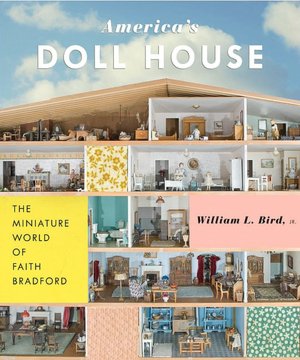
America's Doll House: The Miniature World of Faith Bradford

America's Doll House: The Miniature World of Faith Bradford. William L. Bird, Jr. 2010. Princeton Architectural Press. 128 pages.

From the book jacket:
One of the most popular exhibits at the Smithsonian Institute is a dollhouse. Sitting on the museum's third floor is the five-story home donated to the museum by Faith Bradford, a Washington, D.C. librarian, who spent more than half-a-century accumulating and constructing the 1,354 miniatures that fill its 23 intricately detailed rooms. When Bradford donated them to the museum in 1951, she wrote a lengthy manuscript describing the lives of its residents: Mr. and Mrs. Peter Doll and their ten children, two visiting grandparents, twenty pets, and household staff. Bradford cataloged the Dolls' tastes, habits, and preferences in neatly typed household inventories, which she then bound, along with photographs and fabric samples, in a scrapbook. In America's Doll House, Smithsonian curator William L. Bird, Jr., weaves this visual material into the rich tapestry of Faith Bradford's miniature world. Featuring vibrant photography that brings every narrative detail to life. America's Doll House is both an incisive portrait of a sentimental pastime and a celebration of Bradford's remarkable and painstaking accomplishment. 
I almost never rely on summaries written by other people, but, in the case of America's Doll House, I couldn't think of a better way to say it. After all, if that description made me WANT to pick this book up, then maybe it will make you want to do the same!!! I can't say that the description fits the book exactly--in one or two phrases, I think there is a bit of exaggerating going on. But. Still.

America's Doll House has a mini-biography of Faith Bradford. Readers learn a bit about her childhood, how she came to start her miniature collection, how this was a hobby she shared with her sister, how almost all of her original collection was lost (and/or stolen). Readers learn a bit about her private life and public life, her career as a librarian. Readers gain a bit of background into the times. Readers really see how this hobby shaped her life--through the decades--and how important it was to her, how absorbing of a pastime it was to her.

But America's Doll House also has a mini-lesson on the Smithsonian museum. Readers learn about what the museum was like at this time--late 40s through late 50s. Readers learn about what exhibits the museum had. Which exhibits were the most popular, where they were located, how various people responded to the museum. Perhaps most importantly it focuses on the tension of the times. The desire to have collections for their historic value, for their social value, but at the same time be new and modern and relevant to the times. Many pages are spent talking about money, talking about new buildings, remodeling, etc.

The book is very detailed in the relationship between the museum and Faith Bradford. How she came to donate her collection. What she expected the museum to do for her and her collection. How she wanted it displayed, etc. Also there is some discussion about a second dollhouse she had built for the museum. A doll house that went straight to storage--for better or worse. Going back to the tension of the times. The book also mentions that this second dollhouse is now missing. (Oh, how sad that sentence made me.)

Over half the book is photographs. And these photographs are good. The detail is much greater than the photos displayed on the online exhibit site. You can see the details of each room. You can see the dolls themselves. So the book is very good if that's what you're looking for!

Read America's Doll House
  • If you are interested in dolls, collecting dolls, doll houses, doll miniatures, etc.
  • If you are interested in exhibits at American museums
  • If you are interested in the hobbies of librarians
  • If you are interested in this time period, 1950

© 2012 Becky Laney of Becky's Book Reviews

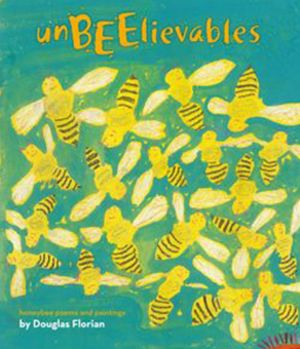
UnBEElievables: Honeybee Poems and Paintings

UnBEElievables: Honeybee Poems and Paintings. Douglas Florian. 2012. Simon & Schuster. 32 pages.

I definitely enjoyed Douglas Florian's latest poetry book, UnBeelievables: Honeybee Poems and Paintings. I typically enjoy his work, I think he's one of the best poets writing for children to be found. He's one of the best of the best. This latest collection combines poems about bees with bee facts. Each two-page spread offers readers a poem, a fact, and an illustration. The book is informative, interesting, and, in a way, playful; perhaps the last poem "Where are the Bees?" is the exception to the 'playful' tone of the book since it focuses on the threat facing honeybees. The book is just a great read! It's full of I-didn't-know-that-facts and the presentation of those facts is just too fun!!!

 Read UnBEElievables
  • If you're a fan of Douglas Florian
  • If you're a fan of poetry, in particular a fan of children's poetry
  • If you enjoy poetry with a focus on nature, on the natural world

© 2012 Becky Laney of Becky's Book Reviews

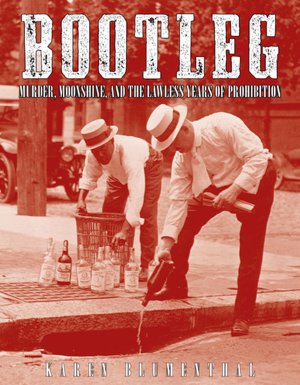
Bootleg: Murder, Moonshine, and the Lawless Years of Prohibition

Bootleg: Murder, Moonshine, and the Lawless Years of Prohibition. Karen Blumenthal. 2011. Roaring Brook Press. 155 pages.

Sometime after 10 A.M. on this shivery cold and windy Chicago morning, seven men gathered in a nondescript garage warehouse on Clark Street.

I'll never be able to do this book justice. I don't think I can adequately convey just how fascinating and engaging and completely interesting this nonfiction book is! Would you believe me when I say that the narrative is just that good that you lose yourself?

I knew this book was for me from the start. The opening paragraphs brought to mind one of my favorite movies--Some Like It Hot. And from there the magic continued. Readers learn about the history of alcohol in the United States, from the colonial days until the beginning of the twentieth century. Readers learn a little bit about saloons and why they weren't especially well-liked by women. And they learn about a couple of groups that formed to response to the problems they saw in society. Men and women who felt the nation--as a whole--had a problem with alcohol. Men and women who thought that the removal of alcohol would lead to the removal of other problems as well. They wanted better men and women. They wanted stable homes, stable lives. The early chapters of the book cover the eighteenth and nineteenth centuries. But most of the book is set during the years immediately following the first World War. In the years when groups were urging legislation through to dry up America. The book covers SO MANY things. And the way the story is conveyed is so engaging, so reader-friendly. I learned so much while reading it!!!

Read Bootleg: Murder, Moonshine, and the Lawless Years of Prohibition
  • If you enjoy engaging nonfiction narratives
  • If you're interested in learning more about the early twentieth century
  • If you're looking for nonfiction companion reads to books such as Moon Over Manifest and The Black Duck

© 2012 Becky Laney of Becky's Book Reviews

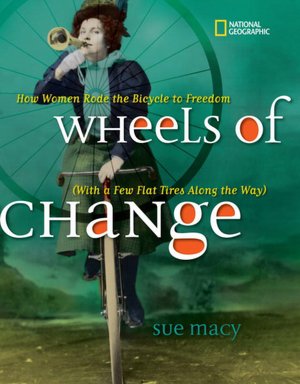
Wheels of Change

Wheels of Change: How Women Rode the Bicycle to Freedom (With a Few Flat Tires Along the Way). Sue Macy. 2011. National Geographic. 96 pages.

Sometime between May and November, 1876, Colonel Albert Augustus Pope took a trip that changed American life forever. 

Wheels of Change is a great little book! It is so well-written, so informative, so engaging! So what is the book about? Well, it's about how the introduction of the bicycle into American culture/society, changed the way women saw themselves, and how others saw them too. Bicycling was fun, yes, and it was physically challenging; but it was so much more than that. At a time when everyone assumed women were weak and mindless and needed to stay that way. Well, I exaggerate slightly, perhaps. But in terms of what women could do--inside or outside the home, in terms of what women could wear, in terms of where women could go, in terms of what kind of relationships and friendships women could have, etc. Forgetting the morality of it all, there were some that believed that women should not exert themselves physically at all. That any type of exercise at all could damage a woman's body or mind. But of course, morality does come into it. What kind of woman rides a bicycle? Who does she ride with? Does she ride on a bicycle built for two? What else is going on besides bike riding in these meetings? And a woman who wears bloomers?! Well, that has to say something about her moral character, right?!

As you can guess, this one is such a great little book. Each chapter is fascinating. And this one is designed so well! It is so reader-friendly. There are so many pictures, so many photographs, so many little asides...this one just says read me, read me, read me!
  • Chapter 1: Inventing the Bicycle
  • Feature: Celebrity Cyclists
  • Chapter 2: The Devil's Advance Agent
  • Feature: Cycling Slang
  • Chapter 3: Fashion Forward
  • Feature: Cycling Songs
  • Chapter 4: Fast and Fearless
  • Feature: The Cycling Press
  • Chapter 5: New Freedoms
  • Feature: Selling with Cycles
This one was well-researched. And I'd definitely recommend it!!!

Read Wheels of Change
  • If you love nonfiction
  • If you are interested in women's history
  • If you are interested in bicycling, the history of it
  • If you are interested in American history during the Victorian period


Women's Independence
Women's Liberation and the Bicycle
Courting with a Bicycle
New Bicycle Technology

© 2012 Becky Laney of Becky's Book Reviews