Tampilkan postingan dengan label adult fiction. Tampilkan semua postingan

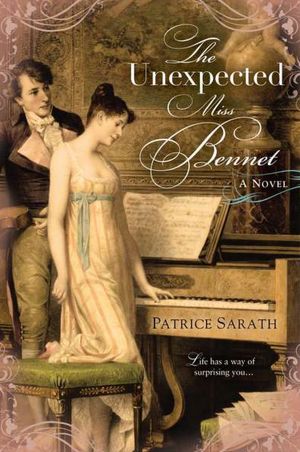
The Unexpected Miss Bennet

The Unexpected Miss Bennet. Patrice Sarath. 2011. Penguin. 304 pages.

It is a comforting belief among much of society, that a plain girl with a small fortune must have no more interest in matrimony than matrimony has in her. 

I loved this one. I just LOVED, LOVED, LOVED it. Set several years perhaps after the events of Pride and Prejudice, this novel shows the transformation of Mary Bennet. And the transformation is both believable and giddy-making. 

One day at a Lucas party, Mary is playing the piano. A young gentleman asks her to dance with him, before she can even start a reply someone cuts in and tells him that she is just Mary, she just plays the piano so others can dance, she isn't there to dance. Mary is puzzled at how this makes her feel. The fact that a man noticed her and wanted to dance with her, the fact that everyone assumed that Mary wouldn't want his attention or to dance, the fact that he took this answer and left to dance with someone else. Mary realizes that everyone has an idea of WHO Mary is and WHAT Mary does, and the ideas are very fixed. Mary wants to change that--one of the first things she does is to give up playing or practicing the piano. She starts taking more walks, she starts reflecting more on who she is and what she wants.

Around this same time, Jane starts worrying about her younger sister, Mary. She's already invited Kitty to spend some time with her and Bingley, so while she's not able to entertain her sister at this time, she's hoping that Elizabeth will be able to invite Mary to Pemberley.

At first, Mary accepts the invitation because she thinks Elizabeth is homesick and in need of one of her sisters, and she's happy to do her duty. But it doesn't take long for Mary to realize that Elizabeth is very happy indeed. For the first time, Mary sees what it would be like to live away from Mr. and Mrs. Bennet. For the first time, Mary reads a novel--or two or three. For the first time, Mary is happy. So when she gets a second opportunity with a certain gentleman who just happens to be an acquaintance of Mr. Darcy, she knows she'll dance. Of course, that's only a hint of what this one is about...

I enjoyed this one. I enjoyed what Sarath did with all the characters! Including Mr. and Mrs. Collins, Catherine de Bourgh and her daughter, Anne, etc. I definitely liked Mr. Aikens, the love interest of Mary, and I thought their courtship was just about right.

Read The Unexpected Miss Bennet
  • If you enjoy Jane Austen
  • If you love Pride and Prejudice
  • If you want Mary Bennet to have a happily ever after
  • If you like clean, historical romance 

© 2012 Becky Laney of Becky's Book Reviews

To Die For

To Die For: A Novel of Anne Boleyn. Sandra Byrd. 2011. Howard Books. 332 pages.

There are many ways to arrive at the Tower of London, though there are few ways out. 

Sandra Byrd's To Die For is an excellent historical romance novel. The narrator is Meg Wyatt, sister to Thomas Wyatt; she is best friends with Anne Boleyn. While I've read plenty of historical fiction set during this time period, it's rare for Anne Boleyn to be presented so sympathetically. I really came to care for both Meg and Anne. The novel begins in 1518 and ends soon after Anne's death. While the focus is definitely on life in the court of Henry VIII, one can also see it as a novel about the English Reformation. It highlights that while for some the Reformation was a convenient way for the King to get his own way all the time, that there were many, many people in England who were true Reformers, and genuinely believed in the Reformation and were eager to get their hands on an English Bible and read the Scriptures for themselves.

In addition to the "romance" between Anne Boleyn and Henry VIII (he is not presented sympathetically), the novel tells Meg's story. Her life being as good an example as any as to what a woman might expect from life at this time.

This historical romance was very enjoyable. Loved the writing, loved the characterization, loved the setting. It felt very personal, in a way, getting a glimpse of the close friendship between two women. For example, Meg being there for her during the birth of her daughter, Elizabeth, and for her two miscarriages. This was a very emotional novel for me, and I definitely wasn't expecting to feel such a strong connection with the heroines.

Read To Die For
  • If you are interested in the Tudors; in Henry VIII and his six wives
  • If you enjoy historical fiction/historical romance
© 2012 Becky Laney of Becky's Book Reviews

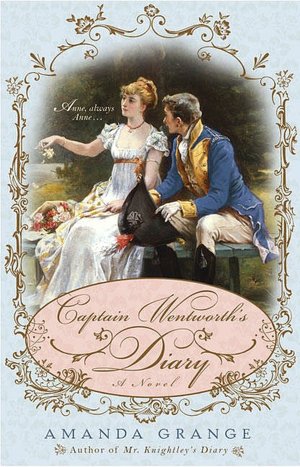
Captain Wentworth's Diary

Captain Wentworth's Diary. Amanda Grange. 2007. Penguin. 304 pages.

Thursday 5 June
At last I am on my way to Somerset!

I do like Amanda Grange's series, and, sometimes I really LOVE her books. But I didn't quite love Captain Wentworth's Diary. Persuasion is one of my favorite books, and definitely my favorite Jane Austen novel. I think I prefer the story from Anne's perspective.

Captain Wentworth's diary begins before he first meets Anne Elliot. The book portrays the courtship of the two, the sweet proposal, the bitter disappointment after she changes her mind. The novel then jumps ahead to Wentworth's successful return. Readers then see the events and scenes of Persuasion through Wentworth's eyes, for the most part. Though it's just a fraction of the story.

I liked this one. I felt Grange got the characters right, for the most part. And it was interesting to see their first meeting. Their first conversation was something. But. It just wasn't as amazing as Austen's original.

Read Captain Wentworth's Diary
  • If you're a fan of Amanda Grange 
  • If you're a fan of Jane Austen
  • If you like historical romances told in diary format 

© 2012 Becky Laney of Becky's Book Reviews

Pride and Pyramids

Pride and Pyramids: Mr. Darcy in Egypt. Amanda Grange and Jacqueline Webb. 2012. Sourcebooks. 320 pages.

Elizabeth Bennet ran down the stairs of the Darcys' London home with a lightness that belied her thirty-five years. 

You may enjoy Pride & Pyramids more than I did. (I was a bit disappointed in the end.) In this Austen-and-Egypt inspired novel, Mr. Edward Fitzwilliam's enthusiasm for a trip to Egypt inspires the whole Darcy family to join in the fun, excitement, and danger of the adventure. Not just Mr. and Mrs. Darcy, but all of their children--and they have oh-so-many children. Also along for the trip is Sophie Lucas, Charlotte's younger sister who is recovering from a broken heart. The family has also hired Mr. Inkworthy, an artist, to paint, sketch, and draw for the trip.

The book has an interesting premise. What if the Darcy family became interested in Egyptology, what if they were adventurous to want to go to an archaeological dig themselves, what if they were in search of a previously-undiscovered tomb full of treasure, etc. But for me this remained an almost book. It had some potential, but it never wowed.

Read Pride & Pyramids
  • If you are a fan of Amanda Grange and/or Jacqueline Webb
  • If you are interested in Egypt and archaeology of the nineteenth century 
  • If you like Pride and Prejudice and can't get enough of adaptations, retellings, sequels, etc. This one is unique. 
  • If you want a little supernatural mixed in  

© 2012 Becky Laney of Becky's Book Reviews

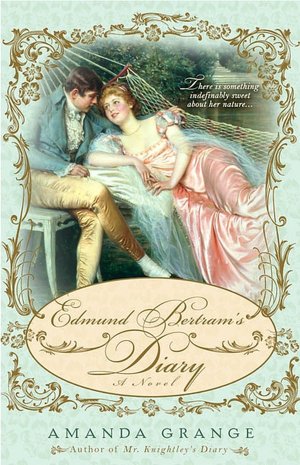
Edmund Bertram's Diary

Edmund Bertram's Diary. Amanda Grange. 2007/2008. Penguin. 304 pages.

Tuesday 8 July
Tom was eager to try out his new horse's paces and so we rode out together this morning, jumping walls and hedges, until he was satisfied he had made a good bargain.

I enjoyed Amanda Grange's retelling of Mansfield Park through the diary of Edmund Bertram. Edmund Bertram isn't always the wisest or brightest hero, but, his genuine friendship for Fanny Price is clear throughout the novel. The romance between Fanny Price and Edmund Bertram has always bothered me slightly. At least in Austen's novel, perhaps because Edmund Bertram's reformation or change of heart was so rushed, the "romance" being almost an afterthought thrown into the last few pages of the novel.

I thought Amanda Grange did a good job with in in this adaptation. For readers see that the love and affection is genuine, sincere. That Edmund does truly care for Fanny Price in that way, and that she feels exactly the same way about him. That he isn't marrying her out of duty or desperation, that Fanny is the one for him, and that he should have been miserable without her by his side.

Grange also did a good job with the other characters, particularly with Mary Crawford and Fanny Price. It would have perhaps been difficult to create a sympathetic Henry Crawford within this novel or adaptation. Though I would LOVE to see her try in another book--diary or not.

I love Amanda Grange's novels. I love her adaptations. While I've loved others a bit more, I still really enjoyed this one and would recommend it.

Read Edmund Bertram's Diary
  • If you liked Mansfield Park by Jane Austen OR even if you didn't particularly "like" it (the change of perspective might make it easier for you to enjoy)
  • If you are a fan of Jane Austen and/or Amanda Grange
  • If you like novels in diary format
  • If you like historical romance

© 2012 Becky Laney of Becky's Book Reviews

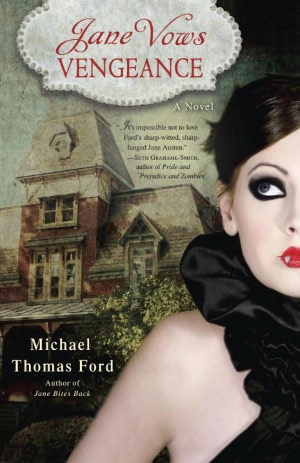
Jane Vows Vengeance

Jane Vows Vengeance. Michael Thomas Ford. 2012. Random House. 288 pages.

"What about this one?" Jane glanced at the magazine Lucy was holding up, opened to a picture of a bride standing in a field of daisies. 

This is the third novel in Michael Thomas Ford's paranormal series. The first is Jane Bites Back, and the second is Jane Goes Batty. If you've enjoyed the first few books in the series, you'll probably want to pick this one up too.

Jane Fairfax owns a bookshop and has recently had a novel published, even had that novel adapted into a movie, of sorts. But she's a woman keeping a secret from her husband-to-be. She's a vampire AND she's Jane Austen. While this knowledge certainly isn't common information, there are a LOT of people in her life who do know, including Walter's mother--Jane's future mother-in-law. By the way, his mother is keeping a BIG, BIG, BIG secret from him too. Poor Walter! No one ever tells him anything!

This novel sees the couple heading to Europe along with their friends and family. (Lucy, Ben, and Miriam, the mother-in-law). It isn't quite a wedding trip or a honeymoon trip--emphasis on the word quite. For Walter, it's a work-related trip, a select group will be touring historic homes. Sound boring? Well, some paranormal activity will liven things up a bit.

This novel had its moments. There were a few sparkly conversations, mainly between Jane and Byron, that made me happy I decided to continue on in this series. There were times this one almost almost worked for me. Some good scenes, some interesting developments. But at other times this novel was a mess. I'm not sure if it's because this book focused on the personal relationship between Jane and Walter, if it's because the book follows the couple's vacation, if it's because the focus was more on Jane trying to meet everyone else's expectations. But something felt off about it. This one had less social commentary, less satire, perhaps.

S
P
O
I
L
E
R

I think this one tried to pay tribute to Agatha Christie and mystery novels, but, that aspect didn't quite work for me. As a mystery this one didn't quite work for me. So what I was left with was a somewhat boring story about Walter and Jane trying to get married peacefully and without a lot of fuss. The scene that probably bothered me the very most was their first attempt to marry. And the wedding is interrupted by Jane's husband. And the guests talk openly about Jane being a vampire, the marriage occurring almost two hundred years in the past, etc. And Walter has not left the room. The author didn't give any indication that Walter left the room, OR, that the guests were huddled together whispering, OR, that the guests left the room to talk together...AND we're supposed to believe that Walter didn't listen closely enough to catch on to the fact that Jane is a vampire....and he's completely SURPRISED by the revelation later on in the novel. I think another issue I have with the novel, with the series, is that Walter isn't a fully developed character. We don't know him well enough to love him, though we can respect that Walter is a good match for Jane, I suppose. Mainly he's just there, and sometimes he's there and reacts.

Read Jane Vows Vengeance
  • If you enjoy paranormal novels
  • If you like satire/humor

© 2012 Becky Laney of Becky's Book Reviews

Mansfield Park Revisited

Mansfield Park Revisited. Joan Aiken. 1985/2005. Sourcebooks. 201 pages.

The sudden and unexpected death of Sir Thomas Bertram, while abroad engaged on business relating to his various properties in the West Indies, could be a cause of nothing but sorrow, dismay, and consternation to the baronet's friends in England.

I just LOVE, LOVE, LOVE Joan Aiken's Mansfield Park Revisited. I do. I love the characters, the story, and most of all the redemption. Susan Price, Fanny's younger sister, is the heroine of Joan Aiken's Mansfield Park Revisited. When the novel opens, Edmund and Fanny are on their way to the West Indies with their youngest child.
Susan's day are soon brightened up by the arrival of two people to the neighborhood. A sadder-but-wiser, Mary Crawford, whose health is in decline, and her ever-faithful brother, Henry. Though Susan never knew either Crawford personally, she can't help but be drawn to them--particularly Mary. She knows the two have history with those she loves best--Fanny, Edward, Tom, etc., but she can't help believing that these two have changed for the better through the years. These two are not seeking society in the neighborhood, just a quiet, peaceful place to simply be.

Aiken is great at relationships, and I definitely enjoyed seeing Susan interact with Mary Crawford, Henry Crawford, Tom Bertram, Lady Bertram, Julia Yates, etc. Readers don't know much about Susan from Austen's novel, but, Aiken did a great job giving her life in this sequel. While readers do know more about Mary and Henry Crawford from Austen's Mansfield Park, I can't help believing that Henry Crawford has been misunderstood until Aiken set the story straight. (I do LOVE Henry Crawford.) Mary's redemption was a beautiful thing as well. Aiken did not rewrite the past--or try to justify it exactly--but she has through circumstance after circumstance brought Mary to a reflective, repentant place and given her an opportunity to blossom into a sensitive, perceptive, loving person. 

I loved every page of this one. I loved spending time with these characters. It was just a wonderful treat.

My first review

Read Mansfield Park Revisited
  • If you love Mansfield Park, if you like Mansfield Park; even if you were bored with it, you may just find something to love in this historical romance
  • If you love Jane Austen
  • If you like historical romance

© 2012 Becky Laney of Becky's Book Reviews

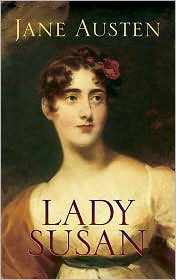
Lady Susan

Lady Susan. Jane Austen 1794?/1871. 64 pages.

I recently reread Jane Austen's Lady Susan. I remembered it as being a quick, light read full of gossip and scandal. Lady Susan Vernon is not a "nice" woman; she's a still-quite-beautiful widow with a near-grown daughter, Frederica, who sometimes forgets her place. After creating a mess--or scandal--she invites herself to her brother-in-law's estate. Of course, she's not completely honest about it--not admitting that it is her last resort and that she really has no interest in his company or the company of his wife, Catherine Vernon. If readers get an honest glimpse of the woman at all, it is in her letters to Alicia Johnson, but, even then I think she's not being completely honest all of the time.

Lady Susan is a tricky, manipulative woman who likes to keep her options open. The other women that readers get to know in this little novel are Catherine and Frederica. Catherine would find it difficult to say anything positive about her sister-in-law, Lady Susan. Though she could probably admit that Lady Susan is quite beautiful and charming--when she wants to be. Catherine thinks Lady Susan is a horrible mother--and she is. And Catherine thinks she is PLOTTING to get her brother, Reginald De Courcy--and she is. Reginald starts strong, but, within a day or two he's convinced that Lady Susan is THE ONE. In other words, he becomes horribly stupid. Frederica, Catherine's daughter, also falls for Reginald. Lady Susan is all about DRAMA. Gossip. Scandal. Lies. Manipulation. Tension. Lady Susan is a divisive woman--breaking apart families, the cause of endless quarrels. 

Lady Susan isn't really like Austen's other novels. Lady Susan, Catherine, and Frederica aren't really like Jane Austen's other heroines. And that is definitely true with the heroes as well. Reginald is not like Tilney, Darcy, Wentworth, or Knightley. Lady Susan is not a swoon-worthy romance. It is fun, lively, gossipy. 

Here's my first review.

My favorite quotes:
Where there is a disposition to dislike, a motive will never be wanting. (7)
In short, when a person is always to deceive, it is impossible to be consistent. (27)
Facts are such horrid things! (54)

Read Lady Susan
  • If you are looking for a classic that is a quick, lively read
  • If you like stories where what is not being said is just as important as what is being said
  • If you like not-so-nice heroines; true Lady Susan is no Moll Flanders, but, she's no Fanny Price either! She just really, really likes it when men--single or married--fall in love with her.
  • If you like Jane Austen

© 2012 Becky Laney of Becky's Book Reviews

The Kingdom

The Kingdom. Bryan Litfin. 2012. Crossway. 448 pages.

From the prologue: The rulers of the earth took counsel together, and the Pact they made defined the centuries to come. 

The Kingdom concludes the Chiveis Trilogy by Bryan Litfin. The first two novels in the series are The Sword and The Gift. The trilogy has an interesting premise. It explores a post-apocalyptic Europe beginning several centuries after "the end of the world as we know it." In this world, Christianity has both fallen into decay (just naturally--slowly but surely--been forgotten with the passing of each generation) and been outlawed. In the first novel, Ana and Teo discovered--by chance--a copy of the Old Testament. This presumably being the only known copy in existence. The two learn that it is only the first half of the Sacred Writings. And, of course, they WANT to find the second half, the second testament. But they hardly know where to begin. But just because their knowledge is incomplete, doesn't mean that they aren't eager--very, very eager--to share what they do know. For this is the first they've heard of a Creator God--Deu or Deus, as they call Him. And they're drawn to Him, trusting in Him, in His goodness, in his justice, in his righteousness. Teo in addition to being an incredibly brave, strong, oh-so-handsome soldier, is, of course an extremely brilliant scholar who speaks two or three languages, at least--including some of the ancient languages. Chiveis is the country (nation) where they both live. But it is immoral and corrupt. And the 'state religion' is idolatrous. The High Priestess, let's say, LOVES power, and loves the control she has over others. She's definitely into cruelty and torture. So when Teo and Ana begin spreading the good news--what they know of it--she is most displeased. The two end up being exiled. The second novel follows the two after their exile. Their true mission (which they sometimes forget about) is to find the New Testament, the Second Testament. This second novel introduces readers to two or three other countries or regions. It introduces at least one or two new villains to the general story, and, essentially has hundreds of pages worth of torture for the reader to endure alongside the characters. The bad news? They find the New Testament only to lose it to their enemy. The good news? The message and content of the New Testament is NOT lost after all. The book concludes with Teo hard at work translating this one into several different languages so they can spread the good news to all countries and nations. Which brings us to the third novel....

...Ana and Teo have finally, finally admitted they have feelings for one another. And they've finally found a community of believers who are eager to share in their work in evangelism. Actually, Ana and Teo fit into their already-present community. Teo may have many qualities to be a leader--of sorts--in the Christian community, since he's so brilliant and can translate the New Testament in just a few short months into several different languages, but he's not trying to take the role of the Papa in Roma. This novel begins with the couple preparing to be separated for many months--Teo seeking to travel to another country in search of Knights of the Cross, to see if they still remember what "the cross" means, to see if they are still loyal to the Papa. What Teo learns in his journeys--and what Ana learns as well--is that WAR is coming, that there are powers that be coming together united in hatred for the Christian faith.

How do I feel about The Kingdom? How do I feel about the trilogy? Well, I'm not sure there's an easy answer. It does have an interesting premise, in a way. And the books do give me something to think about. But. The characters annoy me just as often as they satisfy me. And essentially all three books are high on torture and "intense" situations that seem like desperate this-is-it close calls. Perhaps because of the high-frequency of these dramatic moments, perhaps because the characters always seem to come away safe, I never truly worried. I was also annoyed with the "romance" in this one. I felt Ana's love for Teo strained her common sense at times, and the same with Teo. Because Teo was so in love with Ana, he had his stupid moments.

Read The Sword, The Gift, The Kingdom
  • If you're a Christian looking to read post-apocalyptic and/or dystopian fiction
  • If you're a Christian looking to read a "what if" novel, the what if being WHAT IF the Scriptures were lost, WHAT IF the Scriptures were newly discovered, etc., 
  • If you like premise-driven fiction, without a doubt, the trilogy offers readers a chance to think, to contemplate.

© 2012 Becky Laney of Becky's Book Reviews

The Age of Miracles (YA/Adult)

The Age of Miracles. Karen Thompson Walker. 2012. Random House. 288 pages. 

We didn't notice right away. We couldn't feel it. We did not sense at first the extra time, bulging from the smooth edge of each day like a tumor blooming beneath skin.

The Age of Miracles is a thoughtful coming-of-age story narrated by Julia, age 11. When the "big event" happens, or the big announcement about the big event is made, Julia is entering sixth grade. What's the big announcement? Well, the earth has changed its rotation, the days (and subsequently) the nights are getting longer and longer. The earth no longer revolves around the sun in twenty-four hours. Within a week or two (or maybe three?), days are closer to forty hours than twenty. And the days (and nights) are just going to keep getting longer and longer and longer.

The terror of the situation is felt almost immediately by some, but for others it takes a while. Julia's mother was already prone to anxiety even before the announcement, but since the news came she's more hysterical than ever. And she's not alone.

The Age of Miracles captures what it is like for "life as we know it" to fall apart gradually, piece by piece, layer by layer. Specifically it captures what it is like to be eleven in a strange new world. Julia's world is just as much impacted by her new school year, her school worries about friendships and crushes, as it is the global catastrophe. Julia's home life mirrors the greater falling-apart of the world. As her mother is weighed down with sickness and anxiety, as her father escapes his burdens by taking comfort in a neighbor woman, as the three continue to live disconnected from one another.

Perhaps it is only natural for Julia's concerns to be about whether or not she'll ever see her best friend again (her best friend is moving away), or if the boy she likes will ever talk to her or like her back, to wonder if she'll ever get breasts, or to wonder if her parents will get a divorce, to wonder if her mom knows about the affair, to be worried about her grandfather's mysterious disappearance, than to be concerned about food and water supply, to be concerned about if the planet is still capable of supporting life. If the complete cycle of a day becomes several months long, for example, that means weeks of direct sunlight--too much sun, too much radiation, too much heat; but it also means months of complete darkness--not enough sun, too dark, too cold. What kind of crops can grow in conditions like this? Can greenhouses even begin to support enough food for an entire planet? No, there are enough people worrying about the tomorrows, let Julia remain in the worries of today.

Personally, I found the novel compelling. It was an easy, quick read. Is the absolute best post-apocalyptic book? Probably not. It's not Alas, Babylon or The Earth Abides. But it was a good read. I liked its thoughtfulness, its reflective nature. The narrator is reflecting back on the early days of the crisis, she's remembering what it was like at the beginning. I'm not sure if readers ever learn how many years have passed since the novel began, but, we do know that "the end" wasn't imminent or immediate. That people have had plenty of time to accept the slow passage into the end of times--at least the end of times as they know it, as they can imagine it.

The Age of Miracles reminded me, in a way, of "The Inner Light." (For those unfamiliar with that title, well, it's only the BEST, BEST, BEST Star Trek episode ever, Star Trek Next Generation to be precise.) It also reminded me--not in its exact details, but in its feel--of the Twilight Zone episode, "The Midnight Sun." However, I am NOT saying that the book is as good as either episode. I don't want to raise expectations that high. The book is what it is. Don't expect it to be THE BEST BOOK EVER. OR expect it to be the worst book ever. I happened to like it more than I disliked it. But that's me. I saw it as having strengths and weaknesses.

The Age of Miracles did not feel like science fiction. Or at least not obvious science fiction. It feels more like a traditional coming-of-age novel. True, Julia is growing up at a difficult time in history, a time when time itself is losing its identity. But Age of Miracles is grounded in the small details of life, life as seen through the eyes of a child. Nothing seems dependable, nothing seems certain; everything is changing, all the rules are changing, even the rules of science. 

Quotes:
This was middle school, the age of miracles, the time when kids shot up three inches over the summer, when breasts bloomed from nothing, when voices dipped and dove. Our first flaws were emerging, but they were being corrected. Blurry vision could be fixed invisibly with the magic of the contact lens. Crooked teeth were pulled straight with braces. Spotty skin could be chemically cleared. Some girls were turning beautiful. A few boys were growing tall. I knew I still looked like a child. (43)
We were, on that day, no different from the ancients, terrified of our own big sky. (52)
It's hard to believe that there was a time in this country--not so long ago--when thick almanacs were printed every year and listed, among other facts, the precise clock time of every single sunrise and every single sunset a year in advance. I think we lost something else when we lost that crisp rhythm, some general shared belief that we could count on certain things. (96)
Read The Age of Miracles
  • If you like coming-of-age stories
  • If you like apocalyptic/post-apocalyptic novels that are more quiet and subtle and reflective than action-drama oriented. 
© 2012 Becky Laney of Becky's Book Reviews

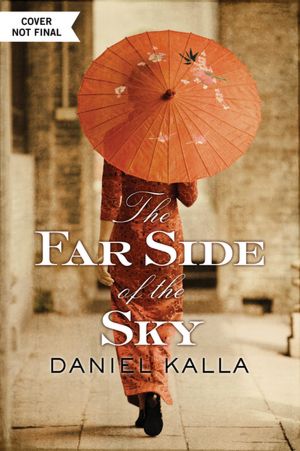
The Far Side of the Sky

The Far Side of the Sky. Daniel Kalla. 2012. Tom Doherty Associates. 464 pages.

The shadow still swayed over the pavement. Franz Adler tried to blink away the memory of his brother's dangling corpse and the silhouette it cast across the sidewalk, but the image looped over and over in his head.

The Far Side of the Sky provides a unique look at World War II. Franz Adler is able to flee Vienna, Austria, after Kristallnacht with his young daughter, Hannah, and his sister-in-law, Esther. Also accompanying them is an artist Ernst Muhler who fears persecution as well. (He joins them at the very last minute when his boyfriend decides to join the Nazis.) Their destination is Shanghai, one of the few places welcoming Jewish refugees.

The Far Side of the Sky is about the Jewish refugee community in Shanghai. Readers get glimpses of refugee life in 1938-9, 1940, 1941, 1942. (For example, the narrative might cover one or two months in a given year, and then jump to the next year.)

The main characters are:

Franz Adler, a Jewish doctor who divides his time between two hospitals in Shanghai, one of the hospitals is for Jewish refugees.

Soon Yi Mah (Sunny) a biracial (American/Chinese) nurse who divides her time between two hospitals. Her father was a doctor, and, she too has a gift for doctoring. But Dr. Reuben, one of the surgeons at the other hospital absolutely hates her and feels she doesn't know her place. She's intelligent, resourceful, courageous.

Of course there are dozens and dozens of minor characters of many ethnicities. 

The story was very fascinating. The author note reveals that much is based on fact, that he spent a great deal of time researching the Jewish refugee experience in Shanghai. And since this was the first I've heard of it, it was definitely fascinating to me. However. I was disappointed in the distant characters. Though readers follow the stories of these characters, I personally never felt connected with them. I knew enough about them to care about their fates, what happened next, etc. But I never felt like I knew them.

I'm not sure this book did a good job with relationships between characters either. For example, readers know that Franz is a father, but, except for two or three scenes, we don't really see Hannah interacting with Franz. We know that Hannah provides motivation for Franz--that his concern for Hannah moves the plot forward, but as for knowing Hannah, that just doesn't happen. We don't get the details of his personal life outside the hospital very often. Again, we know that Franz is taking care of Esther, his sister-in-law, but as for his sister-in-law having any character of her own, I just don't see it. There are a handful of scenes now and then. But even in those scenes she seems one-dimensional and just there. So many of the characters seem one-dimensional. The story itself is fascinating enough--the action, the danger, the uncertainty--but the characters just don't seem to match that.

The setting is unique and interesting. The story is fascinating and compelling. The characters, well, they disappointed me. But. I think there is enough to enjoy this one that I'd definitely still recommend it.

Read The Far Side of the Sky
  • If you are interested in the 1930s and 1940s, particularly the war years
  • If you are interested in reading books set in Shanghai, in China
  • If you are interested in reading a Jewish refugee book in a very different setting
  • If you are interested in doctors, nurses, surgeons, hospitals, etc. 

© 2012 Becky Laney of Becky's Book Reviews
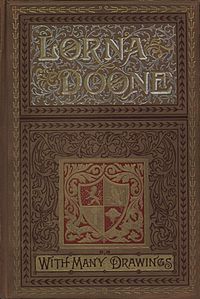
Lorna Doone

Lorna Doone. R.D. Blackmore. 1869. 658 pages.

If anybody cares to read a simple tale told simply, I, John Ridd of the parish of Oare, in the county of Somerset, yeoman and churchwarden, have seen and had a share in some doings of this neighborhood, which I will try to set down in order, God sparing my life and memory. 

Lorna Doone was a classic that I almost almost loved. However, while I didn't "love" it, I certainly liked it. What I liked best about Lorna Doone was the romance. There were a few love scenes in this one--scenes where John Ridd is wooing Lorna Doone and professing his unending love for her. And those scenes work the best of any in the novel. But those scenes make up just a fraction of the novel, and to be honest I found most of this one to be boring. Now, I enjoy a rambling novel, I do. I love Anthony Trollope, Charles Dickens, and Wilkie Collins. I don't mind an author that takes his time telling a story--so long as the asides are written in a charming, entertaining way. But I didn't feel that was the case in Lorna Doone.

This historical romance is set in Exmoor (Devon and Somerset England) in the 17th Century) during the reigns of King Charles II and James II. John Ridd falls in love with Lorna Doone, but there are a few big obstacles standing in the way of their true love. First, she is a Doone. The Doone clan murdered John's father. John himself forgives this flaw easily since Lorna is so incredibly beautiful. The rest of his family may not be eager to welcome a woman from the outlaw clan. And the Doone clan, well, they are definitely not wanting to lose "their" Lorna to John Ridd. Second, Lorna's mysterious past. She doesn't remember a time before the Doones, but, that doesn't mean there wasn't one. And this big reveal causes some to believe that John Ridd isn't good enough--worthy enough-- for her. I will not say more than that. Third, the general times in which they lived: the political mess of the battle for the kingdom between James II and the Duke of Monmouth. John is mistakenly taken for a soldier on Monmouth's side--that is not the case, but it does pose some problems. Fourth, the pure evil that is Carver Doone.

Favorite scenes:
I would have leaped into the valley of the shadow of death (as described by the late John Bunyan), only to hear her call me "John"; though Apollyon were lurking there, and Despair should lock me in.
She stole across the silent grass; but I strode hotly after her; fear was all beyond me now, except the fear of losing her. I could not but behold her manner, as she went before me, all her grace, and lovely sweetness, and her sense of what she was.
She led me to her own rich bower, which I told of once before; and if in spring it were a sight, what was it in summer glory? But although my mind had notice of its fairness and its wonder, not a heed my heart took of it, neither dwelt it in my presence more than flowing water. All that in my presence dwelt, all that in my heart was felt, was the maiden moving gently, and afraid to look at me.
For now the power of my love was abiding on her, new to her, unknown to her; not a thing to speak about, nor even to think clearly; only just to feel and wonder, with a pain of sweetness. She could look at me no more, neither could she look away, with a studied manner—only to let fall her eyes, and blush, and be put out with me, and still more with herself.
I left her quite alone; though close, though tingling to have hold of her. Even her right hand was dropped and lay among the mosses. Neither did I try to steal one glimpse below her eyelids. Life and death to me were hanging on the first glance I should win; yet I let it be so.
After long or short—I know not, yet ere I was weary, ere I yet began to think or wish for any answer—Lorna slowly raised her eyelids, with a gleam of dew below them, and looked at me doubtfully. Any look with so much in it never met my gaze before.
"Darling, do you love me?" was all that I could say to her.
"Yes, I like you very much," she answered, with her eyes gone from me, and her dark hair falling over, so as not to show me things.
"But do you love me, Lorna, Lorna; do you love me more than all the world?"
"No, to be sure not. Now why should I?"
"In truth, I know not why you should. Only I hoped that you did, Lorna. Either love me not at all, or as I love you for ever."
"John I love you very much; and I would not grieve you. You are the bravest, and the kindest, and the simplest of all men—I mean of all people—I like you very much, Master Ridd, and I think of you almost every day."
"That will not do for me, Lorna. Not almost every day I think, but every instant of my life, of you. For you I would give up my home, my love of all the world beside, my duty to my dearest ones, for you I would give up my life, and hope of life beyond it. Do you love me so?"
"Not by any means," said Lorna; "no, I like you very much, when you do not talk so wildly; and I like to see you come as if you would fill our valley up, and I like to think that even Carver would be nothing in your hands—but as to liking you like that, what should make it likely? (214-5)
and
She made for awhile as if she dreamed not of the meaning of my gaze, but tried to speak of other things, faltering now and then, and mantling with a richer damask below her long eyelashes.
"This is not what I came to know," I whispered very softly, "you know what I am come to ask."
"If you are come on purpose to ask anything, why do you delay so?" She turned away very bravely, but I saw that her lips were trembling.
"I delay so long, because I fear; because my whole life hangs in balance on a single word; because what I have near me now may never more be near me after, though more than all the world, or than a thousand worlds, to me." As I spoke these words of passion in a low soft voice, Lorna trembled more and more; but she made no answer, neither yet looked up at me.
"I have loved you long and long," I pursued, being reckless now, "when you were a little child, as a boy I worshipped you: then when I saw you a comely girl, as a stripling I adored you: now that you are a full-grown maiden all the rest I do, and more—I love you more than tongue can tell, or heart can hold in silence. I have waited long and long; and though I am so far below you I can wait no longer; but must have my answer."
"You have been very faithful, John," she murmured to the fern and moss; "I suppose I must reward you."
"That will not do for me," I said; "I will not have reluctant liking, nor assent for pity's sake; which only means endurance. I must have all love, or none, I must have your heart of hearts; even as you have mine, Lorna."
While I spoke, she glanced up shyly through her fluttering lashes, to prolong my doubt one moment, for her own delicious pride. Then she opened wide upon me all the glorious depth and softness of her loving eyes, and flung both arms around my neck, and answered with her heart on mine,—
"Darling, you have won it all. I shall never be my own again. I am yours, my own one, for ever and for ever."
I am sure I know not what I did, or what I said thereafter, being overcome with transport by her words and at her gaze. Only one thing I remember, when she raised her bright lips to me, like a child, for me to kiss, such a smile of sweet temptation met me through her flowing hair, that I almost forgot my manners, giving her no time to breathe.
"That will do," said Lorna gently, but violently blushing; "for the present that will do, John. And now remember one thing, dear. All the kindness is to be on my side; and you are to be very distant, as behoves to a young maiden; except when I invite you. But you may kiss my hand, John; oh, yes, you may kiss my hand, you know. Ah to be sure! I had forgotten; how very stupid of me!"
For by this time I had taken one sweet hand and gazed on it, with the pride of all the world to think that such a lovely thing was mine; and then I slipped my little ring upon the wedding finger; and this time Lorna kept it, and looked with fondness on its beauty, and clung to me with a flood of tears.
"Every time you cry," said I, drawing her closer to me "I shall consider it an invitation not to be too distant. There now, none shall make you weep. Darling, you shall sigh no more, but live in peace and happiness, with me to guard and cherish you: and who shall dare to vex you?" But she drew a long sad sigh, and looked at the ground with the great tears rolling, and pressed one hand upon the trouble of her pure young breast.
"It can never, never be," she murmured to herself alone: "Who am I, to dream of it? Something in my heart tells me it can be so never, never." (261-2)
Isn't the "I love you more than tongue can tell, or heart can hold in silence" lovely?

Lorna Doone isn't just a romance, however; John Ridd has a few adventures all his own, including more than a few fight/battle scenes.

Read Lorna Doone
  • If you like classics
  • If you like historical romances

© 2012 Becky Laney of Becky's Book Reviews

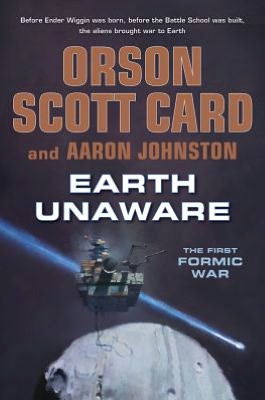
Earth Unaware: The First Formic War

Earth Unaware. Orson Scott Card and Aaron Johnston. The First Formic War. 2012.  Tor. 368 pages.

Victor didn't go to the airlock to see Alejandra leave the family forever, to marry into the Italian clan.

Earth Unaware is an experience. Orson Scott Card is as wonderful as always. In fact, I'd say this may just be my most favorite Card novel of recent years. His characters are so incredibly human, so very, very flawed. Because of their complex relationships with one another, there is a genuineness to them. That doesn't mean readers will connect with each and every character. In fact, this novel has a character I loathe more than any other Card creation: Lem Jukes. Since this novel rotates narrators (or main characters), every Jukes chapter was painful. I was just SO VERY VERY VERY ANGRY at him. I reacted very strongly to him. But that isn't really a big surprise. I reacted strongly to so many characters in this one. Major and minor characters that I just CARED for. Which made almost every loss something to be FELT.

There are essentially "three" big stories being told in Earth Unaware. Two of the stories happen in space. El Calvador is an asteroid mining ship--a family-owned free mining ship. Victor's story, for the most part, occurs on El Calvador. This is the ship that first spots the Formics; well, they are the first to notice that an alien ship is heading towards Earth at faster than light speed. Lem Jukes is captain of a corporation ship. His interest in asteroids isn't quite like El Calvador's. Jukes is working on an invention with a lot of potential--something having to do with a gravity laser. After a successful test or two, he's ready to try the glaser on a bigger object. The object he has in mind happens to be the asteroid that El Calvador is mining at the moment. He decides to "bump" them--destroying their laserline communications--long range communicator--in the process.

The third story is, in a way, the lesser of the three stories. It is set on Earth and involves the military. It centers on a man, Wit O'Toole, forming a special military unit, Mobile Operations Police. One of the recruits is Mazer Rackham. But this isn't his story just yet. He's still undergoing testing, at this point. And the war has not begun. So while he will be very important in the other books in this series, this isn't his time just yet.

Earth Unaware is an exciting, suspenseful science fiction novel. I found the pacing to be just right. (True, some of the chapters seemed like a bit of an interruption, especially close to the end, but for the most part, the book was incredibly INTENSE, painfully INTENSE.) Readers learn about the ship who first spotted the Formic ship--the alien ship. Readers witness the destruction of the first encounter between humans and Formics. And anxiously readers wait and hope that one of the ships who know about the coming aliens will be able to send news to Earth.

This was an incredible reading experience--very emotional. It's a novel to be felt as well as read. The characterization was great. The storytelling and pacing was great too. I just loved it. This is one I'll definitely want to reread. 

Read Earth Unaware
  • If you're a fan of Orson Scott Card
  • If you're a fan of Ender's Game--even if you're not a fan of the other books in the series
  • If you enjoy science fiction
© 2012 Becky Laney of Becky's Book Reviews

Clocks

Clocks. Jerome K. Jerome. 1891. 10 pages.

 There are two kinds of clocks. There is the clock that is always wrong, and that knows it is wrong, and glories in it; and there is the clock that is always right--except when you rely upon it, and then it is more wrong than you would think a clock could be in a civilized country.

This is an extremely short essay on clocks, exaggeration, keeping up appearances, and Time. It was an enjoyable read; perhaps it isn't as WONDERFUL as some of Jerome K. Jerome's other works, but, it was worth the few minutes it took to read.

The second type of clock:
The man who can live in the same house with one of these clocks, and not endanger his chance of heaven about once a month by standing up and telling it what he thinks of it, is either a dangerous rival to that old established firm, Job, or else he does not know enough bad language to make it worth his while to start saying anything at all. The great dream of its life is to lure you on into trying to catch a train by it. For weeks and weeks it will keep the most perfect time. If there were any difference in time between that clock and the sun, you would be convinced it was the sun, not the clock, that wanted seeing to. You feel that if that clock happened to get a quarter of a second fast, or the eighth of an instant slow, it would break its heart and die. It is in this spirit of child-like faith in its integrity that, one morning, you gather your family around you in the passage, kiss your children, and afterward wipe your jammy mouth, poke your finger in the baby's eye, promise not to forget to order the coals, wave at last fond adieu with the umbrella, and depart for the railway-station. I never have been quite able to decide, myself, which is the more irritating to run two miles at the top of your speed, and then to find, when you reach the station, that you are three-quarters of an hour too early; or to stroll along leisurely the whole way, and dawdle about outside the booking-office, talking to some local idiot, and then to swagger carelessly on to the platform, just in time to see the train go out!
On his own "special" clock:
But the great charm about my clock is its reliable uncertainty. It works on no method whatever; it is a pure emotionalist. One day it will be quite frolicsome, and gain three hours in the course of the morning, and think nothing of it; and the next day it will wish it were dead, and be hardly able to drag itself along, and lose two hours out of every four, and stop altogether in the afternoon, too miserable to do anything; and then, getting cheerful once more toward evening, will start off again of its own accord. I do not care to talk much about this clock; because when I tell the simple truth concerning it, people think I am exaggerating. It is very discouraging to find, when you are straining every nerve to tell the truth, that people do not believe you, and fancy that you are exaggerating. It makes you feel inclined to go and exaggerate on purpose, just to show them the difference. I know I often feel tempted to do so myself--it is my early training that saves me.

On society:
Truth and fact are old-fashioned and out-of-date, my friends, fit only for the dull and vulgar to live by. Appearance, not reality, is what the clever dog grasps at in these clever days. We spurn the dull-brown solid earth; we build our lives and homes in the fair-seeming rainbow-land of shadow and chimera.

© 2012 Becky Laney of Becky's Book Reviews
Lady Audley's Secret

Lady Audley's Secret. Mary Elizabeth Braddon. 1862/1998. Oxford World's Classic. 496 pages.  

It lay low down in a hollow, rich with find old timber and luxuriant pastures; and you came upon it through an avenue of lines, bordered on either side by meadows, over the high hedges of which the cattle looked inquisitively at you as you passed, wondering, perhaps, what you wanted; for there was no thoroughfare, and unless you were going to the Court you had no business there at all. At the end of this avenue there was an old arch and a clock-tower, with a stupid, bewildering clock, which had only one hand; and which jumped straight from one hour to the next, and was therefore always in extremes. Through this arch you walked straight into the gardens of Audley Court.

I definitely enjoyed this one! I thought it was a GREAT read. I'm not sure it is a great book, but, it offers entertainment and thrills. I personally liked the writing style of this one, I found it very suspenseful and satisfying. If possible, it's best not to know Lady Audley's "secret" before reading. I'd say avoid reading too much detail about this one. I am going to try my best not to give away any details that are best left as surprises. But I do want to introduce you to the characters...

People you'll meet:

Michael Audley, a widower with a near-grown daughter, Alicia, who falls madly, deeply in love with a younger woman, Lucy Graham, who is employed as a governess by one of his friends.

Lady Audley, a young woman with a secret; It was almost too easy for Lucy Graham to agree to become Lady Audley. He's a rich man, a man with status, and he wants HER, a nobody. Who could say no?! Especially if you don't have your heart set on marrying for love.

Alicia Audley, a young woman too close in age to Lady Audley; she is NOT happy to have a new stepmother. She is not happy that her new stepmother is oh-so-gorgeous and that men seem to see only her. She's also suspicious and distrustful. Granted, she would probably be distrustful of ANY woman in that situation. And the fact that Lady Audley does in fact have a secret shouldn't be taken as proof that she has great instincts.

Robert Audley, a nephew of Michael Audley; Alicia really, really WISHES that Robert would pay attention to her. She really is hoping that he will notice that she is all grown up and ready to be proposed to. When we first meet Robert, you might say that he completely lacks ambition and gumption. In other words, he doesn't do much at all. This doesn't remain the case.

George Talboys, a friend of Robert Audley. He is newly returned to England, he's now got some money. He could potentially have been a very very happy man if he'd found his wife and son alive and waiting for him. Unfortunately, soon after his return, he learns that his wife has died. His son is being cared for by his father-in-law. He's too shocked to really take care of the boy himself, and, he feels perhaps its best not to disturb the boy too much. After all, his mother has died, and the boy's grandfather has been a part of his life from the start.

Phoebe and Luke Marks, Phoebe serves as Lady Audley's maid, Phoebe and her husband are the first to discover her secret.

I would definitely recommend this one!!! This would make a great companion read to The Suspicions of Mr. Whicher by Kate Summerscale, but, do try to read this one FIRST. 

Read Lady Audley's Secret
  • If you want to read one of the first sensation novels
  • If you enjoy suspense and mystery and detective stories
  • If you like classics, Victorian classics
  • If you are interested in reading women writers of the nineteenth century


© 2012 Becky Laney of Becky's Book Reviews

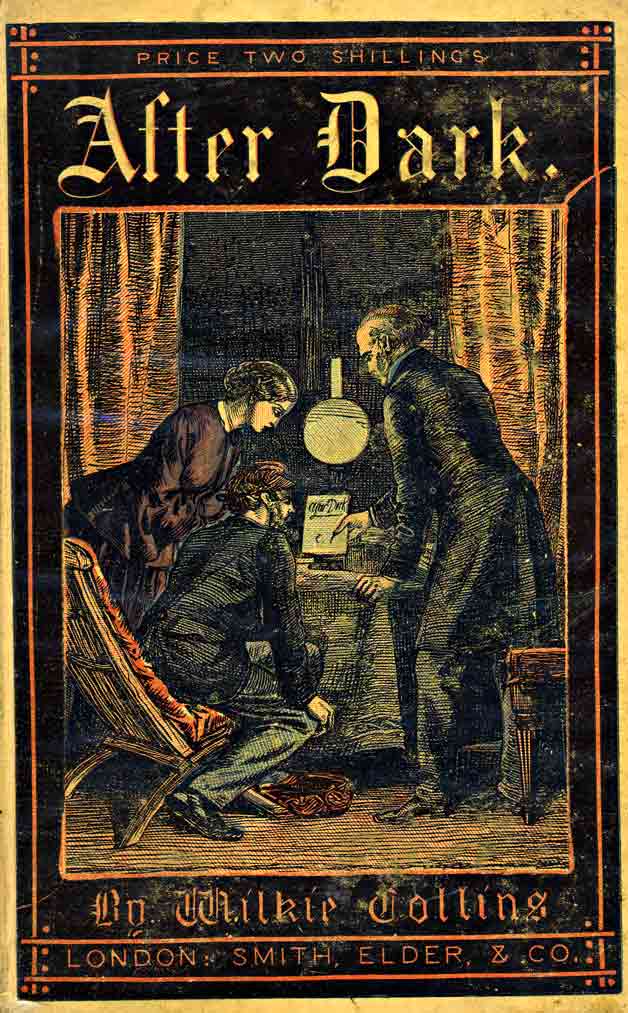
After Dark

After Dark. Wilkie Collins. 1856. 404 pages.

From "Leaves From Leah's Diary"
26th February, 1827.—The doctor has just called for the third time to examine my husband's eyes. Thank God, there is no fear at present of my poor William losing his sight, provided he can be prevailed on to attend rigidly to the medical instructions for preserving it. These instructions, which forbid him to exercise his profession for the next six months at least, are, in our case, very hard to follow. They will but too probably sentence us to poverty, perhaps to actual want; but they must be borne resignedly, and even thankfully, seeing that my husband's forced cessation from work will save him from the dreadful affliction of loss of sight. I think I can answer for my own cheerfulness and endurance, now that we know the worst. Can I answer for our children also? Surely I can, when there are only two of them. It is a sad confession to make, but now, for the first time since my marriage, I feel thankful that we have no more.
I tend to love Wilkie Collins. And I did enjoy his short story collection, After Dark. But I didn't find all six of the short stories equally compelling. And while I *loved* some of the stories in this book, I didn't love them all. I found them all worthwhile, all entertaining.

There's a framework to After Dark. A portrait-painter, William, suffers damage to his eyesight, the doctor tells him he needs LOTS of time to recuperate if he hopes to be able to see again. He can no longer count on his painting to bring in the income and take care of his family, so, the family is forced to come up with plan B. Plan B just happens to be writing and publishing a book of stories. These are stories that have been told to the painter--usually while his subject is being painted--through the years. He will now recollect the best stories he's ever heard and relate them to his wife, Leah, who will write them down each night...after dark. (That is after her long day's work is through.)

The six stories are:

  • The Traveller's Story of a Terribly Strange Bed (1852)
  • The Lawyer's Story of a Stolen Letter (1854)
  • The French Governess's Story of Sister Rose (1855)
  • The Angler's Story of The Lady of Glenwith Grange (new for After Dark)
  • The Nun's Story of Gabriel's Marriage (1853)
  • The Professor's Story of the Yellow Mask (1855)
Five of the six short stories were reprints, only one story was brand new and written especially for this book.

In my opinion, the best, best, best short story in this collection is The French Governess's Story of Sister Rose. This story has DRAMA and action. It is set during the French Revolution. And in my opinion, this story is a MUST read. Not only if you're a fan of Victorian literature OR a fan of Wilkie Collins, but if you're a fan of historical fiction set during the French Revolution, you should really consider reading this novella. (In my opinion, it is closer to a novella than a proper short story. It has parts and chapters.) So Louis Trudaine made a deathbed promise to his mother to always be there for his sister, Rose, and protect her. Rose has fallen in love with a man Louis feels is unworthy of her, a Charles Danville. The marriage does happen, though not without some unpleasant exchanges on the eve of the wedding. But he never feels quite sure of his sister's husband, and so he chooses to remain nearby even if it means passing up a job opportunity. Years pass--we learn from the narrator--and the Revolution comes. And with it danger, drama, action, betrayal, and so much more. This story is so very, very, very good. It's quite intense and I loved every minute of it.

The Traveller's Story of a Terribly Strange Bed is actually Wilkie Collins first published short story. It is quite creepy! It also happens to be set in Paris, by the way, anyway, the narrator is a young man named Faulkner. His good luck at a gambling house almost proves fatal. For a very, very friendly man convinces him that it is much too risky to leave the house at that time of night and wander the streets carrying his winnings. No, no, it would be much much safer to stay there for the night. But is that the truth? Well, his insomnia may just be a lifesaver!

The Nun's Story of Gabriel's Marriage is another story set in France during the French Revolution. While it isn't as good as The French Governess's Story of Sister Rose, in my opinion, it was interesting to get another story set in France--in Brittany--from Collins. The theme of this one is forgiveness and reconciliation. If you want a story with a couple of BIG twists, this one may prove satisfying.

The Angler's Story of The Lady of Glenwith Grange is another story with a BIG, BIG twist. Ida has promised to always, always, always take care of her younger sister, Rosamond. (Their mother died when Rosamond was a baby.) So when Rosamond marries, it's agreed that Ida will always live with them. The marriage, as you might expect, does not exactly exactly go as planned. And readers...along with Ida...learn why.

The Professor's Story of the Yellow Mask is set in Italy, I believe. It has a larger cast of characters than some of the other stories in the collection. And it has its own share of drama. It is a darker story balanced perhaps in a way by a love story with many, many obstacles. It also has lots of twists and turns and such. That being said, I wasn't thrilled with it.

The Lawyer's Story of a Stolen Letter is a detective story. It was a nice enough story, I suppose, but I wasn't wowed by it. Still, it's enjoyable enough. 


Read After Dark
  • If you're a fan of Wilkie Collins
  • If you're a fan of Victorian literature
  • If you're a fan of mystery, suspense, detective, or sensation stories
  • If you like short stories
  • If you like "shocking" stories with plenty of drama and twists and turns
© 2012 Becky Laney of Becky's Book Reviews
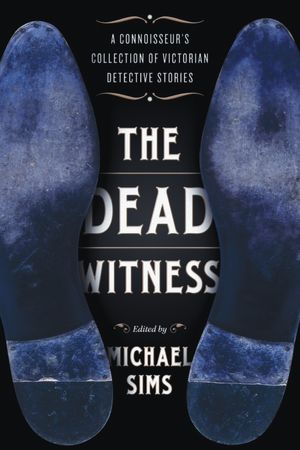
The Dead Witness

The Dead Witness: A Connoisseur's Collection of Victorian Detective Stories. Edited by Michael Sims. 2011. Walker & Company. (Late December 2011). 608 pages.

The Dead Witness is a short story collection that I absolutely LOVE, LOVE, LOVE. Now I am not usually a short story person, I feel it's important for everyone to know that. There are a couple of authors whose short fiction I enjoy, but, for the most part I like my novels.  But. I just LOVED this collection. I think it is a real MUST-READ.

Readers are introduced to twenty-two authors and twenty-two short stories. Each introduction was written by Michael Sims who did a fabulous job. There's just enough in each introduction to make you curious and eager to read their work, some of the introductions tease more than others. For example, they mention other stories, other novels, etc. The introductions are anything but boring! The authors presented are English, American, Canadian, Australian, and French. The collection includes men and women authors and men and women detectives! Some were narrated by a man or woman who just 'accidentally' got involved in the case, who just happened to put the clues together to solve the mystery. Others were narrated by amateur and professional detectives. (For example, The Diary of Anne Rodway is narrated by someone who just happens to become involved in this mystery. Her good friend, her roommate, is killed. She feels it was murder and has a clue or two to go by.)
  • The Secret Cell by William E. Burton
  • The Murders in the Rue Morgue by Edgar Allen Poe
  • On Duty With Inspector Field by Charles Dickens
  • The Diary of Anne Rodway by Wilkie Collins
  • You Are Not Human, Monsieur d'Artagnan by Alexandre Dumas, pere
  • Arrested on Suspicion by Andrew Forrester Jr.
  • The Dead Witness, or, The Bush Waterhole by W.W. (Mary Fortune)
  • The Mysterious Human Leg by James McGovan (William Crawford Honeyman)
  • The Little Old Man of Batignolles by Emile Gaboriau
  • The Science of Deduction by Arthur Conan Doyle
  • The Whitechapel Mystery by Anonymous
  • The Assassin's Natal Autograph by Mark Twain
  • The Murder at Troyte's Hill by C.L. Pirkis
  • The Haverstock Hill Murder by George R. Sims
  • The Stolen Cigar-Case by Bret Harte
  • The Absent-Minded Coterie by Robert Barr
  • The Hammer of God by G.K. Chesterton
  • The Angel of the Lord by Melville Davisson Post
  • The Crime at Big Tree Portage by Ernest Bramah
  • The Case of Padages Palmer by Harvey O'Higgins
  • An Intangible Clue by Anna Katherine Greene
 Chances are you're familiar with some of these authors. But some of these will probably be as new to you as they were to me.


My favorite favorite story was "The Diary of Anne Rodway," which I just LOVED and ADORED. True, I was already familiar with his work, but, even if I hadn't been, I think I would have loved this piece. The short story is a series of diary entries by a young woman, a poor woman. She's good friends with another young woman, Mary Mallinson. The two are in similar situations--in a way--both poor, both working hard to survive, both in love but facing obstacles to their happiness. But when Mary is murdered, Anne Rodway takes it upon herself to try to solve the mystery and discover the identity of the man who killed her friend.

I also enjoyed "The Secret Cell" by William E. Burton first published in 1837--several years before Edgar Allen Poe's oh-so-famous detective story, "The Murders in the Rue Morgue." I personally preferred The Secret Cell. I read that this is the first time it is being republished since its initial publication which I thought was nice! The Secret Cell is the story of a missing woman. The narrator had a laundress who had a daughter. The daughter of the laundress became a companion to a wealthy woman, the wealthy woman favors her companion in her will, and when the daughter inherits a fortune, well, it's not long before she turns up missing. It is a very interesting story!

Other favorites include, "The Murder at Troyte's Hill" by C.L. Pirkis, "The Angel of the Lord," by Melville Davisson Post, "The Stolen Cigar Case" by Bret Harte, and "An Intangible Clue" by Anna Katherine Greene.

Read The Dead Witness
  • If you enjoy detective fiction, mysteries, casebooks, etc.
  • If you enjoy Victorian literature
  • If you enjoy short stories
© 2012 Becky Laney of Becky's Book Reviews
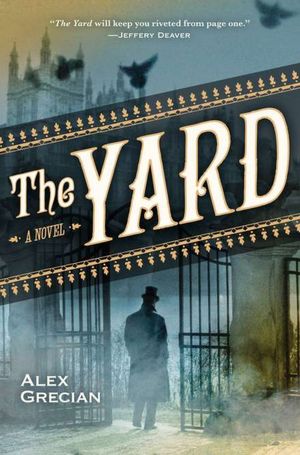
The Yard (with slight spoilers)

The Yard. Alex Grecian. 2012. Penguin. 432 pages.

From the prologue: Nobody noticed when Inspector Christian Little of Scotland Yard disappeared, and nobody was looking for him when he was found.

What can I say about Alex Grecian's The Yard? I was disappointed. If you're expecting a mystery where suspense builds, clues are given, and you're on the edge of your seat to find out who did it, then this one will definitely disappoint. For Grecian will reveal who did it to readers within a chapter or two. Readers will get a behind-the-scenes look at the murderer almost from the beginning. The first entry or so of this murderer his identity is still hidden, but, that doesn't remain the case for long. But Grecian doesn't just reveal the identity of one murderer, he reveals the identity of another murderer. For Scotland Yard is working on two cases during the course of the novel. One, a murderer who is killing police detectives. Two, a murderer who is killing bearded men.

The Yard has multiple narrators. Readers meet several detectives (some remain alive at the novel's end, others aren't so fortunate) throughout the novel, each contributes (to a certain degree) to solving one or the other cases. Some personal details are shared about some of the detectives. For example, readers meet Walter Day and his wife. We get a flashback to before they were married--we get to see the proposal, and, it felt to me it was a very odd proposal! We also see glimpses of their home life as she adjusts to life in London. Another detective we meet is Hammersmith (I can't recall his first name). We get flashes from him as well, including flashbacks to when he was a child. His flashbacks reveal his sensitive side and how difficult the job can be: finding the bodies of children, men, women, etc. Readers also meet Dr. Kingsley who works closely with Scotland Yard, and we meet his young daughter who helps out by sketching all the corpses. While we meet many characters, including a mystery "dancing man", I had a hard time truly connecting with any of the characters. I'll explain, while I wanted to read the book to its end, I wasn't at the edge of my seat. It wasn't that the book was super-compelling and impossible to put down. It wasn't that the book had any suspense (well, readers could perhaps wonder if Fenn would make it back home alive or if he'd end up a corpse; and if you're desperate to find more to be in suspense about I suppose you could wonder if Day's wife was ever going to tell him that she was pregnant), I finished the book because I like to finish what I start.

This one would almost have to be more of a thriller than a mystery, but, I'm not sure it's lack of suspense and uneven pacing would make it a good thriller either. Overall, I'd say the characterization wasn't the best. Some of the characters had potential, they could potentially be developed into something more, into characters that I would care about, but they weren't quite there yet. Some of the characters were incredibly flimsy and flat.

I think some of the scenes were intentionally put in there to aggravate modern readers--which worked, by the way. Having scenes where a boy goes up to a police officer (detective) and clearly states things like, help, please help me, I've been kidnapped, tied up, held prisoner, I only now just escaped, if he catches me again, I don't know what will happen, please help me find my parents. And have him respond with, move along, boy, or I'll send you to the workhouse. I suppose the intention being to highlight that women and children had no value or worth in society.

I wanted to like this one, I was even hoping to love it, but it was just okay. 

Best line: "If all men were sane, we would be blacksmiths." (87)

Read The Yard
  • If you like historical fiction set during the Victorian period
  • If you like Victorian mystery/detective/suspense stories; just don't expect Grecian to write as well as the actual Victorians, his style, his characterization, his pacing, doesn't even come close to matching. 
  • If you don't mind slightly tedious fiction, for example, he spends pages and pages each time (almost) trying to explain the concept of fingerprints. And how each fingerprint is unique, personal; how fingerprints can help establish who was at the scene of the crime, etc. 
© 2012 Becky Laney of Becky's Book Reviews

Idle Thoughts of an Idle Fellow

Idle Thoughts of an Idle Fellow. Jerome K. Jerome. 1889. 112 pages.
Now, this is a subject on which I flatter myself I really am au fait. The gentleman who, when I was young, bathed me at wisdom's font for nine guineas a term—no extras—used to say he never knew a boy who could do less work in more time; and I remember my poor grandmother once incidentally observing, in the course of an instruction upon the use of the Prayer-book, that it was highly improbable that I should ever do much that I ought not to do, but that she felt convinced beyond a doubt that I should leave undone pretty well everything that I ought to do.
I am afraid I have somewhat belied half the dear old lady's prophecy. Heaven help me! I have done a good many things that I ought not to have done, in spite of my laziness. But I have fully confirmed the accuracy of her judgment so far as neglecting much that I ought not to have neglected is concerned. Idling always has been my strong point. I take no credit to myself in the matter—it is a gift. Few possess it. There are plenty of lazy people and plenty of slow-coaches, but a genuine idler is a rarity. He is not a man who slouches about with his hands in his pockets. On the contrary, his most startling characteristic is that he is always intensely busy.
It is impossible to enjoy idling thoroughly unless one has plenty of work to do. There is no fun in doing nothing when you have nothing to do. Wasting time is merely an occupation then, and a most exhausting one. Idleness, like kisses, to be sweet must be stolen.
Is Idle Thoughts of an Idle Fellow worth reading? Is it as good as Three Men in a Boat? Is it as good as Diary of a Pilgrimage? I do think it's worth reading, just reading in a different way. It is not as good, in my opinion, as Three Men in a Boat or Diary of a Pilgrimage. Both Three Men in a Boat and Diary of a Pilgrimage were travel books, travel books written more to amuse and delight, perhaps, but the books had structure, they were going somewhere, they were doing something. Idle Thoughts for an Idle Fellow, well, it's a book about nothing and everything. Some essays were good--very, very good. Others not so much. But I did like this one!!!

On idling:
I like idling when I ought not to be idling; not when it is the only thing I have to do. That is my pig-headed nature. The time when I like best to stand with my back to the fire, calculating how much I owe, is when my desk is heaped highest with letters that must be answered by the next post. When I like to dawdle longest over my dinner is when I have a heavy evening's work before me. And if, for some urgent reason, I ought to be up particularly early in the morning, it is then, more than at any other time, that I love to lie an extra half-hour in bed.
On sleeping late:
Ah! how delicious it is to turn over and go to sleep again: "just for five minutes." Is there any human being, I wonder, besides the hero of a Sunday-school "tale for boys," who ever gets up willingly? 
I think myself that I could keep out of bed all right if I once got out. It is the wrenching away of the head from the pillow that I find so hard, and no amount of over-night determination makes it easier. I say to myself, after having wasted the whole evening, "Well, I won't do any more work to-night; I'll get up early to-morrow morning;" and I am thoroughly resolved to do so—then. In the morning, however, I feel less enthusiastic about the idea, and reflect that it would have been much better if I had stopped up last night.
On alarm clocks: 
artful contrivances that go off at the wrong time and alarm the wrong people
On love:
Love is like the measles; we all have to go through it. Also like the measles, we take it only once. One never need be afraid of catching it a second time.
A man's heart is a firework that once in its time flashes heavenward.
On affection:
Affection will burn cheerily when the white flame of love is flickered out. Affection is a fire that can be fed from day to day and be piled up ever higher as the wintry years draw nigh.
On blame:
But we are so blind to our own shortcomings, so wide awake to those of others. Everything that happens to us is always the other person's fault.
 On truth:
Speak truth, and right will take care of itself.
 On blogging writing:
It is a most remarkable thing. I sat down with the full intention of writing something clever and original; but for the life of me I can't think of anything clever and original—at least, not at this moment.
On cats:
As for cats, they nearly equal human beings for vanity. I have known a cat get up and walk out of the room on a remark derogatory to her species being made by a visitor, while a neatly turned compliment will set them purring for an hour.
I do like cats. They are so unconsciously amusing. There is such a comic dignity about them, such a "How dare you!" "Go away, don't touch me" sort of air. Now, there is nothing haughty about a dog. They are "Hail, fellow, well met" with every Tom, Dick, or Harry that they come across. When I meet a dog of my acquaintance I slap his head, call him opprobrious epithets, and roll him over on his back; and there he lies, gaping at me, and doesn't mind it a bit.
Fancy carrying on like that with a cat! Why, she would never speak to you again as long as you lived. No, when you want to win the approbation of a cat you must mind what you are about and work your way carefully. If you don't know the cat, you had best begin by saying, "Poor pussy." After which add "did 'ums" in a tone of soothing sympathy. You don't know what you mean any more than the cat does, but the sentiment seems to imply a proper spirit on your part, and generally touches her feelings to such an extent that if you are of good manners and passable appearance she will stick her back up and rub her nose against you. Matters having reached this stage, you may venture to chuck her under the chin and tickle the side of her head, and the intelligent creature will then stick her claws into your legs; and all is friendship and affection...
On sympathy:
It is in our faults and failings, not in our virtues, that we touch one another and find sympathy. We differ widely enough in our nobler qualities. It is in our follies that we are at one.
 On flattery:
Fill a person with love for themselves, and what runs over will be your share, says a certain witty and truthful Frenchman whose name I can't for the life of me remember. (Confound it! I never can remember names when I want to.)
On novels:
But then not one novelist in a thousand ever does tell us the real story of their hero. It is in the petty details, not in the great results, that the interest of existence lies.
On babies:
Odd little people! They are the unconscious comedians of the world's great stage. They supply the humor in life's all-too-heavy drama. Each one, a small but determined opposition to the order of things in general, is forever doing the wrong thing at the wrong time, in the wrong place and in the wrong way. Give an average baby a fair chance, and if it doesn't do something it oughtn't to a doctor should be called in at once.

© 2012 Becky Laney of Becky's Book Reviews
Lin McLean

Lin McLean. Owen Wister. 1898/1998. Forge. 230 pages.

In the old days, the happy days, when Wyoming was a Territory with a future instead of a State with a past, and the unfenced cattle grazed upon her ranges by prosperous thousands, young Lin McLean awaked early one morning in cow camp, and lay staring out of his blankets upon the world. 

It helped me tremendously to know that this was Owen Wister's first novel. (I am even tempted to say "novel" just because this book feels more like a short story collection than a cohesive novel.) Unfortunately, I didn't learn that this was his first novel until after I read it and had been disappointed. Last year, I read and LOVED, LOVED, LOVED Owen Wister's novel The Virginian. It was a complete surprise to me because I am allergic to westerns. I wanted to find another Wister novel that compared to The Virginian, and I didn't find it in Lin McLean. (Though the Virginian makes a couple of appearances in the stories within Lin McLean.) But is that fair to expect Lin McLean to be as good, as great as The Virginian? Probably not.

The stories found in Lin McLean are
  • How Lin McLean Went East
  • The Winning of the Biscuit-Shooter
  • Lin McLean's Honey-Moon
  • A Journey In Search of Christmas
  • Separ's Vigilante
  • Destiny at Drybone
  • In the After-Days (a poem, not a story)
If I had to sum up the book, sum up the stories, I would say Lin McLean was about a cowboy who was good at losing his money gambling, a man easily distracted by women and cards and booze, a man who despite his shortcomings found the love of a young boy and a good woman.

My favorite stories were, without a doubt, "Lin McLean's Honey-Moon," "Separ's Vigilante," and "Destiny at Drybone."

Read Lin McLean
  • If you like westerns
  • If you're looking to catch early glimpses of the man who would become THE VIRGINIAN
  • If you like western short stories
© 2012 Becky Laney of Becky's Book Reviews