Tampilkan postingan dengan label 2012 Sunday Salons. Tampilkan semua postingan

Sunday Salon: Watching King's Speech and Wallis and Edward

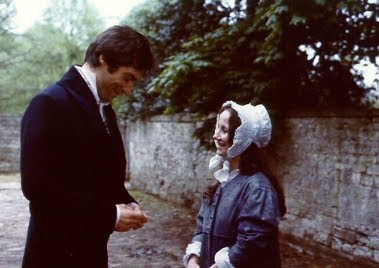
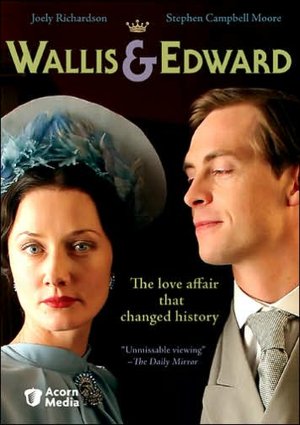
Wallis & Edward is a mostly sympathetic portrayal of the relationship between Edward VIII and Wallis Simpson.  The film stars Joely Richardson and Stephen Campbell Moore. (I really, really loved him in the role of Hugh Stanbury in He Knew He Was Right.) The film follows their courtship leading up to his abdication of the throne so he could be with the woman he loved. This portrayal shows an incredibly vulnerable Wallis Simpson being pursued by the King, highlighting her reluctance to take this relationship seriously. (She was married at the time.)

While I enjoyed Wallis & Edward, it wasn't a movie I could love.

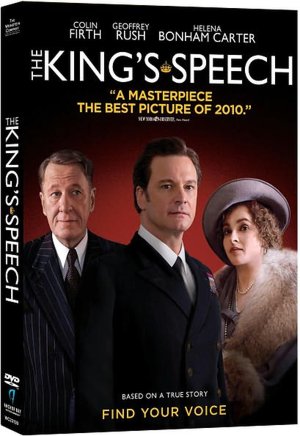
The King's Speech, on the other hand, was an incredible movie that I just LOVED. The film stars Colin Firth as King George VI, Helena Bonham Carter as his wife, Queen Elizabeth, and Geoffrey Rush as his speech therapist, Lionel Logue. This was a movie that I loved almost from the start. I loved so many things about it! I loved the relationship between husband and wife. And I loved seeing him as a father with his two little girls. Loved seeing the juxtaposition of the king's private and public lives. The scenes between the king and his therapist were so wonderful, so compelling.  And this wasn't just the king's story either. We also caught glimpses of Lionel Logue's private life, his time with his wife and children. (Loved all the Shakespeare references, for example!!!) There were so many things that I absolutely loved about this movie.This film, of course, covers the same span as Wallis & Edward, but the portrayal is very different. And there are scenes between the two brothers that are difficult to watch.

I am planning on watching Bertie & Elizabeth when the library gets a copy.

Watch these two:
  • If you are interested in the royal family
  • If you enjoy the 1930s

© 2012 Becky Laney of Becky's Book Reviews

The Sunday Salon: Mini Movie Recommendations

Watch The Egg and I
  • If you like Claudette Colbert
  • If you like Fred MacMurray
  • If you like black-and-white romantic comedies
  • If you like funny movies about city people trying their hand at farming; in this case raising chickens
  • If you want to meet Ma and Pa Kettle
  • If you enjoy movies like GEORGE WASHINGTON SLEPT HERE and MR. BLANDINGS BUILDS HIS DREAM HOUSE.
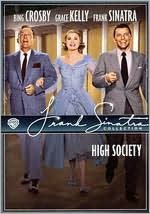
Watch High Society
  • If you like Bing Crosby
  • If you like Frank Sinatra
  • If you like Grace Kelly
  • If you like Louis Armstrong
  • If you like musicals (this one is Cole Porter)
  • If you like jazz and jazz festivals
  • If you like The Philadelphia Story
  • If you like romance
  • If you like classic movies
  • If you like movies that explore human frailty; this movie has some great characters, great scenes.


 Watch Puss in Boots
  • If you love the character Puss in Boots from the Shrek movies
  • If you are interested in the character's back story
  • If you love twists on fairy tales
  • If you love cats 
  • If you have a high tolerance level for Humpty Dumpty


© 2012 Becky Laney of Becky's Book Reviews

Sunday Salon: Watching Miss Marple

I recently watched two episodes of Miss Marple: Sleeping Murder and Moving Finger! I really enjoyed both movies, though, I admit to liking Moving Finger more because that happens to be one of my favorite Christie mysteries. 

The Moving Finger is about a not-so-quiet village being plagued with poison pen letters--anonymous accusations sent through the mail. Almost everyone in the village--with one or two exceptions--has received one. Several murders occur before Miss Marple arrives to help solve the case. I love this mystery because of the characters and the added romance.

The Sleeping Murder is another mystery that I've read. But it wasn't memorable to me. I watched this one without remembering any of the clues or who did it! Which was nice, I suppose! It's tricky to know what to do. On the one hand, I like to be surprised when reading the actual mystery, I wouldn't really want to know who did it ahead of time. But I like to be surprised when watching the movie too.

Watch Miss Marple
  • If you're a fan of the books
  • If you enjoy mysteries
  • If you like mysteries set in the past
© 2012 Becky Laney of Becky's Book Reviews

Sunday Salon: Watching Lorna Doone

I recently watched the 2000 adaptation of Lorna Doone starring Richard Coyle as John Ridd and Amelia Warner as Lorna Doone. (Also notable, Martin Clunes as Jeremy Stickles, and Aidan Gillen as Carver Doone). This historical romance was quite lovely! I do love period dramas! And I'd definitely recommend this one to anyone who loves period dramas and historical romance--even if you've never read the book or plan on reading the book.

It is quite fast-paced, especially when compared with the novel! It is romantic and exciting and oh-so-intense. Especially the ending.
I just LOVED Richard Coyle as John Ridd. Then again, I tend to LOVE Richard Coyle. And Aidan Gillen made a dramatic, oh-so-dangerous villain. He made Carver Doone so much more interesting, I thought. A truly memorable villain!

I thought this film did a great job with the characters, the characterization!!! And the romance was lovely. 

Have you seen this one, what did you think?

© 2012 Becky Laney of Becky's Book Reviews

Sunday Salon: Watching Lady Audley's Secret

I recently watched an "adaptation" of Lady Audley's Secret. How much does the movie have in common with the book? Well, I could be generous and say ten percent--maybe even fifteen percent, but, essentially NOTHING. True, the movie shares a title with the book. True, the movie features characters called: Michael Audley, Alicia Audley, Lady Audley (Lucy Graham), Robert Audley,  George Talboys, and Phoebe and Luke Marks. As does the book. True, Lady Audley has a secret or two. But that is where the similarities end. For the most part.

Perhaps the BIGGEST difference between the movie and the book is in the character of Robert Audley. Other than his first name being Robert, and his last name being Audley, you can just assume that the movie version is completely different--and by different I mean OPPOSITE. Well, technically I guess both Robert Audleys are nephew to Michael Audley. But as far as character, personality, morals, motivations, intentions, and actions go, they are about as opposed as they can be.

If I had to describe the Robert Audley from the movie, I'd say he was lusty, vengeful, and a complete jerk. He LUSTS after his uncle's wife, Lady Audley, something so far removed from the book it is almost impossible to believe that the people responsible for this movie even read the book--did they even own a copy? He doesn't just lust from afar, he goes about grabbing her and kissing her. And then there's the whole sneaking up and watching her in a state of undress through a slightly-open-but-mostly-closed door, her private room. A place he had no business lingering in the first place. Never mind him just happening to find the door that way. And then the way he turns around and kisses Alicia when she discovers him---DISGUSTING. In the book, Robert was equally indifferent to Alicia, who did want him to propose one day, and to Lady Audley. He definitely wasn't chasing after Lady Audley trying to convince her to run away with him! And while it is true that Lady Audley tells her husband that she thought it was unwise to have Robert around just because he might accidentally fall in love with her instead of Alicia, it was a tactic on her part. She wanted him out of the house, she wanted him out of the neighborhood. This Robert--the movie Robert--is not exactly indifferent to Alicia, he leads her to believe that they will be married. You can't mistake words like "will you marry me?" So Robert just appears to be a JERK (to put it very nicely) to Alicia.

George Talboys. Poor George. So little screen time, and what time you were on screen, well, Robert your dear friend, was more interested in Lady Audley. How were viewers to ever guess that your relationship with Robert actually mattered? That your friendship with Robert actually was the motivation behind almost all of the novel after your mysterious disappearance?! No, poor George, you didn't enter into Robert's thoughts at all, hardly. It would have helped things, perhaps, if the movie-Robert had bothered to track down your family, to share his convictions, to meet your father and sister. It would have perhaps shown that Robert just wasn't OBSESSED with Lady Audley instead of Lady Audley's "secrets."

Does motivation matter? Is it so very, very, very important that Robert investigate the disappearance of his friend George because he loved George, that he wanted justice for his friend, that he sincerely thought something horrible had happened and he needed answers? I think so. When you make Robert's sole motivation lust, anger, and vengeance--if Lady Audley won't give herself to me, if she won't betray her husband for a passionate affair with me--then I'll go about ruining her life, I'll piece together clues to make sure she never has a happy day in her life--then Robert is a VILLAIN. He's a guy you want to boo, hiss. Who could ever LIKE this Robert Audley? Who would ever see him as a hero?

Would this movie be more satisfying if it wasn't trying to be an adaptation from a book? I'm not sure. Maybe.

© 2012 Becky Laney of Becky's Book Reviews

Sunday Salon: Watching He Knew He Was Right

I could gush on and on about He Knew He Was Right. This adaptation of an Anthony Trollope novel is practically perfect. It is both true to the book and completely delightful all on its own. Meaning that you don't have to have read the book in order to enjoy it completely, though, after watching this one you may want to pick up the book! I know watching this one made me want to reread the book!!!

So what did I love about this one? I loved that it was true to the book. Now, I've read here and there that this movie is flawed because the subplots are supposedly more interesting than the main story line, that there is something wrong with this movie because viewers care more for the minor characters than the major ones. I disagree. Here's why. This would only be a problem or a flaw IF the movie gave more screen time to the minor characters (Nora Rowley, Hugh Stanbury, Aunt Jemima Stanbury, Dorothy Stanbury, Brooke Burgess, Reverend Gibson, Camilla French, Arabella French, Mr. Glascock, etc.) than Anthony Trollope devotes to these same characters in his novel. If you've read the book, you KNOW that Anthony Trollope spends a great deal of time with these characters. In particular, he gives GREAT attention to both Dorothy Stanbury and Nora Rowley.

These two young women receive equal attention to Emily Trevelyan. The successful romances of Nora and Hugh and Brooke and Dorothy provide contrast to the unhealthy deteriorating romance of Louis Trevelyan and Emily. Viewers see--briefly see--the romance between the "main characters" of Emily and Louis. But except for the first few minutes and the last few minutes--these two are anything but happy and together. The obstacles for this couple all occur after the wedding, after the honeymoon, after the birth of their son. In fact, he's a toddler when the problems begin. Essentially, I see Emily and Louis as one story line, true, but not necessarily the "main" story line. The other story lines receive equal time and attention in the novel, and, it is only fair that they receive the same amount on screen. I don't think Trollope thought in terms of "major" characters and "minor" characters. Not the way we do. I think there is enough depth and substance in his characters that even so-called "minor" characters feel real and interesting.

Thoughts on the Main Story. Viewed solely in terms of the "main" story, the break down of a marriage, the nervous break down of a man, Louis Trevelyan, the story is truly tragic. Here we have a happy home torn apart, broken and divided. And why? Because of one man's insistence that he is right, that his perception of reality is the only right perception. That what "society" thinks is ultimately more important than anything else. In other words, if one or two busybodies from "society" think that there is something immoral in Emily receiving visits from her godfather--her father's so-called oldest and dearest friend, then without a doubt it MUST be true. His reasoning is fuzzy at best, jumping from one vague notion of 'it's not quite proper' to 'my wife is committing adultery' very suddenly. If you look for logical reasons as to why he'd assume the worst, you won't find them. Now, does this mean Emily is perfect? No. Here's why I think she should be held partly accountable. I think that at the very, very, very start, she could have done more to ease his mind. But she was angry and resentful of the implications and responding in turn. There were small things she could have tried to make peace with her husband, and while it's true her pride would have suffered a little here and there, in the end, it might have been worth trying. But that is complete speculation. The truth is that it is hard to pinpoint exactly where Louis started losing his sanity. Now this is all sad and tragic enough, I suppose, but for me the REAL tragedy of this main story line is seeing what this break down does to their son. Seeing two adults battle for possession of their son. Seeing the injustice of the times. It was a POWERFUL moment to see Emily lose her son--he was kidnapped by her husband. There was absolutely NOTHING she could do to get him back in her custody. Her husband had all the rights--no matter who was right or wrong, no matter who was better fit to be a parent, no matter the father's questionable sanity. He didn't want his wife to have custody, he didn't want her to be able to see her son, he didn't want his son to love his mother, he wanted to hurt her deeply so he took away what she valued and loved most in the world. If people prefer the subplots to the "main plot" it may be because they prefer romance and comedy to tragedy. For those that are looking for tragedy, for commentary on society, this main story will satisfy.

Thoughts on the Sub-plots. The sub-plots of He Knew He Was Right provide balance and contrast. Without these storylines, He Knew He Was Right would be EXTREMELY dark and depressing.

Here are how the subplots are connected. Louis has a best friend, Hugh Stanbury, and Emily has a younger sister, Nora. The two are often together because they spend a lot of time with Emily and Louis. The two already are in love when the movie begins--though he's not officially spoken or declared his love for her. She feels something for him, he feels something for her. And it is only his lack of status that is keeping him from asking her to marry him. When Louis separates from his wife, he sends her to the country. Emily, Nora, and little Louis stay with Hugh's mother and sister...introducing viewers to part of Stanbury's family.

Hugh has another sister, Dorothy, who has recently become a companion, to Aunt Jemima Stanbury. She is a CHARACTER and then some!!! Jemima wants to do something for Dorothy because she does like her and wants to see her well-settled, so she tries to get Dorothy to marry Reverend Gibson. While Gibson, at first, seems willing, Dorothy, however is not. Gibson is being pursued by the French sisters, Camilla and Arabella. Dorothy's heart belongs to Brooke Burgess, a young man who comes to visit Aunt Jemima. (He's also friends with her brother, Hugh.) Brooke and Dorothy love each other very, very much. But Aunt Jemima thinks that she should have some say in who marries who. Love, courtship, and marriage are definitely important themes in each of the sub-plots. From the obsessive, jealous love of the French sisters for the same man, Reverend Gibson, which plays out as a comedy. To the forever-and-ever love of Nora and Hugh and Brooke and Dorothy. Both couples definitely have obstacles to face.

There is a richness in Trollope's novel that translates very well in this adaptation.

One other thing I'd love to mention about this adaptation is that I just LOVE the narration. I love how the characters speak directly to the audience, how they look at the camera, making excuses for their behavior.

Watch He Knew He Was Right
  • If you want an introduction to Trollope
  • If you enjoy period dramas; It has tragedy, comedy, romance, and drama
  • If you want to reward yourself for making it through the novel 
Meet Mr. Gibson
Reverend Gibson in a TOUGH moment


 © 2012 Becky Laney of Becky's Book Reviews

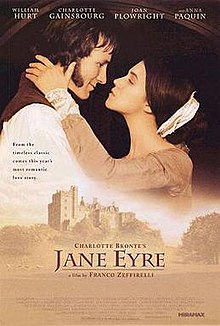
The Sunday Salon: Watching Jane Eyre (1996)

This week I'm sharing my thoughts on the 1996 film, Jane Eyre. This adaptation stars Charlotte Gainsbourg as Jane Eyre and William Hurt as Edward Rochester.

I have been having so much FUN watching all these adaptations of Jane Eyre. You might not think it would be fun to watch Jane Eyre and only Jane Eyre for weeks at a time, but, surprisingly enough I am having a delightful time with this project of mine. Why? Even though not every adaptation gets every, little thing right, even though some interpretations of Bronte's original novel don't make me giddy in delight--even though a few scenes in a few adaptations make me cringe--I have found enough to enjoy in each and every adaptation.

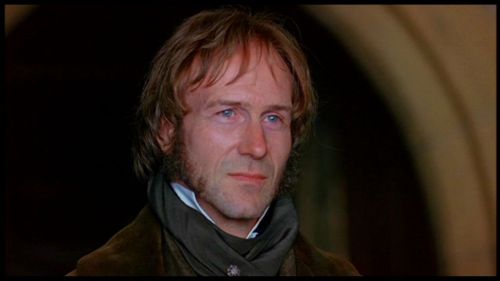
For the most part I enjoyed this adaptation of Jane Eyre. I really enjoyed William Hurt as Mr. Rochester. I think he did a good job in capturing Charlotte Bronte's hero. Perhaps he isn't fully-fully realized or brought to life in this adaptation, a few scenes are missing, a few exchanges are missing, but, for the most part he plays the role right. (The gypsy-fortune-teller scene is missing from this adaptation. And some of the couple's conversations are cut short or eliminated from this abridgment.)

The film did a good job in adapting two tricky scenes. I thought this film did a great job in portraying the first meeting between Mr. Rochester and Jane Eyre. This is closer to how I imagined it from the book. Perhaps this stood out to me because I thought it was done so horribly in the 1997 adaptation.
The second scene that has proved oh-so-tricky to get right is after-the-non-wedding, post-big-reveal scene. This movie gets a passing score not so much for what it does, but for what it doesn't do. It isn't a monstrous temper tantrum or a make-out session. Rochester isn't yelling, screaming, grabbing, pushing, pulling, or demanding.

NOW, what happens after she leaves, well, that certainly deviates from the book!!! Perhaps it took inspiration from the 1934 film?

Overall, this one does take liberties with the book. It is not as faithful as it could be. St. John Rivers is not her cousin, he is rector at Gateshead or near Gateshead. She meets St. John Rivers and his sister, Mary Rivers, not in her desperate hour of need when she's running away from Mr. Rochester, but, instead when she goes to visit her dying Aunt Reed. She returns to them after her bitter disappointment, but, they are already acquainted with her. She does inherit her money (unlike the 1997 adaptation) but she's never as desperate and friendless in this one. For St. John Rivers and his sister know they are taking care of a wealthy heiress.

My general thoughts are this was a very nice, very pleasant, very enjoyable, non-offensive adaptation of Jane Eyre. It may not be WOW, WOW, WOW this is the best Jane Eyre EVER, but, it works really well, in my opinion. It's a nice abridgment, nothing *too* essential was lost. And the romance was nicely done. I thought the age difference between the two worked. (In some adaptions, they are too close together in age to be believable as Jane and Edward. For example, in the 1944 adaptation starring Orson Welles and Joan Fontaine.) I enjoyed both William Hurt's portrayal as Mr. Rochester and Charlotte Gainsbourg's portrayal as Jane Eyre. Essentially, I thought they got all the most important elements right in this adaptation. True, it could have been longer, and if it had been longer, they could have been more faithful to the book or even more faithful to the book. But I think they did a good job in capturing the heart of the original. For this reason, I think I prefer it now to the 2006 adaptation. And I definitely prefer it to the 1997 adaptation.

First conversation
Second conversation
Third conversation
Jane Rescues Mr. Rochester (fire scene)
Blanche Ingram and "guests" on governesses
The Proposal 
The Wedding
Jane Leaves Mr. Rochester after the big reveal

Have you seen this adaptation? What did you think? Do you have a favorite adaptation?

Other Jane Eyre (movie) reviews

© 2012 Becky Laney of Becky's Book Reviews

The Sunday Salon: Watching Jane Eyre (1997)

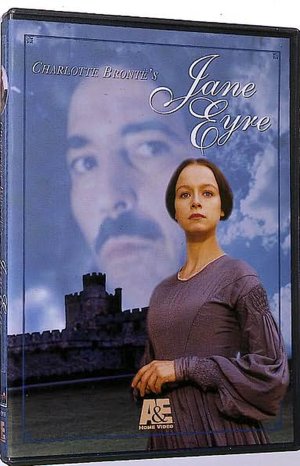
Today I'm sharing my thoughts on the 1997 adaptation of Charlotte Bronte's Jane Eyre. This film stars Samantha Morton and Ciaran Hinds.

Was it faithful to Charlotte Bronte's novel? No and Yes. OR, if you prefer, yes and no. Did every character from the book make it into the film? NO. Did every scene from the book make it into the film? NO. Did every important character and every important scene make it into the film? Well? I don't know how to answer that.

For example, in this adaptation, Jane does NOT learn that the Rivers are her cousins, and she does NOT inherit the money from her dead uncle. Rosamond Oliver and Mary Rivers have both disappeared from this adaptation. But how important are the Rivers to the story as a whole? Do people love Jane Eyre because she runs away and spends time with cousins she didn't even know she had? Or is the romance itself most important to readers and viewers?

Another example, in this adaptation, Jane does leave Thornfield Hall to visit her dying aunt, but, if you blink you'll miss it. Because within seconds of her leaving she's returned. We're told she spent a month there, but, we don't see a minute of it. You have to ask yourself if you love Jane Eyre because of those scenes, that time spent with her dying aunt, and her Reed cousins, or do you love Jane Eyre because of the main story with Mr. Rochester and his mad wife. 

Was it faithful to the book where it counted the most? Was it faithful in the character of Jane Eyre? Was it faithful in the character of Mr. Rochester? Did it do justice to their romance? Were the scenes between Jane and Edward done properly? Did the actors interpret the characters in a way that was true to the book? Did anything feel off? 

I happened to enjoy Samantha Morton as Jane Eyre. I really, really liked her in this role. I thought she did a great job being Jane. I loved her narration, for example. I thought she did a good job with getting the character right. She is definitely a good reason to watch this adaptation.

As for Ciaran Hinds, well, it's hard for me to say. For one thing, a couple of his scenes made me want to cringe. Truly. I did not like the way he portrayed Mr. Rochester. There were a couple of scenes I thought he was TOO angry, TOO violent, TOO forceful, TOO scary, TOO intimidating, TOO dramatic. Particularly the oh-so-crucial after-the-non-wedding, post-big-reveal scene. His temper tantrum is just so out of character. He's way too physical, too physically abusive--bordering on it anyway. And the whole scene just makes me cringe. That is NOT the way it's supposed to go, that is NOT how it was handled in the book.

And at times I felt Hinds' Mr. Rochester was not dimensional enough, sure, he got a few of the emotions down, but, did he capture the full complexity of Bronte's hero?! I'm not sure he did. Also, on a more personal note, the mustache and sideburns bothered me. From certain angles, I kept seeing Tennessee Ernie Ford. (When I wasn't thinking of this animated villain.)

Was this adaptation faithful when it comes to portraying the relationship between Jane and Edward? I think it was. I think the dialogue between them worked. I think many of their scenes were faithful to the book--for the most part. 

I thought this was a very comfortable Jane Eyre to watch. It was just around two hours. You could sit and watch it comfortably all at once. Yes, it condensed things, yes, certain things were missing from this adaptation. But it made sense, it flowed smoothly. I found many, many things delightful about it. I enjoyed many of the scenes, of course, I had issues with a couple of scenes. I didn't particularly love the first meeting between Jane Eyre and Mr. Rochester, I thought it was way too dramatic, definitely over-the-top. But other scenes made up for it, in my opinion.

I did think the film did a good job creating ambiance--at capturing the gothic elements of this one. There were scenes that captured the mystery, suspense, and horror of the original.

I thought Abigail Cruttenden brought something unique to Blanche Ingram--for better or worse. In this film, she was portrayed sympathetically, or more sympathetically than in other adaptations. While we're still told that she was mainly after Mr. Rochester's money, she's not portrayed one-dimensionally as vain and haughty. While she may not be exactly friendly towards "the governess." She doesn't come across as mean and deserving of what she gets. (That is Mr. Rochester using and manipulating her, leading her to believe one thing, but in all truth just trying to make Jane jealous.) Is that a good thing? Well, I suppose that depends on your perspective. Would a nice Caroline Bingley work in Pride and Prejudice? Are people so determined to not like Blanche Ingram that this slightly modified Blanche would offend? I'm not sure.

 St. John Rivers is likewise portrayed sympathetically. He doesn't come across as offensively as he does in other adaptations. He actually seems quite nice, quite pleasant, as someone who actually has people-skills.

Have you seen this adaptation? What did you think of it?

Watch Jane Eyre
  • If you're a fan of the book
  • If you're a fan of Victorian period dramas 
Other Jane Eyre (movie) reviews


    © 2012 Becky Laney of Becky's Book Reviews

    The Sunday Salon: Watching Jane Eyre (2006)

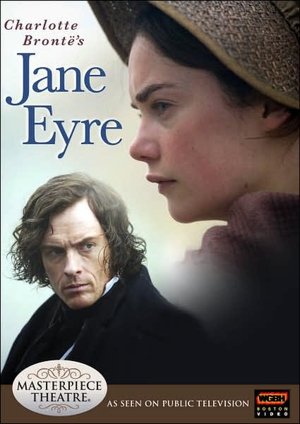
    Last Sunday, I reviewed my favorite adaptation of Jane Eyre starring Zelah Clarke and Timothy Dalton. This Sunday, I am ready to discuss the 2006 adaptation of Jane Eyre starring Ruth Wilson and Toby Stephens. This was the first time I've seen this adaptation since discovering the other one. And it had been a good two years since I'd seen this adaptation, so I was more than happy to reacquaint myself with this film!!!

    So, you already know that this one isn't my favorite, favorite, favorite Jane Eyre. But I thought I would share specifically what I liked and didn't like about this adaptation.

    I loved Georgie Henley as the young Jane Eyre. I just LOVED her! This adaptation hardly spends time on Jane's childhood, but for what we do see in those short minutes it was love. Granted, I will always see her as Lucy (from The Lion, The Witch, and The Wardrobe), and so that does bias me a little in her favor. But I thought they included just enough of her childhood to flavor the movie.

    I loved Christina Cole as Blanche Ingram. Out of all the Jane Eyre adaptations I've ever seen--four or five at this point?--she is the BEST Blanche I've ever seen. The scenes with Blanche and the other house guests worked so incredibly well. Viewers know that Mr. Rochester is just using Blanche to make Jane Eyre jealous, that he is manipulating both women. But we also get a sense that Blanche is using him as well, that she sees him purely as status and wealth. And so it's easy to excuse Mr. Rochester perhaps. Still, he's technically in the wrong.

    There were a few scenes that I liked (a little) better in this adaptation. For example, when Jane Eyre "saves" Mr. Rochester when his bed curtains are on fire. The aftermath of that fire when they're talking and he holds her hand. It is in the 1983 adaptation too, of course. But in this movie, viewers see Jane Eyre go back to bed. And the emotion she conveys actually reminds me a bit of "I Could Have Danced All Night" from My Fair Lady. Viewers catch a glimpse of Jane Eyre's love for Mr. Rochester, and how she holds him dear, and how she is treasuring up his touch of her hand. It could be viewed as silly, I suppose, but I think it's heartfelt too.

    Adele. The scene where we first meet Adele was nicely done. I liked meeting her in this way, with her singing and "performing" in French. The subtitles translating the song were quite effective. They conveyed to the viewers part of Adele's tragic background. And I think we do catch glimpses of her neediness, her desperation for love and acceptance and family. True, she may appear a brat, a horribly spoiled brat, but, I think there is something more that could be there. But this isn't Adele's story, and, it's easy to forget about her completely.

    Her cousins. Well, in this adaptation St. John Rivers does not come across as a horrible-horrible-horrible man. For better or worse depending on how you read Bronte's novel! And his sisters do have a young, vibrant feel about them in this adaptation. In the 1983 adaptation, they appear much older, much more settled, content with what little they have and not expecting life to offer them any entertainment or thrills. 

    I do think this adaptation does a better job with ambiance, capturing the gothic elements of the novel, and the movie is more sophisticated and polished in terms of sets, scenery, costumes, soundtrack, etc. 

    But. This movie does take liberties with the story and the characters. Mr. Rochester's scenes with Jane Eyre aren't necessarily going to be from the book, or true to the book, or true to the spirit of the book. In some scenes, yes, they are similar enough that it works...especially if it's been a few years since you've last read the book. The fuzzier your memory is, the better. And some scenes do feel like they could be authentic enough to the book because they get the characterization right. But. In other scenes, well, liberties were taken.

    There were two scenes that bothered me in this adaptation, the two scenes with the most liberties taken. One scene was the "after wedding" scene, but, really it is the after-the-non-wedding scene. It is very sensual, too sensual in my opinion. Jane Eyre and Mr. Rochester on a bed kissing and caressing while he tries to make excuses for his having kept his mad-wife a secret AND trying to convince Jane that he wouldn't try to tempt her if only she would consent to travel with him and go far away, they could live as brother-and-sister. I didn't buy that argument for a second, if, he truly respected her and wanted to be completely honorable he wouldn't have her on a bed right then and there trying to use his kisses to convince her to stay. This scene is completely wrong for a couple of reasons. One, it is NOT true to the book, not true to the characters, not true to Charlotte Bronte. You'd never find the scene written out like that in Charlotte Bronte's novel. The novel uses words, charismatic words spoken by a passionate Mr. Rochester, to try to convince Jane to stay, to try to help her understand. Read the scene from the book and it is SO MUCH BETTER. The second scene that bothers me is the near-ending where Jane and Mr. Rochester agree to marry and live happily ever after. The book is SO MUCH BETTER. And the changes they made just didn't sit well with me.

    So what did I think of Toby Stephens as Mr. Rochester? Well, I thought he did a good job in some parts, in some ways, in some scenes. Some of his scenes worked better than others. But. He did a good job. He was likable. He was charismatic. He was passionate. You could tell *why* Jane Eyre would be drawn to him. And the film does a good job in building their relationship. But he isn't Timothy Dalton. And he's not completely true to the book, true to the spirit of the book.

    I did like Ruth Wilson as Jane Eyre. I  thought she did a good job in her role as Jane. But I'm not sure I like her better than Zelah Clarke. But she's definitely one of the reasons why this adaptation works so well and has so many fans.

    Watch Jane Eyre
    • If you love Jane Eyre
    • If you love period dramas
    • If you love historical romances
    • If you love good drama 
    ETA: Other Jane Eyre (movie) reviews
    Coming soon:
    1996
    1997

      © 2012 Becky Laney of Becky's Book Reviews

      Watching Dickens


       In June I was able to watch two movies adapted from Dickens' novels.

      The first movie I watched was Pickwick Papers. I watched the BBC miniseries done in 1985. It stars Nigel Stock as Mr. Pickwick, Clive Swift as Mr. Tupman, Alan Parnaby as Mr. Snodgrass, Jeremy Nicholas as Mr. Winkle, Phil Daniels as Sam Weller, and Patrick Malahide as Mr. Jingle. To name a few. What can I say about this one? Well, the watching experience matches the reading experience. In other words, I was equally bored and amused. For example, some of the adventures of the Pickwick Club bored me in the book, and they likewise bored me in the dramatization. Not all of the adventures are boring, mind you, some are quite funny--very funny. But don't expect each episode of the miniseries to be oh-so-thrilling or laugh out loud funny. What I found was that the miniseries could be just as charming and delightful as the book. A great example would be the characterization of Sam Weller and Mr. Pickwick. Sam Weller is one of the BEST characters in Pickwick Papers. Once he's introduced into the narrative, it's like a brand new book, a much better book! Same with the drama!!! I don't think it would be an easy role to play either! But Phil Daniels does a WONDERFUL job with it!!! I also think Patrick Malahide made an excellent Mr. Jingle. Here is a character that made me want to boo, hiss every time he made an appearance; he was a true villain. Yet. By the end when he's had a transformation thanks to the mercy of Mr. Pickwick, I am able to believe it. Which really, really surprised me. Any actor that can pull off villainy and repentance must be good, right?


      I definitely am glad I made time to watch The Pickwick Papers. There were things that I noticed for the first time in the drama. For example, when I was reading the book, I was so caught up in loving Sam Weller that I neglected the characterization of Mr. Pickwick, I didn't realize how much he changes throughout the novel (and the drama). I was so busy laughing with Sam Weller that I missed the heart and soul of a great man, Mr. Pickwick. It is something that I probably would have caught if I had revisited the novel too--but I'm glad I don't have to wait that long. (While I do plan on rereading Dickens, I hope to read every novel at least once before I start indulging in rereads.)

      The second adaptation I watched was Our Mutual Friend (1998). Our Mutual Friend is my favorite, favorite, favorite Dickens. I just LOVE the book so much. In fact, if I was tempted to reread Dickens, Our Mutual Friend would be the one I'd most want to indulge in. I just love, love, love Lizzie and Bella and John and Eugene and Mr. and Mrs. Boffin. So I was very, very happy to watch this film. It stars Keeley Hawes as Lizzie Hexam, Paul McGann as Eugene Wrayburn, Anna Friel as Bella Wilfer, and Steven Mackintosh as John Rokesmith. (I recognized "Bella" from A Midsummer's Night Dream and Pushing Daisies. I recognized "Lizzie" from Wives and Daughters and Under the Greenwood Tree. I recognized "John" from The Muppet Christmas Carol.) So was this film giddy-making? Yes and no. It was giddy making except for when it wasn't. The romantic stories following the two couples could be pure giddy-making at times. I just LOVE, LOVE, LOVE both couples (Lizzie and Eugene; Bella and John). But there were many dark elements in this one. Some very dark, very creepy, very unpleasant elements in this one. For example, Silas Wegg (played by Kenneth Cranham) and Mr. Venus (played by Timothy Spall, whom I recognized from Oliver Twist and Enchanted) were faithful to the book (as far as I can recall) but not exactly thrilling. I do think David Morrissey did a fantastic job of being Bradley Headstone!!! Generally speaking, I think this was a wonderful, wonderful production. Thought it was really well done, thought the portrayals were just about perfect. And I loved so many scenes in this movie!!!

      Watch Pickwick Papers

      • If you're a fan of Charles Dickens
      • If you are a fan of his first novel, The Pickwick Papers
      • If you're curious to see how Mr. Pickwick, Sam Weller, etc. are portrayed on film
      • If you enjoy Dickens' humor and are patient

      Watch Our Mutual Friend

      • If you're a fan of Charles Dickens
      • If you are a fan of the novel, Our Mutual Friend
      • If you enjoy romance, drama, and suspense (this one has quite a few dead bodies)
      • If you enjoy period dramas

      © 2012 Becky Laney of Becky's Book Reviews
      Jane in the Seventies

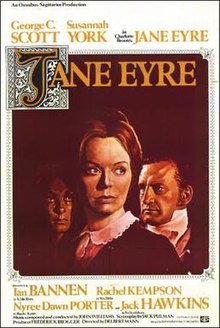
      Today I'll be sharing my thoughts on TWO adaptations of Charlotte Bronte's Jane Eyre, both adaptations are from the 1970s, but they are so DIFFERENT from one another. One I'd definitely recommend, the other, well, not so much.

      I'll start with the one I wouldn't really recommend, the 1970 adaptation starring George C. Scott and Susannah York. The only thing that *may* save this one from being the worst Jane Eyre ever it is my recent discovery of the 1949 TV episode adaptation of Jane Eyre starring Charlton Heston and Mary Sinclair. And then there is always the 1934 adaptation with Colin Clive and Virginia Bruce. So it would not be an easy automatic decision.

      What can I say about this adaptation of Jane Eyre? Susannah York did NOT make a convincing Jane Eyre. While this couple managed to still have a twelve year age difference, it wasn't because she was so young, quite the reverse. She was over thirty and trying to play a young woman of eighteen, nineteen, or twenty. It did NOT work well. In my opinion. She was not convincing in her role as a young, plain governess. And I had a hard time believing in the romance of this couple. George C. Scott, likewise, did not make a convincing Mr. Rochester. In fact, none of the actors--at least the human ones--were quite believable in their roles in this movie. (The horses and Pilot did okay for the most part.) Now, some did better than others. I won't lie. Not everyone was equally horrible. And part of the trouble could have been the script. (The Rivers family are not her cousins, she doesn't receive an inheritance, etc. Also the Reed family does not appear at all.)

      I believe there are some issues with some DVD productions being extremely low quality--in terms of picture quality, sound quality, etc. And I do believe that played a role in why I found this one so painful to watch. But only partly. Because better sound quality wouldn't necessarily have made me appreciate the score to this film any better. I found it very intrusive. It just didn't feel like it was written for this movie. 

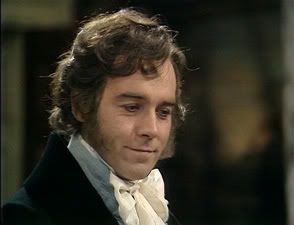
      The second adaptation I will be discussing is the BBC adaptation of 1973. This adaptation is shorter than the 1983 adaptation starring Timothy Dalton and Zelah Clarke. But. It is faithful--quite faithful--to the book. A few might even say more faithful. Then again a few might say it wasn't as faithful as it might first appear to be. (For example, this one does have Mr. Rochester dressing up as a gypsy and telling fortunes! However, this Jane is not fooled for even half a second. Before she even goes to see the gypsy, before she even hears him speak, she claims to have known it was Mr. Rochester all along. He's not able to really talk with her in disguise at all. The scene is not as vulnerable perhaps. So on the one hand, Jane's "cleverness" is maintained and she never loses control, but, is that a good thing? Is this interpretation the best one? Here's the 1983 one for comparison.)

      Is this adaptation for every viewer? Probably not. It is just over four hours in length. For viewers unfamiliar with other BBC adaptations from the 1970s and 1980s, the production quality may seem low. It doesn't necessarily feel like a proper movie. It doesn't have this grand, sophisticated, polished feel to it. The sets, the scenery, the costumes, the landscapes, the filming isn't as grand. Don't be surprised to find reviews calling it boring and unwatchable. It's all a matter of taste and preference. For viewers who are READERS, for viewers who LOVE, LOVE, LOVE the novel, Jane Eyre. For viewers who passionately care for Bronte's novel and hold Bronte's words in high esteem, it doesn't really get any better than this. (Same with the 1983.) I read a review of the 2011 movie that said it [the 2011 movie] was better because it didn't try to read the book to viewers. And it made me smile a little. It's all a matter of taste. Faithfulness--particularly faithfulness in dialogue between Jane and Edward--is SO VERY VERY VERY important to me. And this one has it, for the most part.

      I will say that this adaptation was heavy in narration. And that sometimes the narration was intrusive. The narrator stating what was so clearly obvious to one and all. In a few scenes, this bothered me a lot. I kept thinking it would be near-perfect if the narrator would quiet down and let me watch in peace. But. For the most part. I did like this adaptation.

      It stars Sorcha Cusack as Jane Eyre and Michael Jayston as Edward Rochester. While I didn't love, love, love Cusack as Jane Eyre (I liked her well enough but didn't quite love her), I absolutely LOVED, LOVED, LOVED Michael Jayston as Mr. Rochester. With each episode, I came to love him more. And by the time he proposed, well, I was extremely giddy to say the least.

      This adaptation got many things right. I loved the romance of this one. They make a very good couple. And while this Jane smiled a little too much, I loved the twinkle in Rochesters eyes.

      First Conversation, part one, part two
      Second Conversation, part one, part two
      Third Conversation
      Guests at Thornfield
      The Proposal
      Conversation After The Proposal (Next Day)
      Mr. Rochester as Gypsy
      Meeting Mr. Rochester
      Fire Scene
      After the Big Reveal

      © 2012 Becky Laney of Becky's Book Reviews
      Watching Jane Eyre (2011)

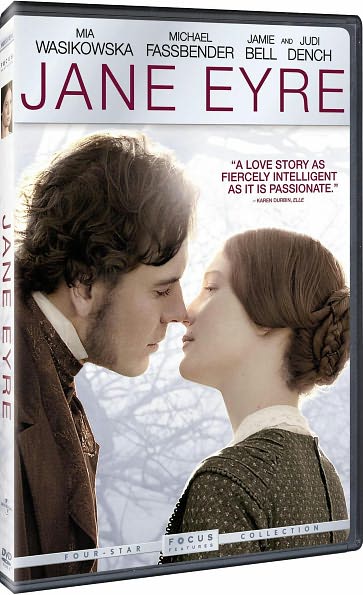
      Do I have thoughts and opinions on the newest adaptation of Jane Eyre? Of course, I do!!! But they have calmed down a little since my first viewing of the film last fall.  My first impression was that it was a horrible adaptation. It felt like they shuffled the pages of the script and didn't care to sort them out properly again. I just didn't understand why anyone would want to play around with the timeline and pacing. Why start the movie with Jane Eyre on the run? Why put viewers on the same page with the Rivers family? Why start there?! If you've never read Jane Eyre--never seen a movie version--it could prove VERY confusing to say the least. And I can only guess that it would influence one's impression of Mr. Rochester when we do finally meet him. Knowing from the start that this love story ends badly--with tears, angst, desperation, she's RUNNING away, etc.

      Would this movie make any sense at all if you'd never read Jane? Is there enough of a story there for viewers to piece together the proper story? I can never answer that because I've read Jane Eyre and I've seen Jane Eyre countless times. I didn't necessarily find it confusing--in terms of story--more puzzling in terms of WHY did they choose to interpret it this way? The two are not the same, I know!!! The story does feel rushed, in a way, especially if you're more accustomed to a longer adaptation (2006, 1983, 1973). But it doesn't feel AS rushed as it used to feel to me since I've seen other adaptations that were comparable in length (1944, 1996, 1997, 1970). And compared to the hour-long adaptations I've seen (1934, 1949) this one was so much better.

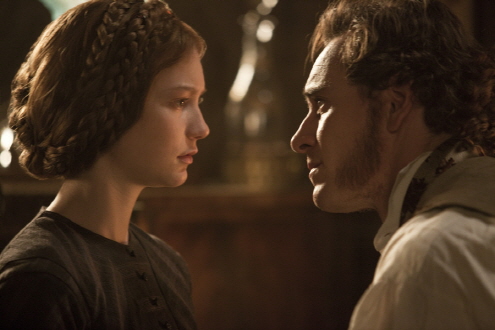
      My first impression of Michael Fassbender in the role of Mr. Rochester was not favorable. Seeing it again, I've softened a little. At first, I thought he got so little time on screen that it would be absolutely impossible to like him--or love him--for his character, personality, charisma, whatever you want to call it. But. Now that I've seen some other (shorter) Jane Eyre adaptations, I realize that it's not so horrible after all. Other adaptations--longer adaptations--give you MORE to love, perhaps. They may add different dimensions to the character of Mr. Rochester--for better or worse--and have their own way of interpreting Mr. Rochester, bringing him to life from the pages of a novel. But I think he does try. One reason why I had such a strong dislike for this portrayal was in how he chose to "react" to Jane's resolution to leave. His anger, his violence, his temper was SO out of control, so over the top. But having seen the 1997 film starring Ciaran Hinds, I have a different perspective. His rage doesn't seem as over-the-top to me because Hinds performance was even worse. Granted, I still don't "like" this scene; it still makes me uncomfortable. But I've seen worse now.

      My first impression of Mia Wasikowska in the role of Jane Eyre was not the best either. I didn't dislike her by any means. The problem was that she didn't leave much of an impression at all--either good or bad. She just left me indifferent. How do I feel now? Well, I can say with absolute confidence that she is so much better (or better suited) in the role than Susannah York, Mary Sinclair, and Virginia Bruce. She at least feels like she belongs to this story. And while she may not have amazed me with her performance, she does a good job. Nothing in her portrayal of Jane is unbelievable or out of character. Nothing she adds to the role offends in any way.

      © 2012 Becky Laney of Becky's Book Reviews

      Watching Other Janes

      Today I thought I would share with you my thoughts on early adaptations of Jane Eyre. The 1934 adaptation starring Colin Clive and Virginia Bruce, and the 1944 adaptation starring Orson Welles and Joan Fontaine.

      The 1934 adaptation is almost comical. I'm not sure comedy was the intent, but this adaptation is only an hour and five minutes!!!! If you found some of the newer adaptations rushed (2011, 1996, 1997, etc.) then you may not believe how condensed it can be. There is also something awkward about this adaptation. Virginia Bruce is just not convincing as Jane Eyre. Not in any way. (And I really wish her clothes had fit her. The costumes just do not hang right on her, they just don't fit. OR else they were trying really hard to make them as unflattering to her as possible.) I could talk about all the hundreds of details that just weren't right about this edition, or you could watch for yourself.  But despite all that, I do consider it worth watching...if you're a big Jane Eyre fan! OR if you just want a GOOD laugh!!!!

      Jane Eyre meets Mr. Rochester *before* she even meets Mrs. Fairfax or Adele
      Jane (in a frilly dress) has her first conversation with Mr. Rochester and sings 
      Naughty Adele in a Tree
      Jane Puts Out the Fire All On Her Own
      Adele being absolutely ridiculous in front of the guests but charming too
      Mr. Rochester tricks Jane leading to the...  Proposal
      Now this certainly wasn't in the book....OR...this Bertha doesn't quite look crazy

      I recently rewatched the 1944 adaptation of Jane Eyre starring Orson Welles and Joan Fontaine. I watched it at the first of the year and liked it, this time I may even have loved it. I think I appreciated Orson Welles' Mr. Rochester even more than before. One thing I've come to appreciate are the scenes between Jane and Edward. Particularly the oh-so-crucial scene between them after the big reveal. Orson Welles got this just right. He wasn't absurdly violent, he wasn't abusive; his heart ache and pain was transparent. He was full of sorrow and regret. Anyway, I thought this adaptation was great in the romance department. Passion, romance, drama, this movie has it in abundance. And this adaptation even features Jane as a child, even takes time to have her become good friends with Helen. True this one doesn't have her cousins or her inheritance. No St. John Rivers to propose marriage giving Jane Eyre an alternative. But. It does have John Sutton as "Dr. Rivers" the man responsible for saving the young Jane from her misery. Is it melodramatic? Yes. Is it entertaining? Yes!!! Is it worth watching?! Definitely!!!

      I also appreciate this adaptation because of the childhood scenes we get with Jane, Helen, Mr. Brocklehurst, Mrs. Reed, and Dr. Rivers. I really enjoyed Agnes Moorehead as Mrs. Reed--she was wonderful! And Henry Daniell as Mr. Brocklehurst, well, he's so brilliant at being evil!!! (Helen is played with Elizabeth Taylor, and she is quite angelic.)

      Jane Eyre meets Mr. Rochester
      The Oh-so-dramatic proposal 
      The Happy Ending

      I also watched a television adaption from 1949 starring Mary Sinclair as Jane Eyre and Charlton Heston as Edward Rochester. This may just be the worst Jane Eyre ever. It just doesn't work on any level. It's not entertaining; it's not believable as a drama, horror, or comedy. It takes an incredible amount of liberties with the book. There's not one character that is believable or likable in this production. Was it the acting? Was it the script-writing? I'm not sure. But I do think it's sad that the two commercials for Westinghouse products--the first for an electric range with not one but two ovens, and an electric sheet so you don't have to sleep with twelve pounds of blankets to stay warm--are more interesting than the drama itself.

      Part one, part two, part three, part four.

      © 2012 Becky Laney of Becky's Book Reviews

      The Sunday Salon: Watching Jane Eyre (1983)

      Jane Eyre is one of my favorite, favorite, favorite books. It's a book that I just love and adore. So it's only natural that I have a favorite adaptation, right?! Before viewing this 1983 adaptation starring Timothy Dalton and Zelah Clarke, my favorite Jane Eyre was the 2006 adaptation starring Ruth Wilson and Toby Stephens. (Though it's only fair to point out it was the only adaptation I'd seen...at the time. Now I've seen quite a few!) And I'll be reviewing it too in the next week or so--but this one, well, this one is the BEST one.

      What makes this one the BEST version of Jane Eyre? Well, it is so very, very faithful to the book. If you LOVE the book, if you love Bronte's writing, her dialogue, her pacing, her characterization, etc., then this one could hardly disappoint. There isn't as much interpretation going on, there aren't as many liberties taken with the story, the characters, the dialogue, the scenes. For better or worse. (I admit that some (but by no means all) of the added scenes in the 2006 adaptation were lovely, were faithful in spirit to the original novel, but they still weren't exactly in the book.)

      It does help that this adaptation is over five hours in length!!! 311 wonderful minutes; 11 episodes of 28 or 29 minutes apiece. Because it is so long--the perfect length in my opinion--nothing felt rushed, nothing was left out for time, nothing left unexplored. Time could be spent on her childhood, her school years, even her time as a teacher at Lowood while she's waiting to hear a reply to her advertisement. Time could be spent at Thornfield Hall; viewers get a real chance to get to know Mrs. Fairfax and Adele, a chance to be spooked by Grace Poole. And then, of course, there is the arrival of Mr. Rochester.

      There is just something wonderful in Timothy Dalton's portrayal of Mr. Rochester. There is just something wonderful in his scenes with Jane. For what this adaptation realizes is that the foundation of this romance, the heart and soul of it, are revealed in their conversations together. And these are absolutely faithful to the book. Nothing is rushed or abridged; nothing is forced or assumed. Dalton's Rochester is complex, is multidimensional. And this is a must, in my opinion. He must be capable of being polite and stern and playful and teasing and charismatic and mysterious and angry and tender and soulful. He's very much a character that needs to be in control yet at the same time capable of being vulnerable. And he just feels like the right Mr. Rochester. (Orson Welles, I felt, was great at being a forceful, melodramatic Mr. Rochester. If capturing GOTHIC is your only criteria, well, he did that quite well.)

      And I quite enjoyed Zelah Clarke's performance as Jane Eyre. She captured Jane's shyness and awkwardness and hesitation. But as she became more comfortable--both with herself and with Mr. Rochester--she became more outspoken, more playful, more assertive. I still saw her as an introvert, but, in my opinion that is NOT a bad thing at all. It made me love her more. In this adaptation, I felt I knew exactly why Mr. Rochester was so drawn to her: her honesty, her vulnerability. Here was a woman who was incapable of deceit, of manipulation. Here was a woman who was free from conceit and vanity and pride. Here was a woman who didn't know how to play games with men, didn't know how to flirt, how to charm, how to manipulate. And even if she knew how, she'd never dream of it.

      Their relationship develops slowly but surely, and I believed every minute of it. It didn't felt rushed. And it didn't feel reliant on appearances. (Whereas in the 2011 adaptation viewers who connect with that Mr. Rochester are forced to either base the swoon factor on his appearance OR on their imagination, what they bring to the film based on their experience with the book. For it is not in his script to cause anyone to fall in love with him.) There was a genuineness in the relationship that was so refreshing.

      While this adaptation isn't the absolute best at capturing the gothic ambiance, it did an adequate job at presenting things as they were: the incidences leading up to the big reveal. I personally feel that this adaptation--the 1983 one--is best at capturing what happens after the big reveal. Most make the mistake of going completely, completely over the top and to all extremes. Read the scene(s) in the book after watching some of the other adaptations and you'll see what I mean. But this one gets it just right. You can see the pain, the heartbreak, the sorrow, the regret, the tenderness, the torture.

      I thought the film did a good job with Jane's cousins as well. They truly captured the hideousness of St. John Rivers!!! In some versions you merely get that he was not the one, or not the one for her, but that he wasn't a bad sort of guy. That he was capable of making someone happy, not just Jane. In this one, his views on marriage, on women, on love, on duty, on relationships was so horrid, so horrible, so offensive that it was EASY to see why he's not husband material. ("God and nature meant you for a missionary's wife. You are formed for labor, not for love. I claim you. Not for my pleasure but for my sovereign service." And if that wasn't enough...."Jane, you are docile, disinterested, faithful, and courageous. Very gentle and heroic.") Enjoyed her (unspoken) commentary on his proposal! And I loved, LOVED, loved her spoken rejection!

      And I loved the ending!!!!

      The Proposal
      After the "Wedding,"  
      Jane With Her Cousins, Receiving Her Inheritance, the other "proposal"
      Fan Music Video for Jane Eyre

      Have you seen this adaptation? What did you think of it? What is your favorite adaptation? Are you willing to watch other adaptations?

      Watch Jane Eyre
      • If you're a fan of Charlotte Bronte's Jane Eyre
      • If you're a fan of romantic, dramatic, mysterious movies
      • If you're a fan of Timothy Dalton
      • If you're a fan of period dramas 
      © 2012 Becky Laney of Becky's Book Reviews
      Sunday Salon: Mini-Movie Reviews

      In the weeks ahead, I hope to be writing about several Victorian period dramas. I've watched Pickwick Papers this week, and I'm almost almost through Our Mutual Friend. But I thought this week I would catch up on some other movies.


      Watch Fahrenheit 451(1966, trailer)
      • If you loved the book and don't mind risking getting aggravated by an adaptation of it; changes were made, important characters were eliminated, roles were shifted, and the ending *is* different. But still the movie is intriguing and worth a watch if you're open enough.
      • If you are open to slightly weird, very artsy movies. It's also more than a little dated. It *is* interesting however.
      Watch Under the Yum-Yum Tree (1963, trailer)
      • If you're a fan of Jack Lemmon, the more you LOVE Lemmon, the more you'll love this one.
      • If you're a fan of "romantic" comedies like Pillow Talk, Lover Come Back, Down With Love, etc. There is NOTHING subtle about this one. If you're looking for anything approaching romance, you'll be disappointed, in my opinion. It's a very bright, very bold and colorful movie. Jack Lemmon's character is about as over-the-top as you can get and not be stereotypically Rock Hudson.
      • If you like crazy-silly movies where the plot is ridiculously predictable. I did NOT care for the credits/title song, however.

      © 2012 Becky Laney of Becky's Book Reviews

      Sunday Salon: Mini-Reviews

      Well, I thought I would do more mini-movie reviews. All of these have been watched in the past two months.

      Watch Lucky Me (1954)
      • If you're a big, big, big Doris Day fan and you just have the need to see every single movie she ever made.
      • If you love musicals and are running out of new-to-you musicals, and you don't mind lowering your standards a bit. (Lucky Me is no Singin' in the Rain, no Showboat, no Seven Brides for Seven Brothers.) Personally, I found some of the songs so painful that I fast-forwarded...and I like musicals...and Doris Day. 
      • If you don't mind movies with the oh-so-predictable mistaken-identity plot.
      • The original trailer
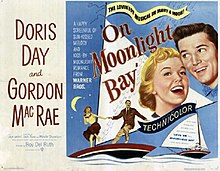
      Watch On Moonlight Bay (1951)
      • If you're a fan of Doris Day 
      • If you're a fan of Gordon MacRae
      • If you've seen the sequel By the Light of the Silvery Moon (1953) two or three times but have never yet caught the original movie
      • If you like romantic comedies. This one is genuinely both, I think. Though perhaps in an old-fashioned way. Doris Day plays the young teen girl, Marjorie Winfield, who falls in love with a college man, William Sherman. He does not get along with her father because he's silly enough to go around boasting about how he doesn't believe in marriage! 
      • If you like movies about rascal-y little brothers. Marjorie's brother, Wesley, played by Billy Gray, is A RASCAL if I've seen one. He is something else. Oh the trouble this boy causes, the messes he makes!!! The lies he tells. One of the big scenes in the movies (for me) is when he sneaks out to the movies. The silent film is about the dangers of drinking alcohol. After watching the Prohibition series, I do believe that there were such propaganda films, but it was just very, very, very interesting to see!
      • If you like movies set during this time period, around the start of World War I. By the end of the movie, we see William Sherman as a soldier all ready to go to war. 
      • If you don't mind traditional, old-fashioned notions of love, romance, and women's roles. (Marjorie is definitely having to choose between a father who would control her and a would-be-husband who would control her.) 
      • Not a clip of the movie, but there are pictures and music
      Watch Captain Horatio Hornblower (1951)
      • If you like sea-dramas, action-adventure films with big, big, big battle scenes at sea (like this one).
      • If you like or love  Gregory Peck.
      • If you have low expectations. This film doesn't come close to comparing with Errol Flynn at his very best...as in Captain Blood (1935) and The Sea Hawk (1940). It is not the best romance, by any stretch of the imagination, in fact I'd rank it as a non-romance. For at the time, he's married and his wife is pregnant with their son AND she's engaged to another man. As a mindless sea adventure it works a bit better.
      • Original trailer;


      © 2012 Becky Laney of Becky's Book Reviews
      The Sunday Salon: Watching Young Victoria (2009)

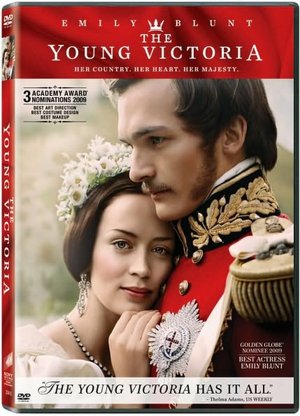
      Last Sunday, I talked about watching Victoria and Albert. Today I'm going to be talking gushing about the movie Young Victoria. How much do I love Young Victoria? Well, I've seen it four times since the first week of March! IF I owned it, well, I'm sure the number would be even higher. For I just LOVE, LOVE, LOVE and adore this movie!!! What do I love about this movie? Well, it might be simpler to ask what I don't love about this movie! I'm not sure I could think of anything either. Sure, I suppose, it goes a little over-the-top in places when it comes to DRAMA. I think they wanted it to be as DRAMATIC as possible. But some of the places in the movie where I thought it could have been a little too exaggerated to be true, well, I've found supported in biographies. Like the scene where her uncle, William IV, throws a temper tantrum at his birthday celebration when he screams at Victoria's mother in front of everyone. In the biography I'm reading Becoming Queen Victoria, I read about this and it has his words...and, yes, they got it right. So I've decided not to overthink the drama. To just take this movie as it is, to love it for what it is. And that won't be hard, trust me.

       What this movie has is what Victoria and Albert fall short on, ROMANCE. The Young Victoria is a giddy-making, oh-so-romantic, oh-so-magical, practically-perfect-in-every-way film. If you want romance, you'll get plenty of it in The Young Victoria. For this film shows these two falling deeply in love with each before they're married. It shows them spending a good amount of time together. Probably more time together than what is historically true--based on the opening chapters I read in We Two. But their scenes together are just so wonderful--like when they're playing chess, when they're dancing, when he's teaching her archery, or when soon after they meet he holds her hand going up the stairs (for that is a 'rule' in place, Victoria cannot walk up stairs (or down stairs) without someone (usually her governess or another lady of the household) holding her hand). The movie also highlights their correspondence. (Here's an example of the romance.)

      One of the great strengths of the movie--beyond the acting, the writing, the sets and costumes--is the music. I just LOVE, LOVE, LOVE the music. The score is by Ilan Eshkeri. And it is beyond wonderful. I didn't think it possible for me to love a film score more than I loved Much Ado About Nothing (by Patrick Doyle)...but Young Victoria is by far my favorite and best score ever. It makes every scene that much better. I have listened to the soundtrack so many times!!!! (One example of the music.)

      Watch The Young Victoria
      • If you want to watch a great movie
      • If you love costume/period dramas
      • If you love romance and drama
      © 2012 Becky Laney of Becky's Book Reviews
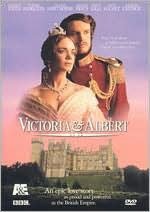
      Sunday Salon: Watching Victoria and Albert (2001)

      A few weeks ago I watched Victoria and Albert. I had just finished watching Young Victoria (I'll be reviewing that another week, I want to rewatch it just one more time...because two times just isn't enough, right?) and I was in the mood for more.

      What can I say? This film is very, very, very different from Young Victoria, but, that isn't a bad thing really. Especially since the truth probably is somewhere between the two. In Young Victoria, viewers get treated to a giddy-making romance. From start to finish, Young Victoria delivers. The music. The costumes. The sets. The dialogue. The acting. The drama. It is just a great, great film.

      While Young Victoria was all about the early years of her marriage (the movie ends with her first pregnancy), Victoria and Albert covers so much more. It covers their entire relationship from start to finish. It's got a framework to it as well. Viewers see Queen Victoria as an old woman remembering her life. And you definitely get the idea that it was a great love--for her. But what Victoria and Albert focuses on, in a way, is how that love was unrequited...at least for a time. Viewers see her fall in love with him almost from the start. Perhaps not their first, first meeting when he was still more of a boy than a man, but still. The movie captures her strong emotion, or connection, with Albert. And in fact it shows her proposing to him very soon after. It shows them marrying, starting a family, raising that family, but viewers see an Albert who is still hesitant to say that he's "in love." In fact, the film shows Albert asking around to see if other husbands feel the same way, if love comes with marriage--with time in marriage, or if it is necessary for a good marriage at all. There is a scene where he confesses his love for her, where he's honest with her--when confronted--that it hasn't always been love. And it was nice to finally get that scene, to see Albert "get" it...finally. But. As far as romance is concerned, Victoria and Albert is hardly giddy-making.

      If the film has a strength, and I believe it does have strengths, it is in showing their lives more fully. We see Queen Victoria first as an overly-protected young woman waiting for the throne, we see her mature as a Queen. We see glimpses of her independence, her stubbornness, her resourcefulness. We see her as being strong and powerful. But we also see her as wife and mother. We see her in her quieter, tender moments. We see her with her children, with her husband. We get private family moments, moments where the focus is not on politics or a nation or an empire. And it was nice to get a fuller portrayal that covers more time, more areas of her life.

      I also enjoyed seeing Victoria Hamilton as Queen Victoria. Though Victoria and Albert was filmed (or released) in 2001, I knew her best--knew her first--as Ruby Pratt from Lark Rise to Candleford. (I LOVE, LOVE, LOVE Lark Rise to Candleford.) So it was great to see her earlier work, and I definitely appreciated it. While Jonathan Firth makes a nice Prince Albert, he's not quite Rupert Friend.

      Watch Victoria and Albert
      • If you like historical/biographical films (though I'm not sure how true or how accurate this film is at capturing the real details of this royal couple)
      • If you are interested in Queen Victoria or Victorian England
      • If you like costume/period dramas 

      © 2012 Becky Laney of Becky's Book Reviews

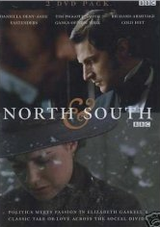
      The Sunday Salon: Watching North and South

      North and South is something I could gush about for hours, days, and weeks. I absolutely LOVE, LOVE, LOVE the book. It's one of those truly-perfectly-perfect-oh-so-magical books for me. The kind that you want to read again and again and again and again.

      The book is by Elizabeth Gaskell. And she is one of my favorite Victorian writers. The only film adaptation I've seen was done by the BBC in 2004/2005. (According to Wikipedia, it aired in November and December 2004, and was released on DVD in spring 2005.)  It stars Richard Armitage and Daniela Denby-Ashe as Mr. John Thornton and Miss Margaret Hale. And it is OH-SO-MAGICAL. But. It's one of those films that I have to keep separate from the book it's based on. Because as wonderful as the movie is in many, many, many ways. It is NOT the book. It doesn't come close to the book. Not really. And the way the characters are depicted does differ. Some changes are small but significant. Some changes are quite obvious, others not so much. But here's what makes this one a success, I think, the changes work in the film's favor. If that makes sense. As a movie it just works really, really well. Everything is just magical. The setting. The costumes. The music, oh the music, I could gush on and on and on about how perfectly-perfectly-perfect the score of this film is. It is MAGICAL. The dialogue. The romance. The drama. Everything is just so well done. And the ending is just about the best ending to a movie that I've ever, ever, ever, ever seen. It goes beyond giddy-making. It takes giddy to a whole other level!!! So any faults I find in the movie--as I'm watching it, small things really about how it differs from the book--are completely erased by the ending.

      I do think this movie will appeal to non-readers or to non-classic readers. I think it would appeal to those who most likely would never have the time or desire to read the book. To those who might be intimidated by classics, or those who might think that classics are boring.

      If you love costume dramas...at all...then this is a must. If you like your romance with more drama than comedy, then this one is for you too!

      Watch North and South
      • If you like/love costume dramas.
      • If you like drama/tragedy with your romance.
      • If you love BBC miniseries and programs (and what's not to love?) 
      • If you're looking for a great movie
      • For Richard Armitage--if you watch it only for Richard Armitage, you probably won't be disappointed, and chances are you'll be surprised by just how much you enjoy all of it.
      • For Brendan Coyle. I believe this was the first I saw of Brendan Coyle, and I did LOVE him in this. I then went on to love him in other things!!! 
      © 2012 Becky Laney of Becky's Book Reviews
      The Sunday Salon: Watching The Valley of Decision (1945)

      I recently watched The Valley of Decision starring Greer Garson and Gregory Peck. It was definitely a treat, for the most part. Greer Garson, of course, I knew from Pride and Prejudice. And then there's Gregory Peck. Need I really say more?! The movie, as I've come to learn, was based on a novel by Marcia Davenport. Though I believe the movie only covers the first section or the first generation of the Scott family saga. (I think I'd remember if there was mention of World War I.) I'm basing this not on my own familiarity with the novel--though I'd love to read it if I can find it--but on the summary on Amazon and Wikipedia.

      Like North and South by Elizabeth Gaskell, it is a blend of workers' rights, strikes and unions, and romance. There are a few similarities between The Valley of Decision and North and South, but in many, many, many ways the two are completely different from one another. Both are set in the 19th century. Both are about mills--though one is a cotton mill, one is a steel mill. Both have good masters: Mr. Thornton in North and South and Mr. Paul Scott in The Valley of Decision. Both masters face rejection of marriage proposals--at various points. Both feature a strike and angry mob scenes. But it is how they are different from one another that matters. Of course, I could tell all. I'm tempted to list their differences, but I don't want to spoil the movie.

      The Valley of Decision also reminded me of William Shakespeare's Romeo & Juliet. (With ONE very big difference.) The heroine is Mary Rafferty (Greer Garson) a young Irish woman who has just been hired as a maid for the Scott family. Her father, Pat Rafferty (Lionel Barrymore) is very, very, very angry and bitter. There is no one in the world he hates more than the William Scott (Paul's father). Her father, at one time, worked in Scott's mill, but he was injured on the job. The Scott family did do the right thing, they are providing for him and his family now that he can't work. But hate has poisoned him body and soul. So he's less than pleased that his daughter will be a maid in their household. But Mary has soon charmed herself right into the family. Especially with the son, Paul Scott. But also with the sister, who when we first meet her is a spoiled brat. Paul falls in love with Mary--as you might have guessed. And she falls in love with him. But she feels that they can never marry because of their different backgrounds. He's rich. She's poor. His family has social standing. Hers, well, her father is a mess to say the least. How can a maid really marry a master and be happy?

      And that's just the beginning of this drama...

      Watch The Valley Of Decision
      • If you love Gregory Peck, Greer Garson, Donald Crisp, or Lionel Barrymore. It also stars Jessica Tandy.
      • If you enjoyed Elizabeth Gaskell's Mary Barton or North and South
      • If you enjoy romances with a lot of DRAMA
      • If you enjoy historical films with costumes

      © 2012 Becky Laney of Becky's Book Reviews