Tampilkan postingan dengan label biography. Tampilkan semua postingan

The Story of the Trapp Family Singers

The Story of the Trapp Family Singers. Maria Augusta Trapp. 1949/2001. HarperCollins. 320 pages.

Somebody tapped me on the shoulder. I looked up from the workbooks of my fifth graders, which I was just correcting, into the lined, old face of a little lay sister, every wrinkle radiating kindness. "Reverend Mother Abbess expects you in her private parlor," she whispered. Before I could close my mouth, which had opened in astonishment, the door shut behind the small figure. Lay sisters were not supposed to converse with candidates for the novitiate.

This is the true story that "inspired" my favorite musical The Sound of Music. For the most part, the book is fascinating--especially the first half of the book. Readers meet the young woman sent to be governess to a retired sea captain with many children. In the book, she's to be governess only to one of his daughters, the rest either have nursemaids, attend schools, or have their own tutors. There are definitely some big differences between the book and the movie--between truth and fiction. (For example, the names of the children are different, as is the chronology of the story. The couple married years before Hitler came to power; they married in 1927!) They began singing together as a family out of love for music, yes, but also out of financial necessity.

The book chronicles:

Maria's first eight or nine months as a governess, particular attention is paid to their first Christmas
Maria's new role as wife and mother
Austria's changing economy and politics in the 1930s
The family's flight from Austria and immigration to the United States
The family's first experiences in America as they go on tour and learn English
The family's (forced) return to Europe--fortunately, only for a few months.
The family's return to the United States, their continuing tours
The family's settling down in America (a bit more about their tours, building of their house, building of their music camp)
The private life of the family (recollections of holidays, feast days, birthdays, Christmases, vacations, etc.)

The book is great on capturing the family's dependence on God, their reliance on God to deliver them and provide for them no matter the circumstance. The book is also great at capturing a specific time, place, and culture. For anyone curious about what it was like to be living in Austria in the 1920s and 1930s, this is a must read. For those interested in the immigrant experience during this time period, it is just a fascinating account! To see American culture--and language--from this outside perspective. The book was published in 1949, but it was up to date--so readers do get perspective on World War II from their perspective, also what the family tried to do to help Austria after the war was over.

I really LOVED this one!!!

Favorite quotes:
One of the greatest things in human life is the ability to make plans. Even if they never come true--the joy of anticipation is irrevocably yours. That way one can live many more than just one life. (214)
One night I tenderly consulted by private calendar, "time eaters" we had called them at school, and it showed only thirteen more days in exile. The next morning I started spring cleaning. Under my direction the maids were taking down the curtains and proceeding to brush the walls, when I saw the three youngest children knock on the door of the study. It didn't take long and out they came again. Running over to me as I stood on a ladder washing a big crystal chandelier, they yelled from afar: "Father says he doesn't know whether you like him at all!" "Why, of course, I like him," I answered, somewhat absentmindedly, because I had never washed a chandelier before. I noticed only vaguely that the children disappeared behind the study door again. That same night I was arranging flowers in several big, beautiful oriental vases. This was the last touch, and then the spring cleaning was over, and it had been really successful. When I had arrived at the last vase, the Captain came in. Stepping over to me, he stood and silently watched what I was doing with the peonies. Suddenly he said, "That was really awfully nice of you." An altogether new tone in his voice, like the deep, rich quality of a low bell, made me look up, and I met his eyes, looking at me with such warmth that I lowered mine immediately again, bewildered. Automatically I asked what was so nice of me, as I only remembered that awful letter. "Why," he said, astonished, "didn't you send word to me through the children that you accepted the offer, I mean, that you want to marry me?" Scissors and peonies fell to the floor. "That I want to--marry you?" "Well, yes. The children came to me this morning and said they had had a council among themselves, and the only way to keep you with us would be that I marry you. I said to them that I would love to, but I didn't think you liked me. They ran over to you and came back in a flash, crying that you had said, 'yes I do.' Aren't we engaged now?" Now I was out of gear. I absolutely did not know what to say or what to do; not at all. The air was full of an expectant silence, and all I knew was that in a few days I would be received into my convent, and there stood a real, live man who wanted to marry me. (57-58)
Read The Story of the Trapp Family Singers
  • If you enjoy biography and memoirs
  • If you love The Sound of Music
  • If you want to learn more about Austria/Europe in the 1920s, 1930s
© 2012 Becky Laney of Becky's Book Reviews

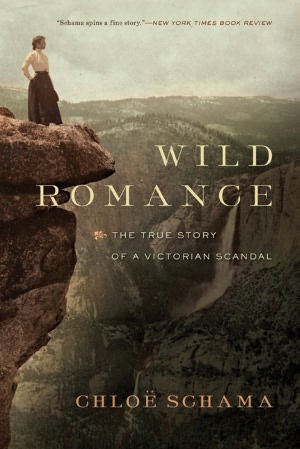
Wild Romance

Wild Romance: The True Story of a Victorian Scandal. Chloe Schama. 2010. Walker & Company. 249 pages.

Loved the first half of this nonfiction book on the life of Theresa Longworth, but, the second half which chronicles her world-travels after her oh-so-famous trials left me bored.

I picked up Wild Romance: A Victorian Story of a Marriage, a Trial, and a Self-Made Woman because I'm a fan of Victorian literature. I've read a handful of novels that fall into the "inspired-by" category. Authors whose works deal with irregular marriages--Irish, Scottish, etc. Marriages whose legitimacy was sometimes called into question. Since in some cases, just saying "We're married" with no paperwork, no witnesses, no priest or clergyman could do the job. At the time, there was definitely debate about what made a marriage or union legal or illegal.

In the case of Theresa Longworth, she "married" allegedly married on two different occasions in two different countries, a man named William Charles Yelverton. In the moment, I suppose, he was willing enough. The couple traveled together as man and wife for a short time at least. But when the two separated, I believe he was in the military, he changed his mind. He found someone new, someone with money to marry. And marry he did. Theresa finding out after a very difficult illness that "her" husband was now married to someone else...and he was claiming that they'd never, ever been married. Furthermore, he started saying that she was chasing him, had been chasing him for years and years, and that she was the one who wanted a more intimate arrangement.

The first half of this one follows their "courtship" and "marriage" leading up to a handful of trials in a handful of countries. And these court cases meant big, big, big publicity. Especially for her, she had a way of winning the public's support...but not so much anyone else. Some thought his new wife was much, much classier mainly because she stayed quiet and stayed at home.

So the book gives readers very detailed accounts of their correspondence. And in a way, the book encourages readers to make up their own minds. Was Theresa Longworth pursuing him? Was she going above and beyond what was allowed of ladies of the time? Was there something indiscreet and shameful in her letters to him? Was she ever grounded in reality? Was William Charles Yelverton a jerk? Did he ever mean to do right by Theresa? Was lying to her about being married the only way he saw of getting her into bed?

The second half of the book, for better or worse, lets readers know what happened next in her life. And what happened next is that she started traveling the world. All over the world. She wrote about her travels and had them published. (She also wrote two novels, though reviews were mixed at best.)

The book concludes by discussing how this real-life court case inspired dozens of novels of the time. 

Read Wild Romance
  • If you're a fan of Victorian literature; particularly of Wilkie Collins.
  • If you're interested in history; if you're interested in this time period
  • If you're interested in court cases and scandals and he-said, she-said dramas
  • If you're interested in travel writing, in following the chronicles of a woman traveler during this time period.
© 2012 Becky Laney of Becky's Book Reviews

Four Picture Book Biographies

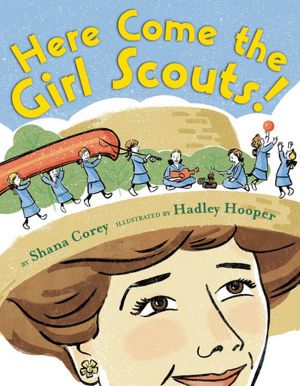
Here Come the Girl Scouts!: The Amazing All-True Story of Juliette "Daisy" Gordon Low and Her Great Adventure. By Shana Corey. Illustrated by Hadley Hooper. 2012. Scholastic. 40 pages.

Daisy was a girl with gumption. Daisy grew up in Savannah, Georgia, at a time when proper young ladies were supposed to be dainty and delicate. But Daisy came from a family of pathfinders and pioneers. She wanted adventure and excitement! Delicate? thought Daisy. Bosh! How boring! 

There was so much to love about Shana Corey's picture book biography of Juliette Gordon Low, founder of the Girl Scouts. I loved the text. It was informative, true, but very kid-friendly.
Daisy and her friend Professor Walter Hoxie worked together to write a handbook for the Girl Scouts. The girls read the book and learned all sorts of interesting things such as: How to find the time by the stars or by the sun, how to cure hams, how to secure a burglar with eight inches of cord, how to brush your teeth if a crocodile takes your toothbrush, how to stop a runaway horse, how to get the skin off a sardine. 

I loved the illustrations, thought the style was great! I loved the quotes on each spread, the author's note reveals that many of these quotes come from the very first Girl Scouts Guide published in 1913. Overall, I thought it was very well done! Interesting, informative, relevant, and just fun!

Read Here Come the Girlscouts!
  • If you're interested in learning more about the Girl Scouts, and the founder of the Girl Scouts, Juliette Gordon Low
  • If you are looking for great biographies to share with children
  • If you are looking for a book that highlights the contribution by women to society
Those Rebels, John and Tom. By Barbara Kerley. Illustrated by Edwin Fotheringham. 2012. Scholastic. 48 pages.

 The true story of how one gentleman--short and stout--and another--tall and lean--formed a surprising alliance, committed treason, and helped launch a new nation. When John Adams and Thomas Jefferson were young, they were very different. John skipped school to fly kites and shoot marbles. He loved swimming, hunting, wrestling--and the occasional boxing match, just for kicks. Tom didn't skip school. He skipped recess--to study Greek grammar. He loved dancing, playing the violin, and reading all the books in his father's library. When John and Tom grew up, they were even more different.

I definitely enjoyed this one. While this one isn't my favorite, favorite picture book biography by Barbara Kerley, I still think it's a great book. (I happen to LOVE, LOVE, LOVE The Extraordinary Mark Twain and What To Do About Alice.) I think the book is informative--there is so much information included for a picture book--but avoids being boring. I think the narrative is strong, which is what it needs to be if you're going to hold a reader's attention.
And then there were all those taxes! A tax on sugar. On coffee and tea. On glass, on pain, and on calico cloth. Newspapers, contracts, even decks of cards! King George and his government taxed them all. They thought America was nothing but a big fat piggy bank to be turned upside down and shaken for coins. And so, in the fall of 1774, a group of Americans planned a meeting in Philadelphia--a Continental Congress--to figure out what to do about it. Something had to change!


I also enjoyed the illustrations by Edwin Fotheringham. Overall, I thought this was a good book about two of the founding fathers, John Adams and Thomas Jefferson, a good introduction to the Declaration of Independence. The book does not try to tell every little thing about each man, instead it focuses on how their friendship and cooperation helped lead the way to freedom. By showing that two men--men who held very different ideas on many subjects--could come together with a common goal and accomplish quite a bit!

Read Those Rebels, John and Tom

  • If you're looking for picture book biographies to share with young children (K-3?)
  • If you're looking for patriotic picture books to celebrate America, the fourth of July, etc.
  • If you're looking for strong values--friendship, cooperation, teamwork, compromising, listening, etc.
  • If you're a fan of Barbara Kerley
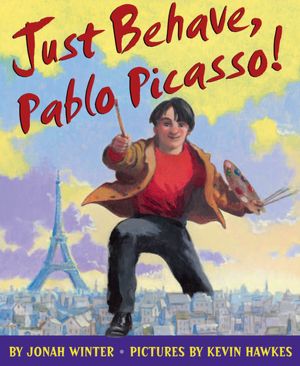
Just Behave, Pablo Picasso! By Jonah Winter. Illustrated by Kevin Hawkes. Scholastic. 48 pages.


One day the world is a peaceful, lovely landscape painting....
The next day--BLAM!--Pablo bursts through the canvas, paintbrush in hand, ready to paint something fresh and new. 

Just Behave, Pablo Picasso is quite an introduction to the artist. It is very creative in its telling, it almost feels too fun to be truly nonfiction. (If that makes sense!) I think it's written in such a way that it will appeal to young readers, it definitely has more of a storybook feel to it. It does cover at least a handful of Picasso's periods as an artists--his styles, moods, techniques, etc. His blue period, his rose period, cubism, etc. It discusses how his art was "received" by the world, by the critics, it discusses how this didn't really have an effect on him, how he did want he wanted, when he wanted, and didn't let anyone tell him what to paint, or how to paint.
All anyone wants is for him to keep painting the same old picture, over and over. Well, guess what? He doesn't want to, he doesn't have to, and he's not going to! HAH! Back in his studio, Pablo starts working on something even more outlandish than his last painting. "Why can't you keep painting beautiful pictures?" asks his wife. "Why can't you keep making art that makes sense?" "The world today doesn't make sense," says Pablo. "Why should I make pictures that do?" And sure enough, much of the world around Pablo doesn't make sense. Everything is changing all the time. New things are being invented: cars, airplanes, telephones, bombs. "But Pablo," says a fellow artist, "your new painting doesn't look real." "Everything you can imagine," says Pablo, "is real."
 I liked this one. I thought it very creative. I thought it would probably make the best read aloud out of all of the picture book biographies I'm reading today.

Read Just Behave, Pablo Picasso
  • If you're looking for a kid-friendly, reader-friendly introduction to the artist Pablo Picasso
  • If you're looking for art-appreciation picture books
Bon Appetit! The Delicious Life of Julia Child. Jessie Hartland. 2012. Random House. 48 pages. 

She bubbled over with effervescence, spoke as if she had marbles in her mouth, and gleefully hammed it up in front of the camera. 
She joined a spy mission during World War II...and later moved to Paris and learned to cook. She wrote a classic French cookbook that still sells oodles of copies. She created and starred in a pioneering TV show loved by millions. How did a gangly girl from Pasadena do it? This is her story.

I really, really, really wanted to LOVE Bon Appetit! I did. But it didn't quite work for me. On the one hand, I really appreciated the amount of information. Julia Child was a very INTERESTING and FASCINATING character, in many ways, one-of-a-kind. And this book is great at capturing that. This isn't just a book highlighting her life, here we get details big and small. But, on the other hand, this one was so very, very, very busy. The way this one is presented makes this one a challenge to read--a challenge to read to yourself, I couldn't imagine trying to read this one aloud to someone else. The design was just very cluttered, very busy. I never knew if I was supposed to read left to right, or up and down. (Some pages were more confusing than others.) There was just a lot of text, a lot of information to be absorbed or processed. And the art was fun, in its way. There is something charming about it. But. There was something about this one that made it an almost for me. I do think this one is for an older audience as well.

Read Bon Appetit
  • If you're a fan of Julia Child
  • If you're looking for children's books about cooking
  • If you want a little French--okay a LOT of French in your picture book
  • If you're looking for a quirky picture book biography


© 2012 Becky Laney of Becky's Book Reviews

Magnficient Obsession

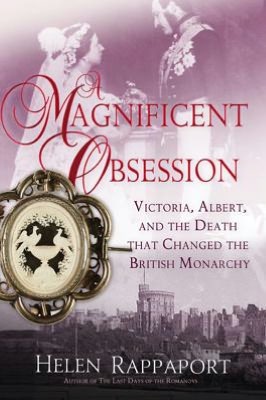
Magnificent Obsession: Victoria, Albert, and the Death that Changed the British Monarchy. Helen Rappaport. 2012. St. Martin's Press. 352 pages.

 A Magnificent Obsession is a nonfiction book that chronicles the last year of Prince Albert's life--focusing on his work load, health problems, and the tedious family dramas that weighed on him. In great detail it shares with readers what the last few weeks of his life were like, day by day, night by night, who visited him, who nursed him, what he ate or didn't eat, the number of hours he slept or didn't sleep, the bulletins the family released to the press, etc. Readers get a glimpse of what this experience might have been like for his wife, Queen Victoria, and his daughter, Princess Alice, who was his chief nurse. After his death, readers get a glimpse of private and public mourning. The rest of the book focuses on the first ten (or perhaps eleven?) years after his death. It discusses the Queen's private and public life. The way the people felt about the Queen. It focuses on the people's doubts and worries, etc. The book concludes with the Queen regaining some popularity with the people. The last chapter, unfortunately, goes in a direction I didn't quite care for, but, for the most part I found this one interesting. I wouldn't quite say compelling. Because if I'm being honest, I was curious but not THAT curious. It was informative without a doubt, but not necessarily written in such a way to make it fascinating.

Why didn't I like the last chapter? Well, the way I read the text--this may not have been the author's intent--I felt Rappaport was saying that Queen Victoria was great because her husband died; her husband's death freed her to become the strong, independent, vibrant monarch she could have been or should have been all along. That she only became QUEEN when Albert died, before she was a weak woman, a woman whose reign was weakened by her private life; that being a wife and mother made her a weak monarch or a monarch in name only. That her so-called "obsessive" love (devotion, passion) for her husband made her weak and dependent and pliable. I must not be alone in my interpretation because a Library Journal review reads along the lines that it wasn't until her husband's death that "she was allowed" to emerge as a great monarch. Albert's death is made to be this great thing that transforms Victoria into a great woman. And that talk just bothered me. And I'm almost sure it would have bothered her as well. I imagine Queen Victoria was VERY strongly opinionated, and I'm sure she'd have something to say here.

Read Magnificent Obsession: Victoria, Albert, and The Death That Changed the British Monarchy
  • If you are interested in history, particularly the 1860s and early 1870s
  • If you are interested in the British royal family
© 2012 Becky Laney of Becky's Book Reviews

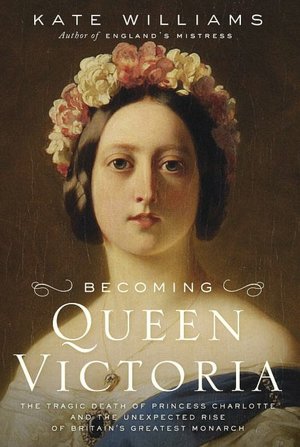
Becoming Queen Victoria

Becoming Queen Victoria: The Tragic Death of Princess Charlotte and the Unexpected Rise of Britain's Greatest Monarch. Kate Williams. 2010. Random House. 464 pages. 

I absolutely LOVED this book!!! In fact, I think it's a true must-read. I should probably add some clarification: I LOVE history, I LOVE literature or classics, I love historical novels and historical romances. For anyone who reads classics written or published during nineteenth century--from 1800 on--this one could prove to be oh-so-enlightening! For anyone who reads historical novels (or historical novels with a touch of romance) set during this time period, this book could prove quite interesting!!! Whether you're a fan of books set during the Regency or Victorian periods, this one could help you connect the dots. Will every reader want to connect the dots between real life and fiction? I'm not sure. For me, it was everything I wanted and more!!!

The first half of this one is setting the stage for Victoria. This includes focusing in on the royal family a good three to four decades before her reign. It means discussing George III, George IV, and William IV. It means discussing all of the brothers (and some of the sisters) of the royal family. It means focusing in on their dysfunction, their failures, their messes. One big story in this section is the marriage of George IV and Queen Caroline. It was a BIG, BIG, BIG mess. Oh, how these two hated one another! They did have one daughter, Princess Charlotte. She was the heir to the throne, no question about it. She was the future of the kingdom, and she was loved, beloved. She married Leopold of Saxe-Coburg, who later became King Leopold I of the Belgians, and their wedding was a HUGE affair. But this fairy-tale wedding, fairy-tale marriage, was not to be. No, they didn't fall out of love. No, they weren't torn apart by scandals. She died in childbirth. Reading about that was truly scary. Why? Well, readers get detailed descriptions of medical treatments, of the art or science of medicine at the time. And not only in the chapter about Charlotte, but in the treatment for the other royals too. And it is scary, scary stuff! So what did Charlotte's death mean to the nation?! It meant EVERYTHING. All of these royal brothers with no legitimate heir to the throne, with no real marriages to speak of amongst them, it meant they had to rush, rush, rush to the altar to marry women almost half their age; it meant that they were in great competition to have children. Of course, it wasn't just a matter of being the first to have a child, their rank mattered too. (Duke of Clarence ranking more than Duke of Kent, Duke of Kent ranking more than Duke of Cumberland, Duke of Cumberland ranking more than Duke of Cambridge, etc.) And this book explores those years, the rivalries, the politics, the scandals, the gossip.

But this one is, of course, about Queen Victoria. Readers learn about her father, the Duke of Kent, and her mother, Victoria, the sister of Leopold, a Saxe-Coburg. Readers learn about her earliest years--from birth on. Readers learn details great and small about her upbringing, the big and small events that marked her life and led to the greatest of them all, her inheriting the throne and leading a nation for over sixty years. The last chapters deal with her marriage to Albert, to their relationship--personal and private. Some attention (very brief in comparison with other periods of her life) is given to her having so many children. But this is almost more of an epilogue to the book than a genuine source of information.

For anyone who loves history, who loves the details behind history--big and small, gossipy and matter-of-fact, then this one is for you. While I wouldn't say the royal family's dysfunction is celebrated or rejoiced in, it definitely plays a big, big role in this one. And Queen Victoria is seen as saving the monarchy, restoring some sanity to it.

Read Becoming Queen Victoria
  • If you love historical fiction, this nonfiction book about Queen Victoria and Princess Charlotte might just prove fascinating and enlightening.
  • If you love nineteenth-century classics and would like to get some context into their background
  • If you love a good biography with lots of detail
  • If you are interested in anything and everything royal

© 2012 Becky Laney of Becky's Book Reviews

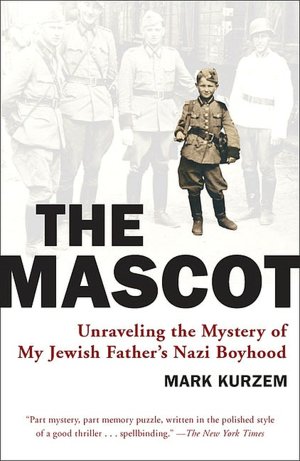
The Mascot

Mascot: Unraveling the Mystery of My Jewish Father's Nazi Boyhood. Mark Kurzem. 2007. Penguin. 432 pages.

If I'm ever asked, "What's your father like?" a simple answer always escapes me. Even though I can look back on a lifetime spent in his company, I have never been able to take his measure. One part of him is a shy, brooding Russian peasant who shows a certain air of naivete, if not gullibility, with strangers. Then there is another side: alert, highly gregarious, and astonishingly worldly. His unexpected appearance on my doorstep in Oxford one May afternoon in 1997 left me more mystified than ever.

The Mascot is such a powerful and compelling biography. It is not your traditional biography--Holocaust or not. It is the story of how one man's past is revealed, how a father chooses to share his memories--some quite vivid, others very vague or fuzzy--with his adult son. The father's life is revealed to his son in a series of conversations and through the son's research to validate his father's story.

Mark, our narrator, always knew his father had his secrets. His father had a brown bag he carried with him everywhere. No one was allowed to see this bag's contents. But. Occasionally, the father would share with his family--his wife and sons--stories from the past. On these occasions, he'd pull out a photograph, an article, an item from the bag. Mark suspected that these stories were just that--stories, being part fact, part embellishment.

But one day his father tries to tell him the truth, the whole truth, the whole UGLY truth about his past. Pieces and fragments. A memory here and there. What is certainly understandable is just how much is missing, how much he doesn't know about who he is and where he comes from.

He was told by his rescuers (Latvian police men or Latvian soldiers?) that he was found in the woods or forest. Alone. Wandering. Obviously struggling to survive. He was taken in by the soldiers and "adopted" into their company. They gave him a name. They gave him a birthday. They gave him a small uniform--from 1941 to 1945 he was given three uniforms. Though he was taken into one man's home--"adopted" (though not legally) by a husband and wife--he stayed connected or associated with a unit of soldiers. He witnessed things NO CHILD of five, six, seven, eight, or nine should EVER witness. He saw men, women, children, babies being killed--in one instance herded together into a building which was then set on fire.

Though he doesn't remember his name--his family name, the names of his brother and sister, father and mother--or the name of his village, the name of his country--he does remember one thing: he witnessed the slaughter of his mother, his younger brother, his baby sister. He witnessed the slaughter of an entire neighborhood or village. At the time, he didn't realize this violence, this bloody slaughter, was because they were Jewish. In fact, his very "Jewishness" was buried deep inside him. At times he seemed aware that he too was Jewish, that his life was at risk if his Jewishness was revealed. But at the same time, the only way he could cope with his present--with his new reality, his new identity, the company he was keeping--was forced to keep in a way--was to bury his 'true' Jewish identity and become the boy others wanted/needed him to be. To survive, he had to deny so very very much.

So the story Mark hears from his father is fragmented, in a way, with very few clues. But it is emotional and intense. Almost too much for him to handle. In fact, it is almost too much for him--the father--to handle. And at one point, he asks himself and he asks his son why. Why bother remembering the past? What good--if any--can come from remembering, from seeking to remember, from uncovering the truth, from piecing everything together, from telling and sharing his story with his family, his friends, his community. For those expecting a clear answer to this, you might be disappointed. The truth is not that black and white. A son and father learn much about one another. The family is at times strengthened, but at other times put under great stress and pressure--by all this. There were things that seemed a little shocking to me, for one, that there were certain organizations (if organizations is the right word?) that denied and rejected his story. Who told him that he was NOT Jewish, that he did NOT suffer during the war, that his story was not part of the Holocaust. Still others (sometimes just individuals, other times groups of individuals) who denied his story, who essentially said that his story was all lies, that it could not happen, did not happen. I think this shocked the son as well, that people could hear the story, see the photographs, and come to the conclusion that this small child (he was found at the age of five) was a willing participant in the war, that he voluntarily joined the enemy, that he was a Nazi just like the others--the adult soldiers. Was he ethically responsible for the actions taken by others? True, you might argue, that the soldiers were trying to "train" him to be a little Nazi, a good, little soldier. But what choice--if any--would he have had? 

Read The Mascot
  • If you can't get enough nonfiction about World War II (like me)
  • If you enjoy reading Jewish books; Holocaust books.
  • If you are interested in family dynamics (relationships); this one is great at exploring a father-son relationship.
  • If you are interested in history and research; this one provides a behind-the-scenes look at how research is done in a very practical, personal way. (Research isn't just about getting a grade.)
  • If you enjoy biographies.

© 2012 Becky Laney of Becky's Book Reviews

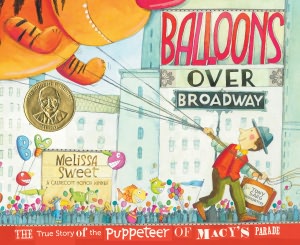
Balloons Over Broadway

Balloons Over Broadway: The True Story of the Puppeteer of Macy's Parade. Melissa Sweet. 2011. Houghton Mifflin Harcourt. 40 pages.

From the time he was a little boy, Tony Sarg loved to figure out how to make things move. He once said he became a marionette man when he was only six years old. 

Balloons Over Broadway is a picture book biography of Anthony "Tony" Frederick Sarg. Perhaps a more apt description would be a picture book about Tony Sarg and his larger-than-life hobby. True, his hobby of making things move--marionettes especially--didn't start out big or larger-than-life. But by the end, when he was making-designing balloons for the Macy's Thanksgiving Day parade, well, it doesn't get much bigger than that!!! I found this nonfiction book to be oh-so-fascinating. I just LOVED how detailed it was.

Balloons Over Broadway won the 2012 Sibert Medal and the 2012 Orbis Pictus Award for Outstanding Nonfiction for Children.

Read Balloons Over Broadway
  • If you love reading fascinating nonfiction, even in picture book format.
  • If you love picture book biographies or picture books for older readers.
  • If you love watching Macy's Thanksgiving Day parade.
  • If you love history.

© 2012 Becky Laney of Becky's Book Reviews

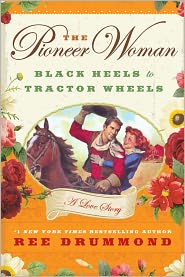
The Pioneer Woman: Black Heels to Tractor Wheels

The Pioneer Woman: Black Heels to Tractor Wheels. Ree Drummond. 2011. HarperCollins. 341 pages.

Forget this, I said to myself as I lay sprawled on the bed in which I grew up. In my Oklahoma hometown on a self-imposed pit stop, I was mired in a papery swamp of study guides, marked-up drafts of my resume, and a J.Crew catalog, from which I'd just ordered a $495 wool gabardine winter coat in olive, not chocolate, because I'm a redhead, and because Chicago, I reminded myself, is a tad more nippy than Los Angeles, which I'd just left weeks earlier.

Ree Drummond, the "Pioneer Woman," shares her love story with readers in this memoir. She met her Marlboro Man around Christmas. In a bar. And the meeting, well, it was magical. But. He. Didn't. Call. She'd just about given up hope of ever hearing from him again, when he calls four months later. But there's a slight little problem. She's a week (or two) away from moving to Chicago. Now that he's finally asked her out, does she want to bother with going knowing that she's going to be leaving for Chicago so soon? But he's oh so cute. And she can't imagine not saying yes. I mean every time she thinks of him, well, she swoons. So she agrees to see him even though the timing isn't the best in the world. The more she sees him--they see each other daily, from the very start, the more she wants to keep seeing him. She puts off her move to Chicago, always telling herself it's not a permanent decision to not go. No, she'll go, just give her a little more time with him. But. There comes a time when she knows that Chicago is not in her future plans...at all. That she loves her Marlboro Man...and it's a forever kind of love.

So this true romance is about her courtship, wedding, and first year of marriage. A first year of marriage that bring a baby girl! Readers get a glimpse into her life. There's plenty to laugh about! From Ree's first experiences on the ranch with the cows, to her experiences meeting his family, etc.

I liked this one. I did. It was a light read. A fun read. If you're a fan of the TV show or the blog, then chances are you'll be charmed by this one too.

© 2011 Becky Laney of Becky's Book Reviews