Tampilkan postingan dengan label HarperCollins. Tampilkan semua postingan

For Darkness Shows the Stars (MG/YA)

For Darkness Shows the Stars. Diana Peterfreund. 2012. HarperCollins. 416 pages.

Elliot North raced across the pasture, leaving a scar of green in the silver, dew-encrusted grass. Jef followed, tripping a bit as his feet slid inside his too-big shoes. 

I really enjoyed Diana Peterfreund's For Darkness Shows the Stars. Did I enjoy it because it was a futuristic dystopia, OR, because it was a retelling of Jane Austen's Persuasion? A bit of both. For those expecting Captain Malakai Wentforth to be as swoon-worthy as Captain Wentworth, well, you might be disappointed. Might. For Kai's romance with Elliot North doesn't exactly mirror that of Wentworth and Anne Elliot. Peterfreund has definitely made this story her own.

For Darkness Shows the Stars is definitely a novel about social class or status. There are three "types" of people in this futuristic world: the Luddites, those with the highest status and wealth, the elite, those that have estates and titles, those that MATTER; the Reduced, those with slave status, essentially, they are thought to be mindless sub-humans, incapable of thought and feelings, definitely thought to be genetically inferior; the POST-Reductionists, the children of the Reduced who happen to be smart enough to function with more independence in the world, they have skills and abilities that make them worth something, they are not thought to be mindless and incapable, but, they're "socially" inferior to the Luddites. No matter how smart or brilliant a POST is, no matter how much money they acquire, they will never be on equal status with the Luddites.

Kai and Elliot grew up together; they share a birthday in fact. (Actually, there are three that share an exact birthday: Kai (Post), Elliot (Luddite), and Ro (Reduced).) But their friendship always had to be a secret, for if Elliot's father or older sister, Tatiana, found out, then everyone would get in trouble. Elliot enjoyed Kai's company, enjoyed spending time with him in the barn, enjoyed watching him fix things--he's a mechanic, the son of a mechanic. But when Elliot chose not to run away with Kai when they were fourteen (or possibly fifteen?), the friendship was broken. He chose to leave the estate, to risk everything in hopes of finding a better future. Elliot hasn't heard from him since the day he left, and he still matters to her. She chose to stay not because she didn't love him, but, because she needed to be responsible, because she was the ONLY one capable of being responsible on the estate, the only one who cared for the welfare of the Reduced, and also respected the Posts.

Meanwhile, Elliot's life has been as unpleasant as ever. Her father and sister are heartless and selfish and at times cruel. The novel opens with her father destroying his daughter's wheat field--weeks before harvest. That wheat could have helped feed the Reduced, it could have been sold for a profit, as well, to help the estate. But her father's "need" for a race track was more important. He's unwilling to see that the estate is struggling financially that they have a responsibility to the Reduced and the Posts that work their land/manage the estate. Elliot doesn't even bother protesting; true, the damage is already done and nothing can bring her wheat back, but, she also has a secret of her own. That wheat was her wheat--her special experimental seed. And Luddites do NOT under any circumstances experiment.

So in an effort to help finances, Elliot decides to rent out the estate to Cloud Fleet....and one of the guests is Captain Malakai Wentforth. Of course, there are plenty of other guests as well.

I enjoyed meeting the different characters in For Darkness Shows the Stars. Since this is a retelling, there is always a chance that the characters could have been weak, shallow copies of the original. For the most part, that was not the case.

I also enjoyed the story; there were just enough twists in the story that it really worked as an original story. The dystopian setting was interesting to me. I didn't have all my questions answered--at least not right away--and this futuristic society definitely added something to the story. 

Read for Presenting Lenore's Dystopian August

Read For Darkness Shows the Stars
  • If you enjoy science fiction, dystopias, post-apocalyptic fiction
  • If you enjoy futuristic stories 
  • If you are interested in a new retelling of Jane Austen's Persuasion
  • If you enjoy a little romance in your science fiction

© 2012 Becky Laney of Becky's Book Reviews

Kindred Souls

Kindred Souls. Patricia MacLachlan. 2012. HarperCollins. 119 pages.

My grandfather, Billy, hears the talk of birds. He leans out the open bedroom window with his head tilted to listen in the warm prairie morning.

Kindred Souls is the kind of children's book I have come to appreciate as an adult, but, the kind of book that I would NEVER have wanted to read as a child. In other words, it's one of those books. You know, the kind, the kind that introduces you to a wonderful old man AND a dog. And you have every right to be suspicious that the end will destroy your emotional well-being.

Jake, our narrator, is ten and confident; confident that everything will stay the same, confident that life is good and will stay that way. Sure, his grandfather, Billy, is eighty-eight, sure he's moved in with them. But he will live FOREVER. Don't ask him how he knows, it's enough that he believes. The novel begins with the two going on their usual walk. Billy is talking--again--about the sod house where he was born. He is wishing--again--that it hadn't fallen into such horrible condition. He is telling Jake--again--about the old days. This time Billy seems extra-sad, so Jake asks him a simple question: "How hard is it to cut a brick of sod?" And so the idea is born that a new sod house will be built...

And then there is the arrival of Lucy, a stray dog, that seems to be the perfect companion for Billy. Billy and Lucy seem to be best, best, best friends from the very first moment they meet.

This book is about an unforgettable summer.

Read Kindred Souls
  • If you like bittersweet children's books
  • If you like emotional family stories
  • If you are a fan of Patricia MacLachlan
  • If you like dog stories
© 2012 Becky Laney of Becky's Book Reviews

The One and Only Ivan

The One and Only Ivan. Katherine Applegate. 2012. HarperCollins. 301 pages.

I am Ivan. I am a gorilla. It's not as easy as it looks.

 Want to read one of the best, best books of the year? May I suggest Katherine Applegate's verse novel, The One and Only Ivan. I can't promise that every reader will come to LOVE Ivan, Ruby, Stella, Bob, Julia, and George, but you might end up loving them just as much as I did. (Ivan is a gorilla; Ruby and Stella are elephants; Bob is a dog; George and Julia are two of the most sympathetic human characters in the novel.)

So what is it about? It's about a small group of animals on display at Exit 8 Big Top Mall and Video Arcade. Ivan, the gorilla, is an artist whose works sell in the gift shop. He's been captive almost thirty years. Stella is one of his dearest friends, she's an elephant who knows quite a few tricks. She's a great storyteller, but, many of her stories are bittersweet. She's had a hard life to have such a great memory. Bob, the stray dog, is Ivan's other best friend, he's not really on display--not wild enough, not talented enough--but to Ivan, well, he's the best dog in the world. One day, Mack, the owner, brings someone new: a baby elephant named Ruby. Her arrival changes EVERYTHING for Ivan. For at long last, he has someone to protect. 

Within pages, I was hooked. Here is the second poem:

names


People call me the Freeway Gorilla. The Ape at Exit 8. The One and Only Ivan, Mighty Silverback.


The names are mine, but they're not me. I am Ivan, just Ivan, only Ivan.


Humans waste words. They toss them like banana peels and leave them to rot.


Everyone knows the peels are the best part.


I suppose you think gorillas can't understand you. Of course, you also probably think we can't walk upright.


Try knuckle walking for an hour. You tell me: Which way is more fun?

The narrative voice is so strong, so rich, so observant, so right. Here are just a few examples:
Humans speak too much. They chatter like chimps, crowding the world with their noise even when they have nothing to say. (3)
Anger is precious. A silverback uses anger to maintain order and warn his troop of danger. When my father beat his chest, it was to say, Beware, listen, I am in charge. I am angry to protect you, because that is what I was born to do. Here in my domain, there is no one to protect. (10)
It was Julia who gave me my first crayon, a stubby blue one, slipped through the broken spot in my glass along with a folded piece of paper. I knew what to do with it. I'd watched Julia draw. When I dragged the crayon across the paper, it left a trail in its wake like a slithering blue snake. (16)
Humans don't always seem to recognize what I've drawn. They squint, cock their heads, murmur. I'll draw a banana, a perfectly lovely banana, and they'll say, "It's a yellow airplane!" or "It's a duck without wings!" That's all right. I'm not drawing for them. I'm drawing for me. (17)
My visitors are often surprised when they see the TV Mack put in my domain. They seem to find it odd, the sight of a gorilla staring at tiny humans in a box. Sometimes I wonder, though: Isn't the way they stare at me, sitting in my tiny box, just as strange? (23)
Bob's tail makes me dizzy and confused. It has meanings within meanings, like human words. "I am sad," it says. "I am happy." It says, "Beware! I may be tiny, but my teeth are sharp." Gorillas don't have any use for tails. Our feelings are uncomplicated. Our rumps are unadorned. (35)
Homework, I have discovered, involves a sharp pencil and thick books and long sighs. (44)
But hunger, like food, comes in many shapes and colors. At night, lying alone in my Pooh pajamas, I felt hungry for the skilled touch of a grooming friend, for the cheerful grunts of a play fight, for the easy safety of my nearby troop, foraging through shadows. (133)
It's an odd story to remember, I have to admit. My story has a strange shape: a stunted beginning, an endless middle. (144)
The One and Only Ivan is definitely an EMOTIONAL read. It's a book about how humans treat or mistreat animals. It tells the story of several animals: Stella, Ivan, Ruby, etc. In some cases relating how they got to their current "domain" (cage, or prison). For the most sensitive reader, it may prove a little too much in a few poems. Overall, I think it's a great read. Powerful, compelling, beautifully written.

Read The One and Only Ivan
  • If you love E.B. White's Charlotte's Web
  • If you love Kathi Appelt's The Underneath
  • If you love animal stories
  • If you love gorillas, elephants, dogs
  • If you love GREAT writing
© 2012 Becky Laney of Becky's Book Reviews

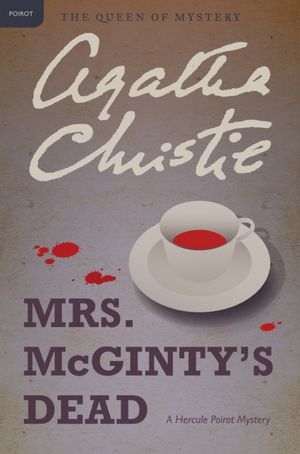
Mrs. McGinty's Dead

Mrs. McGinty's Dead. Agatha Christie. 1952/2011. HarperCollins. 272 pages. 

I definitely LOVED Mrs. McGinty's Dead. I really, really, really LOVED the surprise appearance of Ariadne Oliver. But, of course, the main star of this one is Hercule Poirot. The novel starts off rather unpleasantly with Poirot thinking to himself how wonderful he is, how marvelous he is, and how much he needs someone to talk to so he can show off how wonderful he is. So when he receives an unexpected visit from Superintendent Spence who is asking him to take on a closed case, well, he can't resist. Spence was one of the men who helped convict James Bentley of murder, but, he's having doubts, strong doubts. He believes that if Bentley is executed, well, they'll be executing an innocent man. He's not sure who killed Mrs. McGinty, but he knows that Poirot can solve this case better than anyone else. So Poirot travels to the village of the crime and he learns what only he can learn...

I LOVED this one!!! Loved hearing Mrs. Oliver talk about her writing, loved seeing her "work with" someone who is adapting her character, her main detective, into a play. Loved hearing her grumble and complain about her Finn detective.

This one is a great mystery, and, it was just so much fun to spend time with Christie's characters.

Read Mrs. McGinty's Dead
  • If you're a fan of Agatha Christie, Hercule Poirot, or Mrs. Oliver
  • If you're a mystery lover
© 2012 Becky Laney of Becky's Book Reviews
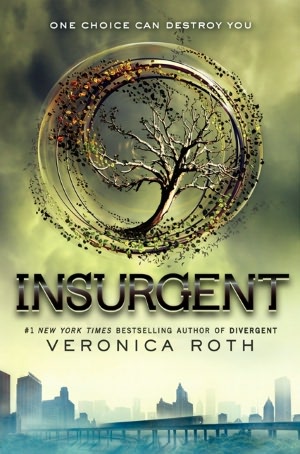
Insurgent (YA)

Insurgent. Veronica Roth. 2012. HarperCollins. 525 pages.

 I absolutely LOVED Veronica Roth's Divergent. I just LOVED, LOVED, LOVED it. I recently reread it too just to prepare myself for reading the sequel, Insurgent. So how do the two compare? Well, I'm not sure that's ever a fair question. The better question may be did I love it? And the answer to that one is much, much easier! Yes, I loved Insurgent. Now does loving it translate into just love or love, love, love? Only time will tell.

Insurgent starts right where Divergent left off, which was great for me since I'd just read Divergent. Beatrice (Tris) is on the run with a handful of people including her boyfriend, Four, and her brother, Caleb. But among this group of survivors are a few people Tris doesn't trust or exactly like. They are seeking refuge with Amity unsure of their welcome. Well, unsure of how long-term this welcome will be. Amity is the kind of faction that gets along with everyone no matter how good or bad. But Tris and Four are almost sure that they cannot stay with Amity, they still have unfinished business.

While Insurgent definitely introduces new business--new dangers, new threats, new risks, etc--it does a great job in terms of consequences. Tris and Four (and the others) have a big, big mess to deal with. Many people have lost loved ones, many have lost homes, all have lost security. Tris' losses are monumental. She has lost both parents, parents with secrets that are only now coming to light, and she's dealing with her choices. Specifically her choice that led to a former friend, a close friend, losing his life. She is HAUNTED, beyond haunted almost, by what she has done.

But there is no time for Tris to relax, not really, for every day brings more decisions. Tris is having to make some tough, tough decisions; decisions that will impact not only her life, not only her relationship with her boyfriend, but will impact potentially everyone. And she struggles with the weight of it all. Does she have the right to think for herself? Does she have the right to disagree with the leaders? With the leaders of her own faction? Does she have the right to question people she's been told are trustworthy? How does she know who to trust?

I definitely loved this one! And I loved getting to know the characters. I loved the world-building, getting a chance to learn more about the other factions and the factionless too.

Read Insurgent
  • If you loved Divergent, or, even if you just liked Divergent
  • If you enjoy science fiction and dystopias
  • If you like dystopias with good world-building and a little romance too
© 2012 Becky Laney of Becky's Book Reviews
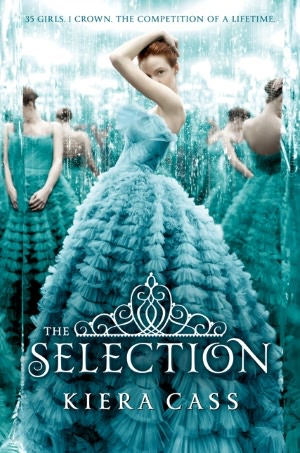
The Selection (YA)

The Selection. Kiera Cass. 2012. HarperCollins. 327 pages.

When we got the letter in the post, my mother was ecstatic. She had already decided that all our problems were solved, gone forever. The big hitch in her brilliant plan was me. I didn't think I was a particularly disobedient daughter, but this was where I drew the line.

The key to enjoying this one may be to approach it with no expectations at all. If you've been told--and I'm not sure who is doing the telling--that this one is in any way like The Hunger Games, then you'll be disappointed most likely. I admit that both books do have a love triangle. And I suppose that both books have a reality-TV aspect to them to a certain degree. But really these are two completely different books.

If The Selection reminded me of any book at all, it was the book of Esther from the Old Testament. Our heroine, America Singer, is one of thirty-five young women chosen to be a potential princess. The Prince, the heir to the throne, is about to begin courting these women--one woman from each district in the realm. They will live at the palace--along with the royal family, though on a different floor. The women will receive makeovers, beauty treatments, wardrobes, etc. The women will also undergo some training. Training that will only increase as the Prince narrows down the women from thirty-five to six. (Ultimately, of course, he'll be choosing one woman. But this book is the first book in a series, and the end of this book only gets us down to six.) America soon realizes that for some, it's a matter of seeing the crown and only the crown. In other words, they want to be princess--ultimately queen--and they don't care who they have to marry to get it. But other women do seem to care for the prince as a person--America is one of them.

The Love Triangle. My feelings weren't torn between the two men at all. I don't know how much I can say about the romance of this one without spoiling things. But. This one is mostly dialogue between America and Prince Maxon. And I liked that. When I'm reading romance, I want dialogue. I want to get to know both the heroine and the hero. I want to see the relationship develop.

What would have made this book more satisfying is if it had been resolved in one book...


Is The Selection the absolute best book I've ever read? Of course not. Was the characterization amazing? Not really. But did I really enjoy it? Did I read it in one day? Were there scenes that made me smile? Yes. Yes. Yes.

Read The Selection
  • If you're looking for a very light, somewhat shallow romance with shades of dystopia, political unrest, and terrorism. 
  • If you like romance with LOTS of dialogue
  • If you love books with love triangles (If you HATE books with love triangles, or if you especially hate dystopias with love triangles, this one won't be for you).


© 2012 Becky Laney of Becky's Book Reviews
Rereading Divergent (YA)

Divergent. Veronica Roth. 2011. May 2011. HarperCollins. 496 pages.

There is one mirror in my house. Our faction allows me to stand in front of it on the second day of every third month, the day my mother cuts my hair. It is behind a sliding panel in the hallway upstairs.

What my original review couldn't tell you is how much I've continued to LOVE, LOVE, LOVE Veronica Roth's Divergent.  I read this one last February, and it remained a favorite throughout the year. It definitely came close to topping my favorite-and-best list of 2011. And was by far the best YA book I read last year. There was something about Beatrice (Tris) and Tobias (Four) that stuck with me. I wanted to pick it up a half a dozen times at least to reread it, but I restrained myself. I wanted to save it up to read it close to the release date of the second book in the series, Insurgent. The truth is the moment I finished Divergent (the first and second time) I wanted, no, NEEDED, Insurgent to be right there for me to pick up. Of course, that was impossible.

From my original review:
Beatrice Prior, our sixteen-year-old narrator, is about to make the most important decision of her life. For two big days are coming: the day of the aptitude test and the Choosing Ceremony. Soon Beatrice will have to decide which faction she'll belong to for the rest of her life. If she chooses outside her parents' faction, she may never see them again. For ties to one's faction must come first. The five factions are as follows: Abnegation (the selfless), Amity (the peaceful), Candor (the honest), Dauntless (the brave), and Erudite (the intelligent). Beatrice has been raised Abnegation, but it's always felt like a wrong fit. Selflessness does not come easy for her. She has spent the first sixteen years of her life practically invisible--blending into the background. But Beatrice has secretly been watching her Dauntless classmates. Dare she admit it aloud? She's thinking of choosing the most rebel faction of all!

But not all initiates make it into the Dauntless faction. Only the bravest. Only the strongest. Only the best. Readers follow Tris (Beatrice) on her new journey. We meet fellow initiates--those born Dauntless, and those transferring from other factions. We follow their training through three stages. They will be challenged physically, mentally, and emotionally. We become familiar with their two trainers--Eric and Four. We see the faction's strengths and weaknesses. As does Tris. On the one hand, Tris realizes she is fierce. She can be strong, determined, brave. She is learning to face her fears, learning to face life. But she's also realizing that compassion and love are part of courage. That selflessness has prepared her for her new life. On the other hand, she sees how heartless, how cruel some are. Yes, the Dauntless have their flaws.

Divergent is an action-packed dystopia. It's exciting. It's compelling. It's impossible to put down. The futuristic Chicago setting has been well-crafted. While only two factions are explored in this first novel in the trilogy, the glimpses we get of this world are fascinating. I loved the setting, the world-building. I loved the characters. Tris is such a great heroine. And Four. Well, I don't want to spoil it. But he's definitely a large part of why I loved this one! I would definitely recommend this one. I think I loved it even more than The Hunger Games trilogy.
What I can add:

There's nothing more to think about. I definitely, definitely LOVE, LOVE, LOVE this one above and beyond the Hunger Games. It's no contest really for me. I love this one above and beyond almost all the YA Science Fiction I've ever read. And maybe even more than I love most of the adult science fiction I've read.

And I just LOVE, LOVE, LOVE Four. I do. I just love every single scene he's in. He's giddy-making and oh-so-swoonworthy. (He even surpasses Marcus Flutie, something I thought near impossible. For those not familiar with Marcus Flutie--and why aren't you?--he's from Megan McCafferty's Jessica Darling series. The first book is Sloppy Firsts.)

Read Divergent
  • If you want to read a GREAT dystopian novel; I love it for the world-building; I love it for the characterization; I love it for its action and drama; I love it for its swoonworthy romance. This is NOT a romance book thinly disguised as dystopia. It's not. I promise.
  • If you want to read a great YA book. I know not every adult will pick up a YA book. I know some are prejudiced against reading YA. But. This book deserves to be read no matter your age!
  • If you want a book that you just CAN'T PUT DOWN. 

© 2012 Becky Laney of Becky's Book Reviews

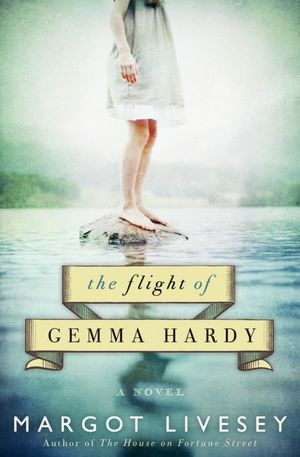
The Flight of Gemma Hardy

The Flight of Gemma Hardy. Margot Livesey. 2012. HarperCollins. 447 pages.

We did not go for a walk on the first day of the year. 

Have you read this "modern" retelling of Charlotte Bronte's Jane Eyre? If you have, I'd love to know what you thought of it.

Personally, I was disappointed with it. Don't get me wrong, I am glad I read it. It was a risk worth taking--at the library, at least! Because a book like this definitely has potential. The description alone is enough to make one curious. A modern Jane Eyre set in the 1960s in Scotland and Iceland.

I do think this will be a hit or miss book though. For me it was a miss mainly because I did NOT feel the romance or connection between Gemma Hardy and Mr. Sinclair, her employer.

I'll be honest, the book had a chance with me up until the big reveal. After the big reveal that was anything but big--you'll just have to trust me, it was a flop, but I don't want to spoil the book in my review--the book just continued to go downhill.

To focus on the positive, this book did start strong. The time spent with Gemma as a child--the time spent with her aunt and mean cousins, the time spent at boarding school, her making her first 'best' friend, etc--was time well spent. (Some time is also spent with her memories of her uncle and what little she knew about her parents.) Initially I thought the book would be one I'd like. I couldn't wait for her to meet her employer; I wanted the romance to begin. But I kept waiting and waiting and waiting, and I never once felt any magic between Gemma and Mr. Sinclair. The very thing that makes Jane Eyre oh-so-magical, oh-so-perfect, was missing in The Flight of Gemma Hardy. The romance is in the small things, the small details, the conversations between the two, the scenes between the two.

Gemma was NOT by any stretch of imagination as engaging as Jane. She just wasn't. I wasn't able to live in her head like I am able to live in Jane's. I wasn't able to make a strong, emotional attachment to Gemma. There were a couple of scenes that are convincing or believable in Jane Eyre that just AREN'T convincing or believable in The Flight of Gemma Hardy. 

I am a bit surprised that The Flight of Gemma Hardy didn't work for me. I wanted to like it at least as much as Jane Slayre by Sherri Browning Erwin. (I was very surprised at how much Jane Slayre worked for me. She got many things right in that adaptation!) 


Read The Flight of Gemma Hardy
  • If you are curious about how Jane Eyre can be modernized and adapted. You may not like it or love it, but sometimes you just have to see for yourself and give it a try. (I do recommend the library for this, or waiting until it's available in paperback).
  • If you are a forgiving fan of Jane Eyre who is oh-so-eager to have more Jane that you're willing to see the plot and characters played around with. For those who love, love, love, absolutely love the original and who are quick to find fault with movie adaptations of the novel, this might not be for you.
  • If you have never read Jane Eyre and are not likely to ever read Jane Eyre because you're intimidated because it's a classic, and yet you're hesitant to try Jane Slayre because you don't like paranormal fiction, but you're still wanting to know what Jane Eyre is all about...then this one may be worth your time.


© 2012 Becky Laney of Becky's Book Reviews
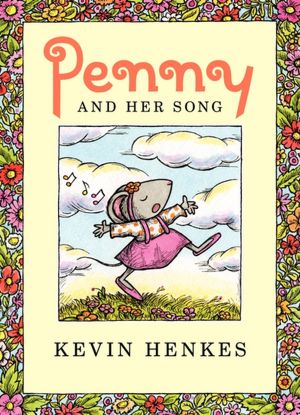
Penny and Her Song

Penny and Her Song. Kevin Henkes. 2012. HarperCollins. 32 pages.

Penny came home from school with a song.
"Listen, Mama," said Penny. "It's my very own song."
Penny started to sing,
"One is nice--"
"Your song is beautiful, said Mama, "but you will wake up the babies." 


I don't love, love, love every book Kevin Henkes writes. Some of his books aren't quite up to what I expect from him. But Penny and Her Song, for me, is one of his best! (Perhaps just needing some time before becoming as beloved as his classic picture books, Chrysanthemum and Lilly's Purple Plastic Purse and Owen.)  
 
From the very start, I just LOVED, LOVED, LOVED Penny. I did. I loved her energy, her perseverance. She has a SONG TO SING...and she wants to SING until she's heard. She will find an audience, she will, she will. She just has to!

I also loved the family dynamics of this one. While the Mom and Dad aren't exactly thrilled with the exuberant singing--the timing of it--they are very good, very sweet in their own way, in their own time. There's a time to sing, and a time to be quiet...after all.

This one is told in two very short chapters. I'd definitely recommend this one!!!
 

Read Penny And Her Song
  • If you're a fan of Kevin Henkes
  • If you like mice in your picture books and early readers
  • If you loved Frances' singing in the Frances books by Russell and Lillian Hoban


© 2012 Becky Laney of Becky's Book Reviews
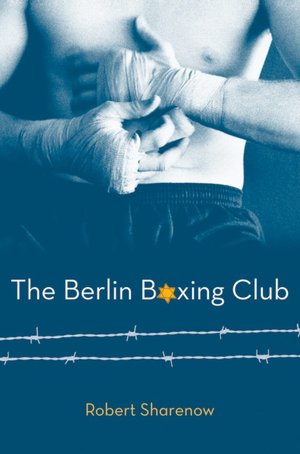
The Berlin Boxing Club (YA)

The Berlin Boxing Club. Robert Sharenow. 2011. HarperCollins. 416 pages.

As Herr Boch finished the last lecture of the school year, I sketched one final caricature of him into the margins of my notebook.

For someone who does not like sports novels--who claims to not like sports novels--I sure did love Robert Sharenow's The Berlin Boxing Club. Perhaps I just require HEART in my sports novels?

The Berlin Boxing Club is set in Berlin during the mid-to-late 1930s. The hero of the novel is a young Jewish boy, Karl Stern. When readers first meet Karl, he does not even identify himself as being Jewish. It's not that he's trying to hide the fact from his peers, acting one way at home, another way in public. He just does not see himself as being ethnically or religiously Jewish. His sister and father look Jewish--though Karl still argues that they don't particularly act stereotypically Jewish--so it's a shock to him that he's forced to wear this Jewish identity. And being Jewish in Nazi Germany, well, it's nothing anyone wants to be. The new laws being so strict, so harsh. (Karl ends up being kicked out of school, getting beat up by bullies, etc. And that's just the start of it, but I won't go much beyond that in this review.)

Karl also does NOT see himself as athletic. He does NOT see himself as a fighter. But when his father's friend, Max Schmeling, offers to train him, offers him a membership at the Berlin Boxing Club, well, Karl finds himself wanting/needing this. His father would have preferred that Max pay money for the painting he bought at his gallery, but this does seem to be a once-in-a-lifetime opportunity. So Karl has to do a great deal of training to get himself in shape before he even steps into the boxing club, Max gave him a list of exercises, a training regimen. Will Karl have the stamina and motivation to continue, to live up to his potential....

So The Berlin Boxing Club is about so much more than boxing. It is even much more than just a novel about "the fights" between Joe Louis and Max Schmeling. It is a book about fighting to survive in desperate times. It is about how difficult it was to be Jewish in Nazi Germany. It's a thought-provoking read, very emotional, very compelling!

Read The Berlin Boxing Club
  • If you're interested in reading about this time period, Nazi Germany in the 1930s
  • If you're interested in reading Jewish fiction
  • If you're looking for a companion read to The Book Thief
  • If you're looking for a sports book with heart and soul

© 2012 Becky Laney of Becky's Book Reviews
The Girl of Fire and Thorns (YA)

The Girl of Fire and Thorns. Rae Carson. 2011. HarperCollins. 425 pages.

Prayer candles flicker in my bedroom. The Scriptura Sancta lies discarded, pages crumpled, on my bed. Bruises mark by knees from kneeling on the tiles, and the Godstone in my navel throbs. I have been praying--no, begging--that King Alejandro de Vega, my future husband, will be ugly and old and fat. Today is the day of my wedding. It is also my sixteenth birthday.

The Girl of Fire and Thorns was nothing like I expected. I read the first few chapters and imagined it heading in one direction. I didn't expect it to go oh-so-differently than how I imagined it. And yet, I can't say that those differences kept me from enjoying this novel. Not really.

Elisa is a princess, the second princess. But she's been Chosen, chosen almost since birth. For she bears the godstone in her navel. And chosen ones only appear every four hundred years or so. So she's special. But her being special makes her all that much more vulnerable. For it seems that there are oh-so-many ways to view the godstone. Yes, some react with reverence and respect, devotion and loyalty. But not all. There are some who would kill her for the stone in her navel. Some who would see her as expendable, her only worth being the stone itself. So while her 'chosen' status is known in some circles, in others it's a very closely kept secret.

So. The novel opens with Elisa preparing for her marriage. She's nervous for many reasons. She'll be marrying a stranger, a King, a king with a young son, a king that may or may not be over the loss of his first wife, a king that may or may not ever care for her, a king whose character is completely unknown to her. She's nervous about the impression she'll make on him her future husband. She's definitely on the plump side, and she feels her wedding dress makes her look like an over-stuffed sausage. She sees rolls and rolls of fat and worries that that is all he'll see too. She worries that he'll never look at her with respect, with friendship, or love. So part of her hopes that she won't be attracted to him. She hopes that she won't want a real marriage.

But the King is anything but ugly or fat or old. He makes quite a first impression on her. Not that it's love at first sight. It isn't. It really isn't. But he's kind and gentle. And he seems to see her. Enough that readers feel there is potential. That there is a spark of something that will work in the heroine's favor...

So their journey together begins soon after the marriage. The trip to his kingdom is NOT easy. In fact, it clarifies things for readers. Rae Carson is NOT afraid to kill off characters.

They arrive...and she learns that her marriage is to be kept secret...indefinitely. Once they arrive, she barely sees her new husband...at all. And that small spark of potential seems to vanish completely. But her new life isn't horribly lonely. Not really. But before she can adapt to her new role, a role that has her merely as visiting princess, she's kidnapped...and EVERYTHING changes...Elisa most of all. She goes from a shy and uncertain oh-so-vulnerable heroine who doubts that she'll ever live up to being 'the chosen one' to being someone who's incredibly fierce and resourceful and stronger than she ever imagined herself being...

I liked The Girl of Fire and Thorns. There were things I loved about it. There were things I didn't quite love about it. But for the most part I enjoyed it and would recommend it.

Read The Girl of Fire and Thorns
  • If you're a fan of Shannon Hale
  • If you're a fan of Megan Whalen Turner
  • If you're a fan of strong heroines
  • If you're looking for a heroine that doesn't quite look--at least at first--like your typical heroine
  • If you're a fan of fantasy novels
  • If you don't mind losing more than a few characters along the way

© 2012 Becky Laney of Becky's Book Reviews
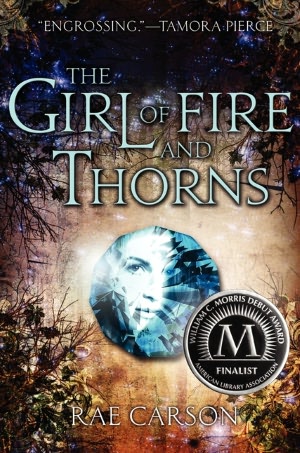
Catherine, Called Birdy (MG)

Catherine, Called Birdy. Karen Cushman. 1994. HarperCollins. 212 pages.

September 12,
I am commanded to write an account of my days. I am bit by fleas and plagued by family. That is all there is to say.

This children's book set in 1290 (1291) won a Newbery Honor in 1995.

I wanted to like it more than I did. But. It just didn't quite work for me. Why? Well, I found the heroine, Catherine, annoying. I think readers are supposed to like her for her spunky independence. I think readers are supposed to admire her stubbornness and rebellious attitude.

I am NOT saying that Catherine's arranged marriage to a much, much older man, a man who disgusted her, was a good thing. I am not saying that I wanted her to just mindlessly say yes to the marriage just because it is what her father wanted for her. But I couldn't help finding Catherine just a tiny bit obnoxious. She was just so disrespectful, so disobedient, so strong-willed. It was just so draining to listen to her whine in each and every entry.

I'm also not sure how realistic the novel is. I'm not sure how many daughters were that educated. I'm also not sure how many girls kept diaries during that time period. I'm not saying that it was impossible, just that it was convenient. Speaking of being convenient, the ending, well that was extremely convenient. 

© 2011 Becky Laney of Becky's Book Reviews

Alas, Babylon

Alas, Babylon. Pat Frank. 1959/1999. HarperCollins. 325 pages.

In Fort Repose, a river town in Central Florida, it was said that sending a message by Western Union was the same as broadcasting it over the combined networks. This was not entirely true. It was true that Florence Wechek, the manager, gossiped. Yet she judiciously classified the personal intelligence that flowed under her plump fingers, and maintained a prudent censorship over her tongue. The scandalous and the embarrassing she excised from her conversation. Sprightly, trivial, and harmless items she passed on to friends, thus enhancing her status and relieving the tedium of spinsterhood. If your sister was in trouble, and wired for money, the secret was safe with Florence Wechek. But if your sister bore a legitimate baby, its sex and weight would soon be known all over town.

Alas, Babylon was an apocalyptic novel written in 1959 during the Cold War. It imagines the ultimate what-if of the time. What if the USSR used nuclear warfare and took out all our bases and major cities?

Mark Bragg is in the know. He's received just enough warning to send his wife, Helen, his son, Ben Franklin, and his daughter, Peyton, to his brother, Randy, in Fort Repose, Florida. Of course, he doesn't know for sure that Fort Repose will be safe enough, but it has to be safer than Omaha. He knows his own fate all too well. His will be among the first hit--or targeted. This isn't Mark's story. And readers only catch a glimpse of his story through his brief conversation with Randy--and through what Randy chooses to reveal about him. 

Randy Bragg is the hero of Alas, Babylon. He is our narrator. He receives a telegram from his brother that reads "Alas, Babylon" and he knows it's just a matter of time. Will it be today? Will it be tomorrow? How soon is 'the end'? He learns that his brother is sending his family to him, that he is to protect them to the best of his ability. But how do you really, truly prepare for something like this? How can you know exactly what you'll need? He does go to the store, he does go shopping, he does try, but he's just not able to comprehend what the loss of most (if not all) major cities in Florida will mean.  (The loss of electricity, no gasoline deliveries, no food deliveries, no mail, no radio, no television, no newspapers, no way to learn what is happening on any street but you're own). And of course, it's not just Florida. Other states, other cities, will be effected as well.

For an apocalyptic novel, Alas, Babylon is rich in hope. I'm not saying that it's not a serious novel with a serious subject. I'm not saying that it's not bleak either. Bad things do happen. And life does change...seemingly forever. There are no easy answers on what to do next. I'm reminded of a scene from Babylon 5, season two, "Confessions and Lamentations" in which Delenn and Lennier learn that "faith manages." But there is much to admire in Randy Bragg and the other men and women we meet in Pat Frank's Alas, Babylon. Like their courage, their resourcefulness, their determination, etc.

While part of the novel is spent on politics--the right and wrongs of it--and war--the right and wrongs of it--much of the novel is focused on surviving, on moving forward. Part of the novel also has to do with race relations as well. Randy was not elected before "the day" because he was too open-minded and not quite Southern enough. In other words, he was not a racist. In other words, he didn't think integration was the work of the devil. (Half of the characters in Alas, Babylon are black. And I don't think it's unfair to conclude that without the help of his black neighbors, Randy Bragg wouldn't have managed as well).

There were many, many memorable scenes in Alas, Babylon. My personal favorite may just be this commentary from librarian.
Alone of all the people in Fort Repose, Alice continued with her regular work. Every morning she left the Wechek house at seven. Often, ignoring the unpredictable dangers of the road, she did not return until dark. Since The Day, the demand for her services had multiplied. They slowed when they overtook her, shouted a greeting, and waved. She waved back and pedaled on, a small, brave, and busy figure. Watching the car chuff past,  Alice reminded herself that this evening she must bring back new books for Ben Franklin and Peyton. It was a surprise, and a delight, to see children devour books. Without ever knowing it, they were receiving an education. Alice would never admit it aloud, but for the first time in her thirty years as librarian of Fort Repose she felt fulfilled, even important.
It had not been easy or remunerative to persist as librarian in Fort Repose. She recalled how every year for eight years the town council had turned down her annual request for air conditioning. An expensive frill, they'd said. But without air conditioning, how could a library compete? Drugstores, bars, restaurants, movies, the St. Johns Country Club in San Marco, the lobby of the Riverside Inn, theaters, and most homes were air conditioned. You couldn't expect people to sit in a hot library during the humid Florida summer, which began in April and didn't end until October, when they could be sitting in an air-conditioned living room coolly and painlessly absorbing visual pablum on television. Alice had installed a Coke machine and begged old electric fans but it had been a losing battle.
In thirty years her book budget had been raised ten percent but the cost of books had doubled. Her magazine budget was unchanged, but the cost of magazines had tripled. So while Fort Repose grew in population, book borrowings dwindled. There had been so many new distractions, drive-in theaters, dashing off to springs and beaches over the weekends, the mass hypnosis of the young every evening, and finally the craze for boating and water-skiing. Now all this was ended. All entertainment, all amusements, all escape, all information again centered in the library. The fact that the library had no air conditioning made no difference now. There were not enough chairs to accommodate her readers. They sat on the front steps, in the windows, on the floor with backs against walls or stacks. They read everything, even the classics. And the children came to her, when they were free of their chores, and she guided them. And there was useful research to do. Randy and Doctor Gunn didn't know it, but as a result of her research they might eat better thereafter. It was strange, she thought, pedaling steadily, that it should require a holocaust to make her own life worth living. (187-188)

Read Alas, Babylon
  • If you're a fan of apocalyptic fiction
  • If you're a fan of science fiction and are looking for a classic 
  • If you're a fan of survival stories
  • If you're a fan of compelling thrillers
  • If you want to know the fate of armadillos in Florida
© 2012 Becky Laney of Becky's Book Reviews
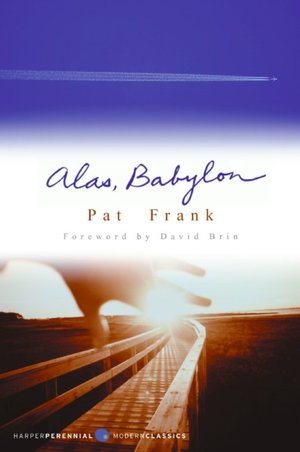
Pink, More Pink, Even More Pink

Pinkalicious. Victoria Kann & Elizabeth Kann. 2006. HarperCollins. 40 pages.

It was a rainy day, too wet to go outside. Mommy said, "Let's make cupcakes! What color do you want?"
"Pink!" I said. "Pink, pink, pink!"
Mommy put in some pink. 
"More!" I cried. "More, more, more!"
I gobbled up a couple of cupcakes while Mommy and I frosted them. They were so yummy--they were Pinkalicious! 

The star of Pinkalicious just LOVES the color pink. And in this first adventure, she is delightfully munching pink cupcakes. To her surprise--to everyone's surprise--eating so many pink cupcakes turns her to varying shades of pink. But when is enough enough?

I liked this book. I did. It was fun. It was clever. And I liked her little brother, Peter, too. I liked this one the best of all the series.

Purplicious. Victoria Kann & Elizabeth Kann. 2007. HarperCollins. 40 pages.

I was in art class, painting a picture.

In Pinkalicious' second adventure, she learns that kids can be very mean and bossy. It's no secret that the star of this book LOVES the color pink. So when the girls in her class tell her that pink is only for babies, well, it upsets her. She just CAN'T like black like all the others. It's black. But after a few days of this nonsense, she feels that pink is a lonely color.  Will the new girl--who loves purple--cheer her up and cure her blues?!

Goldilicious. Victoria Kann. 2009. HarperCollins. 40 pages.


I was putting flowers on the mane of my pet unicorn. "Pinkalicious, why are you dropping flowers on the rug?" asked Mommy. "I'm not dropping flowers. I am getting Goldie ready for the Unicorn Ball," I said, prancing around the room.
"What unicorn? I don't see any unicorn," said Peter.
"She's right here and she's not ANY unicorn, she is my unicorn. Her name is Goldilicious, Goldie for short. Oh, Goldie--you shouldn't have done that on the floor! You know better. Just neigh when you need to go potty. I'm sorry, Peter, but you are stepping right in it," I said.

This is the third picture book starring Pinkalicious. In my opinion, it is probably the weakest of the series. In this adventure, readers learn about Pinkalicious' (imaginary) unicorn, Goldie. Readers see the two have some adventures together. But these adventures aren't without their difficulties. Peter sees to that. (I would have liked this one more if it hadn't talked about wizards, casting spells, and crystal balls.)

Silverlicious. Victoria Kann. 2011. HarperCollins. 40 pages.


I had a wiggly tooth. It had been wiggling for days. 


In this adventure, Pinkalicious loses a tooth. But not just any tooth. She loses her sweet tooth. Ever since she lost this tooth, she's not been able to enjoy anything sweet. Her family has also noticed how losing this tooth has made her CRANKY and ungrateful. Can Pinkalicious learn her lesson and become a sweet little girl again?

I also read three I Can Read books starring Pinkalicious. I read Pinkalicious: Pink Around the Rink, Pinkalicious School Rules!, and Pinkalicious: Pinkie Promise. I found I actually preferred these early readers to some of the picture book sequels. For example, in School Rules! is an early reader about Goldie and Pinkalicious. Having her imaginary unicorn with her during the school day may help her behave herself because she's having to show him all the rules. Pinkie Promise shows Pinkalicious successfully resolving a conflict with her best friend. She promised her friend that she wouldn't use all her pink paint--she was borrowing her friend's paint--but not only did she use all the pink paint, she also used most of the red and white too. But there is hope for the friendship yet... And in Pink Around the Rink, Pinkalicious turns her new boring white ice skates into one-of-a-kind skates with the help of a pink marker...

Read Pinkalicious (and all its sequels)
  • If you are looking for a fun series to read aloud to little girls
  • If you love the color pink, cupcakes, unicorns, etc.
  • If you are looking for sweet picture books with family-friendly messages and themes 
  • If you like enthusiastic narrators
© 2012 Becky Laney of Becky's Book Reviews

The Great Migration

The Great Migration: Journey to the North. Eloise Greenfield. Illustrations by Jan Spivey Gilchrist.  2011. HarperCollins. 26 pages.

Between 1915 and 1930, more than a million African Americans left their homes in the South, the southern part of the United States, and moved to the North. This movement was named "the Great Migration." 

The Great Migration is a poetry book that won a 2012 Coretta Scott King Honor in the author category. What I liked best about this poetry book is the diversity of narrative voices. Greenfield tells the story of the Great Migration through a series of different voices--old, young, man, woman, boy, girl. Some find leaving bittersweet; others can't wait to start a new life. Some are anxious, hesitant. Others are exuberant and confident. All of the poems feel personal.

My favorite may be "IV. Question: Men and Women"

Will I make a good life
for my family,
for myself?
The wheels are singing,
"Yes, you will,
you will, you will!"
I hope they're right.
I think they're right.
I know they're right.
We're going to have
a great life. Got to try it.
Going to do it. Going to
make it. No matter what.

Read The Great Migration
  • If you enjoy poetry written for children
  • If you enjoy poetry with a historical subject
  • If you're interested in this time period, 1915-1930
  • If you are interested in African American history

© 2012 Becky Laney of Becky's Book Reviews

Every Thing On It

Every Thing On It. Shel Silverstein. 2011. HarperCollins. 208 pages.

Years From Now


Although I cannot see your face
As you flip these poems awhile,
Somewhere from some far-off place
I hear you laughing--and I smile.

Every Thing On It made me giddy. It did. I just LOVED, LOVED, LOVED it. I think it is my favorite of the later Shel Silverstein collections. It is just as worthy to be on everyone's shelves as Where The Sidewalk Ends, A Light in the Attic, and Falling Up. It is so, so, so much better than recent offerings like Runny Babbit A Billy Sook and Don't Bump the Glump and Other Fantasies. If you grew up LOVING Shel Silverstein's poetry, then this newest collection is an absolute must!!!

Some of these poems are just fabulous. Just wonderful. Some are happy; some are sad. Quite a few are quirky and weird. A few are beautifully bittersweet. Some are very thoughtful and insightful. Others are just as silly as can be. I think this collection has something for every reader.

I think this is a book EVERYONE needs to read. I just loved, loved, loved it.

Here's one called The Dollhouse

You can't crawl back in the dollhouse--
You've gotten too big to get in.
You've got to live here
Like the rest of us do.
You've got to walk roads
That are winding and new.
But oh, I wish I could
Crawl back with you,
Into the dollhouse again. (151)

and here's a little one called Spider:
A spider lives inside my head
Who weaves a strange and wondrous web
Of silken threads and silver strings
To catch all sorts of flying things,
Like crumbs of thoughts and bits of smiles
And specks of dried-up tears,
And dust of dreams that catch and cling
For years and years and years.... (190)

And here is Eatin' Soup
Eatin' soup with chopsticks--
I should be finished soon.
Eatin' soup with chopsticks
While whistlin' a tune.
Eatin' soup with chopsticks
Because I have no spoon.
Eatin' soup with chopsticks
Can take all afternoon. (185)

And here's The Clock Man
"How much will you pay for an extra day?"
The clock man asked the child.
"Not one penny," the answer came,
"For my days are as many as smiles."

"How much will you pay for an extra day?"
He asked when the child was grown.
"Maybe a dollar or maybe less,
For I've plenty of days on my own."

"How much will you pay for an extra day?"
He asked when the time came to die.
"All of the pearls in all of the seas,
And all of the stars in the sky." (95)

And here's the final poem of the collection:

When I Am Gone

When I am gone what will you do?
Who will write and draw for you?
Someone smarter--someone new?
Someone better--maybe YOU! (194)
Read Every Thing On It:
  • If you are a fan of Shel Silverstein
  • If you grew up reading Where The Sidewalk Ends, A Light in the Attic, and Falling Up
  • If your only experience with Shel Silverstein is The Giving Tree, and you've been meaning to give him another try
  • If you're looking for a poem collection that appeals to readers of all ages; there are plenty of poems with kid-appeal (though I didn't necessarily quote those in this review); but there are so many that will appeal to older readers as well. A few I think are meant more for adults than kids. But that's the great thing about collections--different poems speak to different people.
  • If you're looking to read poems that you can actually understand and relate to.
To read more poems from this collection, here's a post about the book. (Poems shared "Every Thing On It," "Dirty Clothes," "Happy Birthday," and "Italian Food.") And this site seems to share many, many Silverstein poems. Including Happy Ending?

© 2012 Becky Laney of Becky's Book Reviews

Eve (YA)

Eve. Anna Carey. 2011. HarperCollins. 322 pages.

By the time the sun set over the fifty-foot perimeter wall, the School lawn was covered with twelfth-year students.

Eve is an intense dystopian novel. It's very dark, very harsh. Carey has created a world with very few happy endings. Especially if you're an orphan like Eve.

The world has been devastated, and I do mean DEVASTATED by plague. And it has left the world in an ugly, ugly mess. Eve is an orphan, she is just one of many, many orphan girls being raised and educated by the school. She's been taught so many things, so many extraordinary things, really, when you think about the condition of the world.

But the night before she graduates, she realizes that something is wrong. That the promising future is NOT so promising after all. She learns that they are essentially sows. That they're existence will consist of giving birth to future generations. And this means multiple births each pregnancy. (She sees a room full of teenage girls--she recognizes some of them as former classmates--tied down to beds, each in a different state of pregnancy.)

She is determined to escape no matter the cost. She's recently heard of a place called Califia that offers a safe place to women just like her. But can she get there?!

This is further complicated--in a GOOD way--when she meets a guy. She's been taught to hate guys her whole life. Taught that they can't be trusted. That they are mean, violent, cruel, incapable of love and goodness. But what Eve sees in Caleb is undeniable. He is a good, good man. He's honorable and brave and good. What she wants is to be with him, to stay with him, but can they find a safe place to be together...or is the world to dangerous for true love?!

This one is exciting and oh-so-realistic. The ending may leave you wanting more...

© 2011 Becky Laney of Becky's Book Reviews

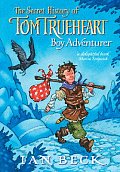
The Secret History of Tom Trueheart (MG)

The Secret History of Tom Trueheart. Ian Beck. 2006. HarperCollins. 345 pages.

Once upon a time, long ago, near the Land of Stories, lived young Tom Trueheart. He was the youngest of the famous Trueheart family of adventurers. 

I liked this one. I even really liked this one! I'm just not sure it's love for me.

Tom is the youngest in a long line of adventurers. All of his older brothers have already had plenty of adventures in the Land of Stories. All of his older brothers regularly are sent on missions by the Story Bureau. But for Tom, well, he's always the one left behind. True he isn't quite old enough, he hasn't had 'the birthday' yet. (I believe it's 12?) But his birthday is fast approaching. All of his brothers have promised--their mother--to be back in time for Tom's birthday. That will give them several weeks at least to finish the stories and report everything so that it can be written down and enjoyed by one and all. But Tom's birthday comes and goes, and there is still no word on his brothers. What could have kept them in their stories so long? Should they be worried?!

In this first adventure, Tom Trueheart receives his FIRST assignment. Enter the Land of Stories and find out what happened to his older brothers--I believe there are six brothers. It's not an easy mission, for something must be seriously wrong to keep all six brothers away from home so long. Does the Trueheart family have an enemy?!

As I said, I really really liked this one. I thought it was fun. Perhaps not quite as fun and clever as A Tale Dark and Grimm by Adam Gidwitz. Perhaps not quite as funny as the first few books in  The Sisters Grimm series by Michael Buckley. But I think the book is a fun treat all the same.

© 2011 Becky Laney of Becky's Book Reviews
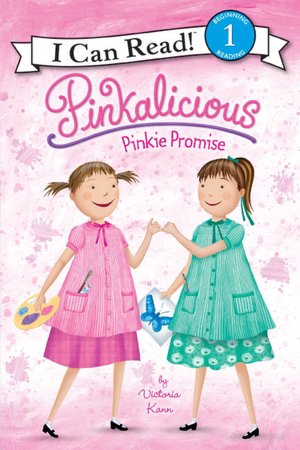
Jake Ransom and the Howling Sphinx (MG)

Jake Ransom and the Howling Sphinx. James Rollins. 2011. HarperCollins. 370 pages.

Most days people don't kick you in the head. For Jacob Bartholomew Ransom, it was just another Monday.

If the second book hadn't caught my attention, I don't know that I would have picked up the first novel in the series, Jake Ransom and the Skull King's Shadow. This is Jake's second adventure, and it is just as action-packed as the first. I definitely recommend you read the series from the beginning. Because many--if not most--of the characters are introduced in the first book. Even though this book has a different setting, in a way. The books do share a villain.

I don't know how to talk about this one without spoiling the first novel. With fantasy series that is often the case. I can only say that it was a quick read, a very quick read, and quite a satisfying one! I am still liking Jake and his sister, Kady. I'm liking their resourcefulness, their strength. The pacing, the plot, the characters, everything works.

© 2011 Becky Laney of Becky's Book Reviews
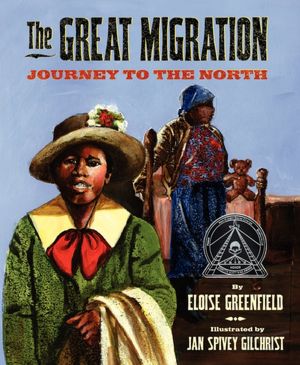
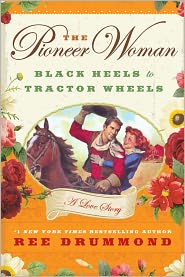
The Pioneer Woman: Black Heels to Tractor Wheels

The Pioneer Woman: Black Heels to Tractor Wheels. Ree Drummond. 2011. HarperCollins. 341 pages.

Forget this, I said to myself as I lay sprawled on the bed in which I grew up. In my Oklahoma hometown on a self-imposed pit stop, I was mired in a papery swamp of study guides, marked-up drafts of my resume, and a J.Crew catalog, from which I'd just ordered a $495 wool gabardine winter coat in olive, not chocolate, because I'm a redhead, and because Chicago, I reminded myself, is a tad more nippy than Los Angeles, which I'd just left weeks earlier.

Ree Drummond, the "Pioneer Woman," shares her love story with readers in this memoir. She met her Marlboro Man around Christmas. In a bar. And the meeting, well, it was magical. But. He. Didn't. Call. She'd just about given up hope of ever hearing from him again, when he calls four months later. But there's a slight little problem. She's a week (or two) away from moving to Chicago. Now that he's finally asked her out, does she want to bother with going knowing that she's going to be leaving for Chicago so soon? But he's oh so cute. And she can't imagine not saying yes. I mean every time she thinks of him, well, she swoons. So she agrees to see him even though the timing isn't the best in the world. The more she sees him--they see each other daily, from the very start, the more she wants to keep seeing him. She puts off her move to Chicago, always telling herself it's not a permanent decision to not go. No, she'll go, just give her a little more time with him. But. There comes a time when she knows that Chicago is not in her future plans...at all. That she loves her Marlboro Man...and it's a forever kind of love.

So this true romance is about her courtship, wedding, and first year of marriage. A first year of marriage that bring a baby girl! Readers get a glimpse into her life. There's plenty to laugh about! From Ree's first experiences on the ranch with the cows, to her experiences meeting his family, etc.

I liked this one. I did. It was a light read. A fun read. If you're a fan of the TV show or the blog, then chances are you'll be charmed by this one too.

© 2011 Becky Laney of Becky's Book Reviews