Tampilkan postingan dengan label YA Fiction. Tampilkan semua postingan

Code Name Verity (YA/Adult)

Code Name Verity. Elizabeth Wein. 2012. Hyperion. 352 pages.

I am a coward. I wanted to be heroic and I pretended I was. I have always been good at pretending. I spent the first twelve years of my life playing at the Battle of Stirling Bridge with my five big brothers--and even though I am a girl, they let me be William Wallace, who is supposed to be one of our ancestors, because I did the most rousing battle speeches. 

So many people have gushed about reviewed Code Name Verity by Elizabeth Wein. And so many have just LOVED it and found it amazing. I have been meaning to read this one for a few months now, but, I personally found the novel difficult to get into. It just wasn't working for me...at all. I found the framework of the story to be frustrating and confusing. The jumping back and forth between first person and third person, etc. And the main character, the narrator, I found her difficult to connect with. But I really didn't want to return this one to the library unread...again. So I decided to read it no matter what. And after two hundred pages, this one finally started working for me. And by the end, it definitely worked for me. By the end, I could see why people did love it. But it took reading the whole novel--seeing the big picture--for me to be able to appreciate it.

Code Name Verity is about two women serving their country during World War II. One woman is a spy; the other woman is a pilot. One fateful night, the two are together in a plane over France. One woman is captured several days later, and interrogated. This novel is her "cooperation" with the enemy. Through this written account--an account where she both speaks directly to her captors and relates events of the past (these are written in third person omniscient), readers come to know both women...

Read Code Name Verity
  • If you are interested in World War II, 
  • If you are interested in pilots and spies and secret operations
  • If you are interested in reading about strong, brave women
© 2012 Becky Laney of Becky's Book Reviews

Mothership (YA)

Mothership: Book One of the Ever-Expanding Universe. Martin Leicht and Isla Neal. 2012. Simon & Schuster. 320 pages.

As far as scientists have been able to determine, the primary function of the human coccyx, or tailbone, is to remind us that once upon a time we were all monkeys or something. But I happen to know that it can still serve a useful purpose. Say, for example, that a pregnant teenager three weeks from her due date, who weighs, oh, approximately 145 pounds (lay off, all right? The baby loves ice cream), were shoved down forcefully on a Treadtrack in gym class by a bitchy cheerleader. 

 Our heroine, Elvie Nara, is one of many students attending a special high school for pregnant teens. The school is in space--a space cruiser in Earth's orbit. When her father enrolled her, she had no idea that Britta McVicker would also be there. The hate is mutual. Their due dates are only weeks apart--and for better or worse--their babies will be siblings. Of course, Elvie isn't sure if Britta is aware of that little fact. The thought repulses Elvie actually. Despite the opening paragraph, Elvie rarely thinks in terms of carrying 'a baby.' An "it" or "goober" at best. Elvie definitely has no intention at all of ever, ever, ever feeling maternal.

On the day of the incident when Elvie is alone and eating ice cream, the ship--cruiser--is attacked by another ship. And thus the scare begins, Elvie racing to join the other girls--hoping to stay ahead of the mysterious gunned invaders. She meets a few other girls on the way, and convinces them to join her in her flight. But what she witnesses next...well...it's almost unbelievable. For she witnesses her teachers drowning her classmates. And then one of the invaders tells her that her teachers were in fact evil aliens. And he should know, because, he is an alien too....

Is there any part of Mothership that isn't over-the-top? I'm not sure that there is. I would say that this one should please fans of Bumped and/or Beauty Queens. The narrator, Elvie, is full of snark. (For those that require clean reads--look elsewhere.) And the book is about as believable as Earth Girls Are Easy. The novel is set in the future--2074.

The story is revealed in alternating chapters--jumping between the present (on board the spaceship) and the past (in the months and weeks leading up to her pregnancy). Ducky, her best, best friend is a big part of these flashbacks.

Read for Presenting Lenore's Dystopian August.  

Read Mothership
  • If you like silly, over-the-top, funny adventures that require a suspension of disbelief
  • If you like snarky narrators
  • If you're looking for aliens in your YA

© 2012 Becky Laney of Becky's Book Reviews

Gilt (YA)

Gilt. Katherine Longshore. 2012. Penguin. 416 pages.

"You're not going to steal anything." I left the question--Are you?--off the end of the sentence. But Cat heard it anyway. 

I'm not quite sure how I feel about this book cover. Would you be able to tell from the cover that this is historical fiction? That this book is in fact about Catherine Howard, one of the doomed wives of Henry VIII?

Gilt is told from the perspective of one of Catherine's companions, Kitty Tylney. (Catherine is "Cat", she is "Kitty.") Their relationship--friendship--isn't quite one-sided, but, Cat definitely is the boss, and there is some manipulation going on, I believe. It's a toxic friendship, in a way. It isn't exactly in Kitty's best interest to be best, best, best friends with Catherine Howard. Sure, it means that when Catherine Howard marries the King of England, that there is an invitation to go to court and be one of her maids, but she's not a lady, and her tasks are servants' tasks, in a way. And even before Cat married the Henry VIII, she wasn't easy to counsel, if Cat wants something, she wants it, won't be talked out of it. As you might have guessed, I had a hard time liking Catherine Howard. At least as she is portrayed in this novel! How did I feel about Kitty? Well, I pitied her to a certain degree. Kitty isn't always the wisest person in the world, but, she was truly in a horrible place. On the one hand, Kitty knows Cat is stupid and making HUGE mistakes with her life. Kitty is being asked to cover up her friend's mistakes, and, that makes Kitty very unhappy. She knows that if she talks, Cat, will die. That if the truth is uncovered, no matter who uncovers it, Cat will die. She may feel used, in a way, by her friend, but, she doesn't wish her friend harm. What Kitty learns is that court life isn't all that glamorous and charming. That many unpleasant things go on at court, that wearing fancy clothes may not be worth the emotional stress of court life.

Did I love it? Probably not. Did I like it? Yes, I liked it well enough. I have read a handful of books set during this time period, quite a few focusing on Catherine Howard. It isn't my new favorite, but, it's an interesting book.

Read Gilt
  • If you're a fan of historical fiction 
  • If you like a little political intrigue, a little romance with your historical fiction
  • If you are interested in Henry VIII and his wives

© 2012 Becky Laney of Becky's Book Reviews

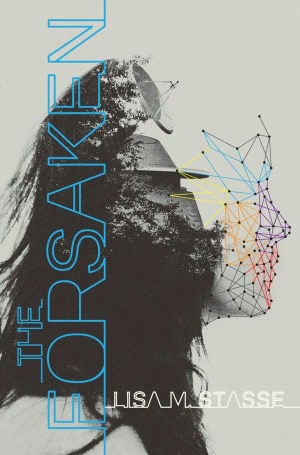
The Forsaken

The Forsaken. Lisa M. Stasse. 2012. Simon & Schuster. 375 pages.

At first I think the hammering sound is the noise of waves crashing down on white sand.

Alenna has "failed" her GPPT (Government Personality Profile Test) and has been sent to Prison Island Alpha. She's heard about the island, obviously, in the past few years, everyone has. She's even seen some of the violence from the island on screen, with the image of one boy, in particular, staying with her in the day or so leading up to her own "test." She never thought she'd be one to fail the test, she never thought she'd test positive for being violent, out of control, a potential danger to others. But she woke up on the island, and though she knows it has to be a mistake, how, do you survive long enough to prove that?

Soon after she wakes up on the island, she meets David, another "mistake" of sorts. He seems so very sane! The two work together--especially at first--trying to survive their first day or two. But they're just beginning to trust one another when they are claimed by different factions on the island. David is taken by the Drones on the "Monk" side of the island, Alenna is taken by the other side. She's given a truth serum, and trained to be a warrior. She makes a couple of friends and finds her place. Liam and Gadya are perhaps the two closest to her.

The book is obviously a thriller with plenty of secrets, secrets, and more secrets.

I enjoyed this one. Is it the best dystopian ever? No. But for those wanting another series like James Dashner's Maze Runner, for those that don't mind more-of-the-same from their dystopias, then this one could satisfy. The world-building isn't amazing. The characters aren't that well-developed. The relationships between the characters aren't fully explored. Is there a love triangle? I don't think so. Not really. True, the main character TALKS to two guys. (She talks to more than two guys.) But the fact that she talks to David and tries to listen and understand him does not mean that she sees him in that way, and there is not proof that he has those kinds of feelings for her either. 


Read for Presenting Lenore's Dystopian August.  


Read The Forsaken
  • If you're in the mood for a YA dystopia
  • If you don't mind a familiar feel to your dystopia
  • If you are looking for something fast-paced and action-driven

© 2012 Becky Laney of Becky's Book Reviews

For Darkness Shows the Stars (MG/YA)

For Darkness Shows the Stars. Diana Peterfreund. 2012. HarperCollins. 416 pages.

Elliot North raced across the pasture, leaving a scar of green in the silver, dew-encrusted grass. Jef followed, tripping a bit as his feet slid inside his too-big shoes. 

I really enjoyed Diana Peterfreund's For Darkness Shows the Stars. Did I enjoy it because it was a futuristic dystopia, OR, because it was a retelling of Jane Austen's Persuasion? A bit of both. For those expecting Captain Malakai Wentforth to be as swoon-worthy as Captain Wentworth, well, you might be disappointed. Might. For Kai's romance with Elliot North doesn't exactly mirror that of Wentworth and Anne Elliot. Peterfreund has definitely made this story her own.

For Darkness Shows the Stars is definitely a novel about social class or status. There are three "types" of people in this futuristic world: the Luddites, those with the highest status and wealth, the elite, those that have estates and titles, those that MATTER; the Reduced, those with slave status, essentially, they are thought to be mindless sub-humans, incapable of thought and feelings, definitely thought to be genetically inferior; the POST-Reductionists, the children of the Reduced who happen to be smart enough to function with more independence in the world, they have skills and abilities that make them worth something, they are not thought to be mindless and incapable, but, they're "socially" inferior to the Luddites. No matter how smart or brilliant a POST is, no matter how much money they acquire, they will never be on equal status with the Luddites.

Kai and Elliot grew up together; they share a birthday in fact. (Actually, there are three that share an exact birthday: Kai (Post), Elliot (Luddite), and Ro (Reduced).) But their friendship always had to be a secret, for if Elliot's father or older sister, Tatiana, found out, then everyone would get in trouble. Elliot enjoyed Kai's company, enjoyed spending time with him in the barn, enjoyed watching him fix things--he's a mechanic, the son of a mechanic. But when Elliot chose not to run away with Kai when they were fourteen (or possibly fifteen?), the friendship was broken. He chose to leave the estate, to risk everything in hopes of finding a better future. Elliot hasn't heard from him since the day he left, and he still matters to her. She chose to stay not because she didn't love him, but, because she needed to be responsible, because she was the ONLY one capable of being responsible on the estate, the only one who cared for the welfare of the Reduced, and also respected the Posts.

Meanwhile, Elliot's life has been as unpleasant as ever. Her father and sister are heartless and selfish and at times cruel. The novel opens with her father destroying his daughter's wheat field--weeks before harvest. That wheat could have helped feed the Reduced, it could have been sold for a profit, as well, to help the estate. But her father's "need" for a race track was more important. He's unwilling to see that the estate is struggling financially that they have a responsibility to the Reduced and the Posts that work their land/manage the estate. Elliot doesn't even bother protesting; true, the damage is already done and nothing can bring her wheat back, but, she also has a secret of her own. That wheat was her wheat--her special experimental seed. And Luddites do NOT under any circumstances experiment.

So in an effort to help finances, Elliot decides to rent out the estate to Cloud Fleet....and one of the guests is Captain Malakai Wentforth. Of course, there are plenty of other guests as well.

I enjoyed meeting the different characters in For Darkness Shows the Stars. Since this is a retelling, there is always a chance that the characters could have been weak, shallow copies of the original. For the most part, that was not the case.

I also enjoyed the story; there were just enough twists in the story that it really worked as an original story. The dystopian setting was interesting to me. I didn't have all my questions answered--at least not right away--and this futuristic society definitely added something to the story. 

Read for Presenting Lenore's Dystopian August. 

Read For Darkness Shows the Stars
  • If you enjoy science fiction, dystopias, post-apocalyptic fiction
  • If you enjoy futuristic stories 
  • If you are interested in a new retelling of Jane Austen's Persuasion
  • If you enjoy a little romance in your science fiction

© 2012 Becky Laney of Becky's Book Reviews

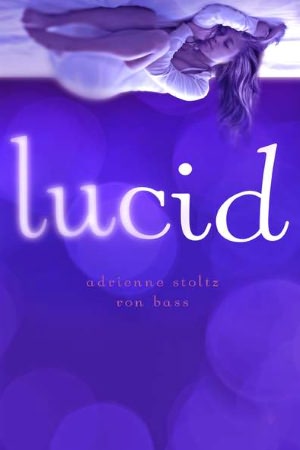
Lucid (YA)

Lucid. Adrienne Stoltz and Ron Bass. 2012. Penguin. 288 pages.

Right now, I'm Maggie. 

Maggie enters the same dream world every single night. Every single night she lives a day in Sloane's life. Sloane is a teenager living in Connecticut with her Mom, Dad, and younger brother. (She also has an older brother who has gone away to college.) Is Sloane's life perfect? Not exactly. True, she has some great friends, true, there's a new boy whom she has a love/hate interest in. His name is James. But she's still mourning the loss of her best friend, Bill. In fact, when the reader first meets Sloane she has just been asked to speak at a memorial celebration. Sloane also has a secret--a big secret. Every single night, she dreams a day in Maggie's life. No one would mistake Maggie's life for the perfect life. Her dad is dead, her younger sister, Jade, is having some health problems, and her mom, Nicole, is more of a hindrance than a help. But her Manhattan life is certainly far removed from Connecticut. Maggie is an actress. She is always auditioning for new roles and following her dreams. She's met two men Andrew and Thomas. One tempts her with auditions, the other offers only honest companionship: a willingness to listen, to respond with sincerity and honesty. As Maggie falls for Andrew, Sloane falls for James...will either girl get her happily ever after?

This book is certainly memorable! And it's definitely better than I expected!!! I would definitely recommend it. It was a compelling read--impossible to put down. And I cared about both Sloane and Maggie. While Andrew was my favorite love interest, James was also a good choice...at least for Sloane. I loved how their relationship began with debating literature.

I would have to say that this is one of my favorite YA reads of the year.

Read Lucid
  • If you like compelling YA Fiction
  • If you like the premise of lucid dreaming and dream worlds
  • If you were intrigued by the movie Inception
  • If you like fiction that questions the nature of reality

© 2012 Becky Laney of Becky's Book Reviews
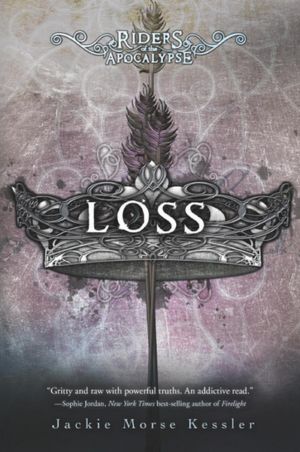
Loss (YA)

Loss. (Riders of the Apocalypse #3) Jackie Morse Kessler. 2012. Houghton Mifflin Harcourt. 272 pages.

The day before Death came for Billy Ballard...
...Billy was on the ground, getting the snot pounded out of him. Again. No special reason this time; maybe it was because it was Tuesday, or because Eddie Glass didn't like Billy's hair.

This is the third novel in Jackie Morse Kessler's Riders of the Apocalypse series. The first two books are Hunger and Rage. Hunger was a novel about a young teen girl with an eating disorder becoming Famine; Rage was a novel about a trouble teen girl, a girl who cuts herself, becoming War. The third novel is about a GUY who has spent years of his life being bullied becoming Pestilence. (For the record, the books do stand alone; you don't need to read them in a certain order; each book is about a different Rider of the Apocalypse.)

The hero of Loss is Billy Ballard. And he's going to have to become confident in the role of hero fast if he's going to stand a chance at saving the world from self-destruction, at stopping the end of the world. He's going to have to face what is troubling him--everything that is troubling him. At home, he's having to deal with a grandfather with Alzheimer's disease. Every room, every window, must be locked. And the front door itself must be "hidden" so that the grandfather can't escape and get lost and cause problems. Soon after the novel opens, readers see what happens when the Mom is careless when she comes in from work. The two are soon rushing through the streets, yelling as they search, needing to find him before something horrible happens. And that something horrible does almost happen--but Billy is there just in time. It was the closest of close calls. And it makes Billy "a hero" in the eyes of his best friend, a girl Billy wishes was his actual girlfriend. But. Billy feels silly thinking himself a hero when he's too scared to go to school, too afraid to go to his classes, his gym class, his locker room. He spends his life dreading every moment he's out of the house; considering what his home life is like--taking care of a grumpy, sometimes-violent grandfather who does not remember him, does not love him, does not want him around--that is saying a lot. But everything changes, everything goes topsy-turvy, everything becomes surreal when Billy is greeted by Death and given the Bow of the Conqueror, of Pestilence. Billy has a chance to wield power, destructive power. But he doesn't necessarily have to do it recklessly or irresponsibly.

Loss will best work for readers who don't require their fiction to make sense 100% of the time. In other words, for those that can accept a certain flowing ever-changing magic-realism, poetical, fantastical dream-state. While Billy does interact in the real world after assuming his bow and the 'office' of Pestilence, most of it does occur in Billy's mind. The imagery and allusions are powerful, in a way, and are incredibly creative. But. At the same time, it didn't quite work...for this reader. It was not quite my personal style.

Though the author uses some biblical imagery in these novels, the whole concept of the (four) riders of the Apocalypse, I can't say that the books are ever faith-friendly. In particular, this book has bothered me more than the others. True, it has been a few years since I've read them, and true, it's possible that I didn't just mention it in my reviews. In general, my philosophy is that I don't expect books to "be biblical" or to meet certain moral standards if they're obviously secular or mainstream. (If, like in Irises, they have characters that profess faith, then, that's somewhat different.) Loss is definitely, definitely a secular book. Yes, it may be using imagery from Revelation, but not in a biblical way. The viewpoint is not biblical. I found it disturbing--actually extremely offensive--when the author has "the Conqueror" say twice:
"Death is in all things," the Conqueror continued, babbling now, his words like wasps in Billy's ears. "He is the alpha and the omega, and we exist only on his whim. And he is done with whimsy!" (229, 243)
At one point Death says, "I'm not a god. Those come and go. I'm more like a permanent fixture." (48)

The novel also holds an unbiblical view of good and evil. In Kessler's novel, for example, and it won't be the first or last time this is done, I know, but good and evil are presented as equal, equal in terms of strength and power and forces and influences. Both good and evil being in eternal opposition forever and ever and ever without end. Neither good nor evil being able to overcome the other. The war between the two resulting not in their losses exactly, but in human losses.

Personally, I liked the first two books better than this one. I think this one is the weirdest one; I think it requires the biggest stretch to suspend your disbelief. I think it takes the most work to understand the surreal storyline which occurs mainly in a weird dream-memory-mind state.

Read Loss
  • If you're a fan of the series
  • If you enjoy magic realism and fantasy
© 2012 Becky Laney of Becky's Book Reviews

The Gathering Storm (YA)

The Gathering Storm. Robin Bridges. 2012. Random House. 386 pages.

An afternoon spent solving quadratic equations would have been infinitely more pleasant. 

 The Gathering Storm is a paranormal fantasy that almost-almost worked for me. It is a paranormal novel starring necromancers, werewolves, vampires, and zombies set in 1880s Russia; the characters are aristocratic and often royal. Our heroine is a young woman named Katerina Alexandrovna, Duchess of Oldenburg. She's making her debut in society, and she's caught the attention of two men. One is the middle son of the tsar, his name is George Alexandrovich, at first Katerina is not impressed with him. The second is the crown prince of Montenegro, Prince Danilo, her first impression of him is much stronger. Then again, it could be because he's a vampire who has mesmerized her.

Is there a single character in this one that doesn't have at least one secret? And most of the main characters--the five or six 'main' characters--have DOZENS of secrets between them. This was truly a case of the main character not knowing WHO to trust. Could she have made better guesses at who to trust? Perhaps. Did the reader have a little more information? Not really. Sure, readers can make their own guesses as to who's telling the truth, who's lying, and who's being the MOST manipulative. What kept me from making predictions--or sticking with the predictions that I made early on--was the fact that you never do know for sure if/when authors are going to put in twists and turns and surprise you.

Did I care about the characters? Well, I almost cared about Katerina. And I did care about George Alexandrovich. I did like Katerina's father. The rest of the characters? Well, I almost-almost cared about some of them, but, some of them not even that much. There were SO VERY MANY characters, usually these characters were related to one another. And I could never remember who was who, who liked each other, who hated each other, who got along, etc. The politics did get confusing at times.

I think I would have liked this one more if it hadn't felt so modern. At times the historical setting worked for me, but other times I just didn't believe it. Katerina has ONE BIG DREAM, to go to medical school and become a doctor. But the universities in Russia do not accept women in their medical programs, and, her parents aren't quite willing to send their daughter away to another European university. But Katerina's dream to have a career remains strong. She hasn't decided against marriage, she hasn't embraced the single life. No, she wants a very open-minded husband who will celebrate her decision to work outside the home and have a career as a doctor. And Katerina seems genuinely surprised when the CROWN PRINCE frowns on her demands to be a working woman. Every time I see Katerina interact with the doctors in the hospital (or in private homes, for that matter), I was thrown out of the story a bit. I don't know how modern, how advanced, how scientific and research-oriented the medical field was in 1880s Russia, but, I do know that at this time in other parts of the world, it was not very. That the field of medicine was very different than modern medicine.

Does it work as a paranormal fantasy? Probably. This isn't my favorite genre, but, it has potential. Does it work as a romance? Well, it has potential. A little more time focused on romance would probably have been a good thing. But, what we do get of George was nice.

Read The Gathering Storm
  • If you enjoy paranormal fantasies with light romance (love triangle of sorts)
  • If you enjoy historical fantasy with some paranormal elements (vampires, zombies, werewolves)
  • If you enjoy books set in Russia in the nineteenth century
© 2012 Becky Laney of Becky's Book Reviews
Raider's Ransom (MG)

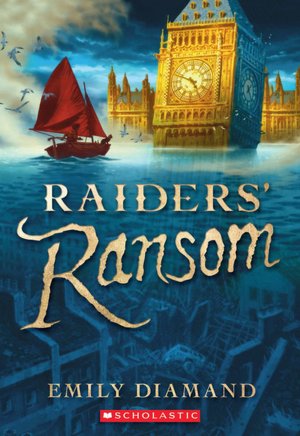
Raider's Ransom. Emily Diamand. 2009. Scholastic. 368 pages.

Cat puts up his nose to sniff the breath of wind barely filling the sail, and opens his small pink mouth to speak.

Knowing that I could never quite do justice to Raider's Ransom in my review, let me encourage you to just pick up this one and give it a try. I can't promise that you'll love it. But. You just may. It's that kind of book. The kind that actually delivers what it promises.
If you like action/adventure quests, I think you'll really, really appreciate Raider's Ransom. I think you'll enjoy the world Diamand created in the novel. I think there will be scenes that stay with you. I think you'll enjoy not only her world-building but her characterization and storytelling too.

The heroine of Raider's Ransom is a young girl, Lilly. She may be young, but she's a fisherman with a small (very small) boat of her own. And to the dismay of some, she's the owner of a cat, a sea cat. Not something to be taken lightly in her community of survivors. When she's at home, on land, she stays with her grandmother. But. Readers don't get a chance to see a more relaxed Lilly. For the novel opens with Lilly discovering the tragic truth: when she was out sailing her vessel, out fishing, the raiders (or should that be Raiders?) attacked her village. They were looking for something specific, the attack wasn't just random. I don't know if that makes things better or worse for Lilly since one of the things they were looking for was her cat. The Raiders kill Lilly's grandmother, and kidnap the Prime Minister's daughter. One might think that they kidnapped her for a nice ransom, but, they had something even more in mind. They return without their sought-after object, a particular jewel. And that's only the beginning. The problem? Well, I can't talk about this one without revealing too much. I think this is one of those that is best discovered all on your own. Trust me.

So. I won't go into details. But I will say we get another narrator. And that proves most interesting indeed! For I certainly wasn't expecting it at all.

This one went above and beyond all my expectations. It really did. It surprised me in a good way.

Read Raider's Ransom
  • If you like survival stories or starting over stories; 
  • If you like action/adventure stories with a quest, a journey, a mission
  • If you like action stories with battles and close escapes
  • If you like dystopias, novels set in the future with a society quite unlike our own
  • If you like good storytelling

© 2012 Becky Laney of Becky's Book Reviews
The Wicked and The Just (YA)

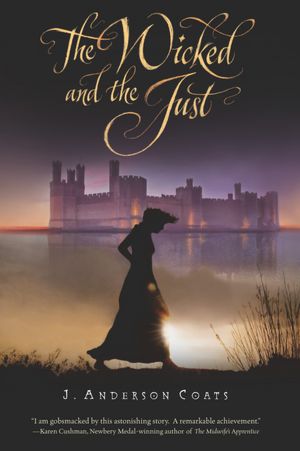
The Wicked and The Just. J. Anderson Coats. 2012. Houghton Mifflin Harcourt. 352 pages. 


Tonight at supper, over capon and relish, my father ruined my life. He smiled big, scrubbed his lips with the end of his cloak, and said, "We're moving house." 

I think there is a good chance you will like The Wicked and the Just more than I did. I seem to be in the minority on this one. Apparently I liked all the wrong characters, disliked all the wrong characters, and got my sympathies misplaced. If you happen to believe that there is one right way to read a novel. (I'm not saying that I do, just that some do.)

The Wicked and the Just is set in Wales in 1294. One of our narrators is Cecily, who provides the "English" perspective; the other narrator is Gwenhwyfar, who provides the Welsh perspective. I think I might be the only reader who sympathized more with Cecily and preferred her narrative. Did I love Cecily? No, not exactly. Did I like her? A little. Do I find her perfect and without fault? Hardly! How did I feel about Gwen? Well, I'm in the minority, but I did NOT like her at all, not even a little bit. I really, really, really did not like her narrative. Especially towards the end, after IT happens. I really HATED her. I did.

The King is encouraging the English to move to Wales and settle it. Cecily's father feels his chances are better in Wales than England--he can live cheaper, have better status and opportunity, etc. (He does not have his own estate to inherit or manage because he is a younger son.) The Welsh are not happy to be "managed" or "governed" by the English. They do not "enjoy" the rules and regulations the English put in place. They do not like the added-burden of having the English around. The past few years have been hard ones--famine, I believe--and having the English around telling them how to sell and trade, when to sell and trade, and deciding what is "fair" is too much. The English have the first and last word on what justice looks like, and there are differences depending on if you're Welsh or English. The English are treated preferentially. No doubt about it.

S
P
O
I
L
E
R

The novel is working towards a VIOLENT response to the injustice. There will be blood spilled. A LOT of blood. For the Welsh "rebels" will band together, form an uprising, and slaughter the English. Yes, slaughter. There will be bodies everywhere. Not just a few of the leaders, not just the government, not just the men. But of everyone. Why did they have to die? Because they were there, because they were English. Did it matter how they lived? What kind of person they were? No. Of course not. Everyone must die. The English must be "taught" a lesson. Cecily witnesses the violent slaughter of her father. It is horrific. And by my reckoning, that was not JUSTICE. The slaughter of a whole town is NOT JUSTICE. It is murder. How do two wrongs make a right? Ever?!  So what does this mean for Cecily? Don't expect mercy or compassion from the so-called heroine, Gwen. You won't find it. 

The character I happened to like best of all--better than Cecily, better than Gwen--is Gruffydd.

Read The Wicked and the Just
  • If you enjoy historical fiction set in medieval times
  • If you enjoy reading about peasant revolutions and uprisings
  • If you are looking for fiction set in Wales
© 2012 Becky Laney of Becky's Book Reviews

Grave Mercy (YA/Adult)

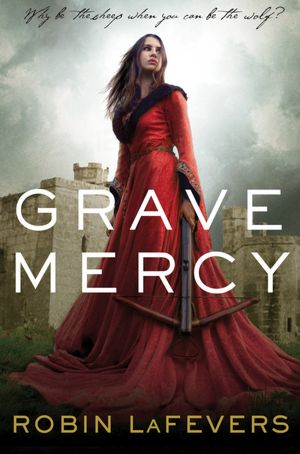
Grave Mercy. Robin LaFevers. 2012. Houghton Mifflin Harcourt. 560 pages.
Brittany 1485
I bear a deep red stain that runs from my left shoulder down to my right hip, a trail left by the herbwitch’s poison that my mother used to try to expel me from her womb. That I survived, according to the herbwitch, is no miracle but a sign I have been sired by the god of death himself.
I am told my father flew into a rage and raised his hand to my mother even as she lay weak and bleeding on the birthing bed. Until the herbwitch pointed out to him that if my mother had lain with the god of death, surely He would not stand idly by while my father beat her.
I risk a glance up at my husband-to-be, Guillo, and wonder if my father has told him of my lineage. I am guessing not, for who would pay three silver coins for what I am? Besides, Guillo looks far too placid to know of my true nature. If my father has tricked him, it will not bode well for our union. That we are being married in Guillo’s cottage rather than a church further adds to my unease.
I feel my father’s heavy gaze upon me and look up. The triumph in his eyes frightens me, for if he has triumphed, then I have surely lost in some way I do not yet understand. Even so, I smile, wanting to convince him I am happy—for there is nothing that upsets him more than my happiness.
Wow. If you're looking for two words: assassin nuns. Of course, our heroine, Ismae isn't a nun in the Catholic church. No, she's in a special nunnery, the nuns live to serve Death whom they call St. Mortain, and she's received very special training. They've taught her to kill, to be an assassin. The nuns are loyal to the Duchess of Brittany, and the victims are often her political enemies--foreign or domestic--those that pose the greatest threat to Brittany's independence.

While we do see her first few jobs carried out, most of the novel focuses on one job in particular. The abbess wants her to team up with Duval, the Duchess' older brother and her most trusted friend and advisor. She's to pose as his mistress, and travel with him to the Duchess' household. There she will "help him" find any possible traitors. He doesn't exactly trust her, he knows exactly what she's capable of, and who she serves. He knows that if given orders, she'd kill him to please her Lord. She doesn't exactly trust him either. Though the marque hasn't appeared on him yet--the special sign or symbol that she sees on her victims before they're killed--she knows that he could be lying to her, that his loyalty to the Duchess could be an act. But both know that it is of the utmost importance to protect the Duchess, and to find any traitors and uncover any conspiracies, if that means working together, so be it. Of course, this means spending a LOT of time with one another...

...the time will come when Ismae must choose who to trust and who to believe...

Politics. Romance. Drama. Dysfunctional Families. Poison. Murder. Betrayal. Mystery. Suspense.

This one probably won't please every reader. Some may not be able to get past the premise of old or ancient religions continuing to exist under the guise of Christianity. And this one isn't squeaky clean. For those that have no tolerance whatsoever when it comes to sensuality. (I would consider it mild up until the very end when their relationship changes.) But. For those that can, well, this is one COMPELLING read. My favorite character happens to be Duval. I just LOVED him. I did. He was such a swoon-worthy hero!!! And our heroine, Ismae, is quite strong and resourceful. I loved the drama. I loved the history. I loved seeing the court life and family drama play out. I enjoyed the setting, the characters, the writing. It worked really well for me.

Favorite quotes:
"Are you drunk?" I try to put as much scorn into my words as he did.
"No. Yes. Perhaps a little. Definitely not enough." The bleakness is back and he turns to stare into the flames.
I am torn between wanting to leave him to wallow in his despair and wanting to rush to his side and chase that look from his eyes. That I long to do this appalls me, sets panic fluttering against my ribs.
"I suggest you return to your room," Duval says, his gaze still fixed woodenly on the fire. "Unless you have come to practice your lessons of seduction on me?" His mouth twists in bitter amusement. "That could well entertain me till sunrise."
I jerk my head back as if I have been slapped. "No, milord. I had thought only to pray for your soul if Madame Hivern had seen fit to poison you. Nothing more." And with that, I turn and flee the room, then bolt the door against the disturbing glimpse of both his soul and mine. Whatever games are being played here, he is master at them, and I will do well to remember that. (155)
"What is my fair assassin so afraid of? I wonder."
"I'm not afraid."
Duval tilts his head to the side. "No?" He studies me a long moment, then rises out of his chair. I hold my breath as he crosses to my bed. "Are you afraid I will draw closer, perhaps?" His voice is pitched low, little more than a purr. My breath catches in my throat, trapped by something I long to call fear but that doesn't feel like fear at all. (174)
His smile flashes, quick and surprising in the darkness. "When one consorts with assassins, one must expect to dance along the edge of a knife once or twice. I bid you good night." (218)
Read Grave Mercy
  • If you're a fan of Robin LaFevers
  • If you're a fan of historical romance, with a fantasy feel to it (mythology/supernatural)
  • Also if you're a fan of mystery/suspense/political thrillers

© 2012 Becky Laney of Becky's Book Reviews
Kepler's Dream (MG)

Kepler's Dream. Juliet Bell. 2012. Penguin.  256 pages.

It was the middle of the night, and that's not a time when you want to be hearing strange noises. I don't care how brave you are. No one wants to be restless and almost-sleep, then rustled awake by a thudding overhead and the feeling that someone is trying to get into the room.

Ella, our heroine, is visiting a grandmother she's never met, her paternal grandmother. Her father, whom she barely knows, does not get along with his mother. But Ella has to spend the summer with someone since her mother will be undergoing treatment for her leukemia. (She'll be receiving a bone marrow transplant, I believe.) And her grandmother is her last option, her only option.
Ella's first impressions of her grandmother, of her grandmother's house, are priceless. But through the course of a summer, the eccentricity and quirks of her grandmother have become familiar and comfortable. And she's made other friends as well.

Kepler's Dream is about a dysfunctional family who has a rather unique opportunity to heal, to mend, to come together. Could Ella  help bring her father and grandmother together again? Perhaps. For Ella who has never really known her grandmother and does not really know her father, it's an unique opportunity, for she'll get a chance to get to know them, to get to love them, to make them a part of her family.

But Kepler's Dream is also a mystery. And Ella's curiosity and determination to solve the mystery, to learn WHO stole her grandmother's precious book, Kepler's Dream, is the beginning of that opportunity. This mystery is the catalyst for a family to come together again.

I liked this one. I definitely liked it. There were places I just loved it. I liked the narrative voice, how Ella's reading influences her as a narrator. I love her grandmother's bookish lifestyle, and how she's always getting book deliveries. I liked how these relationships, friendships, happened naturally--nothing forced, nothing instant, nothing magical. I loved getting to know Ella at a very vulnerable time in her life. The thing I absolutely LOVED about this one were Ella's letters to her mom.

Read Kepler's Dream
  • If you like bookish heroines
  • If you like children's mysteries
  • If you like family books, plenty of drama but heart as well
© 2012 Becky Laney of Becky's Book Reviews
Tempest (YA)

Tempest. Julie Cross. 2012. St. Martin's Press. 352 pages. 


Saturday, April 11, 2009,
Okay, so it's true. I can time-travel. But it's not as exciting as it sounds. I can't go back in time and kill Hitler. I can't go to the future and see who wins the World Series in 2038. So far, the most I've ever jumped is about six hours in the past. Some superhero, right?

Tempest is a great example of why you should never judge a book by its cover. For me this cover just doesn't work, it doesn't shout out time-traveling-spies, does it? And with a premise as appealing as time travel (in general) AND featuring mysterious secret agents fighting evil-time-travelers, it should have an awesome cover.

Jackson Meyer is our time-traveling hero with a girlfriend named Holly. But within chapters, Holly's life is in danger--she's dying before his eyes--and Jackson does the only thing he can do: panic as he jumps backwards in time. Because of the traumatic events leading to the jump, Jackson does something he's never done before which traps him in the past--in the year 2007. Once there, he'll have plenty of time to find out who he is, who his father is--why his Dad is so very, very weird and out-of-touch with him, and much much more. He has tons of questions, and he wants some answers at least. Mainly: can he change the future, is there anything he can do to prevent the tragic events leading up to Holly's (alleged) death? Also: can he find a way to jump back to the future, or is he stuck in 2007? Will he have to relive two years of his life? And then there's all the super-super mysterious stuff about himself, his father, his mother, his abilities, etc.

So how does he spend his time? Well, he a) time-travels back and forth in his own past trying to piece together clues b) meets his girlfriend, Holly, years before he "really" meets her c) meets his best friend, Adam, years before he's supposed to really meet him d) confronts his Dad with some super-tough questions.

This one has dangers, thrills, mysteries, secrets, lies, spies, and time-travel. What is NOT to love?! Seriously!!! The book has a GREAT premise. Jackson is a fully developed character whom we get to know surprisingly well considering how this is an action/plot/premise-driven book. Loved the emotional range we get, not only all the scenes about Holly or with Holly, but all the scenes about his twin-sister, Courtney. There was even a great heart-to-heart with his Dad towards the end. The book has a quite a few complex relationships, and I appreciated how they were developed. I loved also the exploration of consequences. I really appreciated the ending, I thought it was just right.

Read Tempest
  • Time travel
  • Good vs. Evil
  • Secret Agents/Secret Agencies
  • Romance from a guy's perspective


© 2012 Becky Laney of Becky's Book Reviews
No Safety in Numbers (YA)

No Safety in Numbers. Dayna Lorentz. 2012. Random House. Penguin. 288 pages. 

The back cover reads: "It's just another Saturday in a busy suburban mall. But not for long." The front cover reads: "Four teens, 150 stores, 1 bomb." I'm not sure which one is more effective as a hook for drawing readers in, what do you think?! Essentially this is a book about a mall that gets quarantined with all its shoppers "trapped" inside after one employee discovers a hidden bomb. The book covers, I believe, the first week. And by the end of the week, the novelty has definitely worn off.

You should definitely know that there is no ending, this is book one, and those who absolutely need an ending to be satisfied should wait until the release of the second book. Personally, as long as I know that before I begin a book, it doesn't bother me that much. It's only when I spend two or three hours of time anxiously expecting an ending only to be surprised by a big "to be continued" that I get annoyed.

Is No Safety in Numbers premise-driven or plot-driven? I think it is. I think the premise itself is big enough to drive the plot forward. That doesn't mean that the characters are flat, boring, and lifeless. It just means that they are not the strongest element of the book. We've got two male narrators: Marco, a busboy at a restaurant; Ryan, a football player whose integrity is flexible depending on who is around. And two female narrators: Lexi, the daughter of a Senator, a true computer nerd who spends her time making movies, working with graphics and computer programming instead of having "real" friends; and Shay, who spends half her time taking care of her younger sister, Preeti, and her grandmother, Nani, and the other half of her time talking with either Marco OR Ryan.

Each narrator manages to bring a handful of other characters into view. (Lexi spends time with Ginger and Maddie, two popular girls from her school whom she's never really spent any time whatsoever with until this crisis; Lexi also keeps in touch with her mother, the Senator, and her father; all three are "trapped" in the mall. Shay has her younger sister and grandmother. Ryan has at least two if not three football players to hang out with. Marco, poor Marco, well he occasionally gets to mention a cook, waiter, or manager.) But despite the fact that readers are told about all the thousands of people who are trapped in this quarantined mall, despite the fact that readers see these people mass together to riot on at least one or two occasions, I couldn't help but get a sense of emptiness and loneliness. At times it felt like there were only ten or twelve people in this gigantic mall.

There were times it felt believable enough, then again, there were other times it didn't. And sometimes these instances are where you would least expect them.


I have a hard time putting No Safety in Numbers into a 'perfect' genre. On the one hand, there is nothing in it to make it science fiction. The setting could be present day or a few years into the future. So it could be classified as realistic fiction. There is a sense of danger, of terror, that makes this a thriller, to a certain extent. But for readers looking for ACTION, they might not appreciate all the time spent making friends and forming relationships. They might not appreciate the surreal "first date" between Shay and Ryan, for example. And all the talk of feelings and loneliness and not belonging. And the poetry reading.

So did I like it? Yes. For the most part. I found it compelling, or compelling enough. In other words, I read it essentially in one afternoon. I did get caught up into the story.

Read No Safety in Numbers
  • If you like thrillers and suspense novels; this one does have some action, but it isn't exactly fast-paced action. There is danger to be avoided, a sense of terror, but it is more subtle, at least for the first half. 
  • If you like survival fiction

© 2012 Becky Laney of Becky's Book Reviews

Insurgent (YA)

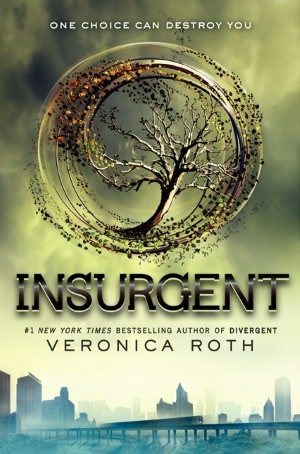
Insurgent. Veronica Roth. 2012. HarperCollins. 525 pages.

 I absolutely LOVED Veronica Roth's Divergent. I just LOVED, LOVED, LOVED it. I recently reread it too just to prepare myself for reading the sequel, Insurgent. So how do the two compare? Well, I'm not sure that's ever a fair question. The better question may be did I love it? And the answer to that one is much, much easier! Yes, I loved Insurgent. Now does loving it translate into just love or love, love, love? Only time will tell.

Insurgent starts right where Divergent left off, which was great for me since I'd just read Divergent. Beatrice (Tris) is on the run with a handful of people including her boyfriend, Four, and her brother, Caleb. But among this group of survivors are a few people Tris doesn't trust or exactly like. They are seeking refuge with Amity unsure of their welcome. Well, unsure of how long-term this welcome will be. Amity is the kind of faction that gets along with everyone no matter how good or bad. But Tris and Four are almost sure that they cannot stay with Amity, they still have unfinished business.

While Insurgent definitely introduces new business--new dangers, new threats, new risks, etc--it does a great job in terms of consequences. Tris and Four (and the others) have a big, big mess to deal with. Many people have lost loved ones, many have lost homes, all have lost security. Tris' losses are monumental. She has lost both parents, parents with secrets that are only now coming to light, and she's dealing with her choices. Specifically her choice that led to a former friend, a close friend, losing his life. She is HAUNTED, beyond haunted almost, by what she has done.

But there is no time for Tris to relax, not really, for every day brings more decisions. Tris is having to make some tough, tough decisions; decisions that will impact not only her life, not only her relationship with her boyfriend, but will impact potentially everyone. And she struggles with the weight of it all. Does she have the right to think for herself? Does she have the right to disagree with the leaders? With the leaders of her own faction? Does she have the right to question people she's been told are trustworthy? How does she know who to trust?

I definitely loved this one! And I loved getting to know the characters. I loved the world-building, getting a chance to learn more about the other factions and the factionless too.

Read Insurgent
  • If you loved Divergent, or, even if you just liked Divergent
  • If you enjoy science fiction and dystopias
  • If you like dystopias with good world-building and a little romance too
© 2012 Becky Laney of Becky's Book Reviews

Unbreak My Heart (YA)

Unbreak My Heart. Melissa Walker. 2012. Bloomsbury. 240 pages.

I definitely enjoyed Melissa Walker's Unbreak My Heart. I thought it was a wonderful way to spend a summer afternoon. Clementine, the heroine, is an emotional mess when the novel opens. All will come to light as the story unfolds chapter by chapter, but, essentially she's lost someone really super-close to her, her best friend, Amanda, someone she's known and loved since grade school. Why are these two friends no longer speaking? (Or at least with words that can be repeated?!) Well, it has a little something to do with the notion of being betrayed. It's up to readers to decide just how much betrayal was involved and if Clementine is deserving (or not) of a second chance.

Unbreak My Heart is an intriguing YA book in that there are two stories unfolding at once. 1) The present summer (the summer before her senior year) where she is on a three month sailing trip with her parents and her younger sister, Olive. 2) The previous school year (her sophomore year) where readers see Amanda and Clementine and their friends and boyfriends. Readers, of course, know this is building to something allegedly BIG and SHATTERING.

The summer might be lonely, incredibly lonely, for Clementine, if it wasn't for meeting James, a cute red-haired guy with issues of his own. James and his Dad are sailing for the whole summer too. With James and tag-along Olive, Clementine does stop moping occasionally. And James does awaken something in her...

Read Unbreak My Heart
  • If you're a fan of Melissa Walker, Sarah Dessen, Elizabeth Scott, Deb Caletti, Susane Colasanti, etc.
  • If you're a fan of YA Romance, particularly YA Romances with an emphasis on music and playlists.
  • If you're looking for YA novels with complexly drawn characters, particularly if you're looking for well-drawn families. Truth be told, it's rare for parents, sisters, etc. to get fleshed out. But I think she did a great job making this feel like a real family on a real vacation. 
  • If you're looking for YA novels that explore the tension of friendships and relationships.

© 2012 Becky Laney of Becky's Book Reviews

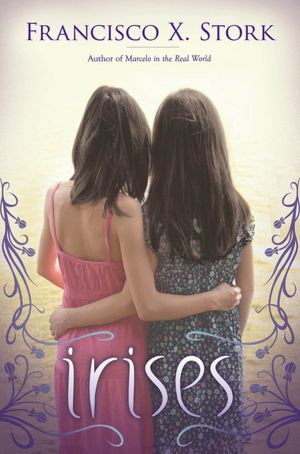
Irises (YA)

Irises. Francisco X. Stork. 2012. Scholastic. 304 pages.

From the prologue: Kate had finally agreed to pose under the willow tree.
From chapter one: Kate and her father sat in the shade of the willow tree, side by side in two wooden chairs. It was unusually hot for an April day in El Paso. 

Kate and Mary are sisters. Kate, 18, dreams of being a doctor, dreams of going away to Stanford for her college education. Mary, 16, is an artist, an artist struggling to recapture her initial joy perhaps, but a very talented, very dedicated artist nonetheless. In the first chapter of Irises, both girls receive a bit of a shock: their father, a pastor, dies. Arguably he knew the end was near for he has a great heart-to-heart with his daughter, Kate, urging her to look to her soul, mend her faith, take care of the family, etc. He tells her: "Love makes everything that is heavy light" (4). Kate, of course, not realizing the gravity of the situation, perhaps just thinking that her oh-so-strict father is just in an odd mood, quickly leaves the house and goes to study with her boyfriend, Simon. It is Mary, ever-sacrificing Mary, who is left behind to care for their Mom, who is in a vegetative state going on two years now, who discovers that her Dad has died in his sleep. While the two sisters have an aunt who lives in California, both girls know that more than likely they'll be on their own. Aunt Julia isn't exactly the most-nurturing type, after all. And Kate and Aunt Julia are like oil and water. The girls are facing at least half-a-dozen BIG, BIG decisions. And coming to agreement may not be easy...

The facts:
  • Mary and Kate have very limited funds, in part because their father's insurance is being denied; the insurance company will not make good with his insurance policy after his death.
  • Kate is having to make a decision about college; she's received a scholarship to Stanford, but taking it  will mean leaving her mother and sister behind. Is it fair to leave the care and to some extent the expense of caring for a mother in a vegetative state to a sixteen year old girl? A job that is emotionally, psychologically, financially, physically challenging for anyone.
  • Mary secretly wishes that there was a way for the family to stay together but she's afraid to disappoint Kate. 
Irises may not appeal to every reader, but, I liked it all the same. Was it too heavy or too heavy-handed? I'm not sure there is a right answer to that. Some might feel it was in-your-face with a somewhat potentially controversial (at least in some circles perhaps?) issue. The issue of when is it "right" or "ethical" to take someone off of life support. Some might feel there was too much God-talk. A few might feel there is not enough God-talk.

Irises is almost by necessity a serious-minded novel. It explores many questions while not necessarily giving ready-made answers to those questions. At least not ready-made-answers for every-single-person. What does it mean to be in a family? Who is in your family? Can you walk away from family without looking back? Is it right to ever turn your back on your family and put yourself first? What is love? How do you know you love someone? Does love always mean making sacrifices? Can you love someone and by your choices cause them hardship? Can you love someone and still love yourself more? By always putting yourself and your needs and wants first are you selfish? Is it always wrong to be selfish? What's the difference between being true to yourself and following your dreams and ambitions and being a horribly selfish self-centered person? Does being honest about how selfish you are help redeem your selfishness in any way? Does being selfish mean indulging your HUGE ego?

The rest of the review will be spoilerish, so I'll go ahead with...

Read Irises
  • If you are a fan of Francisco X. Stork
  • If you are looking for an art appreciation novel; Artistic Mary is a great narrator, and the way she uses art to help Marcus (her potential love-interest) is great. 
  • If you are looking for a YA novel that explores faith, hope, and belief
  • If you are looking for a book that addresses the complexity of what it means to be sisters
  • If you are looking for an issue book, a serious book; this one is about death, dying, grief, letting go, making sacrifices, reaching hard decisions, etc.
  • If you're looking for books with a Texas (West Texas) setting.

If you read the book jacket, you'll learn that there are three men in the picture. Two relate to Kate, one to Mary. I definitely don't want to spoil the book for anyone, but, I have to talk about one of the men: Andy.

S
P
O
I
L
E
R

Reverend "Andy" Soto was certainly charismatic in an oddly appealing and equally revolting way. When readers first meet him, he seems very dynamic, very charismatic, very friendly, very much a good guy. And yet. And yet. His true nature is revealed through the course of the novel. And he's so very, very, very slimy. There are some warning signs we can pick up on as readers--or adult readers may pick up on--but it isn't surprising that Kate doesn't quite see him clearly. 

Is he 100% evil? NO! That's NOT what I'm saying. Though his tact could use a LOT of work, (I hate to think what his bedside manner would be if visited the sick or dying or the family members of the sick or dying.) Some of his advice was actually good advice. Some of what he had to say needed to be said...by someone, by anyone.

M
O
R
E

S
P
O
I
L
E
R
S

I definitely found his EGO to be revolting. He was young, just twenty-two, and ambitious and selfish, and all ME, ME, ME, I LOVE MYSELF. And the way he behaved with Kate, well, it was a bit shocking or surprising. You would think that he'd learn somewhere along the way that inviting an eighteen year old girl, a member of your congregation, into his apartment to spend the night even if it was just "talking" or mainly talking...after his advances were halted...by her...with an apology for sending mixed signals. I do think he plays an extraordinary part in the novel. Mainly by mirroring to Kate the extremities of selfish ambition and pride and ego. His "you should totally do this without feeling guilt in any way whatsoever" attitude actually was a BIG, BIG wake-up call to Kate. I just LOVED her confrontation with him!!!! I was cheering her on!!!! Tell him, tell him, TELL HIM!

© 2012 Becky Laney of Becky's Book Reviews
Rereading The Schwa Was Here

The Schwa Was Here. Neal Shusterman. 2004. 240 pages.

I am definitely glad I chose to reread Neal Shusterman's The Schwa Was Here. I'm not exactly sure I loved it as much this second time, but, I am glad I reread it.

My reaction the first time I read this one--back in 2005--was that THIS WAS THE BEST, BEST, BEST book ever...at least of 2004. I was wowed by the characters of Schwa and Antsy. And smirked at the developing relationship between Old Man Crawley and Antsy. I thought it had heart and humor and a great narrative voice. And I still do, for the most part. I definitely think that Antsy is a GREAT narrator. The narrative voice in this one is so strong. Antsy can be very very funny in his observations--particularly in his observations about life, like how he compares life to a bad haircut, or change in life to a bad haircut. But he can also be authentic in some very tense, uncomfortable situations. In particular the tension-filled dynamics of his family. Never do readers get the idea that Antsy's life is one big joke after another. Readers see a blending of humor and pain. Which I think is authentic.

So the premise of this one is simple, Calvin Schwa is a middle schooler who, for the most part, remains invisible to teachers and students alike. They just don't see him. It's like he's not even there. Antsy does notice him, though even Antsy sometimes slips, and begins to make the Schwa a project of his. He decides to experiment to see the properties of the Schwa effect. The first few experiments are funny. Over-the-top ridiculous. But the experiments don't last forever, and the joke doesn't stay funny for long. Schwa may have enjoyed a couple of weeks of particular attention (not being taken seriously, mind you, not being seen for who he is, really is, but being the focus of a joke, a bet, a fad), but soon Antsy is his only friend. Almost. (A girl does enter into this.) How long can the Schwa go on being unseen and unheard? When will enough be enough? Can he turn his tragic non-life around?

I suppose the only thing that has changed in my rereading is that it doesn't strike me as truly being the best, best, best, best, best book ever. I still love it, I still really love it. I still seeing it as being a strong novel with a lot of heart and soul to it--a blending of emotions that make up life as we know it. I still love Antsy. I still love seeing a novel that addresses the invisibility of some kids. I still love seeing all the family drama. 

Read The Schwa Was Here
  • If you love Middle Grade Fiction
  • If you love coming-of-age stories
  • If you love stories with great narrators
  • If you have room in your heart for a grumpy old man
© 2012 Becky Laney of Becky's Book Reviews

Miracle (YA) Spoilers

Miracle. Elizabeth Scott. 2012. Simon & Schuster. 224 pages.

When I woke up the sky was burning. It was orange-red with flames, breathing hot all over me, and thick black smoke bloomed like clouds. I rose to my knees and the sky grew hotter and closer as water poured over me. I knew I should turn around, that there was something behind me. I didn't even know how I knew that. I just did. I didn't turn around, and in front of me, through the bright flame of the sky, I saw a hint of green. I started walking toward it. Smoke was winding itself inside me, slipping down my throat every time I breathed. 

I have a feeling that it isn't exactly fair to judge a book by an author's previous books. But. I can't help feeling that Miracle just isn't as wonderful as some of the author's previous books. Even if I exclude Elizabeth Scott's contemporary romances and only consider her darker YA novels like Grace, Living Dead Girl, Love You Hate You Miss You. Do I like her darker books? Yes and no. Grace wowed me, I won't lie. It was definitely a strong book for me. Same with Living Dead Girl. It was very, very, very, very dark. And not at all pleasant to read. But I did feel that it was a powerful story well told. I felt their was a certain strength in the writing, not anyone could write like that. And the fact that the same person who writes like that also writes giddy-making (seriously giddy-making) YA romances, it is a lot to keep in mind. Scott doesn't just write the same book over and over and over again. Although some fans might prefer her to keep writing giddy-making romances. I certainly wouldn't mind reading *more* YA romance from her. But neither do I expect her to just write one kind of a book and only one kind of book.

So. I didn't exactly love, love, love Miracle. I didn't dislike it. I really didn't. There were things I definitely liked, and things that I definitely didn't like. So what didn't I like? Well, I HATED (yes, hated) Megan's parents. I HATED the way they treated Megan's brother. I thought it was absolutely ridiculous. The way the parents treat David was all kinds of wrong. And the way we're led to believe that before the plane crash the case was reversed, well, it convinced me that Megan's parents need HELP. (Before David got 100% of the attention.) Is not liking the parents of a narrator reason enough to not particularly "like" a book, probably not. And I did like a handful of the characters. I particularly liked Margaret. She was one of two people who really got Megan, well, post-crash Megan. She was one of the only people who saw Megan for herself, who saw Megan's need and looked at it without turning away. The other person was Joe, a next door neighbor with swoon potential. If Miracle had more Bloom to it, well, it would be a different book. Still. Joe was an asset to this book. I did like the way he got to know Megan, and how he helped her through some of her darkest times.

I think Miracle is more of an issue book than a romance. It does go dark places. Being the sole survivor of a plane crash would be traumatic. Being a survivor--sole or not--would be traumatic. So there is a reason this isn't a giddy-making romance... 

Read Miracle
  • If you're looking for a novel about PTSD (Post-traumatic Stress Disorder)
  • If you're looking for a dark and gritty novel about a young woman tortured by what she doesn't quite remember--she's the sole survivor of a plane crash. 
  • If you prefer contemporary/realistic YA to YA romance.
  • If you're a fan of Elizabeth Scott. Particularly if you're a fan of Grace, Living Dead Girl, or Love You Hate You Miss You.
© 2012 Becky Laney of Becky's Book Reviews
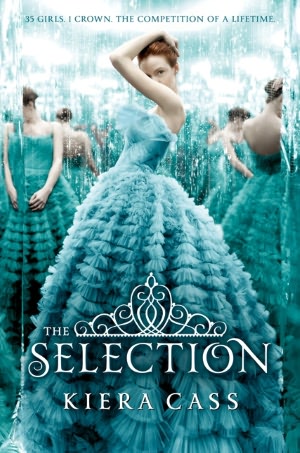
The Selection (YA)

The Selection. Kiera Cass. 2012. HarperCollins. 327 pages.

When we got the letter in the post, my mother was ecstatic. She had already decided that all our problems were solved, gone forever. The big hitch in her brilliant plan was me. I didn't think I was a particularly disobedient daughter, but this was where I drew the line.

The key to enjoying this one may be to approach it with no expectations at all. If you've been told--and I'm not sure who is doing the telling--that this one is in any way like The Hunger Games, then you'll be disappointed most likely. I admit that both books do have a love triangle. And I suppose that both books have a reality-TV aspect to them to a certain degree. But really these are two completely different books.

If The Selection reminded me of any book at all, it was the book of Esther from the Old Testament. Our heroine, America Singer, is one of thirty-five young women chosen to be a potential princess. The Prince, the heir to the throne, is about to begin courting these women--one woman from each district in the realm. They will live at the palace--along with the royal family, though on a different floor. The women will receive makeovers, beauty treatments, wardrobes, etc. The women will also undergo some training. Training that will only increase as the Prince narrows down the women from thirty-five to six. (Ultimately, of course, he'll be choosing one woman. But this book is the first book in a series, and the end of this book only gets us down to six.) America soon realizes that for some, it's a matter of seeing the crown and only the crown. In other words, they want to be princess--ultimately queen--and they don't care who they have to marry to get it. But other women do seem to care for the prince as a person--America is one of them.

The Love Triangle. My feelings weren't torn between the two men at all. I don't know how much I can say about the romance of this one without spoiling things. But. This one is mostly dialogue between America and Prince Maxon. And I liked that. When I'm reading romance, I want dialogue. I want to get to know both the heroine and the hero. I want to see the relationship develop.

What would have made this book more satisfying is if it had been resolved in one book...


Is The Selection the absolute best book I've ever read? Of course not. Was the characterization amazing? Not really. But did I really enjoy it? Did I read it in one day? Were there scenes that made me smile? Yes. Yes. Yes.

Read The Selection
  • If you're looking for a very light, somewhat shallow romance with shades of dystopia, political unrest, and terrorism. 
  • If you like romance with LOTS of dialogue
  • If you love books with love triangles (If you HATE books with love triangles, or if you especially hate dystopias with love triangles, this one won't be for you).


© 2012 Becky Laney of Becky's Book Reviews