Tampilkan postingan dengan label J Fiction. Tampilkan semua postingan

Kindred Souls

Kindred Souls. Patricia MacLachlan. 2012. HarperCollins. 119 pages.

My grandfather, Billy, hears the talk of birds. He leans out the open bedroom window with his head tilted to listen in the warm prairie morning.

Kindred Souls is the kind of children's book I have come to appreciate as an adult, but, the kind of book that I would NEVER have wanted to read as a child. In other words, it's one of those books. You know, the kind, the kind that introduces you to a wonderful old man AND a dog. And you have every right to be suspicious that the end will destroy your emotional well-being.

Jake, our narrator, is ten and confident; confident that everything will stay the same, confident that life is good and will stay that way. Sure, his grandfather, Billy, is eighty-eight, sure he's moved in with them. But he will live FOREVER. Don't ask him how he knows, it's enough that he believes. The novel begins with the two going on their usual walk. Billy is talking--again--about the sod house where he was born. He is wishing--again--that it hadn't fallen into such horrible condition. He is telling Jake--again--about the old days. This time Billy seems extra-sad, so Jake asks him a simple question: "How hard is it to cut a brick of sod?" And so the idea is born that a new sod house will be built...

And then there is the arrival of Lucy, a stray dog, that seems to be the perfect companion for Billy. Billy and Lucy seem to be best, best, best friends from the very first moment they meet.

This book is about an unforgettable summer.

Read Kindred Souls
  • If you like bittersweet children's books
  • If you like emotional family stories
  • If you are a fan of Patricia MacLachlan
  • If you like dog stories
© 2012 Becky Laney of Becky's Book Reviews

Love From Your Friend, Hannah

Love From Your Friend, Hannah. Mindy Warshaw Skolsky. 1998. DK. 246 pages.

September 27, 1937
Dear Edward,
I got your name and address from a piece of paper I picked out of a box that says Pen Pals on a corner of my teacher's desk. I've never done this before and I don't know exactly what to say. So I'll just pretend I'm talking. 

Hannah Diamond is the heroine of Mindy Warshaw Skolsky's Love From Your Friend, Hannah, a historical novel set in Grand View, New York in the 1930s. What should you know about Hannah? Well, she's a young girl who is missing her best friend, Aggie, who moved away. She's part of her classroom's pen pal program, but, she has DRAWN THE NAME OF A BOY! And since the teacher saw her draw his name, she can't put that piece of paper back to draw another name--no matter how much she wants to. Since her first letter to him is a total disaster, she decides to focus her energy on writing letters to other people. Surely she'll be able to find someone who wants to be friends...

Here is the disastrous reply from Edward:
Dear Hannah,
I haven't got a mountain.
I have a cow.
Edward Winchley
P.S. I don't like to read books. I don't like to write letters either. My teacher made me put my name on that piece of paper.
So who does Hannah decide to write? Well, her grandma, her aunt Becky, her best friend Aggie, and the President of the United States--Franklin D. Roosevelt, for starters...

The novel is composed of her letters to other people, and the letters she receives from other people.

I loved this one. I just LOVED, LOVED, LOVED it. I loved Hannah so very, very much!!! And I ended up just LOVING Edward!!!!

Hannah on reading:
My favorite thing in the world to do is read a book. I read Heidi, which I love, then I read another book, then I read Heidi again. If I stopped reading Heidi in between the other books, I'd be able to read twice as many books, but the thing is I like reading Heidi. So I do. (93)
Edward on reading:
Guess what I read for the second book the teacher said I had to read? Don't laugh. I read that one that you said you like so much. Heidi. Even though Heidi was a girl, you said there was a boy in it too. Peter. But you know what boy I liked the best? He wasn't a boy anymore. He was a grandfather--Heidi's grandfather. I would like to have Heidi's grandfather for a grandfather. I don't think he would bother me about talking or reading--or anything. (161)
Hannah on writing a book report:
Now, about the book report. I can't write it for you because your teacher would know just like you couldn't do my arithmetic because then my teacher would know. Teachers are like mothers--they always know!
But I can help give you some tips...
Tell the name of the book. Tell the name of the author. The Wizard of Oz was written by L. Frank Baum. Tell if you think he's a good writer. Tell the names of all the characters in the book. Tell what they did. Tell where they went. Tell who they were looking for. Tell what they finally found. Tell how they treated one another. Tell about their feelings. Tell that you read some to your sister. Tell that she liked it. Read some to a friend. Then you can even tell that your friend liked it. By that time, Edward, you'll have so many lines your teacher will leave you alone. (113)
Hannah to her Aunt Becky:
About finding me a present to make up for missing the movie, that was very nice of you. My mother said it'll be a consolation prize. But you don't have to bother knitting me any clothes because I already have so many clothes you knitted me. I have sweaters, jackets, scarves, and mittens. I even still have the red-and-white stocking cap that matches Skippy's jacket and that I wore up to the top of the mountain the time we had the big snow. And when my one galosh came off and I couldn't find it under the snow, I walked down the mountain with your stocking cap on my foot.
One thing about your knitting, Aunt Becky, it never wears out, so you see, you don't really have to knit me anything new. (74)
Read Love From Your Friend, Hannah
  • If you like historical fiction set in the 1930s
  • If you're looking for a great book set during the Depression
  • If you're looking for a book-loving heroine
  • If you're looking for a book about friendship, about pen pals, about school
  • If you're looking for a family-friendly children's book 

© 2012 Becky Laney of Becky's Book Reviews

Gods and Warriors (MG)

Gods and Warriors. Michelle Paver. 2012. Penguin. 320 pages.

The shaft of the arrow was black and fletched with crow feathers, but Hylas couldn't see the head because it was buried in his arm. 

 If you love action and adventure, you should really consider picking up Michelle Paver's new book, Gods and Warriors. This middle grade novel is set in ancient Greece during the Bronze Age. It stars a young boy, Hylas, who may or may not fulfill prophecy. But he isn't the only one readers will meet, two other (human) characters have a role to play: Telamon, the son of a chieftain and Hylas' best friend at the start of the novel, and Pirra, a young girl betrothed to Telamon against her wishes. The other star of this one is not human, she is a dolphin named Spirit.

I loved this one!!! I just loved it! I loved learning about Hylas, Telamon, and Pirra; but especially about Hylas and Pirra. It was very interesting to see this relationship develop. For they are thrown together in desperation. Both needing the other to survive, both having strengths and weaknesses, both uncertain about so many things. It was interesting to see how circumstances helped them come to trust one another, to become friends despite their differences. I also loved Spirit, the dolphin, who has a very significant role in the novel!

Action, adventure, and drama!!! This one has it all. I'd definitely recommend it!

Read Gods and Warriors
  • If you like action/adventure stories with light touches of fantasy and mythology
  • If you like plot-driven stories with fast pacing
  • If you are looking for a new series to begin

© 2012 Becky Laney of Becky's Book Reviews

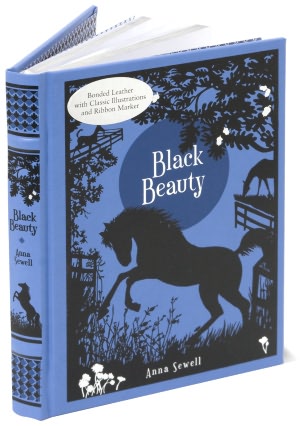
Black Beauty

Black Beauty. Anna Sewell. 1877. 245 pages.

The first place that I can well remember was a large pleasant meadow with a pond of clear water in it. Some shady trees leaned over it, and rushes and water-lilies grew at the deep end. Over the hedge on one side we looked into a plowed field, and on the other we looked over a gate at our master's house, which stood by the roadside; at the top of the meadow was a grove of fir trees, and at the bottom a running brook overhung by a steep bank.

Black Beauty is such a GREAT book. I really LOVED, LOVED, LOVED it. Which surprises me, I must admit since I generally don't like animal stories, and I'm even more reluctant to read horse books than dog books. But. I loved it. There was something timeless and wonderful about it. I can see why it became a classic, I hope it remains a beloved classic. 

Black Beauty is a great narrator, a great character. I really came to care for this horse right from the start. I had a feeling that life wouldn't always be so easy and gentle for him. I knew that they'd be dark days and nights ahead. And that proved true. As he is sold from one owner to another to another to another to another and so on. But he's so very, very, very good and understanding and wise. There were so many times he proved himself noble and worthy. And Black Beauty wasn't the only character I loved. I loved so many of the human characters too! John Manly, for example, comes to mind, as does James Howard, Joe Green, Jerry Barker, Farmer Grey, Farmer Thoroughgood, etc. Ginger's story is touching, as well, Ginger being one of many horses Black Beauty befriends.

Black Beauty also had a LOT to say about society, about virtues and vices. It had a LOT to say in regards to how animals should be treated--with respect, kindness, understanding, with dignity. It had a LOT to say about how humans should treat one another too. I was surprised at how deep this book was, how wise.

My favorite quotes:
“There is no religion without love, and people may talk as much as they like about their religion, but if it does not teach them to be good and kind to man and beast, it is all a sham.”
“Only ignorance! only ignorance! how can you talk about only ignorance? Don't you know that it is the worst thing in the world, next to wickedness? -- and which does the most mischief heaven only knows. If people can say, `Oh! I did not know, I did not mean any harm,' they think it is all right.”
“My doctrine is this, that if we see cruelty or wrong that we have the power to stop, and do nothing, we make ourselves sharers in the guilt.”
 “If a thing is right it can be done, and if it is wrong it can be done without; and a good man will find a way.”
“We call them dumb animals, and so they are, for they cannot tell us how they feel, but they do not suffer less because they have no words.” 

Read Black Beauty

    •    If you want to read one of the best children's books ever
    •    If you're a fan of animal stories, horse stories,
    •    If you enjoy historical fiction
    •    If you enjoy classics


© 2012 Becky Laney of Becky's Book Reviews

The One and Only Ivan

The One and Only Ivan. Katherine Applegate. 2012. HarperCollins. 301 pages.

I am Ivan. I am a gorilla. It's not as easy as it looks.

 Want to read one of the best, best books of the year? May I suggest Katherine Applegate's verse novel, The One and Only Ivan. I can't promise that every reader will come to LOVE Ivan, Ruby, Stella, Bob, Julia, and George, but you might end up loving them just as much as I did. (Ivan is a gorilla; Ruby and Stella are elephants; Bob is a dog; George and Julia are two of the most sympathetic human characters in the novel.)

So what is it about? It's about a small group of animals on display at Exit 8 Big Top Mall and Video Arcade. Ivan, the gorilla, is an artist whose works sell in the gift shop. He's been captive almost thirty years. Stella is one of his dearest friends, she's an elephant who knows quite a few tricks. She's a great storyteller, but, many of her stories are bittersweet. She's had a hard life to have such a great memory. Bob, the stray dog, is Ivan's other best friend, he's not really on display--not wild enough, not talented enough--but to Ivan, well, he's the best dog in the world. One day, Mack, the owner, brings someone new: a baby elephant named Ruby. Her arrival changes EVERYTHING for Ivan. For at long last, he has someone to protect. 

Within pages, I was hooked. Here is the second poem:

names


People call me the Freeway Gorilla. The Ape at Exit 8. The One and Only Ivan, Mighty Silverback.


The names are mine, but they're not me. I am Ivan, just Ivan, only Ivan.


Humans waste words. They toss them like banana peels and leave them to rot.


Everyone knows the peels are the best part.


I suppose you think gorillas can't understand you. Of course, you also probably think we can't walk upright.


Try knuckle walking for an hour. You tell me: Which way is more fun?

The narrative voice is so strong, so rich, so observant, so right. Here are just a few examples:
Humans speak too much. They chatter like chimps, crowding the world with their noise even when they have nothing to say. (3)
Anger is precious. A silverback uses anger to maintain order and warn his troop of danger. When my father beat his chest, it was to say, Beware, listen, I am in charge. I am angry to protect you, because that is what I was born to do. Here in my domain, there is no one to protect. (10)
It was Julia who gave me my first crayon, a stubby blue one, slipped through the broken spot in my glass along with a folded piece of paper. I knew what to do with it. I'd watched Julia draw. When I dragged the crayon across the paper, it left a trail in its wake like a slithering blue snake. (16)
Humans don't always seem to recognize what I've drawn. They squint, cock their heads, murmur. I'll draw a banana, a perfectly lovely banana, and they'll say, "It's a yellow airplane!" or "It's a duck without wings!" That's all right. I'm not drawing for them. I'm drawing for me. (17)
My visitors are often surprised when they see the TV Mack put in my domain. They seem to find it odd, the sight of a gorilla staring at tiny humans in a box. Sometimes I wonder, though: Isn't the way they stare at me, sitting in my tiny box, just as strange? (23)
Bob's tail makes me dizzy and confused. It has meanings within meanings, like human words. "I am sad," it says. "I am happy." It says, "Beware! I may be tiny, but my teeth are sharp." Gorillas don't have any use for tails. Our feelings are uncomplicated. Our rumps are unadorned. (35)
Homework, I have discovered, involves a sharp pencil and thick books and long sighs. (44)
But hunger, like food, comes in many shapes and colors. At night, lying alone in my Pooh pajamas, I felt hungry for the skilled touch of a grooming friend, for the cheerful grunts of a play fight, for the easy safety of my nearby troop, foraging through shadows. (133)
It's an odd story to remember, I have to admit. My story has a strange shape: a stunted beginning, an endless middle. (144)
The One and Only Ivan is definitely an EMOTIONAL read. It's a book about how humans treat or mistreat animals. It tells the story of several animals: Stella, Ivan, Ruby, etc. In some cases relating how they got to their current "domain" (cage, or prison). For the most sensitive reader, it may prove a little too much in a few poems. Overall, I think it's a great read. Powerful, compelling, beautifully written.

Read The One and Only Ivan
  • If you love E.B. White's Charlotte's Web
  • If you love Kathi Appelt's The Underneath
  • If you love animal stories
  • If you love gorillas, elephants, dogs
  • If you love GREAT writing
© 2012 Becky Laney of Becky's Book Reviews

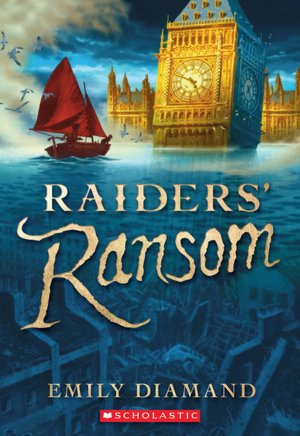
Raider's Ransom (MG)

Raider's Ransom. Emily Diamand. 2009. Scholastic. 368 pages.

Cat puts up his nose to sniff the breath of wind barely filling the sail, and opens his small pink mouth to speak.

Knowing that I could never quite do justice to Raider's Ransom in my review, let me encourage you to just pick up this one and give it a try. I can't promise that you'll love it. But. You just may. It's that kind of book. The kind that actually delivers what it promises.
If you like action/adventure quests, I think you'll really, really appreciate Raider's Ransom. I think you'll enjoy the world Diamand created in the novel. I think there will be scenes that stay with you. I think you'll enjoy not only her world-building but her characterization and storytelling too.

The heroine of Raider's Ransom is a young girl, Lilly. She may be young, but she's a fisherman with a small (very small) boat of her own. And to the dismay of some, she's the owner of a cat, a sea cat. Not something to be taken lightly in her community of survivors. When she's at home, on land, she stays with her grandmother. But. Readers don't get a chance to see a more relaxed Lilly. For the novel opens with Lilly discovering the tragic truth: when she was out sailing her vessel, out fishing, the raiders (or should that be Raiders?) attacked her village. They were looking for something specific, the attack wasn't just random. I don't know if that makes things better or worse for Lilly since one of the things they were looking for was her cat. The Raiders kill Lilly's grandmother, and kidnap the Prime Minister's daughter. One might think that they kidnapped her for a nice ransom, but, they had something even more in mind. They return without their sought-after object, a particular jewel. And that's only the beginning. The problem? Well, I can't talk about this one without revealing too much. I think this is one of those that is best discovered all on your own. Trust me.

So. I won't go into details. But I will say we get another narrator. And that proves most interesting indeed! For I certainly wasn't expecting it at all.

This one went above and beyond all my expectations. It really did. It surprised me in a good way.

Read Raider's Ransom
  • If you like survival stories or starting over stories; 
  • If you like action/adventure stories with a quest, a journey, a mission
  • If you like action stories with battles and close escapes
  • If you like dystopias, novels set in the future with a society quite unlike our own
  • If you like good storytelling

© 2012 Becky Laney of Becky's Book Reviews
The Princess and Curdie (MG)

The Princess and Curdie. George MacDonald. 1883. 272 pages.

Curdie was the son of Peter the miner. He lived with his father and mother in a cottage built on a mountain, and he worked with his father inside the mountain.

The Princess and Curdie is the sequel to George MacDonald's The Princess and the Goblin. It is set several years after the events of the first book. And those are years that Curdie has spent away from Princess Irene--the young princess and the great-great-great-great-grandmother Irene. He hasn't completely forgotten the Princess and her father, the King. But he's a growing boy, a busy boy, and well, he needs a bit of a wake up call perhaps.

He has his own encounter with the old woman--the grandmother Irene. And it changes EVERYTHING. For she gives him a very unique gift--with the touch of his hand, he can know what a man or woman truly is: if they are truly human, or if there is a "beast" inside. If it sounds confusing, well, it is in a way. It definitely requires you to suspend your disbelief, to fully engage in this FANTASY world. This one excerpt will do a better job than I ever could in describing what this book is like, and what to expect from this adventure-fantasy-quest.
'Curdie,' she said in answer to his eyes, 'you have stood more than one trial already, and have stood them well: now I am going to put you to a harder. Do you think you are prepared for it?'
'How can I tell, ma'am,' he returned, 'seeing I do not know what it is, or what preparation it needs? Judge me yourself, ma'am.'
'It needs only trust and obedience,' answered the lady.
'I dare not say anything, ma'am. If you think me fit, command me.'
'It will hurt you terribly, Curdie, but that will be all; no real hurt but much good will come to you from it.'
Curdie made no answer but stood gazing with parted lips in the lady's face.
'Go and thrust both your hands into that fire,' she said quickly, almost hurriedly.
Curdie dared not stop to think. It was much too terrible to think about. He rushed to the fire, and thrust both of his hands right into the middle of the heap of flaming roses, and his arms halfway up to the elbows. And it did hurt! But he did not draw them back. He held the pain as if it were a thing that would kill him if he let it go—as indeed it would have done. He was in terrible fear lest it should conquer him.
But when it had risen to the pitch that he thought he could bear it no longer, it began to fall again, and went on growing less and less until by contrast with its former severity it had become rather pleasant. At last it ceased altogether, and Curdie thought his hands must be burned to cinders if not ashes, for he did not feel them at all. The princess told him to take them out and look at them. He did so, and found that all that was gone of them was the rough, hard skin; they were white and smooth like the princess's.
'Come to me,' she said.
He obeyed and saw, to his surprise, that her face looked as if she had been weeping.
'Oh, Princess! What is the matter?' he cried. 'Did I make a noise and vex you?'
'No, Curdie, she answered; 'but it was very bad.'
'Did you feel it too then?'
'Of course I did. But now it is over, and all is well. Would you like to know why I made You put your hands in the fire?' Curdie looked at them again—then said:
'To take the marks of the work off them and make them fit for the king's court, I suppose.'
'No, Curdie,' answered the princess, shaking her head, for she was not pleased with the answer. 'It would be a poor way of making your hands fit for the king's court to take off them signs of his service. There is a far greater difference on them than that. Do you feel none?'
'No, ma'am.'
'You will, though, by and by, when the time comes. But perhaps even then you might not know what had been given you, therefore I will tell you. Have you ever heard what some philosophers say—that men were all animals once?'
'No, ma'am.'
'It is of no consequence. But there is another thing that is of the greatest consequence—this: that all men, if they do not take care, go down the hill to the animals' country; that many men are actually, all their lives, going to be beasts. People knew it once, but it is long since they forgot it.'
'I am not surprised to hear it, ma'am, when I think of some of our miners.'
'Ah! But you must beware, Curdie, how you say of this man or that man that he is travelling beastward. There are not nearly so many going that way as at first sight you might think. When you met your father on the hill tonight, you stood and spoke together on the same spot; and although one of you was going up and the other coming down, at a little distance no one could have told which was bound in the one direction and which in the other. Just so two people may be at the same spot in manners and behaviour, and yet one may be getting better and the other worse, which is just the greatest of all differences that could possibly exist between them.'
'But ma'am,' said Curdie, 'where is the good of knowing that there is such a difference, if you can never know where it is?'
'Now, Curdie, you must mind exactly what words I use, because although the right words cannot do exactly what I want them to do, the wrong words will certainly do what I do not want them to do. I did not say you can never know. When there is a necessity for your knowing, when you have to do important business with this or that man, there is always a way of knowing enough to keep you from any great blunder. And as you will have important business to do by and by, and that with people of whom you yet know nothing, it will be necessary that you should have some better means than usual of learning the nature of them.
'Now listen. Since it is always what they do, whether in their minds or their bodies, that makes men go down to be less than men, that is, beasts, the change always comes first in their hands—and first of all in the inside hands, to which the outside ones are but as the gloves. They do not know it of course; for a beast does not know that he is a beast, and the nearer a man gets to being a beast the less he knows it. Neither can their best friends, or their worst enemies indeed, see any difference in their hands, for they see only the living gloves of them. But there are not a few who feel a vague something repulsive in the hand of a man who is growing a beast.
'Now here is what the rose-fire has done for you: it has made your hands so knowing and wise, it has brought your real hands so near the outside of your flesh gloves, that you will henceforth be able to know at once the hand of a man who is growing into a beast; nay, more—you will at once feel the foot of the beast he is growing, just as if there were no glove made like a man's hand between you and it.
'Hence of course it follows that you will be able often, and with further education in zoology, will be able always to tell, not only when a man is growing a beast, but what beast he is growing to, for you will know the foot—what it is and what beast's it is. According, then, to your knowledge of that beast will be your knowledge of the man you have to do with. Only there is one beautiful and awful thing about it, that if any one gifted with this perception once uses it for his own ends, it is taken from him, and then, not knowing that it is gone, he is in a far worse condition than before, for he trusts to what he has not got.'
'How dreadful!' Said Curdie. 'I must mind what I am about.'
'Yes, indeed, Curdie.'
'But may not one sometimes make a mistake without being able to help it?'
'Yes. But so long as he is not after his own ends, he will never make a serious mistake.'
'I suppose you want me, ma'am, to warn every one whose hand tells me that he is growing a beast—because, as you say, he does not know it himself.'
The princess smiled.
'Much good that would do, Curdie! I don't say there are no cases in which it would be of use, but they are very rare and peculiar cases, and if such come you will know them. To such a person there is in general no insult like the truth. He cannot endure it, not because he is growing a beast, but because he is ceasing to be a man. It is the dying man in him that it makes uncomfortable, and he trots, or creeps, or swims, or flutters out of its way—calls it a foolish feeling, a whim, an old wives' fable, a bit of priests' humbug, an effete superstition, and so on.'
'And is there no hope for him? Can nothing be done? It's so awful to think of going down, down, down like that!'
'Even when it's with his own will?'
'That's what seems to me to make it worst of all,' said Curdie.
'You are right,' answered the princess, nodding her head; 'but there is this amount of excuse to make for all such, remember—that they do not know what or how horrid their coming fate is. Many a lady, so delicate and nice that she can bear nothing coarser than the finest linen to touch her body, if she had a mirror that could show her the animal she is growing to, as it lies waiting within the fair skin and the fine linen and the silk and the jewels, would receive a shock that might possibly wake her up.'
'Why then, ma'am, shouldn't she have it?'
The princess held her peace.
'Come here, Lina,' she said after a long pause.
From somewhere behind Curdie, crept forward the same hideous animal which had fawned at his feet at the door, and which, without his knowing it, had followed him every step up the dove tower. She ran to the princess, and lay down flat at her feet, looking up at her with an expression so pitiful that in Curdie's heart it overcame all the ludicrousness of her horrible mass of incongruities. She had a very short body, and very long legs made like an elephant's, so that in lying down she kneeled with both pairs. Her tail, which dragged on the floor behind her, was twice as long and quite as thick as her body. Her head was something between that of a polar bear and a snake. Her eyes were dark green, with a yellow light in them. Her under teeth came up like a fringe of icicles, only very white, outside of her upper lip. Her throat looked as if the hair had been plucked off. It showed a skin white and smooth.
'Give Curdie a paw, Lina,' said the princess.
The creature rose, and, lifting a long foreleg, held up a great doglike paw to Curdie. He took it gently. But what a shudder, as of terrified delight, ran through him, when, instead of the paw of a dog, such as it seemed to his eyes, he clasped in his great mining fist the soft, neat little hand of a child! He took it in both of his, and held it as if he could not let it go. The green eyes stared at him with their yellow light, and the mouth was turned up toward him with its constant half grin; but here was the child's hand! If he could but pull the child out of the beast! His eyes sought the princess. She was watching him with evident satisfaction.
'Ma'am, here is a child's hand!' said Curdie.
'Your gift does more for you than it promised. It is yet better to perceive a hidden good than a hidden evil.'
Curdie sets out on his mission/quest to visit the city of Gwyntystorm--where the King and Princess Irene live. He doesn't know exactly why he's going--what the desired outcome is. But he trust that he's been sent for a reason, for a higher purpose and that is more than enough for him.

I will warn you that Irene, the heroine from The Princess and the Goblin, does not appear until the novel is halfway over. This isn't her story, this isn't her adventure. The adventure belongs more to Curdie and Lina than anyone else. 

This is more fantasy than fairy tale. There is definitely a struggle between good and evil. But I definitely liked it. At times I even loved it.


Read The Princess and Curdie
  • If you're a fan of George MacDonald
  • If you enjoy children's classics
  • If you enjoy children's fantasy
  • If you enjoy C.S. Lewis and J.R.R. Tolkien
  • If you enjoy adventurous fantasy novels with quests; the ongoing struggle between good and evil
© 2012 Becky Laney of Becky's Book Reviews

Lego Friends Chapter Books

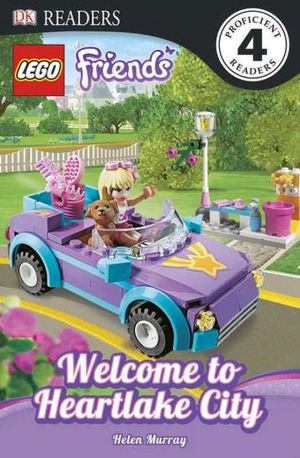
LEGO FRIENDS: Welcome to Heartlake City. Helen Murray. 2012. DK Readers, 48 pages. 

Welcome to Heartlake City! There is always something fun and exciting to do here. You could explore the boutiques and cafes downtown, or enjoy an open-air concert in the park. Perhaps you might like to go to the pool to sunbathe and chat with friends, or catch a boat to Lighthouse Island to search for buried treasure? Anything is possible in Heartlake City. 

This DK Reader stars Olivia, Emma, Stephanie, Andrea, and Mia. Characters some may know from a line of Lego products, Lego Friends. This book introduces the five characters, sharing what makes each girl unique, and also introduces readers to Heartlake City. The book uses photographs throughout the chapters. Each chapter highlights a specific Lego set. For example, "A Fun Place To Work" features "City Park Cafe," and "A Girly Day Out" features, "Butterfly Beauty Shop." So is there a story to this reader? Yes and no. The writing is not wonderful. But it makes some effort to be descriptive, I think.
Andrea works at the cafe with Marie, the owner. Marie is a great cook and a wonderful boss. For years, Marie's friends told her that she should open a cafe so the whole of Heartlake City could sample her food--so one day she did! Marie bakes cakes and pies before the cafe opens. Her favorite moment of the day is when she pulls out a tasty cake from the oven. The wonderful smell that greets her makes all the hard work worthwhile. The cafe stays busy all day. Andrea and Marie rush around taking orders and delivering tasty food to eager customers. Andrea is an amazing singer and is always dreaming about becoming a pop star, even at work! Fortunately for Andrea, Marie encourages her to perform for customers at the cafe. With Marie's fantastic baking and Andrea's incredible singing, the cafe draws in customers from all across Heartlake City! (8-9)
and
There's so much to see and do in Heartlake City, but sometimes there's no place like home. And Olivia's house is one of the coolest in the city. The girls like to head to Olivia's house to spend time together. Olivia, Andrea, Mia, Emma, and Stephanie have many choices about where to go in the beautiful house. They can watch movies in the comfortable living room, cook together in the spacious kitchen, and stargaze at night from the roof terrace. The friends also enjoy spending time with Olivia's parents. Anna and Peter are always there with a sympathetic ear whenever the girls have any worries. (16-17)
Some of the descriptions are too much, in my opinion. It doesn't sound completely natural. 

And the chapters, in my opinion, are more scenarios than actual stories, almost suggestions in how to play. And the stories are definitely directed by the product. (Does the set come with a glass? Better mention that Andrea gets thirsty while playing music.)

But. The photographs are enjoyable. The photographs make the sets look like a lot of fun.

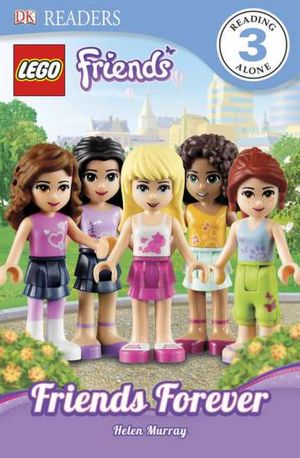
LEGO Friends: Friends Forever. Helen Murray. 2012. DK Readers. 48 pages. 

Heartlake City is a wonderful place to live. Whether you love nature, relaxation, shopping, or going to cool parties and events, you are sure to find lots to do in this beautiful city. For one lucky girl, Heartlake City has just become her new home. Her name is Olivia and she is looking forward to all the fun and excitement the city promises. Olivia can't wait to plan an outdoor adventure in the mountains, take a boat out onto Lake Heart, and go to open-air concerts in the park. But, most of all, Olivia is excited to make lots of new friends. With all the cool things to do in her new city, that should be no problem at all!

Friends Forever is a DK Reader starring Olivia, Mia, Stephanie, Emma, and Andrea. The first chapter or two introduce Olivia as a newcomer to the city, but, within a few chapters, she's definitely settled in and the center of a circle of friends. All the friends, of course, are super-super-talented and quite unique. Each has a long, long list of hobbies; each is confident.
Olivia is a clever, hardworking student and she is looking forward to studying at Heartlake School. Her favorite subjects are science, art, and history. Olivia is a practical person who loves to solve problems. She likes to make and fix things. One day she hopes to be a scientist, inventor, or engineer. Olivia enjoys nature and hiking and she is eager to explore the beautiful woods, coastline, and mountains of Heartlake City. Unfortunately, this will have to wait because Olivia's parents have told her that she must unpack all of the boxes in her room first! (6-7)
This one is a chapter book. There's a chapter devoted to each character, Olivia, Mia, Stephanie, Emma, and Andrea. And two chapters are devoted to describing how these five friends are the best, best friends ever. I must admit that this book, Friends Forever, does a better job at story than Welcome to Heartlake City. Not that the writing is wonderful. It doesn't exactly sound natural.

But the photographs are fun, they make the toys look fun.

Read Friends Forever and Welcome to Heartlake City
  • If your child LOVES LEGO Friends
© 2012 Becky Laney of Becky's Book Reviews
Kepler's Dream (MG)

Kepler's Dream. Juliet Bell. 2012. Penguin.  256 pages.

It was the middle of the night, and that's not a time when you want to be hearing strange noises. I don't care how brave you are. No one wants to be restless and almost-sleep, then rustled awake by a thudding overhead and the feeling that someone is trying to get into the room.

Ella, our heroine, is visiting a grandmother she's never met, her paternal grandmother. Her father, whom she barely knows, does not get along with his mother. But Ella has to spend the summer with someone since her mother will be undergoing treatment for her leukemia. (She'll be receiving a bone marrow transplant, I believe.) And her grandmother is her last option, her only option.
Ella's first impressions of her grandmother, of her grandmother's house, are priceless. But through the course of a summer, the eccentricity and quirks of her grandmother have become familiar and comfortable. And she's made other friends as well.

Kepler's Dream is about a dysfunctional family who has a rather unique opportunity to heal, to mend, to come together. Could Ella  help bring her father and grandmother together again? Perhaps. For Ella who has never really known her grandmother and does not really know her father, it's an unique opportunity, for she'll get a chance to get to know them, to get to love them, to make them a part of her family.

But Kepler's Dream is also a mystery. And Ella's curiosity and determination to solve the mystery, to learn WHO stole her grandmother's precious book, Kepler's Dream, is the beginning of that opportunity. This mystery is the catalyst for a family to come together again.

I liked this one. I definitely liked it. There were places I just loved it. I liked the narrative voice, how Ella's reading influences her as a narrator. I love her grandmother's bookish lifestyle, and how she's always getting book deliveries. I liked how these relationships, friendships, happened naturally--nothing forced, nothing instant, nothing magical. I loved getting to know Ella at a very vulnerable time in her life. The thing I absolutely LOVED about this one were Ella's letters to her mom.

Read Kepler's Dream
  • If you like bookish heroines
  • If you like children's mysteries
  • If you like family books, plenty of drama but heart as well
© 2012 Becky Laney of Becky's Book Reviews

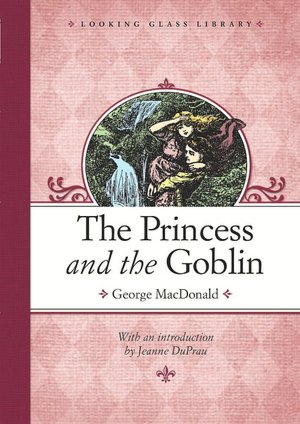
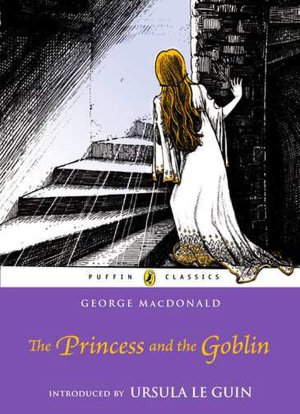
Princess and the Goblin (MG/YA)

The Princess and the Goblin. George MacDonald. 1872. 259 pages.

There was once a little princess whose father was king over a great country full of mountains and valleys. His palace was built upon one of the mountains, and was very grand and beautiful. The princess, whose name was Irene, was born there, but she was sent soon after her birth, because her mother was not very strong, to be brought up by country people in a large house, half castle, half farmhouse, on the side of another mountain, about half-way between its base and its peak. 

I just LOVED The Princess and the Goblin by George MacDonald. I'm not sure if I could say I loved it more than A Light Princess, but, I'm not sure I could say I loved it less either!!! George MacDonald is just pleasing me these days! I would definitely recommend this one to just about everyone!

It isn't the easiest novel in the world to describe, but, I'll do my best to do it justice. Princess Irene is the heroine. She lives a very, very sheltered life. She hardly ever goes outside the safety of the castle, but, when she does she often stumbles across Curdie, a young boy with hero-potential. If the castle and/or the kingdom is at risk, if their peace is threatened, they are unaware of it. But Curdie stumbles into danger and unveils a plot. GOBLINS. Goblins set on revenge, goblins who want war, goblins who want to overthrow the kingdom and perhaps steal the princess.

Here's the introduction to goblins:
Now in these subterranean caverns lived a strange race of beings, called by some gnomes, by some kobolds, by some goblins. There was a legend current in the country that at one time they lived above ground, and were very like other people. But for some reason or other, concerning which there were different legendary theories, the king had laid what they thought too severe taxes upon them, or had required observances of them they did not like, or had begun to treat them with more severity, in some way or other, and impose stricter laws; and the consequence was that they had all disappeared from the face of the country. According to the legend, however, instead of going to some other country, they had all taken refuge in the subterranean caverns, whence they never came out but at night, and then seldom showed themselves in any numbers, and never to many people at once. It was only in the least frequented and most difficult parts of the mountains that they were said to gather even at night in the open air. Those who had caught sight of any of them said that they had greatly altered in the course of generations; and no wonder, seeing they lived away from the sun, in cold and wet and dark places. They were now, not ordinarily ugly, but either absolutely hideous, or ludicrously grotesque both in face and form. There was no invention, they said, of the most lawless imagination expressed by pen or pencil, that could surpass the extravagance of their appearance. But I suspect those who said so had mistaken some of their animal companions for the goblins themselves—of which more by and by. The goblins themselves were not so far removed from the human as such a description would imply. And as they grew misshapen in body they had grown in knowledge and cleverness, and now were able to do things no mortal could see the possibility of. But as they grew in cunning, they grew in mischief, and their great delight was in every way they could think of to annoy the people who lived in the open-air storey above them. They had enough of affection left for each other to preserve them from being absolutely cruel for cruelty's sake to those that came in their way; but still they so heartily cherished the ancestral grudge against those who occupied their former possessions and especially against the descendants of the king who had caused their expulsion, that they sought every opportunity of tormenting them in ways that were as odd as their inventors; and although dwarfed and misshapen, they had strength equal to their cunning. In the process of time they had got a king and a government of their own, whose chief business, beyond their own simple affairs, was to devise trouble for their neighbours. It will now be pretty evident why the little princess had never seen the sky at night. They were much too afraid of the goblins to let her out of the house then, even in company with ever so many attendants; and they had good reason, as we shall see by and by.
 The story is essentially told through two perspectives that of Curdie, who overhears the plotting and later stumbles into the goblins' realm or kingdom--where he is imprisoned underground; and that of Princess Irene who is a lonely child who likes to explore the castle. One day she discovers her great-great-great-great-great grandmother. An old woman named Irene. The two become good friends, great friends, but the truth of the matter is that NO ONE believes in the existence of this old woman, no one believes that Irene has found a woman living up high in one of the now-forgotten castle rooms. Irene visits her a time or two, Irene listens carefully to every word, every instruction. And Irene is happy to be a believer even if it means her nurse laughs at her for her overactive imagination, even if it means her father chuckles at his little girl's dreams, even if it means Curdie calls her a fool.

What makes this book so wonderful is the writing. My description of it may not do it justice...at all...it may not sound like it would be a good story, a charming and delightful story. But MacDonald is such a great writer, that it just works. His writing reminds me of E. Nesbit, C.S. Lewis, J.R.R. Tolkien. For example, this story is sprinkled--liberally--with poems and songs. And the book does have this adventuresome spirit to it. It's just a lively, delightful story. I think it's a must for those that enjoy fairy tales and fantasy stories.

Favorite quotes:
All mothers are nice and good more or less, but Mrs. Peterson was nice and good all more and no less. (99)
But that is the way fear serves us: it always sides with the thing we are afraid of. (112)
It is when people do wrong things willfully that they are the more likely to do them again. (120)
The right old age means strength and beauty and mirth and courage and clear eyes and strong painless limbs. (129)
People must believe what they can, and those who believe more must not be hard upon those who believe less. (187)
Seeing is not believing--it is only seeing. (190)
"We are all very anxious to be understood, and it is very hard not to be. But there is one thing much more necessary."
"What is that, grandmother?"
"To understand other people."
"Yes, grandmother. I must be fair--for if I'm not fair to other people, I'm not worth being understood myself." (191)
 Read The Princess and the Goblin
  • If you love fantasy
  • If you love adventure
  • If you love fairy tales
  • If you love old-fashioned stories with lots of description and detail
  • If you love good storytelling 
© 2012 Becky Laney of Becky's Book Reviews
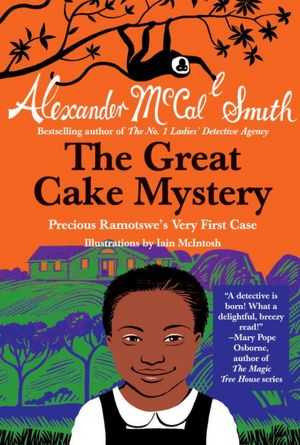
The Great Cake Mystery

The Great Cake Mystery. Alexander McCall Smith. Random House. 96 pages. 

Have you ever said to yourself, "Wouldn't it be nice to be a detective? Most of us will never have the chance to make that dream come true. Detectives, you see, are born that way. Right from the beginning they just know that this is what they want to be. And right from the beginning they show that solving mysteries is something they can do rather well. This is the story about a girl who became a detective. Her name was Precious.

I liked this one. I definitely liked it. To clarify things I'll just mention that I have not read the book, No. 1 Ladies' Detective Agency, which stars Precious Ramotswe. This children's chapter book is the famous detective's first case. So if I like this one it isn't necessarily because I love the adult mystery series, I may or may not. (I do plan on reading the first book this summer, if all goes to plan.) I do find it tricky as an adult to judge early readers and chapter books because often the plots are not thrilling at all, the text can be tiresome OR predictable OR condescending OR preachy. And it's hard to know--as an adult--exactly what books are going to appeal, truly appeal, to those aged six, seven or eight. That being said, I liked this one. Why? Well. I liked the writing, the storytelling. I liked the narrator. I liked how the narrator sometimes addressed the reader. And I liked the pacing. I liked how we get to know Precious BEFORE the actual mystery begins. I liked how we get to know something of Precious and her relationship with her father. I did like her father telling a story about the lion! I *know* it has nothing to do with the main mystery in this one, I *know* that it wouldn't fit neatly into an outline of what this story is about, but I feel it does reveal something about the characters and the setting. It gives us a feel for the story, perhaps. It gives us time to get settled into the story before the "real" action begins. (And dare I say it, I almost liked this side story more than the actual mystery?) Going back to the pacing, I liked how the chapters flowed together. Yes, there was really no reason to break where they did each time, but, for me it kept me wanting to turn the page. Now turning to the mystery itself, this one has a not-so-subtle message about how you shouldn't judge people and make accusations without proof and hard evidence. You shouldn't just accuse a classmate of stealing from you just because he's overweight and in the habit of eating candy and sweets.
Accusing people of doing something wrong--lying, stealing, cheating, whatever--is serious and it's not a joke. So we learn a good, moral, common-sense lesson in how to treat others. Precious knows that there is a thief stealing things from the school from her classmates, but while other kids are quick to judge WHO is doing the stealing, Precious is slow to judge or accuse. She knows that there has to be a rational explanation for the disappearances of these sticky buns, cakes, etc. But that doesn't mean it has to be a classmate or friend. Precious determines to outwit the thief and catch him in the act...

The very things I liked about it, may not work for other people. 

Read The Great Cake Mystery
  • If you're a fan of Alexander McCall Smith
  • If you're a fan of mysteries for young readers
  • If you're looking for an interesting chapter book

© 2012 Becky Laney of Becky's Book Reviews
The Light Princess

The Light Princess. George MacDonald. 1864. 110 pages.
Once upon a time, so long ago that I have quite forgotten the date, there lived a king and queen who had no children. And the king said to himself, "All the queens of my acquaintance have children, some three, some seven, and some as many as twelve; and my queen has not one. I feel ill-used." So he made up his mind to be cross with his wife about it. But she bore it all like a good patient queen as she was. Then the king grew very cross indeed. But the queen pretended to take it all as a joke, and a very good one too.
"Why don't you have any daughters, at least?" said he. "I don't say sons; that might be too much to expect." 
"I am sure, dear king, I am very sorry," said the queen.
"So you ought to be," retorted the king; "you are not going to make a virtue of that, surely."
But he was not an ill-tempered king, and in any matter of less moment would have let the queen have her own way with all his heart. This, however, was an affair of state. The queen smiled. 
"You must have patience with a lady, you know, dear king," said she.
She was, indeed, a very nice queen, and heartily sorry that she could not oblige the king immediately. (1-2)
While this isn't technically my first completed read for A Literary Odyssey's Victorian Celebration, it is my first completed read by a Victorian author. George MacDonald's The Light Princess is a true must read. For anyone of any age who loves a good story. It reads like a fairy tale. It has all the elements that we've come to associate with fairy tales: a king and queen that struggle to have a child, the birth of a beautiful baby, a christening that does NOT go as planned, a "curse" upon an innocent baby, etc. And that's just the beginning.

This is the second time I've read this short novel. And I think it's a book that begs to be reread again and again because once in a lifetime could never be enough.

The Light Princess is such a DELIGHTFUL book. It seems obvious in a way to call it delightful and charming and oh-so-magical. But it's true. There are no other words that could do it justice. It's the story of what happens when this childless king and queen have a baby girl of their own. It's the story of what happens when one of the princesses (who is also a witch) is NOT invited to the christening.

The king tried to have patience, but he succeeded very badly. It was more than he deserved, therefore, when, at last, the queen gave him a daughter--as lovely a little princess as ever cried.
The day drew near when the infant must be christened. The king wrote all the invitations with his own hand. Of course somebody was forgotten.
Now it does not generally matter if somebody is forgotten, only you must mind who. Unfortunately, the king forgot without intending to forget; and so the chance fell upon the Princess Makemnoit, which was awkward. For the princess was the king's own sister; and he ought not to have forgotten her. But she had made herself so disagreeable to the old king, their father, that he had forgotten her in making his will; and so it was no wonder that her brother forgot her in writing his invitations. But poor relations don't do anything to keep you in mind of them. Why don't they? The king could not see into the garret she lived in, could he?
She was a sour, spiteful creature. The wrinkles of contempt crossed the wrinkles of peevishness, and made her face as full of wrinkles as a pat of butter. If ever a king could be justified in forgetting anybody, this king was justified in forgetting his sister, even at a christening. She looked very odd, too. Her forehead was as large as all the rest of her face, and projected over it like a precipice. When she was angry, her little eyes flashed blue. When she hated anybody, they shone yellow and green. What they looked like when she loved anybody, I do not know; for I never heard of her loving anybody but herself, and I do not think she could have managed that if she had not somehow got used to herself. But what made it highly imprudent in the king to forget her was--that she was awfully clever. In fact, she was a witch; and when she bewitched anybody, he very soon had enough of it; for she beat all the wicked fairies in wickedness, and all the clever ones in cleverness. (3-5)
Of course, the uninvited guest comes, and of course they bring an unwelcome gift. In this case, the princess-witch deprived the baby of gravity. So from the day of the christening on, she floated. The king and queen tried to find some positive aspects to it, but, really what could they do when their apologies failed? Just go on loving their daughter as she was with all their hearts.

But their daughter was different in another way too. She had no gravity in matters of the heart and mind too. She could not take anything seriously. Her reaction to life--to all of life--was laughter. Which is just as serious a curse as the other, in my opinion. For there was an emptiness in all her emotions, her actions.

The Light Princess is the story of what happens when she meets a prince. Will the young woman incapable of falling, be capable of falling in love?

I loved the young man who comes to the kingdom and befriends the princess. I love his conversations with the princess. And I do love seeing the big transformation at the end. It's quite magical.

I just LOVE, LOVE, LOVE this book!

Read The Light Princess
  • If you love fairy tales, 
  • If you love children's fantasy
  • If you love good storytelling
  • If you love 'light' romance
  • If you love happy endings

© 2012 Becky Laney of Becky's Book Reviews

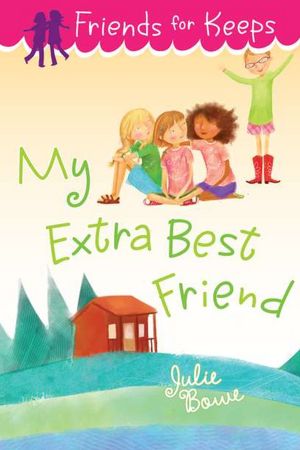
My Extra Best Friend

My Extra Best Friend. Julie Bowe. 2012. Penguin. 224 pages.

 I'm Ida May and I could use a little light. That's because I'm digging around in my bedroom closet, trying to find my flashlight. If I had a flashlight, it would make looking for one a lot easier. 

This is Ida May's fifth adventure, and I still love and adore this character!!! I do, I just love seeing the world through Ida May's eyes. I love her observations and her insights. There are times, of course, when Ida May just doesn't get it, especially in My Extra Best Friend. But. I think this just makes her more realistic, more authentic. 

In My Extra Best Friend, Ida May is off to Meadowlark Camp with her classmates: Jenna, Brooke, Stacey, Randi, Meeka, Jolene, Rusty, Tom, Joey, and Quinn. The girls will all be staying in the same cabin, with the addition of one more camper, a girl named Liz. Could this Liz be the same Elizabeth or "Lizbutt" of days of old? You know, the Elizabeth who moved with her family to New Mexico and never, ever, ever, ever, ever wrote to Ida May no matter how many letters Ida May sent her. That Elizabeth.

While the novel is definitely about the full camping experience--arts and crafts, singing, swimming, hiking, etc. It is also a novel about trust, friendship, and accepting change and growth as a good thing. The lesson, of course, is a good one. Brooke and Ida and Liz all have something to learn it seems.

The Friends for Keeps Series:

My Last Best Friend
My New Best Friend
My Best Frenemy
My Forever Friends
My Extra Best Friend

Read My Extra Best Friend
  • If you want to meet one of the best girl heroines ever, I just LOVE Ida May. 
  • If you are a fan of the Friends for Keeps series by Julie Bowe
  • If you are looking for great books to share with young readers; probably 8+ unless you've got an advanced reader ready for long chapter books.  

© 2012 Becky Laney of Becky's Book Reviews

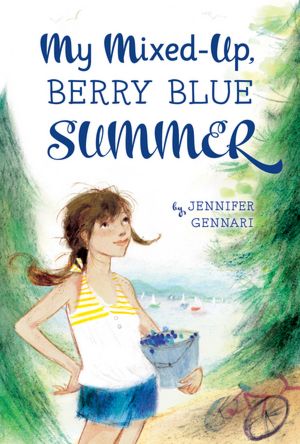
My Mixed-Up Berry Blue Summer (MG)

My Mixed-Up Berry Blue Summer. Jennifer Gennari. 2012. Houghton Mifflin Harcourt. 119 pages.

Unlike some people, Lake Champlain was a friend I could count on. I knew her every mood--sometimes she was flat like a cookie sheet, and other times she was whipped up like meringue on a butterscotch pie. That was the way I felt, too. Ever since Eva had moved in with Mom and me last month, I was as changeable as the lake.

June Farrell isn't quite having a perfect summer. Her mom's girlfriend, Eva, has moved in with them. And soon afterwards the two announce their plans to get married--Vermont's new civil union law has just been put in place. June isn't the biggest Eva fan. Sure she wants her Mom to be happy. But if she's honest, June doesn't quite feel comfortable around Eva, at least not yet. There is some personality clashing going on...

And the town's mood has definitely changed in recent months. There is a campaign, a movement, to "take back Vermont" and to undo what's been done. There are many in the town who are not exactly thrilled with Vermont's new law, and who feel it is their right to let this be known. Mainly through putting up signs and flyers about their campaign to "take back Vermont." But also through distributing a list of businesses owned and operated by gays so that those businesses can be boycotted in the future.

June is embarrassed that her mom's business is on that list. And that they are temporarily at least losing some of their customers. And she's also not thrilled that some of her friends parents are part of this campaign. That is that their political views do not match up with her family's. She doesn't want to lose friends because of this. But at the same time, she doesn't know if she's still welcome. She doesn't feel comfortable when her friends' parents express their views on homosexuality. Everything seems so complicated now, whereas just a few months ago, things seemed to be going so well.

This book isn't just about family drama and a tension-filled town. It is also about pies and the joy of baking.

Read My Mixed-Up Berry Blue Summer
  • If you're looking for lgbt books for elementary age children; the book is about how an eleven year old handles having two moms planning a wedding/civil union.
  • If you're looking for a little politics in your fiction;
  • If you're looking for books with young heroines who love to bake

© 2012 Becky Laney of Becky's Book Reviews
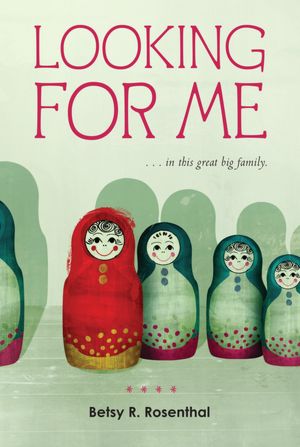
Looking for Me (MG)

Looking for Me. Betsy R. Rosenthal. 2012. Houghton Mifflin Harcourt. 176 pages.

Edith of No Special Place

I'm just plain Edith.
I'm number four, 
and should anyone care,
I'm eleven years old,
with curly black hair.

Squeezed / between / two / brothers,
Daniel and Ray,
lost in a crowd,
will I ever be more
than just plain Edith,
who's number four?

In my overcrowded family
I'm just another face.
I'm just plain Edith
of no special place.

I tend to assume that verse novels will be easy reads. And if by easy you just mean quick, then such is the case with Looking For Me. But there is emotional depth in this one. And the subject matter makes this one anything but easy--on the emotions. You might just be brought to tears. Of course, not every reader is so easily touched. But. Still it's best to be prepared.

Looking for Me is set in the 1930s during the Depression. It stars a very, very large Jewish family. Twelve children. Yes, twelve children. Edith has two older sisters and an older brother, but it is Edith who is the "little mother" to her younger siblings. She does take her family for granted, and at times, it is easy for Edith to be full of complaints. Which I suppose is only human. What Edith is missing is her own identity. Though others may think of her in certain ways, she's having a hard time deciding for herself just who she is, who she is beyond one of many daughters, beyond one of many sisters. Who is she apart from her role in the family? Does she have a voice? Does she have a choice?

I liked this one. I did. I'm not sure it is for every reader. I know that some people just don't like verse novels and can't understand why the stories are just not written in ordinary prose. And other readers do like verse novels. But even if you love verse novels, you might not like historical fiction. So. As I said, this one may not be for everyone, but I liked it well enough. It was definitely a difficult read--and it did bring me very, very close to tears.

Read Looking for Me
  • If you like historical verse novels
  • If you are looking for Jewish children's books
  • If you are looking for books set during the Depression
  • If you are looking for family books
  • If you don't mind really, really sad books

© 2012 Becky Laney of Becky's Book Reviews
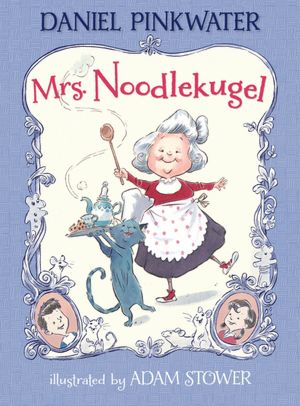
Mrs. Noodlekugel

Mrs. Noodlekugel. Daniel Pinkwater. Illustrated by Adam Stower. 2012. Candlewick. 80 pages.

A tall building, with one apartment stacked on top of another--that is where Nick and Maxine came to live with their parents.

The cover is the best part about this book. That and the interior illustrations. This book *looks* like it would be comparable to Mary Poppins and/or Mrs. Pigglewiggle. The book *looks* like it would be a funny story for an age-group that doesn't get much attention. But. The writing just did NOT work for me at all. The writing--especially the dialogue--was so terribly unnatural and awkward. Trying much too hard to be Dick and Jane, maybe? I don't know. The writing just felt foreign, awkward, robotic. The book may promise, "signature wit and whimsy" but it doesn't quite deliver. (I can see the whimsy, I can. It just isn't enough to save this one, in my opinion.) 


Try it for yourself. Read the first few paragraphs:
A tall building, with one apartment stacked on top of another--that is where Nick and Maxine came to live with their parents. They had not lived there very long when Maxine said to Nick, "Come to my room. I have discovered something." "What?" Nick asked. "What have you discovered?" "You can see it out the window," Maxine said. "But you have to stand with your head in that corner." "But there is a chest of drawers in that corner," Nick said. "I know there is," Maxine said. "You have to stand on top of the chest of drawers and lean your head into the corner and look out the window and down. Then you will see it." "Is that how you saw it?" What were you doing standing on top of the chest of drawers?" "Just do it. Tell me what you see." Nick climbed onto the chest of drawers. He leaned his head into the corner. He looked out the window and down. "I see grass. I see trees and flowers. There is a little old-fashioned house." "It is nice," Maxine said. "The house is cute. Did you know there was a backyard to this building with a cute little house in it?" "I did not," Nick said. "We should go down there." "Yes," Maxine said. (1-4)
Read Mrs. Noodlekugel
  • If you can look past the unnaturalness of the writing, especially the dialogue between this brother and sister
  • If you are looking for a fantasy (talking animals--cat and mice) to share with young children


© 2012 Becky Laney of Becky's Book Reviews
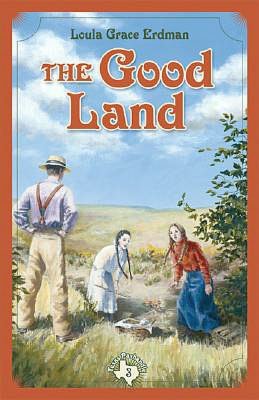
The Good Land (MG)

The Good Land. Loula Grace Erdman. 1959/2007. Bethlehem Books. 185 pages.

Carolyn Pierce, pulling the white linen cloth straight on the long dining-room table, thought that perhaps the worst problem a girl could have was for people to think she didn't have any at all. 

I really, really, really liked this one. It is the last in Loula Grace Erdman's historical trilogy set in the Texas Panhandle. It concludes the hint of romance between Katie and Bryan--from the second book. And Carolyn herself has an admirer! I definitely liked the lightness, the sweetness, the innocence of these three romances. (Melinda and Dennis met in the first book, were married in the second book, and had a boy and a girl by the third book.)

Carolyn is looking forward to going to high school in Amarillo, but that is a year away still when the novel opens. And while it may seem like 'nothing happens' in her own community--farming and ranching community--that isn't exactly true. They've got new stand-offish neighbors for one thing...

The Good Land may not be an adventurous novel with one thrill after another. (The big event is a prairie fire.) But it is a quiet-and-happy novel all the same. For people who love historical fiction, I think it holds enough interest.

Read The Good Land
  • If you love historical fiction set in Texas
  • If you love historical fiction with the lightest, sweetest touches of romance
  • If you enjoy coming-of-age stories 

© 2012 Becky Laney of Becky's Book Reviews

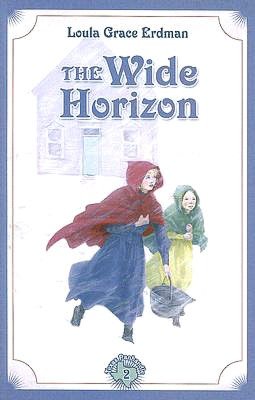
The Wide Horizon (MG)

The Wide Horizon. Loula Grace Erdman. 1956/2007. Bethlehem Books. 279 pages.

Katie Pierce was sure she must be the luckiest girl in the whole Panhandle of Texas. Luckier even than her older sister Melinda who, after five years of waiting, was going to marry Dennis Kennedy in June and go with him to live in Amarillo. Dennis was a real doctor now, driving around the town and the surrounding country, looking after sick folks. 

The Wide Horizon is my favorite, favorite, favorite book in Loula Grace Erdman's Texas Panhandle trilogy. (It might have something to do with the fact that I read it a dozen times as a child. I never got a chance to read the first or last book in this series.)

The narrator is Katie Pierce. She's excited because she's not only going to be singing at her sister's wedding, she'll be a bridesmaid too. And then that fall, she'll be going back to East Texas to live with her grandmother and attend a fancy academy for young ladies. But except for the singing, nothing quite goes like plan. For on the day of a wedding, a stranger-soon-not-to-be-a-stranger, Bryan Cartwright, interrupts bringing Dr. Kennedy urgent news. He must leave the wedding ceremony so he can see one of his patients. (The ceremony continues when he returns.) The other unexpected news of the summer is that Katie won't be going away after all. Her grandmother has fallen and broken her hip. Katie's mom will be going to nurse her back to health. Katie is needed right where she is. She'll need to take care of her brothers and younger sister. Katie will have to learn fast how to fill her mother's place on the farm! And it's quite a learning experience. The chapter on cooking beans was hilarious!

There were so many things I loved about this one!

Read The Wide Horizon
  • If you enjoy historical fiction, if you enjoy pioneer stories with a "Little House" feel
  • If you like stories with blizzards in them! (Katie finds herself responsible for caring for the children left behind at the school)
  • If you like coming-of-age stories
© 2012 Becky Laney of Becky's Book Reviews

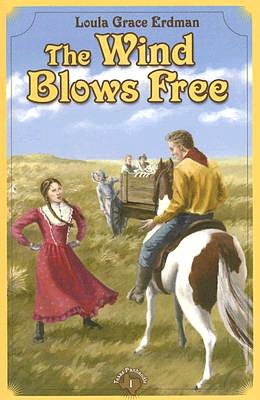
The Wind Blows Free (MG)

The Wind Blows Free. Loula Grace Erdman. 1952/2006. Bethlehem Books. 271 pages.

Melinda Pierce sat on the green plush seat of the railroad car, listening to the mocking song the wheels of the train were singing. All the way up from East Texas they had said the same thing--"Going away. Going away. Going away," they wailed. And sometimes they added, "Poor Melinda. Poor, poor Melinda." 

In the 1950s, Loula Grace Erdman wrote a historical trilogy set in the Texas Panhandle. Each book was narrated by a Pierce sister. The first book by the oldest, Melinda, the second book by the middle sister, Katie, the third book by the youngest, Carolyn. The novels are not necessarily dependent on one another. The age of each heroine happens to be fifteen. So in some cases, quite a few years have gone by since the previous book. But of course, if you've got access to all three books, I'd recommend reading them in order!

After their father loses his store in a fire, the Pierce family resettles in the Texas Panhandle. It will require some adapting by each family member, of course, though the twins, Bert and Dick, seem to have it best of all the children. They just can't stop from saying 'oh golly' every time they enter a scene. But for Melinda, the move is doubly hard. She can't stop thinking that she was meant to stay in East Texas and attend the same ladies academy as her best friends. And the move west seems to have doubled her responsibilities. Melinda's "new life" doesn't get off to the best of starts. For while she's busy daydreaming, her youngest sister wanders away. And it takes hours and hours to find her. But the afternoon isn't a complete loss for there is one special young man, Dennis Kennedy, who helps Melinda search for her sister.

For those interested in pioneer stories, this will prove an interesting read. It isn't quite the same time period of the Little House books (it's set a few decades later), but the pioneer-feel is the same. I liked the first book, The Wind Blows Free. It is Melinda's coming-of-age story, readers see how she comes to accept the move and even come to love her new life. But it probably isn't the best of the trilogy.

Read The Wind Blows Free
  • If you are looking for more pioneer stories with a "Little House" feel
  • If you are looking for historical fiction set in Texas, in the Texas Panhandle
  • If you can get past dated (or outdated) references to Native Americans. (The book has Melinda recounting her great-grandmother's oh-so-scary experience with Indians as a child in Georgia. Melinda does seem worried that she might accidentally see an Indian, but everyone assures her that Indians are only to be found on reservations these days, so she need not worry about that.)

© 2012 Becky Laney of Becky's Book Reviews
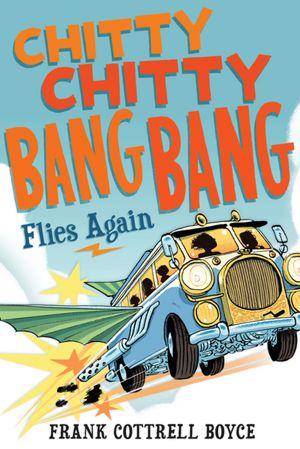
Chitty Chitty Bang Bang Flies Again (MG)

Chitty Chitty Bang Bang Flies Again. Frank Cottrell Boyce. 2012. Candlewick Press. 192 pages.

Most cars are just cars. Four wheels. An engine. Some seats. They take you to work. Or to school. They bring you home again. But some cars--just a few--are more than cars.
Some cars are different.
Some cars are amazing.
And the Tooting family's car was absolutely definitely not one of those.
Not amazing.
Not different.
It was so undifferent and so unamazing, in fact, that on the last day of the summer term when Lucy and Jem strolled out of the school gates and into the holidays, they walked straight past it. They didn't even notice it was there until their father popped his head out of the window and shouted, Lucy! Jem! Jump in! I'm giving you a lift!"

 Did I love Chitty Chitty Bang Bang Flies Again? Not really. Not love. It's not that kind of book, at least not for me. Did I like it? Yes! Not that I'd go so far as to say I really, really, really liked it. But. It was definitely a fun, silly, predictably over-the-top adventure story--the sort that's perfect for family read alouds. The family is just wonderfully silly. There's a clever Dad who loves to invent or tamper with things. A cleverer Mom who thinks its a great idea if Dad tampers with a camper van instead of the house. And three children: Jem, Lucy, and Little Harry. Each has their role to play in the novel, as you might expect, but don't expect brilliant, amazing characterization. These characters feel like humorous character sketches created for our amusement. Jem was fun because as he worked with his Dad, his confidence grew and grew. And soon we have our own hero in the making. Lucy was also fun. You might think you know what Lucy does in her black bedroom, but, trust me, you don't know the half of it. Little Harry, well, no one takes him as seriously as they should. And he does provide the twist at the end!

If you enjoy adventure-fantasies that are completely over-the-top, then Chitty Chitty Bang Bang Flies Again is just the novel for you. I do think it would make a good read aloud. I do think it's a fun, playful, enjoyable read.

Read Chitty Chitty Bang Bang Flies Again
  • If you enjoy fantasy-adventure novels 
  • If you love humorous adventure stories that aren't quite believable but are oh-so-fun in the moment
  • If you love family books
  • If you are looking for books with biracial characters
© 2012 Becky Laney of Becky's Book Reviews