Tampilkan postingan dengan label Historical Fiction. Tampilkan semua postingan

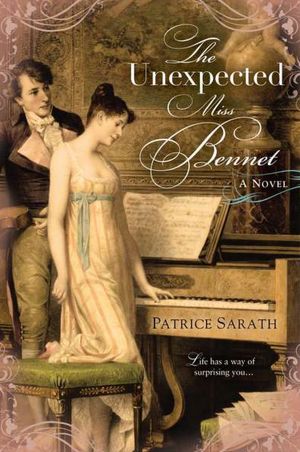
The Unexpected Miss Bennet

The Unexpected Miss Bennet. Patrice Sarath. 2011. Penguin. 304 pages.

It is a comforting belief among much of society, that a plain girl with a small fortune must have no more interest in matrimony than matrimony has in her. 

I loved this one. I just LOVED, LOVED, LOVED it. Set several years perhaps after the events of Pride and Prejudice, this novel shows the transformation of Mary Bennet. And the transformation is both believable and giddy-making. 

One day at a Lucas party, Mary is playing the piano. A young gentleman asks her to dance with him, before she can even start a reply someone cuts in and tells him that she is just Mary, she just plays the piano so others can dance, she isn't there to dance. Mary is puzzled at how this makes her feel. The fact that a man noticed her and wanted to dance with her, the fact that everyone assumed that Mary wouldn't want his attention or to dance, the fact that he took this answer and left to dance with someone else. Mary realizes that everyone has an idea of WHO Mary is and WHAT Mary does, and the ideas are very fixed. Mary wants to change that--one of the first things she does is to give up playing or practicing the piano. She starts taking more walks, she starts reflecting more on who she is and what she wants.

Around this same time, Jane starts worrying about her younger sister, Mary. She's already invited Kitty to spend some time with her and Bingley, so while she's not able to entertain her sister at this time, she's hoping that Elizabeth will be able to invite Mary to Pemberley.

At first, Mary accepts the invitation because she thinks Elizabeth is homesick and in need of one of her sisters, and she's happy to do her duty. But it doesn't take long for Mary to realize that Elizabeth is very happy indeed. For the first time, Mary sees what it would be like to live away from Mr. and Mrs. Bennet. For the first time, Mary reads a novel--or two or three. For the first time, Mary is happy. So when she gets a second opportunity with a certain gentleman who just happens to be an acquaintance of Mr. Darcy, she knows she'll dance. Of course, that's only a hint of what this one is about...

I enjoyed this one. I enjoyed what Sarath did with all the characters! Including Mr. and Mrs. Collins, Catherine de Bourgh and her daughter, Anne, etc. I definitely liked Mr. Aikens, the love interest of Mary, and I thought their courtship was just about right.

Read The Unexpected Miss Bennet
  • If you enjoy Jane Austen
  • If you love Pride and Prejudice
  • If you want Mary Bennet to have a happily ever after
  • If you like clean, historical romance 

© 2012 Becky Laney of Becky's Book Reviews

To Die For

To Die For: A Novel of Anne Boleyn. Sandra Byrd. 2011. Howard Books. 332 pages.

There are many ways to arrive at the Tower of London, though there are few ways out. 

Sandra Byrd's To Die For is an excellent historical romance novel. The narrator is Meg Wyatt, sister to Thomas Wyatt; she is best friends with Anne Boleyn. While I've read plenty of historical fiction set during this time period, it's rare for Anne Boleyn to be presented so sympathetically. I really came to care for both Meg and Anne. The novel begins in 1518 and ends soon after Anne's death. While the focus is definitely on life in the court of Henry VIII, one can also see it as a novel about the English Reformation. It highlights that while for some the Reformation was a convenient way for the King to get his own way all the time, that there were many, many people in England who were true Reformers, and genuinely believed in the Reformation and were eager to get their hands on an English Bible and read the Scriptures for themselves.

In addition to the "romance" between Anne Boleyn and Henry VIII (he is not presented sympathetically), the novel tells Meg's story. Her life being as good an example as any as to what a woman might expect from life at this time.

This historical romance was very enjoyable. Loved the writing, loved the characterization, loved the setting. It felt very personal, in a way, getting a glimpse of the close friendship between two women. For example, Meg being there for her during the birth of her daughter, Elizabeth, and for her two miscarriages. This was a very emotional novel for me, and I definitely wasn't expecting to feel such a strong connection with the heroines.

Read To Die For
  • If you are interested in the Tudors; in Henry VIII and his six wives
  • If you enjoy historical fiction/historical romance
© 2012 Becky Laney of Becky's Book Reviews

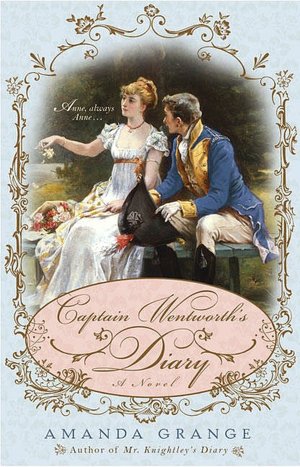
Captain Wentworth's Diary

Captain Wentworth's Diary. Amanda Grange. 2007. Penguin. 304 pages.

Thursday 5 June
At last I am on my way to Somerset!

I do like Amanda Grange's series, and, sometimes I really LOVE her books. But I didn't quite love Captain Wentworth's Diary. Persuasion is one of my favorite books, and definitely my favorite Jane Austen novel. I think I prefer the story from Anne's perspective.

Captain Wentworth's diary begins before he first meets Anne Elliot. The book portrays the courtship of the two, the sweet proposal, the bitter disappointment after she changes her mind. The novel then jumps ahead to Wentworth's successful return. Readers then see the events and scenes of Persuasion through Wentworth's eyes, for the most part. Though it's just a fraction of the story.

I liked this one. I felt Grange got the characters right, for the most part. And it was interesting to see their first meeting. Their first conversation was something. But. It just wasn't as amazing as Austen's original.

Read Captain Wentworth's Diary
  • If you're a fan of Amanda Grange 
  • If you're a fan of Jane Austen
  • If you like historical romances told in diary format 

© 2012 Becky Laney of Becky's Book Reviews
Pride and Pyramids

Pride and Pyramids: Mr. Darcy in Egypt. Amanda Grange and Jacqueline Webb. 2012. Sourcebooks. 320 pages.

Elizabeth Bennet ran down the stairs of the Darcys' London home with a lightness that belied her thirty-five years. 

You may enjoy Pride & Pyramids more than I did. (I was a bit disappointed in the end.) In this Austen-and-Egypt inspired novel, Mr. Edward Fitzwilliam's enthusiasm for a trip to Egypt inspires the whole Darcy family to join in the fun, excitement, and danger of the adventure. Not just Mr. and Mrs. Darcy, but all of their children--and they have oh-so-many children. Also along for the trip is Sophie Lucas, Charlotte's younger sister who is recovering from a broken heart. The family has also hired Mr. Inkworthy, an artist, to paint, sketch, and draw for the trip.

The book has an interesting premise. What if the Darcy family became interested in Egyptology, what if they were adventurous to want to go to an archaeological dig themselves, what if they were in search of a previously-undiscovered tomb full of treasure, etc. But for me this remained an almost book. It had some potential, but it never wowed.

Read Pride & Pyramids
  • If you are a fan of Amanda Grange and/or Jacqueline Webb
  • If you are interested in Egypt and archaeology of the nineteenth century 
  • If you like Pride and Prejudice and can't get enough of adaptations, retellings, sequels, etc. This one is unique. 
  • If you want a little supernatural mixed in  

© 2012 Becky Laney of Becky's Book Reviews

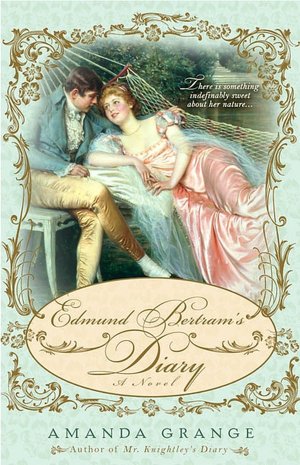
Edmund Bertram's Diary

Edmund Bertram's Diary. Amanda Grange. 2007/2008. Penguin. 304 pages.

Tuesday 8 July
Tom was eager to try out his new horse's paces and so we rode out together this morning, jumping walls and hedges, until he was satisfied he had made a good bargain.

I enjoyed Amanda Grange's retelling of Mansfield Park through the diary of Edmund Bertram. Edmund Bertram isn't always the wisest or brightest hero, but, his genuine friendship for Fanny Price is clear throughout the novel. The romance between Fanny Price and Edmund Bertram has always bothered me slightly. At least in Austen's novel, perhaps because Edmund Bertram's reformation or change of heart was so rushed, the "romance" being almost an afterthought thrown into the last few pages of the novel.

I thought Amanda Grange did a good job with in in this adaptation. For readers see that the love and affection is genuine, sincere. That Edmund does truly care for Fanny Price in that way, and that she feels exactly the same way about him. That he isn't marrying her out of duty or desperation, that Fanny is the one for him, and that he should have been miserable without her by his side.

Grange also did a good job with the other characters, particularly with Mary Crawford and Fanny Price. It would have perhaps been difficult to create a sympathetic Henry Crawford within this novel or adaptation. Though I would LOVE to see her try in another book--diary or not.

I love Amanda Grange's novels. I love her adaptations. While I've loved others a bit more, I still really enjoyed this one and would recommend it.

Read Edmund Bertram's Diary
  • If you liked Mansfield Park by Jane Austen OR even if you didn't particularly "like" it (the change of perspective might make it easier for you to enjoy)
  • If you are a fan of Jane Austen and/or Amanda Grange
  • If you like novels in diary format
  • If you like historical romance

© 2012 Becky Laney of Becky's Book Reviews
Mansfield Park Revisited

Mansfield Park Revisited. Joan Aiken. 1985/2005. Sourcebooks. 201 pages.

The sudden and unexpected death of Sir Thomas Bertram, while abroad engaged on business relating to his various properties in the West Indies, could be a cause of nothing but sorrow, dismay, and consternation to the baronet's friends in England.

I just LOVE, LOVE, LOVE Joan Aiken's Mansfield Park Revisited. I do. I love the characters, the story, and most of all the redemption. Susan Price, Fanny's younger sister, is the heroine of Joan Aiken's Mansfield Park Revisited. When the novel opens, Edmund and Fanny are on their way to the West Indies with their youngest child.
Susan's day are soon brightened up by the arrival of two people to the neighborhood. A sadder-but-wiser, Mary Crawford, whose health is in decline, and her ever-faithful brother, Henry. Though Susan never knew either Crawford personally, she can't help but be drawn to them--particularly Mary. She knows the two have history with those she loves best--Fanny, Edward, Tom, etc., but she can't help believing that these two have changed for the better through the years. These two are not seeking society in the neighborhood, just a quiet, peaceful place to simply be.

Aiken is great at relationships, and I definitely enjoyed seeing Susan interact with Mary Crawford, Henry Crawford, Tom Bertram, Lady Bertram, Julia Yates, etc. Readers don't know much about Susan from Austen's novel, but, Aiken did a great job giving her life in this sequel. While readers do know more about Mary and Henry Crawford from Austen's Mansfield Park, I can't help believing that Henry Crawford has been misunderstood until Aiken set the story straight. (I do LOVE Henry Crawford.) Mary's redemption was a beautiful thing as well. Aiken did not rewrite the past--or try to justify it exactly--but she has through circumstance after circumstance brought Mary to a reflective, repentant place and given her an opportunity to blossom into a sensitive, perceptive, loving person. 

I loved every page of this one. I loved spending time with these characters. It was just a wonderful treat.

My first review

Read Mansfield Park Revisited
  • If you love Mansfield Park, if you like Mansfield Park; even if you were bored with it, you may just find something to love in this historical romance
  • If you love Jane Austen
  • If you like historical romance

© 2012 Becky Laney of Becky's Book Reviews

The Far Side of the Sky

The Far Side of the Sky. Daniel Kalla. 2012. Tom Doherty Associates. 464 pages.

The shadow still swayed over the pavement. Franz Adler tried to blink away the memory of his brother's dangling corpse and the silhouette it cast across the sidewalk, but the image looped over and over in his head.

The Far Side of the Sky provides a unique look at World War II. Franz Adler is able to flee Vienna, Austria, after Kristallnacht with his young daughter, Hannah, and his sister-in-law, Esther. Also accompanying them is an artist Ernst Muhler who fears persecution as well. (He joins them at the very last minute when his boyfriend decides to join the Nazis.) Their destination is Shanghai, one of the few places welcoming Jewish refugees.

The Far Side of the Sky is about the Jewish refugee community in Shanghai. Readers get glimpses of refugee life in 1938-9, 1940, 1941, 1942. (For example, the narrative might cover one or two months in a given year, and then jump to the next year.)

The main characters are:

Franz Adler, a Jewish doctor who divides his time between two hospitals in Shanghai, one of the hospitals is for Jewish refugees.

Soon Yi Mah (Sunny) a biracial (American/Chinese) nurse who divides her time between two hospitals. Her father was a doctor, and, she too has a gift for doctoring. But Dr. Reuben, one of the surgeons at the other hospital absolutely hates her and feels she doesn't know her place. She's intelligent, resourceful, courageous.

Of course there are dozens and dozens of minor characters of many ethnicities. 

The story was very fascinating. The author note reveals that much is based on fact, that he spent a great deal of time researching the Jewish refugee experience in Shanghai. And since this was the first I've heard of it, it was definitely fascinating to me. However. I was disappointed in the distant characters. Though readers follow the stories of these characters, I personally never felt connected with them. I knew enough about them to care about their fates, what happened next, etc. But I never felt like I knew them.

I'm not sure this book did a good job with relationships between characters either. For example, readers know that Franz is a father, but, except for two or three scenes, we don't really see Hannah interacting with Franz. We know that Hannah provides motivation for Franz--that his concern for Hannah moves the plot forward, but as for knowing Hannah, that just doesn't happen. We don't get the details of his personal life outside the hospital very often. Again, we know that Franz is taking care of Esther, his sister-in-law, but as for his sister-in-law having any character of her own, I just don't see it. There are a handful of scenes now and then. But even in those scenes she seems one-dimensional and just there. So many of the characters seem one-dimensional. The story itself is fascinating enough--the action, the danger, the uncertainty--but the characters just don't seem to match that.

The setting is unique and interesting. The story is fascinating and compelling. The characters, well, they disappointed me. But. I think there is enough to enjoy this one that I'd definitely still recommend it.

Read The Far Side of the Sky
  • If you are interested in the 1930s and 1940s, particularly the war years
  • If you are interested in reading books set in Shanghai, in China
  • If you are interested in reading a Jewish refugee book in a very different setting
  • If you are interested in doctors, nurses, surgeons, hospitals, etc. 

© 2012 Becky Laney of Becky's Book Reviews

After Dark

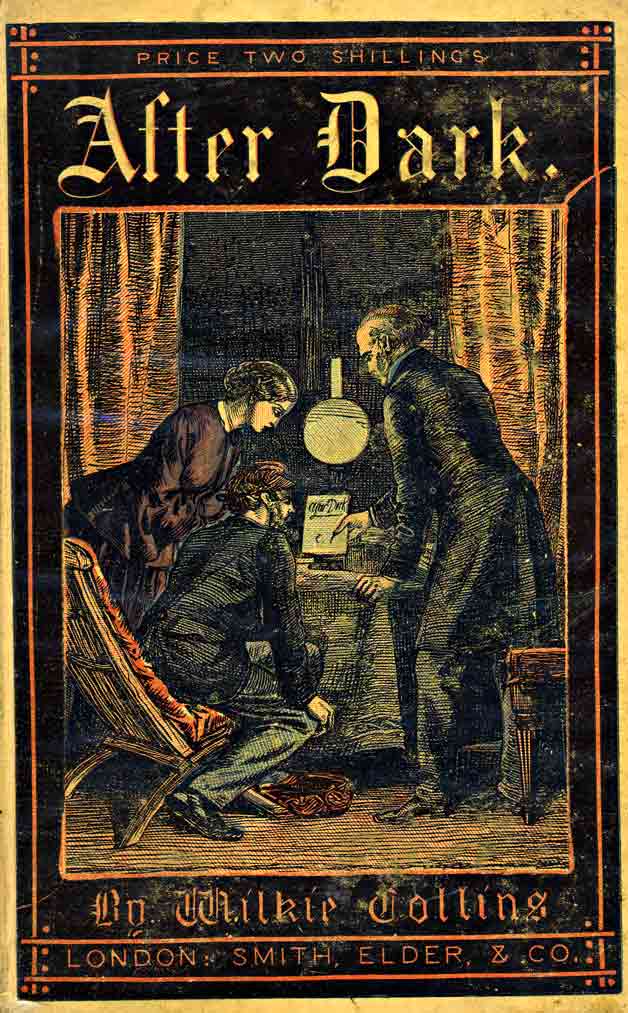
After Dark. Wilkie Collins. 1856. 404 pages.

From "Leaves From Leah's Diary"
26th February, 1827.—The doctor has just called for the third time to examine my husband's eyes. Thank God, there is no fear at present of my poor William losing his sight, provided he can be prevailed on to attend rigidly to the medical instructions for preserving it. These instructions, which forbid him to exercise his profession for the next six months at least, are, in our case, very hard to follow. They will but too probably sentence us to poverty, perhaps to actual want; but they must be borne resignedly, and even thankfully, seeing that my husband's forced cessation from work will save him from the dreadful affliction of loss of sight. I think I can answer for my own cheerfulness and endurance, now that we know the worst. Can I answer for our children also? Surely I can, when there are only two of them. It is a sad confession to make, but now, for the first time since my marriage, I feel thankful that we have no more.
I tend to love Wilkie Collins. And I did enjoy his short story collection, After Dark. But I didn't find all six of the short stories equally compelling. And while I *loved* some of the stories in this book, I didn't love them all. I found them all worthwhile, all entertaining.

There's a framework to After Dark. A portrait-painter, William, suffers damage to his eyesight, the doctor tells him he needs LOTS of time to recuperate if he hopes to be able to see again. He can no longer count on his painting to bring in the income and take care of his family, so, the family is forced to come up with plan B. Plan B just happens to be writing and publishing a book of stories. These are stories that have been told to the painter--usually while his subject is being painted--through the years. He will now recollect the best stories he's ever heard and relate them to his wife, Leah, who will write them down each night...after dark. (That is after her long day's work is through.)

The six stories are:

  • The Traveller's Story of a Terribly Strange Bed (1852)
  • The Lawyer's Story of a Stolen Letter (1854)
  • The French Governess's Story of Sister Rose (1855)
  • The Angler's Story of The Lady of Glenwith Grange (new for After Dark)
  • The Nun's Story of Gabriel's Marriage (1853)
  • The Professor's Story of the Yellow Mask (1855)
Five of the six short stories were reprints, only one story was brand new and written especially for this book.

In my opinion, the best, best, best short story in this collection is The French Governess's Story of Sister Rose. This story has DRAMA and action. It is set during the French Revolution. And in my opinion, this story is a MUST read. Not only if you're a fan of Victorian literature OR a fan of Wilkie Collins, but if you're a fan of historical fiction set during the French Revolution, you should really consider reading this novella. (In my opinion, it is closer to a novella than a proper short story. It has parts and chapters.) So Louis Trudaine made a deathbed promise to his mother to always be there for his sister, Rose, and protect her. Rose has fallen in love with a man Louis feels is unworthy of her, a Charles Danville. The marriage does happen, though not without some unpleasant exchanges on the eve of the wedding. But he never feels quite sure of his sister's husband, and so he chooses to remain nearby even if it means passing up a job opportunity. Years pass--we learn from the narrator--and the Revolution comes. And with it danger, drama, action, betrayal, and so much more. This story is so very, very, very good. It's quite intense and I loved every minute of it.

The Traveller's Story of a Terribly Strange Bed is actually Wilkie Collins first published short story. It is quite creepy! It also happens to be set in Paris, by the way, anyway, the narrator is a young man named Faulkner. His good luck at a gambling house almost proves fatal. For a very, very friendly man convinces him that it is much too risky to leave the house at that time of night and wander the streets carrying his winnings. No, no, it would be much much safer to stay there for the night. But is that the truth? Well, his insomnia may just be a lifesaver!

The Nun's Story of Gabriel's Marriage is another story set in France during the French Revolution. While it isn't as good as The French Governess's Story of Sister Rose, in my opinion, it was interesting to get another story set in France--in Brittany--from Collins. The theme of this one is forgiveness and reconciliation. If you want a story with a couple of BIG twists, this one may prove satisfying.

The Angler's Story of The Lady of Glenwith Grange is another story with a BIG, BIG twist. Ida has promised to always, always, always take care of her younger sister, Rosamond. (Their mother died when Rosamond was a baby.) So when Rosamond marries, it's agreed that Ida will always live with them. The marriage, as you might expect, does not exactly exactly go as planned. And readers...along with Ida...learn why.

The Professor's Story of the Yellow Mask is set in Italy, I believe. It has a larger cast of characters than some of the other stories in the collection. And it has its own share of drama. It is a darker story balanced perhaps in a way by a love story with many, many obstacles. It also has lots of twists and turns and such. That being said, I wasn't thrilled with it.

The Lawyer's Story of a Stolen Letter is a detective story. It was a nice enough story, I suppose, but I wasn't wowed by it. Still, it's enjoyable enough. 


Read After Dark
  • If you're a fan of Wilkie Collins
  • If you're a fan of Victorian literature
  • If you're a fan of mystery, suspense, detective, or sensation stories
  • If you like short stories
  • If you like "shocking" stories with plenty of drama and twists and turns
© 2012 Becky Laney of Becky's Book Reviews
Short-Straw Bride

Short-Straw Bride. Karen Witemeyer. 2012. Bethany House. 368 pages.

From the prologue: Ten-year-old Meredith Hayes balled her hands into fists as she faced her tormentor, "Hiram Ellis! Give me back my lunch bucket this instant!"

From chapter one: "I don't think I can do it, Cass." Meredith peered up at her cousin through the reflection in the vanity mirror. Cassandra pulled the hairpin from her mouth and secured another section of Meredith's braided chignon. "Do what?" "Marry a man who wants me only for the land I can bring him." 

This isn't my first Karen Witemeyer book; however, it is the first Karen Witemeyer book that I absolutely LOVED, LOVED, LOVED. Short-Straw Bride is a Christian historical romance; it is set in Palestine, Texas in the 1880s.

In the prologue, Travis Archer saves the then-ten-year-old Meredith, her leg having gotten trapped in a hunting trap. The incident stays with her, as you might imagine. First, because she can't forget Travis Archer, he is forever her hero, the stuff of her dreams, despite the fact that that isolated incident is the only time she's seen him. Second, because it left a scar on her leg and the damage to the bone prevented it from growing as it should; one leg being slightly longer than the other.

The novel opens with Meredith all grown up and living with her aunt and uncle who are her guardians. They have arranged a marriage for her with an up-and-coming businessman, Roy Mitchell. Meredith prays for a sign, an indication one way or another if she should marry the man her guardians have chosen for her, or, if she should be stubborn and refuse their choice. And the sign, when it comes, is definite: she not only overhears him calling her a cripple, she overhears him making unethical arrangements to acquire land. He WANTS the Archer land, and since the Archer brothers won't sell, won't negotiate, won't budge, he's decided that if he burns their barn down, it will be a good first step to getting what he wants.

So what's a woman to do? Well, she does try going to the sheriff--or the deputy?--but when she's not taken seriously, when she's instead ridiculed for being a silly woman with a vivid imagination, she does what she must: she rides out to the Archer land herself to warn them. The problem? She doesn't have the time to ride out there and back before nightfall. And she wasn't counting on her cousin giving into the pressure of revealing her whereabouts. So her heroic ride to warn them just in time turns into a compromising reputation-killer. Her uncle demanding that one of the four Archer brothers step forward to marry her....

I admit this one could sound a bit silly to some readers, but, oh how I loved it!!!! I loved Meredith! I loved Travis! I loved their relationship, their marriage, their courtship-coming-after-marriage. I loved seeing how Meredith's presence on the Archer farm transforms the place, transforms the brothers. I loved just about everything in this one!!! There were quite a few giddy-making scenes!

Will Short-Straw Bride appeal to every reader? I doubt it. It's definitely for those that love Christian fiction, those that love Christian historical romance. I could see it having some appeal to non-Christians who love and seek out clean romance novels (smut-free romance novels).

Read Short-Straw Bride
  • If you enjoy Christian fiction
  • If you enjoy Christian historical romance
  • If you enjoy clean romance novels
  • If you are looking for historical romance set in Texas
© 2012 Becky Laney of Becky's Book Reviews

The Lost Wife

The Lost Wife. Alyson Richman. 2011. Penguin. 352 pages.

New York City
2000
He dressed deliberately for the occasion, his suit pressed and his shoes shined. While shaving, he turned each cheek carefully to the mirror to ensure he hadn't missed a single whisker. 

The Lost Wife, at least at first glance, does not appear to be your traditional Holocaust novel. True, both hero and heroine are Jewish. True, over half of the novel is about what happened to them as a result of the Nazis invading their country and bringing the war all too close to home. But the way this story is told sets it a bit apart. For one, the framework of the story is NOT chronological. It begins and ends on the very same day, it begins with a reunion decades in the making. It begins with the grandfather of the groom meeting the grandmother of the bride and realizing their shared past. Their tragically-brief past.

Lenka, the heroine, perhaps has the greater task. Her narrative focuses on the past, for the most part. From her childhood to her teen years to her relationship with a young man, Josef. It covers the happy years, the anxious years, the joyful moments, the heartbreaking moments. Her time with Josef does seem brief--their marriage consisting of mere weeks when it was meant to last a lifetime. But war has a way of wrecking things.

Josef, the hero, balances out Lenka's story. His role in the novel is to relate to readers the post-war present. The focus is on his life in America. The war has cost him much, much, much more than just a wife. And so he does have to find a way to go on, and that includes marrying someone (another broken person forever changed and haunted by war, by what might have been, what should have been) and having a family. We catch glimpses of his home life through the decades. We see him as a husband, a father, a grandfather, a friend. He has never forgotten Lenka. Never.

Though the novel does jump around in time, I didn't find it confusing. I cared about both stories, though, I perhaps cared about hers a bit more. Both Josef and Lenka endured losses--great losses--and both witnessed things that were traumatic, I think her story is more compelling because of the duration. We see Lenka in two concentration camps. And we endure with Lenka. Or at least that is how it felt to me.

The way this story is told does take a good bit of suspense out of it, but I didn't mind because to me it was all about the journey. 

Read The Lost Wife
  • If you want to read an amazing, heartbreaking-yet-hopeful love story
  • If you are interested in reading about the Holocaust
  • If you are interested in Terezin and Auschwitz 
  • If you want a little art appreciation; this one has a definite art theme to it.
  • If you're looking for a compelling read that's almost impossible to put down

© 2012 Becky Laney of Becky's Book Reviews

Smuggled

Smuggled. Christina Shea. 2011. Grove/Atlantic. 256 pages.

They would slip her between the seams of the two countries.

This historical fiction novel sounds like it would be a perfect fit for me. The heroine, Eva, is a very young child who is smuggled out of Hungary into Romania during World War II. She's sent to live with her aunt and uncle. She's given a new name, a new history or backstory, and, of course, new documents that hide her Jewish identity. She's forbidden to speak of her old life, forbidden to speak her own language--at least after the first two weeks or so. She's forced to adapt really, really quickly. Unfortunately--for me--the novel barely covers the war years. It seems like we're just getting started to know this frightened young girl renamed Anka, when, we're rushed at a very alarming pace through her childhood years, teen years, college years, and adult life. Almost half the novel is spent with her as an adult in the late 60s, 70s, 80s, and early 90s. For readers who truly want to know all the gritty little details about what it might have been like to live in Romania during the Communist years, this one may be just what you're looking for.

The novel is very dark. Of course, it would almost have to be dark. In some ways the bleakness of the novel was almost too much for me. Especially as it traces just how far the narrator--Eva/Anka--will go to survive. I did NOT want to read about her personal life in that much detail. (This one is far from clean, trust me.)

Smuggled isn't a bad novel, it's just more of a not-for-me novel. I was hoping for more of a child/teen perspective/experience about World War II and maybe the early years of Communism--but I wasn't expecting it to cover quite so many years. And the attention to detail varies so much! There were things that I would have loved to read about--the war years, what it was like to live in hiding, have a secret life, what was it like to learn a new language, to be placed in a new family, etc. How she *really* felt about both her aunt and uncle, did she have a hard time adjusting, did she make friends, was it easy for her to go to school and have a 'normal' life after the war, what was it like to go to school, etc. How did it feel to hide her Jewishness for so many years--so many decades?

If you're looking for a novel about an oppressed woman that endured much...then this might be for you.

Read Smuggled
  • If you are interested in World War II AND equally interested in Communism
  • If you're looking for a novel set in Romania and Hungary
  • If you like your fiction on the gritty side; things get dark and bleak. 

© 2012 Becky Laney of Becky's Book Reviews

Glamour in Glass

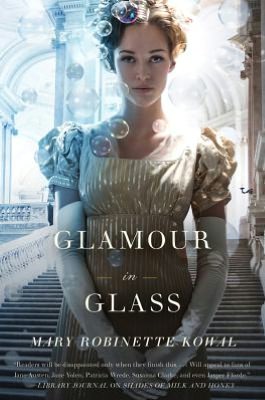
Glamour in Glass. Mary Robinette Kowal. 2012. Tor. 336 pages.

Finding oneself a guest of honor only increases the presentiment of anxiety, should one be disposed to such feelings. Jane Vincent could not help but feel some measure of alarm upon hearing her name called by the Prince Regent, for though she fully expected to be escorted into dinner by someone other than her husband, she had not expected to accompany His Royal Highness and to be seated at his right hand.

 Sequel to Shades of Milk and Honey.

How much should you know going into a book? On the one hand, I had a difficult time getting into Glamour in Glass and just a hint of what it was REALLY about would have helped me so much. On the other hand, would knowing have taken out all the suspense and tension?

I enjoyed quite a few things about Glamour in Glass. I liked that it was a clean read, for the most part. It is so refreshing to read a honeymoon book that is not graphic in detail. I know that wouldn't be a plus for every reader, but, for me, it worked out well. And while this one is a 'honeymoon' book--meaning that everyone is waiting to see *when* the honeymoon would be over, when the couple would start fighting and getting annoyed with one another--it isn't just that though. If the real drama had not started, I might have given up on this one. If the book had just been about the tension between these two as business partners--as glamour partners--or if the book had just been about her getting annoyed with her husband for not sharing enough about his feelings, his memories, his doubts, his dreams, etc., then I would have probably given up on it.

S
P
O
I
L
E
R

But this book is set in Europe during a dangerous but exciting time (exciting to read about perhaps, not exactly exciting to live through). Napoleon's threatening return. And since this honeymoon just happens to be in his path--well, things get a bit exciting.

What I didn't exactly love in this one was all the talk about glamour, about *how* glamour worked, about the new experiments in glamour, about all the rules of glamour and what that meant for married women in particular. In some ways the talk was just too much, but in other ways even with all this talk, not enough was clearly said. For example, we're told that pregnant women could never, ever, ever, ever, ever, ever use glamour. Ever. But we're not told why really. We're not told how using glamour effects the unborn baby, and what risks would be involved if a woman dared to break the rules.

Read Glamour in Glass
  • If you enjoy Regency romances, particularly clean romance
  • If you enjoy historical fiction
  • If you enjoy fantasy (though this is more alternate history...what if magic/glamour were real)
  • If you enjoy Jane Austen or other classic authors

© 2012 Becky Laney of Becky's Book Reviews
Mr. Darcy's Diary

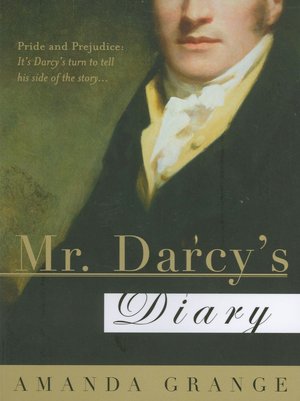
Mr. Darcy's Diary. Amanda Grange. Sourcebooks. 2007. 320 pages.

Monday, 1st July
Have I done the right thing in establishing Georgiana in London, I wonder? The summer is proving to be very hot, and when I visited her this morning, I found her lacking her usual energy. I think I will send her to the coast for a holiday.

Do I have a favorite Amanda Grange novel? I'm not sure. I definitely LOVED this one, Mr. Darcy's Diary!!! The first Amanda Grange "diary" I read was Colonel Brandon's Diary.  I've since read Mr Knightley's Diary, Wickham's Diary, and Henry Tilney's Diary. (I'd love to make time to read Captain Wentworth's Diary and Edmund Bertram's Diary.)

I also JUST discovered there will be *new* Amanda Grange this year!!! Pride & Pyramids: Mr. Darcy in Egypt which releases in July. Also Dear Mr. Darcy: A Retelling of Pride and Prejudice which releases in August. I believe this gives an insider's look on Darcy's correspondence (as opposed to his diaries).

So I have high expectations for Amanda Grange. And she has never once disappointed me!!! She gets her Austen characters just right. True, I don't love *all* her books equally. But that is in part because I don't love  all of Jane Austen's characters equally. And since her characters are so very true-to-the-book and yet so vividly brought to life all at the same time, it is only natural that I have a similar reaction. At least to a certain degree. I will say this, she can make me appreciate characters that I have been indifferent to in the past. And she can make me appreciate even more characters that I already love and adore.

I loved many, many things about Mr. Darcy's Diary. The thing I love most is how it gives a new perspective on Darcy's relationship with Charles Bingley. In Jane Austen's Pride and Prejudice, readers don't really get a chance to know--really know--Charles Bingley all on his own. I loved reading the scenes with Charles Bingley and Mr. Darcy. You really do get an impression of him, a clearer impression of him. And even though Bingley is far, far from perfect, I can't help smiling at his scenes. As for Mr. Darcy, well, that's only to be expected that there's a high degree of charm to be found. True, he can be smug and arrogant, a bit blinded to reality, but, his transformation is all that much more wondrous as seen slowly through the course of these diary entries.

Read Mr. Darcy's Diary
  • If you love Jane Austen
  • If you love Austen's characters, if you want to spend more time with them, if you want newer, fresher perspectives on their inner lives
  • If you enjoy clean Austen retellings/adaptations
  • If you're a fan of Amanda Grange
  • If you love the book or movie, Pride and Prejudice

© 2012 Becky Laney of Becky's Book Reviews
Henrietta Sees It Through: More News From the Home Front 1942-1945

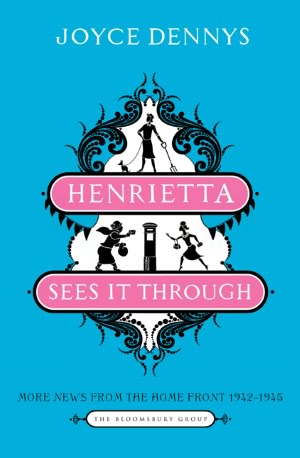
Henrietta Sees It Through. Joyce Dennys. 1987/2011. Bloomsbury. 208 pages. 

February 11, 1942
My dear Robert
Is there anything more fascinating than cutting the edges of a lawn?
 

I definitely liked this one! I'm trying to decide if I like it more than the first book, Henrietta's War, or if I just feel more comfortable liking it since most of the characters are familiar friends by this point. It definitely covers more than the first book. It speeds through the rest of the war. (Perhaps because this book doesn't publish every single letter originally published for the magazine these were originally written for during the war years.) Once again the setting is a small country village, the narrator is a doctor's wife, Henrietta Brown. The book deals not only with rations and war-worries but with everyday life like gossip, weddings, baby showers, dog shows, squabbles between "friends."

Read Henrietta Sees It Through
  • If you enjoyed Henrietta's War
  • If you enjoy books set in England, especially those set during World War II
  • If you enjoy books with a small, country village setting
  • If you like comedy; quirky characters, etc.
  • If you like epistolary novels 
© 2012 Becky Laney of Becky's Book Reviews
Henrietta's War: News from the Home Front 1939-1942

Henrietta's War: News from the Home Front, 1939-1942. Joyce Dennys. 1985/2010. Bloomsbury. 176 pages.

October 18, 1939
My dear Robert,
It was good to get your letter and hear that you are in a 'perfectly safe place,' though I wonder how much of that is true and how much intended to allay the alarms of your Childhood's Friend. And why, when I and everybody else know that you are in France, must I address my letters to Berkshire? Well, well, I suppose They Know Best, and Ours Not to Reason Why, but I seem to remember that when I wrote to you in the last war I used to put "B.E.F., France," quite boldly on the envelope, thereby no doubt endangering the safety of the British Empire.


I have been wanting to read this book for a year or so now. And in many ways it did not disappoint. It's set in the country, in a small country village. The main character is Henrietta Brown, a doctor's wife. The book is told through a series of letters to her childhood-friend-now-a-soldier, Robert. The first book covers October 1939 through December 1941. (Yes, the cover says 1939-1942, but the truth is the last entry is dated December 31, 1941.) Many letters (or sketches, depending on how you want to view them) are accompanied by small black-and-white drawings. What does Henrietta write about? Well, life in the village, in the country. Everything from tea parties, church rumble sales, various "concerts," and other events--big and small--that concern everyday folk. Simple things like gardening, shopping, rationing, knitting, gossiping, etc.

The setting is definitely enjoyable. I was reminded of Agatha Christie, in a way, especially the Miss Marple series. Because these are set in a small country village, because the characters presented are so quirky. But there are no murders, no mysteries to solve. So the comparison isn't quite fair. I was also reminded, in a way, of Erma Bombeck. Though I admit it that is a bit of a stretch. It's just that Dennys' sketches of what it is like to live in a small country village, in a small community where everyone knows everyone's business, her focus on being a housewife, a mother, a 'good' neighbor and friend, well, it is the finding humor in the common, everyday dealings of life that made me think of Bombeck. True, the humor is sometimes more understated and subtle than Bombeck, but, there are many funny scenes in this one. Is the humor for everyone? Probably not. Some might fight it too quiet.

So I definitely liked it. I'm not exactly, exactly sure I loved it. I am very, very glad I read it. And I'd definitely recommend it to some of my friends. But if you're looking for action, action, more action...it's not going to be for you.

Read Henrietta's War
  • If you like books set in England, especially if you like the period in which this is set, World War II
  • If you like epistolary novels 
  • If you like quirky characters and humor

© 2012 Becky Laney of Becky's Book Reviews

Rereading Book Thief (YA/Adult)

The Book Thief. Markus Zusak. 2006. Random House. 560 pages.

First the colors. Then the humans. That's usually how I see things. Or at least, how I try. Here is a small fact: you are going to die. I am in all truthfulness attempting to be cheerful about this whole topic, though most people find themselves hindered in believing me, no matter my protestations. Please, trust me. I most definitely can be cheerful. I can be amiable. Agreeable. Affable. And that's only the A's. Just don't ask me to be nice. Nice has nothing to do with me. 
 
The Book Thief leaves me speechless. If humans leave Death, the narrator, feeling haunted, I can say the same of the narrator. Could a book have a better narrator? I doubt it. There is something so perfectly-perfectly-perfect about The Book Thief. It is beautiful and brilliant; absorbing and compelling. It goes ugly places, to be sure, but the language, the style, just can't be beat. I mean this is a novel that wows and amazes. The characters are so real, so vivid. I mean these characters are very real, very human, very flawed, but the connection is so intense. I mean how can you read Liesel Meminger's story and not be moved? How can you not care for Liesel, for her new Papa and Mama, for Rudy, for Max? It would probably be hard to pick a favorite character in this one. Would it be Death who tells the story so beautifully, so achingly, so straight-forwardly? Would it be Liesel, the girl-turned-woman, whom you just can't help loving? Her story is so heartbreaking. She is weak-and-strong. She's vulnerable and spunky. I mean she's got fight to her, fight in her. And there's something about her that you just can't ignore. But she's been hurt, she's carrying pain and loss. There's so much about her that I couldn't even begin to put into words. Would it be Hans Hubermann? It may just be. The way he tenderly loves Liesel, the way he's strong and gentle with her. So very, very understanding. How she becomes his world. How he does everything possible to be a true father to her, to heal her hurts, to piece her heart back together. There is something so very practical and down-to-earth about him, yet something so sensitive too. I mean Hans Hubermann and his accordion won't soon be forgotten by anyone who reads this novel. And then there's Max, the hidden Jew in the basement. I love Max for himself, it's true, but I love Max for what he brings out in Hans and Liesel. I love Max's role in the novel because of how he is able to connect with Liesel, how he is able to connect with this family. His story is powerful, the "books" he writes for Liesel are incredibly compelling, but, this isn't his story. He's a big part of the story, to be sure, because of the way Liesel takes him into her heart. But. This story is all about Liesel. As it perhaps should be.

The Book Thief is a book that everyone should experience twice: once in print, once in audio.  I've read it three times, I believe, and listened to it once. (Though I've listened to some sections of the audio more than once.) And it is one of the best, best, best books I've ever read. I don't love it because it's an easy read. I don't love it because it's a happy, happy novel. I love it because it is beautiful, haunting, ugly, yet hopeful.

Read The Book Thief
  • If you want to read a great book; it's compelling, emotional, haunting, beautiful and ugly.
  • If you want to read a book set during World War II.
  • If you are looking for a substantive book on love and loss and everything it means to be human.

© 2012 Becky Laney of Becky's Book Reviews

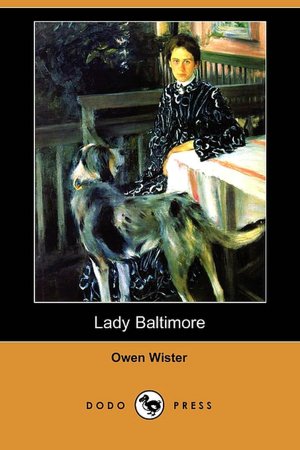
Lady Baltimore

Lady Baltimore. Owen Wister. 1906. 272 pages.

Like Adam, our first conspicuous ancestor, I must begin, and lay the blame upon a woman; I am glad to recognize that I differ from the father of my sex in no important particular, being as manlike as most of his sons. Therefore it is the woman, my Aunt Carola, who must bear the whole reproach of the folly which I shall forthwith confess to you, since she it was who put it into my head; and, as it was only to make Eve happy that her husband ever consented to eat the disastrous apple, so I, save to please my relative, had never aspired to become a Selected Salic Scion. I rejoice now that I did so, that I yielded to her temptation. Ours is a wide country, and most of us know but our own corner of it, while, thanks to my Aunt, I have been able to add another corner. This, among many other enlightenments of navel and education, do I owe her; she stands on the threshold of all that is to come; therefore I were lacking in deference did I pass her and her Scions by without due mention,—employing no English but such as fits a theme so stately. Although she never left the threshold, nor went to Kings Port with me, nor saw the boy, or the girl, or any part of what befell them, she knew quite well who the boy was. When I wrote her about him, she remembered one of his grandmothers whom she had visited during her own girlhood, long before the war, both in Kings Port and at the family plantation; and this old memory led her to express a kindly interest in him. How odd and far away that interest seems, now that it has been turned to cold displeasure! 

Last year I read Owen Wister's The Virginian and just loved it. Surprisingly loved it since I am NOT by any stretch of the imagination a fan of westerns. I knew I wanted to read a second book by Owen Wister this year, and I chose Lady Baltimore. Trying to compare Lady Baltimore and The Virginian would be a mistake because they are two entirely different books. Different styles, different genres.

Lady Baltimore is one part social commentary, one part romance, one part comedy. Set in South Carolina at the turn of the century, it dramatically and comically shows the tension of a town and ultimately a nation. What kind of tension? Well, tensions between generations, regions, races, and social classes.

(We see domineering aunts, for example, from both North and South, who want to "rule" over their nephews and nieces.) There is a generation (probably those fifty and up) who CANNOT for one minute put the Civil War behind them, and there is a generation (especially those in their twenties and late teens) who don't quite understand why it still has to be such a big deal, who'd like to see some change or progress at least. There's definitely still tension between North and South as well. Our narrator is a "Yankee" visiting a Southern town. His "Yankee" aunt warns him throughout not to be too influenced by the Southerners. She doesn't want him to like or love his travels too much. And the people of the town, especially the Somebodies of the town, find it hard to open up with any Yankee no matter how seemingly charming. From the narrator's viewpoint, readers see the tension between these two sides is still very much alive. Race. This is a BIG, BIG, BIG issue in the novel. For better or worse. On one hand, it could always allow for discussion and critical thinking on the part of the reader. But on the other hand, it might make some very uncomfortable in the process. Because whether the "racism" is just racism by condescension or racism by pure ugliness and hatred, it is still very present in this novel. (Let's just say that the narrator and almost every single person in the novel does NOT believe in equality of the races, and most certainly does not believe that they should have the right to vote or hold any sort of political office.) Social class also plays a role in this one. We've got the tension between people who once had money but now only have class, manners, and pride. And the newly rich who many view as having NO class, and low morals.

Augustus is our young narrator. He is visiting King's Port, South Carolina, at the request of his Aunt Carola. (She is, in fact, paying for his trip. He's supposed to be diligently researching genealogies and records to see if he can find the "proof" he needs to join her oh-so-exclusive club. Those men and women supposedly descended from royalty. Does he stay on task? What do you think?!) While there, he becomes entangled in a love affair. I'll clarify. He joins a gossip-y group of women who are focusing their attention on John Mayrant. Augustus first impression of John Mayrant is quite interesting. (It is readers' first impression as well.) He is ordering his own wedding cake, a Lady Baltimore cake. He is a bit anxious, a bit shy, a bit nervous. He even forgets to tell the woman at the counter, the baker, the date of his wedding, the date he needs the cake. He has to run back to tell her. Just as she is running to catch him to tell him he's forgotten. As you might guess, as you might imagine, readers see some potential here! The woman is Eliza La Heu. His fiance, Hortense Rieppe, is seen as less than desirable. She's not from the right kind of people, and if she has any money of her own, it's the wrong sort of money. She mixes with the wrong crowds, vacations the wrong places, and smokes! Is this young couple in love? Well, that's the big question, I suppose. And it seems to be everybody's business. Even with this newcomer Augustus getting in the middle of it. Should the engagement be broken? How should it be broken? When should it be broken? Would everyone be better off if it was broken?

So Lady Baltimore is just as much about the break up of a relationship (though readers may have a hard time believing it was love) as it is the start of a new relationship (Eliza and John).

There were many things I found enjoyable in Lady Baltimore. The writing was delightful-and-pleasant. For the most part. When the narrator is discussing race, well, it would be difficult to find charm in that...at all...but when the focus is on society, on social issues, on manners and traditions, courtship, etc., then it is a great way to spend a week. (When it comes to observation and characterization, think Austen or Trollope.)

I was always happy to pick this one back up, yet, there are not any scenes in particular that I can say I loved or loved, loved, loved. (I can still think of some from The Virginian.)


Read The Lady Baltimore
  • If you're looking for fiction set in the South at the turn of the century
  • If you're looking for a little social commentary with your romance
  • If you enjoy slower paced novels with some charm; this one is NOT full of action; it's mostly dialogue. So it might not be for everyone.
  • If you loved The Virginian, yet, are willing to give the author a chance to write a completely different kind of book.

© 2012 Becky Laney of Becky's Book Reviews
Henry Tilney's Diary

Henry Tilney's Diary. Amanda Grange. 2011. [December 2011] Penguin. 288 pages.

Wednesday 14 April 1790
No lessons, no tutors, no Latin, no Greek! How glad I am to be home again, with time to spend with my horses and dogs, my brother and sister, my mother and father. No more school for a month! Instead time to wander the abbey and roam the grounds.

Out of all the Austen heroes, Henry Tilney is probably my favorite and best. "Even more than Captain Wentworth?!" you might ask...
Well, that's like deciding between chocolate cake and chocolate cheesecake. Both are too good, too satisfying, too giddy-making to resist. Why would anyone ever even try...

So. Henry Tilney is a swoon-worthy Austen hero, in my opinion. His strength is his charm, his wit, his friendliness, his teasing-manner. He has a way of making people feel at ease, of making people feel good about themselves. I'm not even sure he has a weakness. He's not proud or anti-social. He's not insincere or deceitful or manipulative. He doesn't flirt with (other) women for fun or sport, or to make anyone jealous. He's not a bore. He's just a fun-loving, novel-loving, light-hearted guy. Who wouldn't want to spend time with him?!

So Henry Tilney's Diary presents his side--and to some extent his sister's side--of the story found in Jane Austen's Northanger Abbey. Half of the novel takes place before he travels to Bath and meets Catherine Morland. Readers learn about his relationship with his sister, Eleanor, his father and mother, and his older brother. (Does Amanda Grange try to redeem this bad-boy brother? Well, she gives just enough background that empathetic readers can put together an argument of sorts. But is it enough for your average reader? Well, I'm not sure that it is. Not that that matters horribly to the enjoyment of the novel.)

Henry Tilney spends MUCH of his time reading aloud to his sister, Eleanor. Both just LOVE Ann Radcliffe. Both just LOVE novels--gothic novels, in particular. Amanda Grange gives us multiple reading scenes. In fact, some might say too many reading-together scenes. On the one hand, she's definitely showing instead of telling. These two love to read. And since these two will in a period of time be meeting Catherine Morland, a heroine who LOVES, LOVES, LOVES to read, it makes a certain amount of sense to show that Henry Tilney is the oh-so-perfect match for her.  On the other hand, by quoting so much from a gothic novel--it appears to be the actual text of A Sicilian Romance--it just made this reader want to pick up the original.

The strength of this one is the background it provides readers. It doesn't add to Austen's Northanger Abbey, that is it doesn't improve it. As far as building his relationship with Catherine Morland. It doesn't make the story, the romance, 'better.' Tilney isn't more swoon-worthy or giddy-making in Grange's retelling. Neither is he less swoon-worthy. Where it adds to the enjoyment of Northanger Abbey is in its imagining of the close, caring relationship between brother and sister.

I liked this one. I definitely liked it. It made me want to spend time with the original. It even made me want to pick up an Ann Radcliffe novel.

Read Henry Tilney's Diary
  • If you're a fan of Amanda Grange
  • If you're a fan of Jane Austen
  • If you like historical romance
  • If you like gothic romance

© 2012 Becky Laney of Becky's Book Reviews

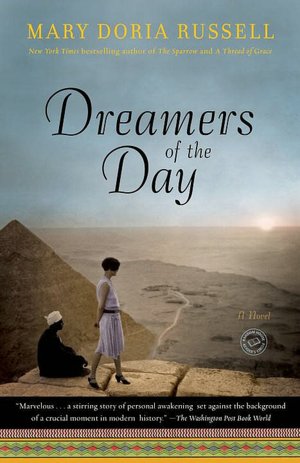
Dreamers of the Day

Dreamers of the Day. Mary Doria Russell. 2008. Random House. 254 pages. 

I suppose I ought to warn you at the outset that my present circumstances are puzzling, even to me. Nevertheless, I am sure of this much: my little story has become your history. You won't really understand your times until you understand mine.

There were a few things that I just loved about Dreamers of the Day by Mary Doria Russell. For example, I loved the first few chapters. Readers see the impact of World War I and the 'Spanish' influenza on our heroine, Miss Agnes Shanklin. She truly lost everyone. Her mother. Her sister. Her brother-in-law. Her two nephews. Her brother. These chapters spent describing both the war and the influenza were truly fascinating. Here she is as a young woman trying to make sense of the world, of the war, of her place in it all, she's just an ordinary woman, a school teacher, and within weeks or at the very most months, to face such sudden devastation.
A few months after these losses, she decides to visit the Middle East, to visit Egypt, Cairo, in particular. She wants to see the land where her brother-in-law and sister spent their happiest years together before the War. Her sister was friends with T.E. Lawrence, and soon she is too. She is soon mingling with other famous people too--like Winston Churchill and Lady Gertrude Bell. She is listening to their heated discussions on the Middle East. Everyone has an opinion on what is best for the many people who live there, an opinion on who should rule, how they should rule, how many countries or nations, etc.
She also makes a "special" friend while in Cairo. A man who is very, very interested in what she has to say. A man who listens intently. A man who always treats her with such kindness and respect. But this "relationship" has its basis in politics too, as she later realizes.
But as much as I loved a few things about this novel, there were other things that I just did not like at all. And these weren't small things that were bothering me. For example, I did NOT care for the narration at all. I do not like dead-narrators, for the most part. People who are telling their life story from beyond-the-grave. I do not like dead people narrating on the present, and sharing their so-called wisdom. I especially do not like opinionated dead narrators who treat Christianity with disdain and contempt.

Read Dreamers of the Day
  • If you are interested in novels set during the 1920s, this one, I believe, is set in 1920/1921.
  • If you are interested in reading about World War I, the 'Spanish' influenza, etc.
  • If you are interested in politics and history
  • If you are interested in the Middle East, the formation of the Middle East; much of this one is set in Egypt, but they also travel to Palestine.

© 2012 Becky Laney of Becky's Book Reviews
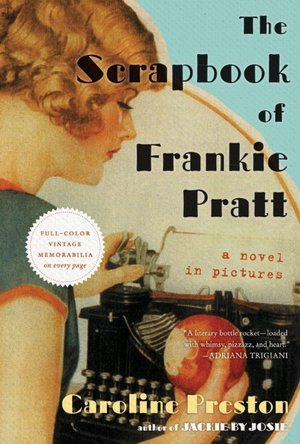
The Scrapbook of Frankie Pratt

The Scrapbook of Frankie Pratt. A Novel in Pictures. Full-Color Vintage Memorabilia On Every Page. Caroline Preston. 2011. HarperCollins. 240 pages.

The Girl Who Wants To Write
A Corona at last --
I've always wanted one!


How this story begins...
Scrapbook was a high school graduation present from mother.
I found Daddy's old Corona portable in the cellar. Mice had chewed the case but it still works.
I sent away for a free instruction booklet on how to type. I will type one page every day.

I don't think I've ever read a novel quite like this one. This 'scrapbook' tells the story of one young woman's life in the 1920s. It starts with her high school graduation and ends with her marriage...almost a decade later. It follows her from her small town to New York...and later Paris. It is a novel about family, friendship, love, and expectations. What does Frankie really want from life? Who does she want to be? What pressures does she face? What obstacles must she overcome...

Read The Scrapbook of Frankie Pratt
  • If you're a fan of historical fiction
  • If you're a fan of romance
  • If you're a fan of graphic novels
  • If you're looking for a good, quick read
The book trailer:


© 2012 Becky Laney of Becky's Book Reviews