Tampilkan postingan dengan label J Historical Fiction. Tampilkan semua postingan

Love From Your Friend, Hannah

Love From Your Friend, Hannah. Mindy Warshaw Skolsky. 1998. DK. 246 pages.

September 27, 1937
Dear Edward,
I got your name and address from a piece of paper I picked out of a box that says Pen Pals on a corner of my teacher's desk. I've never done this before and I don't know exactly what to say. So I'll just pretend I'm talking. 

Hannah Diamond is the heroine of Mindy Warshaw Skolsky's Love From Your Friend, Hannah, a historical novel set in Grand View, New York in the 1930s. What should you know about Hannah? Well, she's a young girl who is missing her best friend, Aggie, who moved away. She's part of her classroom's pen pal program, but, she has DRAWN THE NAME OF A BOY! And since the teacher saw her draw his name, she can't put that piece of paper back to draw another name--no matter how much she wants to. Since her first letter to him is a total disaster, she decides to focus her energy on writing letters to other people. Surely she'll be able to find someone who wants to be friends...

Here is the disastrous reply from Edward:
Dear Hannah,
I haven't got a mountain.
I have a cow.
Edward Winchley
P.S. I don't like to read books. I don't like to write letters either. My teacher made me put my name on that piece of paper.
So who does Hannah decide to write? Well, her grandma, her aunt Becky, her best friend Aggie, and the President of the United States--Franklin D. Roosevelt, for starters...

The novel is composed of her letters to other people, and the letters she receives from other people.

I loved this one. I just LOVED, LOVED, LOVED it. I loved Hannah so very, very much!!! And I ended up just LOVING Edward!!!!

Hannah on reading:
My favorite thing in the world to do is read a book. I read Heidi, which I love, then I read another book, then I read Heidi again. If I stopped reading Heidi in between the other books, I'd be able to read twice as many books, but the thing is I like reading Heidi. So I do. (93)
Edward on reading:
Guess what I read for the second book the teacher said I had to read? Don't laugh. I read that one that you said you like so much. Heidi. Even though Heidi was a girl, you said there was a boy in it too. Peter. But you know what boy I liked the best? He wasn't a boy anymore. He was a grandfather--Heidi's grandfather. I would like to have Heidi's grandfather for a grandfather. I don't think he would bother me about talking or reading--or anything. (161)
Hannah on writing a book report:
Now, about the book report. I can't write it for you because your teacher would know just like you couldn't do my arithmetic because then my teacher would know. Teachers are like mothers--they always know!
But I can help give you some tips...
Tell the name of the book. Tell the name of the author. The Wizard of Oz was written by L. Frank Baum. Tell if you think he's a good writer. Tell the names of all the characters in the book. Tell what they did. Tell where they went. Tell who they were looking for. Tell what they finally found. Tell how they treated one another. Tell about their feelings. Tell that you read some to your sister. Tell that she liked it. Read some to a friend. Then you can even tell that your friend liked it. By that time, Edward, you'll have so many lines your teacher will leave you alone. (113)
Hannah to her Aunt Becky:
About finding me a present to make up for missing the movie, that was very nice of you. My mother said it'll be a consolation prize. But you don't have to bother knitting me any clothes because I already have so many clothes you knitted me. I have sweaters, jackets, scarves, and mittens. I even still have the red-and-white stocking cap that matches Skippy's jacket and that I wore up to the top of the mountain the time we had the big snow. And when my one galosh came off and I couldn't find it under the snow, I walked down the mountain with your stocking cap on my foot.
One thing about your knitting, Aunt Becky, it never wears out, so you see, you don't really have to knit me anything new. (74)
Read Love From Your Friend, Hannah
  • If you like historical fiction set in the 1930s
  • If you're looking for a great book set during the Depression
  • If you're looking for a book-loving heroine
  • If you're looking for a book about friendship, about pen pals, about school
  • If you're looking for a family-friendly children's book 

© 2012 Becky Laney of Becky's Book Reviews

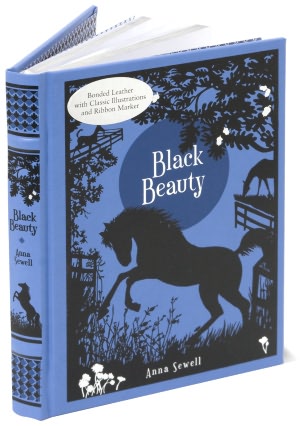
Black Beauty

Black Beauty. Anna Sewell. 1877. 245 pages.

The first place that I can well remember was a large pleasant meadow with a pond of clear water in it. Some shady trees leaned over it, and rushes and water-lilies grew at the deep end. Over the hedge on one side we looked into a plowed field, and on the other we looked over a gate at our master's house, which stood by the roadside; at the top of the meadow was a grove of fir trees, and at the bottom a running brook overhung by a steep bank.

Black Beauty is such a GREAT book. I really LOVED, LOVED, LOVED it. Which surprises me, I must admit since I generally don't like animal stories, and I'm even more reluctant to read horse books than dog books. But. I loved it. There was something timeless and wonderful about it. I can see why it became a classic, I hope it remains a beloved classic. 

Black Beauty is a great narrator, a great character. I really came to care for this horse right from the start. I had a feeling that life wouldn't always be so easy and gentle for him. I knew that they'd be dark days and nights ahead. And that proved true. As he is sold from one owner to another to another to another to another and so on. But he's so very, very, very good and understanding and wise. There were so many times he proved himself noble and worthy. And Black Beauty wasn't the only character I loved. I loved so many of the human characters too! John Manly, for example, comes to mind, as does James Howard, Joe Green, Jerry Barker, Farmer Grey, Farmer Thoroughgood, etc. Ginger's story is touching, as well, Ginger being one of many horses Black Beauty befriends.

Black Beauty also had a LOT to say about society, about virtues and vices. It had a LOT to say in regards to how animals should be treated--with respect, kindness, understanding, with dignity. It had a LOT to say about how humans should treat one another too. I was surprised at how deep this book was, how wise.

My favorite quotes:
“There is no religion without love, and people may talk as much as they like about their religion, but if it does not teach them to be good and kind to man and beast, it is all a sham.”
“Only ignorance! only ignorance! how can you talk about only ignorance? Don't you know that it is the worst thing in the world, next to wickedness? -- and which does the most mischief heaven only knows. If people can say, `Oh! I did not know, I did not mean any harm,' they think it is all right.”
“My doctrine is this, that if we see cruelty or wrong that we have the power to stop, and do nothing, we make ourselves sharers in the guilt.”
 “If a thing is right it can be done, and if it is wrong it can be done without; and a good man will find a way.”
“We call them dumb animals, and so they are, for they cannot tell us how they feel, but they do not suffer less because they have no words.” 

Read Black Beauty

    •    If you want to read one of the best children's books ever
    •    If you're a fan of animal stories, horse stories,
    •    If you enjoy historical fiction
    •    If you enjoy classics


© 2012 Becky Laney of Becky's Book Reviews
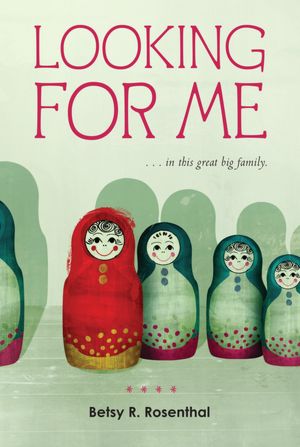
Looking for Me (MG)

Looking for Me. Betsy R. Rosenthal. 2012. Houghton Mifflin Harcourt. 176 pages.

Edith of No Special Place

I'm just plain Edith.
I'm number four, 
and should anyone care,
I'm eleven years old,
with curly black hair.

Squeezed / between / two / brothers,
Daniel and Ray,
lost in a crowd,
will I ever be more
than just plain Edith,
who's number four?

In my overcrowded family
I'm just another face.
I'm just plain Edith
of no special place.

I tend to assume that verse novels will be easy reads. And if by easy you just mean quick, then such is the case with Looking For Me. But there is emotional depth in this one. And the subject matter makes this one anything but easy--on the emotions. You might just be brought to tears. Of course, not every reader is so easily touched. But. Still it's best to be prepared.

Looking for Me is set in the 1930s during the Depression. It stars a very, very large Jewish family. Twelve children. Yes, twelve children. Edith has two older sisters and an older brother, but it is Edith who is the "little mother" to her younger siblings. She does take her family for granted, and at times, it is easy for Edith to be full of complaints. Which I suppose is only human. What Edith is missing is her own identity. Though others may think of her in certain ways, she's having a hard time deciding for herself just who she is, who she is beyond one of many daughters, beyond one of many sisters. Who is she apart from her role in the family? Does she have a voice? Does she have a choice?

I liked this one. I did. I'm not sure it is for every reader. I know that some people just don't like verse novels and can't understand why the stories are just not written in ordinary prose. And other readers do like verse novels. But even if you love verse novels, you might not like historical fiction. So. As I said, this one may not be for everyone, but I liked it well enough. It was definitely a difficult read--and it did bring me very, very close to tears.

Read Looking for Me
  • If you like historical verse novels
  • If you are looking for Jewish children's books
  • If you are looking for books set during the Depression
  • If you are looking for family books
  • If you don't mind really, really sad books

© 2012 Becky Laney of Becky's Book Reviews
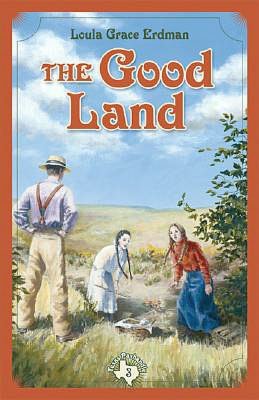
The Good Land (MG)

The Good Land. Loula Grace Erdman. 1959/2007. Bethlehem Books. 185 pages.

Carolyn Pierce, pulling the white linen cloth straight on the long dining-room table, thought that perhaps the worst problem a girl could have was for people to think she didn't have any at all. 

I really, really, really liked this one. It is the last in Loula Grace Erdman's historical trilogy set in the Texas Panhandle. It concludes the hint of romance between Katie and Bryan--from the second book. And Carolyn herself has an admirer! I definitely liked the lightness, the sweetness, the innocence of these three romances. (Melinda and Dennis met in the first book, were married in the second book, and had a boy and a girl by the third book.)

Carolyn is looking forward to going to high school in Amarillo, but that is a year away still when the novel opens. And while it may seem like 'nothing happens' in her own community--farming and ranching community--that isn't exactly true. They've got new stand-offish neighbors for one thing...

The Good Land may not be an adventurous novel with one thrill after another. (The big event is a prairie fire.) But it is a quiet-and-happy novel all the same. For people who love historical fiction, I think it holds enough interest.

Read The Good Land
  • If you love historical fiction set in Texas
  • If you love historical fiction with the lightest, sweetest touches of romance
  • If you enjoy coming-of-age stories 

© 2012 Becky Laney of Becky's Book Reviews
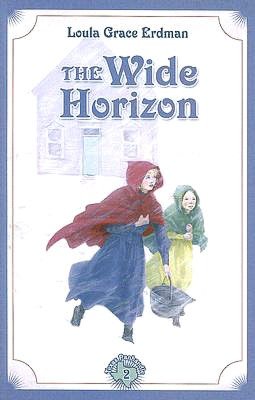
The Wide Horizon (MG)

The Wide Horizon. Loula Grace Erdman. 1956/2007. Bethlehem Books. 279 pages.

Katie Pierce was sure she must be the luckiest girl in the whole Panhandle of Texas. Luckier even than her older sister Melinda who, after five years of waiting, was going to marry Dennis Kennedy in June and go with him to live in Amarillo. Dennis was a real doctor now, driving around the town and the surrounding country, looking after sick folks. 

The Wide Horizon is my favorite, favorite, favorite book in Loula Grace Erdman's Texas Panhandle trilogy. (It might have something to do with the fact that I read it a dozen times as a child. I never got a chance to read the first or last book in this series.)

The narrator is Katie Pierce. She's excited because she's not only going to be singing at her sister's wedding, she'll be a bridesmaid too. And then that fall, she'll be going back to East Texas to live with her grandmother and attend a fancy academy for young ladies. But except for the singing, nothing quite goes like plan. For on the day of a wedding, a stranger-soon-not-to-be-a-stranger, Bryan Cartwright, interrupts bringing Dr. Kennedy urgent news. He must leave the wedding ceremony so he can see one of his patients. (The ceremony continues when he returns.) The other unexpected news of the summer is that Katie won't be going away after all. Her grandmother has fallen and broken her hip. Katie's mom will be going to nurse her back to health. Katie is needed right where she is. She'll need to take care of her brothers and younger sister. Katie will have to learn fast how to fill her mother's place on the farm! And it's quite a learning experience. The chapter on cooking beans was hilarious!

There were so many things I loved about this one!

Read The Wide Horizon
  • If you enjoy historical fiction, if you enjoy pioneer stories with a "Little House" feel
  • If you like stories with blizzards in them! (Katie finds herself responsible for caring for the children left behind at the school)
  • If you like coming-of-age stories
© 2012 Becky Laney of Becky's Book Reviews
The Wind Blows Free (MG)

The Wind Blows Free. Loula Grace Erdman. 1952/2006. Bethlehem Books. 271 pages.

Melinda Pierce sat on the green plush seat of the railroad car, listening to the mocking song the wheels of the train were singing. All the way up from East Texas they had said the same thing--"Going away. Going away. Going away," they wailed. And sometimes they added, "Poor Melinda. Poor, poor Melinda." 

In the 1950s, Loula Grace Erdman wrote a historical trilogy set in the Texas Panhandle. Each book was narrated by a Pierce sister. The first book by the oldest, Melinda, the second book by the middle sister, Katie, the third book by the youngest, Carolyn. The novels are not necessarily dependent on one another. The age of each heroine happens to be fifteen. So in some cases, quite a few years have gone by since the previous book. But of course, if you've got access to all three books, I'd recommend reading them in order!

After their father loses his store in a fire, the Pierce family resettles in the Texas Panhandle. It will require some adapting by each family member, of course, though the twins, Bert and Dick, seem to have it best of all the children. They just can't stop from saying 'oh golly' every time they enter a scene. But for Melinda, the move is doubly hard. She can't stop thinking that she was meant to stay in East Texas and attend the same ladies academy as her best friends. And the move west seems to have doubled her responsibilities. Melinda's "new life" doesn't get off to the best of starts. For while she's busy daydreaming, her youngest sister wanders away. And it takes hours and hours to find her. But the afternoon isn't a complete loss for there is one special young man, Dennis Kennedy, who helps Melinda search for her sister.

For those interested in pioneer stories, this will prove an interesting read. It isn't quite the same time period of the Little House books (it's set a few decades later), but the pioneer-feel is the same. I liked the first book, The Wind Blows Free. It is Melinda's coming-of-age story, readers see how she comes to accept the move and even come to love her new life. But it probably isn't the best of the trilogy.

Read The Wind Blows Free
  • If you are looking for more pioneer stories with a "Little House" feel
  • If you are looking for historical fiction set in Texas, in the Texas Panhandle
  • If you can get past dated (or outdated) references to Native Americans. (The book has Melinda recounting her great-grandmother's oh-so-scary experience with Indians as a child in Georgia. Melinda does seem worried that she might accidentally see an Indian, but everyone assures her that Indians are only to be found on reservations these days, so she need not worry about that.)

© 2012 Becky Laney of Becky's Book Reviews
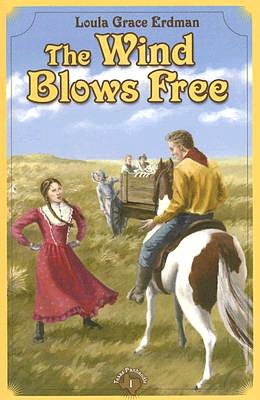
The Wild Book

The Wild Book. Margarita Engle. 2012. Harcourt. 144 pages.

I really do love Margarita Engle's verse novels set in Cuba. They almost always impress me. I love her poetry. I love the emotion behind the poems. The way she tells a story. The Wild Book is no exception. Set in Cuba in the early twentieth century, the heroine is based on Engle's grandmother. (I believe the novel is set around 1912?)

Josefa, or "Fefa", is our eleven year old, word-blind heroine. Her inability to read isn't from lack of focus or desire. More than anything, Fefa wants to be able to read and write. She's dyslexic at a time when no one really understood what that meant. Her mother gives her a present, a blank book, and tells her to practice, to take things slow, slow, slow. To keep trying. To not give up. And that is just what our heroine does. She writes--as slowly and carefully as she can--about her life. And it's an interesting time to be sure....since Cuba has won its independence from Spain and is being occupied by the United States...a time with many dangers and risks.

Guessing

I memorize all the little
guess-me riddles
in my schoolbook:


A bird has a little white
treasure chest
that everyone knows
how to open
but no one can close.
An egg!


Why does an unlucky shrimp
swim backwards?
To return to a time 
before he lost his luck!


I dream up new riddles
and write them all down
in my wild book.


My slow handwriting
with its careful swirls
and loops
has almost grown 
beautiful.


Am I patient?
What has changed?


When I write riddles,
the pen in my hand
feels mysterious.


I feel as powerful
as a girl in a fairy tale,
a brave girl who climbs
dangerous towers
and sips water
from magic wells.


Is this how it feels
to be smart? (46-47)

Read The Wild Book
  • If you're a fan of Margarita Engle
  • If you're a fan of verse novels
  • If you're looking for historical fiction set in Cuba
  • If you're looking for books with dyslexic characters

© 2012 Becky Laney of Becky's Book Reviews
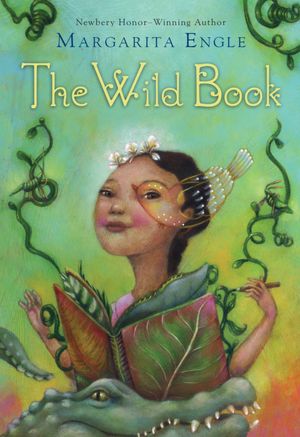
Rereading Moon Over Manifest

Moon Over Manifest. Clare Vanderpool. 2010. October 2010. Random House. 368 pages.
The movement of the train rocked me like a lullaby. I closed my eyes to the dusty countryside and imagined the sign I knew only from stories. The one just outside of town with big blue letters: MANIFEST: A TOWN WITH A RICH PAST AND A BRIGHT FUTURE. I thought about my daddy, Gideon Tucker. He does his best talking in stories, but in recent weeks, those had become few and far between. So on the occasion when he'd say to me, "Abilene, did I ever tell you 'bout the time...?" I'd get all quiet and listen real hard. Mostly he'd tell stories about Manifest, the town where he'd lived once upon a time.
His words drew pictures of brightly painted storefronts and bustling townsfolk. Hearing Gideon tell about it was like sucking on butterscotch. Smooth and sweet. And when he'd go back to not saying much, I'd try recalling what it tasted like. Maybe that was how I found comfort just then, even with him being so far away. By remembering the flavor of his words.
This was my third time to read Clare Vanderpool's historical novel, Moon Over Manifest. (I read it twice in 2010.) It is one of those books--in my opinion--that reads just as good, if not better, upon rereading. I never get tired of reading great books, of books that are among 'my favorite and best.' How could I ever know which books were truly my favorites unless I reread them again and again?! How could one reading of a great book ever, ever, ever be enough?!

Moon Over Manifest is a coming-of-age novel that is a historical mystery. The heroine, Abilene, is a young girl who's just arrived--in her own way, in her own style--in the town of Manifest. She's heard a few stories from her father--this is the town where he spent some of his childhood; but she knows she's just got a fraction of the stories. For there are many, many things she doesn't know about her father--past or present. Like, she doesn't really understand why her father is sending her away now. Yes, it's the depression. Yes, times are hard. Yes, life on the road is tough and unpredictable. But isn't being together worth it? She has certainly always thought so...

So the novel has a framework to it. There is the modern-day story with Abilene and her brand-new friends as they set about discovering clues to the past--letters, newspaper articles, special objects, etc. And the flash-back story that stars Jinx and Ned--two young men who are the best of friends. This is the story set during the first world war. This is the story that sees one of the young men going off to war and never coming back home. This is the story that shows the devastation of the 'Spanish' influenza. And that's just the beginning.

I loved so many things about Moon Over Manifest. The characterization. The storytelling. The writing. I definitely recommend this one...

Read Moon Over Manifest
  • If you're a fan of historical fiction
  • If you're looking for a book set in the 1930s
  • If you're looking for a book set during World War I
  • If you like storytelling
  • If you like historical mysteries
  • If you like coming-of-age stories

© 2012 Becky Laney of Becky's Book Reviews
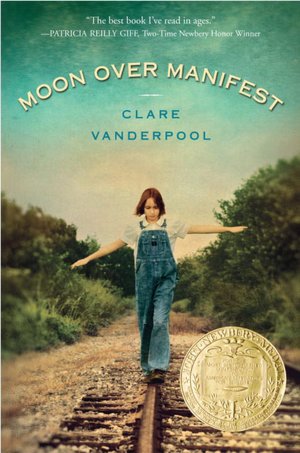
Dead End in Norvelt (MG)

Dead End in Norvelt. Jack Gantos. 2011. FSG. 352 pages.

School was finally out and I was standing on a picnic table in our backyard getting ready for a great summer vacation when my mother walked up to me and ruined it.

Chances are you'll like this one more than I did. Many people have, after all, it did win the Newbery this year. But. For me. Dead End in Norvelt wasn't that great a book. It wasn't that funny--at least I didn't find bloody noses and dead bodies to be all that hilarious. (Jack Gantos is NOT Richard Peck. And Dead End in Norvelt isn't A Long Way From Chicago or A Year Down Yonder.)

So, the hero of this novel, Jack Gantos, spends most of his summer vacation grounded. Put into a difficult place by both parents. His mother is keeping secret an incident involving Jack and his father's Japanese gun. As long as he stays on her good side, he may live to see the summer through. His father wants Jack to mow down his mother's corn fields. He plans to build a runway for a plane he just bought, and he's also working on a bomb shelter. Both projects, of course, just have to be right where his mother planted corn. His father doesn't want his mother to know about the plane, at least not yet. What's a boy to do?

So. Even before the family drama gets a chance to begin, his mother volunteers him to help out Miss Volker. He'll be writing/typing out obituaries for the newspaper. Each obituary features something about the life of the deceased--as is only right and proper--and something of a historical aside. Miss Volker has some strange, strange ideas on what historical facts, what historical figures, are relevant. The summer Jack's grounded, Miss Volker keeps him very, very, very busy. For SO MANY old people are dying this year. Miss Volker is the medical examiner, I believe, as well as the person writing the obituary, so she's always interested in who's going to be next. She seems a little too excited about her job...

I just didn't like the characters all that much. And the story, well, it just didn't thrill me. All the history lessons felt odd to me. It reminded me of Arsenic and Old Lace. How that film was supposed to be funny too.

Read Dead End in Norvelt
  • If you're a fan of Jack Gantos
  • If you're a fan of historical fiction set in the 1960s
  • If you're a fan of boy stories, boy humor
  • If you're reading Newbery books

© 2012 Becky Laney of Becky's Book Reviews

The Dollhouse Magic (MG)

The Dollhouse Magic. Yona Zeldis McDonough. Illustrated by Diane Palmisciano. 2000. Henry Holt. 86 pages.


Of all the streets in town, Lila and Jane Finney like Cheshire the very best. It's not because of the large old oaks whose spreading branches arch and nearly meet in the air, creating, in spring and summer, a most beguiling canopy overhead. Nor is it the well-tended flower beds, though these are filled with an ongoing seasonal display: tulips and daffodils in spring; roses, lilies, and marigolds in summer; asters and mums in the fall. It is not even because of the way the street ends in a lush, grassy circle, in the center of which is a handsomely carved old stone fountain. No, as attractive as all these things are, what Lila and Jane love most is a house on Cheshire Street, a three-story dollhouse with real clapboard siding and a cedar shingle roof that sits in Miss Amanda Whitcomb's front window. 

It all depends on your expectations. On what you want this one to be. Is that fair to a book? Well, I'm not sure it is. But it's one of those things that just happens naturally.

So The Dollhouse Magic is historical fiction for young readers. (I'm thinking second to fourth graders, though that all depends on reading levels of course.) The Dollhouse Magic is set during the Great Depression (1930s). Readers are introduced to two sisters, Lila and Jane, there are other siblings in the family, but Lila and Jane are the stars of this one. The book is about their "adventures" visiting Miss Amanda Whitcomb's dollhouse. It definitely IS an adventure for them. It's quite a thrill to be allowed to play with this dollhouse, to look at all the furniture and dolls. And the dollhouse is perhaps the main attraction at the beginning, but, the two do become very friendly with this old woman. They enjoy the treats she shares. Perhaps they don't realize just how special she is...until...well, you can guess what happens next.

What I didn't quite like about The Dollhouse Magic is how manipulative it is. Yes, I know that people die. I know that is natural. And yes, I know that people even die on Christmas Eve. But. Why oh why oh why does it have to happen in this happy little book...especially without any warning. It's not like we see Miss Whitcomb getting weak or sick. It just didn't seem fair or right.

I would have HATED this ending as a kid. I would have. I'm not all that fond of it as an adult. So my question for you is this... if a character is going to die in a book, do you want some foreshadowing or hinting along the way? Do you want or need time to prepare? Or do you like being surprised? Should sad books come with warnings?

© 2012 Becky Laney of Becky's Book Reviews
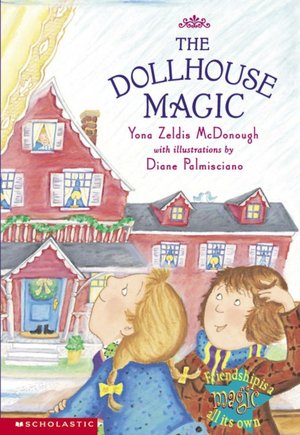
Inside Out & Back Again (MG)

Inside Out & Back Again. Thanhha Lai. 2011. HarperCollins. 262 pages.

1975: Year of the Cat
Today is Tet,
the first day
of the lunar calendar.


Every Tet
we eat sugary lotus seeds
and glutinous rice cakes.
We wear all new clothes,
even underneath.


Mother warns 
how we act today
foretells the whole year.


Everyone must smile
no matter how we feel.


No one can sweep,
for why sweep away hope?
No one can splash water,
for why splash away joy?

Inside Out & Back Again is a verse novel with wow-factor. If you like compelling novels with great narrators, then it's definitely a must-read. The heroine of the novel is a young girl named Ha. Her family faces a difficult choice, but they make the only choice they feel they can make at the time, they choose to leave war-torn Saigon. They could apply to go anywhere, they could try to find a sponsor in a number of countries, but they choose America. The family ends up in Alabama. For better or worse as Ha herself can tell you. For this sensitive, well-spoken young girl is made to feel ridiculous, stupid, and worthless. She's bullied by many of her classmates. There are days Ha feels that even a war-torn country would be a better place to live than Alabama. But the novel isn't without hope. For Ha's life isn't hopeless, good things can and do happen to her and her family.

I definitely recommend this one!!! I loved it SO MUCH MORE than Dead End in Norvelt. (Have you read both books, which one did you like better?!) I thought the poems were so well-written. Here's one called "Two More Papayas"

Two More Papayas


I see them first.
Two green thumbs
that will grow into
orange-yellow delights
smelling of summer.


Middle sweet
between a mango and a pear.


Soft as a yam
gliding down
after three easy,
thrilling chews. (21)

And one called "First Rule." It is one of many, many, many poems about Ha's experiences learning English/English grammar.

First Rule


Brother Quang says
add an s to nouns
to mean more than one
even if there's 
already an s
sitting there.


Glass
Glasses


All day
I practice
squeezing hisses
through my teeth.


Whoever invented 
English
must have loved
snakes. (118)

Read Inside Out & Back Again
  • If you are interested in Vietnam
  • If you are interested in historical novels
  • If you are interested in verse novels
  • If you are looking for heroines with heart
  • If you are looking to read this year's Newbery honor book
  • If you are looking for books about grieving and healing
  • If you are looking for family books
  • If you are looking for books with school settings and bullying

© 2012 Becky Laney of Becky's Book Reviews

Breaking Stalin's Nose (MG)

Breaking Stalin's Nose. Eugene Yelchin. 2011. Henry Holt. 160 pages.


My Dad is a hero and a Communist and, more than anything, I want to be like him. I can never be like Comrade Stalin, of course. He's our great Leader and Teacher. 

Sasha Zaichik, the young hero of Eugene Yelchin's historical novel, Breaking Stalin's Nose, makes quite an impression. When readers first meet him, he's confident--perhaps over-confident that communism is the best thing that ever, ever happened to Russia. He worships his father and Stalin. When readers first meet him, he's so thrilled to be on the verge of joining the Young Pioneers. But the night before the ceremony, the night before his big opportunity, his father is arrested. It seems their neighbors have turned him in. Just minutes after the arrest, they take advantage of the situation and move into his rooms, Sasha Zaichik is forced onto the streets. But even his father's arrest can't thoroughly shake his belief that Stalin is a good man, that his father is a good man, that there has been a great misunderstanding, that a day--or two, at most--will right all wrongs. But is that the case? The novel follows Sasha for just two days, but in those two days, everything seems to change.

I would definitely recommend this one! The story is definitely compelling. And the illustrations complemented the text well. I think they definitely added to this novel for young readers. It was refreshing to see historical fiction set in a different time and place. While I've read more than a few novels (for this age group) about the Cold War--from the American perspective--I've hardly read anything at all set in Russia during this time period--after World War II.

Read Breaking Stalin's Nose
  • If you enjoy historical novels for children
  • If you enjoy coming-of-age stories
  • If you want to read this year's Newbery Honor Book

© 2012 Becky Laney of Becky's Book Reviews

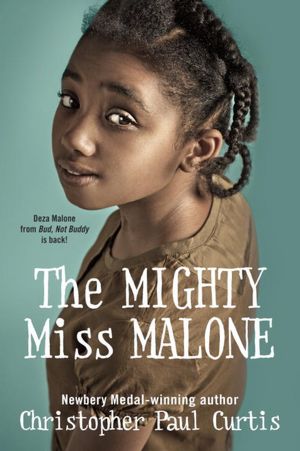
The Mighty Miss Malone (MG)

The Mighty Miss Malone. Christopher Paul Curtis. 2012. January 2012. Random House. 320 pages.

"Once upon a time...."
If I could get away with it, that's how I'd begin every essay I write.
Those are the four best words to use when you start telling about yourself because anything that begins that way always, always finishes with another four words, "...they lived happily everafter." 
And that's a good ending for any story.

The Mighty Miss Malone is in a way a companion novel to Bud, Not Buddy. It is set during the same time period, the late 1930s, during the Great Depression. Deza Malone does get a brief mention in Bud, Not Buddy--she's the young girl that gives Bud his first kiss. But. For the most part, The Mighty Miss Malone does stand alone.

The first chapter introduces readers to the Malone family. Deza takes great care in showcasing her family's strengths. She praises her brother's singing voice, noting how his singing wows just about everyone. And how his gift makes up for some of his faults. She also praises her mom--who works as a maid--and her father. The chapter also shows readers just how well Deza thinks of herself. She WANTS to be a writer so badly, she tries SO HARD to better herself, to learn as much as she can, but sometimes she tries a little too hard. Sometimes she just needs to be herself. As her teacher--who is retiring--tells her. She thinks Deza has great potential. That she could really do so much if she holds onto her dream. But she doesn't lie to Deza either, there will be tough times ahead.

As I mentioned, this novel is set during the Depression. And readers follow Deza on a tough, tough journey. The difficulties begin when her father and his friends go missing from their fishing trip. Days pass. No word. Bodies are found--but not his. And then--a miracle--of sorts. He's returned to them. Broken, bruised, changed in oh-so-many-ways, but alive. But his road to recovery won't be an easy one. And it may separate him--physically and emotionally--from those he loves best...

The Mighty Miss Malone is a bittersweet novel. It's a hope-filled novel, in my opinion. BUT. It is a novel that makes your heart ache. It just does. Some of the things that happen to the Malone family, well, they're crushing. But the Malones are resilient. And love and kisses and hope do seem to make a difference. I think the novel is very realistic and very well-written.

I would definitely recommend this one.


Read The Mighty Miss Malone
  • If you're a fan of Christopher Paul Curtis (he's written some GREAT books including Bud, Not Buddy and The Watsons Go To Birmingham, 1963)
  • If you're a fan of historical fiction
  • If you want to read about the Depression (Bud, Not Buddy and The Mighty Miss Malone are much more reader-friendly than some other titles I could name)
  • If you are interested in seeing poverty realistically portrayed (this novel felt very authentic)

© 2012 Becky Laney of Becky's Book Reviews
Bud, Not Buddy (MG)

Bud, Not Buddy. Christopher Paul Curtis. 1999. Random House. 245 pages.

Here we go again. We were all standing in line waiting for breakfast when one of the caseworkers came in and tap-tap-tapped down the line. 

Some novels have me at hello. Bud, Not Buddy wasn't like that--for me. It was a novel that had to grow on me. It was a quiet novel, in a way, that in the end proved most satisfying. Chapter by chapter I came to know Bud Caldwell better, and I started to care about him. By the end, the novel felt just right, so perfectly right. It is easy to see why this one won awards!!!

Bud, Not Buddy is set in the 1930s during the Depression. It is set in Flint, Michigan, for the most part. Though this novel will see Bud setting out on quite a journey. He's an orphan, just eleven, in search of one simple thing: a father, a family, he's never known, never hoped to know. So what led him to begin this journey? Well, he had to run away from his last placement in a foster home. The family had a son who was a few years older, and, this boy was cruel and mean, and his parents were stupid enough to believe their son an angel. Could he have gone back to the Home? Maybe, maybe not. But isn't this ending worth it?!

Read Bud, Not Buddy:
  • If you are looking for a historical read with plenty of heart and a good, satisfying ending
  • If you are looking for books set during the Depression that are realistic but not depressing
  • If you are looking to read a great Newbery winner with memorable characters

© 2012 Becky Laney of Becky's Book Reviews

Catherine, Called Birdy (MG)

Catherine, Called Birdy. Karen Cushman. 1994. HarperCollins. 212 pages.

September 12,
I am commanded to write an account of my days. I am bit by fleas and plagued by family. That is all there is to say.

This children's book set in 1290 (1291) won a Newbery Honor in 1995.

I wanted to like it more than I did. But. It just didn't quite work for me. Why? Well, I found the heroine, Catherine, annoying. I think readers are supposed to like her for her spunky independence. I think readers are supposed to admire her stubbornness and rebellious attitude.

I am NOT saying that Catherine's arranged marriage to a much, much older man, a man who disgusted her, was a good thing. I am not saying that I wanted her to just mindlessly say yes to the marriage just because it is what her father wanted for her. But I couldn't help finding Catherine just a tiny bit obnoxious. She was just so disrespectful, so disobedient, so strong-willed. It was just so draining to listen to her whine in each and every entry.

I'm also not sure how realistic the novel is. I'm not sure how many daughters were that educated. I'm also not sure how many girls kept diaries during that time period. I'm not saying that it was impossible, just that it was convenient. Speaking of being convenient, the ending, well that was extremely convenient. 

© 2011 Becky Laney of Becky's Book Reviews

Crow (MG/YA)

Crow. Barbara Wright. 2012. Random House. 304 pages.

The buzzard knew. He gave the first warning. I was playing in the backyard while my grandmother stirred the iron wash pot over the fire. She had gray hair and a bent back. Standing, she looked like the left-hand side of a Y. If she'd been able to straighten her back, she would have been taller than me, but since she couldn't, we were the same height. I called her Boo Nanny. She joked that I should call her Bent Granny. 

Crow by Barbara Wright is a book that I could gush on and on and on about. Because it is just that wonderful. Because the characterization was amazing. Because the narrative voice was so strong. Because the story was incredibly compelling. Because the drama was so intense. Because it is a story that NEEDS to be told. Because it is so heartbreaking. I mean this book just keeps tugging and tugging and tugging at your heart.

Set in 1898 in Wilmington, North Carolina, Crow is a dramatic story of the events leading up to Wilmington Massacre of 1898. (Had you heard of it before? I sure hadn't.) It is narrated by an eleven year old boy, Moses Thomas. He is close to his family--especially his grandmother, Boo Nanny, and his father, whom he admires. (His father is one of four black aldermen in Wilmington; there are ten aldermen all together. His father also works for the Wilmington Daily Record, "the only Negro daily in the South.") Family dynamics feature prominently in this novel. The Thomas family is not presented as perfect--far from it--the tensions between family members, especially between the father and Boo Nanny (his mother-in-law) are fierce. But never for a second, did I doubt how strong and resilient and loving this family could be. Their kindness for one another, their concern for one another, their joy of being together, well, it was something I loved seeing.

So Crow is a novel about race relations, racial tensions between the black and white communities in Wilmington, North Carolina. It is about MORE than that. It is a novel with depth, substance. It is a meaning-of-life kind of novel, I thought. But the subject matter can't be ignored.

One of the big issues of the book is how the editor of the Wilmington Daily Record wrote an editorial in response to something he'd read. A woman who was calling for action, encouraging men to lynch those blacks who dared (or allegedly dared) to be "too forward" with white women. He dared to look at the other side of the issue. What about those white men who forced themselves on black women? What about all the slave owners who became involved with their slaves--with or without consent. What about all the white men that fathered children with their slaves? If interracial involvement was wrong, immoral, dangerous, something to be avoided at any and all costs, shouldn't it work both ways? Much more about this can be found on this website, 1898 Wilmington Debunking the Myths. His editorial made him no friends--only enemies on both sides. For his editorial made the white community angry and aggressive and ready to attack. And the black community did not want to fight this battle--did not want to be the target.

Of course, that isn't the only factor in the novel. It isn't that simple. It's also about Republicans and Democrats. The constitution. The right to vote in elections. It's about justice and equality. Or should that be injustice and inequality? Crow is set during an election year, and politics is VERY important.

Crow isn't just an issue book though. I know it may sound like an "important" book, an "issue" book. But it's also a good book if you're looking for a compelling story with a strong narrative. If you enjoy coming of age stories. If you can appreciate good writing, good characterization, then you'll find something special in Crow.

"There is not one Constitution for white folks and a separate one for black folks. There is one Constitution for all Americans, no matter what the color of their skin, and it promises us the right to vote. This is what we are guaranteed, and we will settle for nothing less." (220) 

Read Crow
  • If you're looking for a great book; strong narrative voice, amazing characterization, memorable characters, great storytelling, great writing.
  • If you're looking for a book set in the American South from an African-American perspective
  • If you're looking for historical fiction set during this time period, 1890s
  • If you're looking for a book with heart and soul, depth and substance
  • If you're looking for historical fiction based on real events (though the Thomas family is fictional, a handful of characters were based on real people, Wright even used their own words.)

© 2012 Becky Laney of Becky's Book Reviews

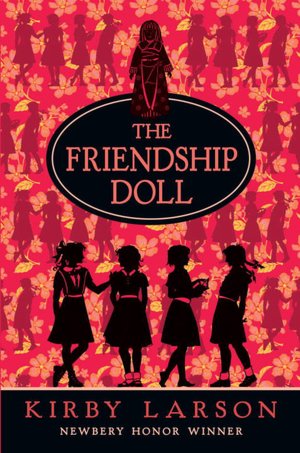
The Friendship Doll (MG)

The Friendship Doll. Kirby Larson. 2011. Random House. 208 pages.

The old doll-maker Tatsuhiko poured boiling water into the teapot with trembling hands and inhaled deeply. It was the last of his tea. He portioned out his breakfast rice and took a seat on a tatami mat. One of the blessings of growing old was that it did not take much to make his stomach content. And this morning his heart was so full that food seemed trivial.

One Japanese doll, Miss Kanagawa, sent in friendship in 1927, finds herself 'awakened' to the joys and sorrows of humanity in Kirby Larson's The Friendship Doll. Miss Kanagawa will be seen by many, many people in her travels. Especially at the beginning. When she's on display, when she's on tour, with the other friendship dolls. But can a doll touch others--touch human lives--if she herself can't be touched or played with?

The Friendship Doll is historical fiction with a touch of fantasy. (Readers will have to believe that a doll is capable of thinking and loving, etc.) The book is a series of stories, the main connection between the stories being the doll. Each story is set in its own time period. The first is set in 1927; the second in 1933; the third in 1937; the fourth covers a handful of years--1939 to 1941. (There is an epilogue that brings it closer to the present.)

For much of the novel Miss Kanagawa acts as a conscience for a handful of heroines. She does this without saying a word, of course. But Miss Kanagawa is more than just a scolding sort of doll. She becomes more 'alive' with each experience. She has always been observant, but she becomes wiser and more compassionate with each adventure. (More human, less doll-like).

Did I like this one? Yes!!! I definitely liked this one! It was interesting to see the different characters. I think I liked the 1933 and 1937 stories best of all. But I enjoyed all of them.

Read The Friendship Doll
  • If you like stories about dolls. Like Hitty, Her First Hundred Years. Like Miss Hickory. Like The Miraculous Journey of Edward Tulane. Like The Velveteen Rabbit.
  • If you like historical fiction set in the 1920s, 1930s, 1940s.
© 2012 Becky Laney of Becky's Book Reviews
Sylvia & Aki (MG)

Sylvia & Aki. Winifred Conkling. 2011. Random House. 160 pages.

Sylvia Mendez imagined her first day of third grade at Westminster School. She would use her freshly sharpened yellow pencils to write her name in cursive at the top of her worksheets. Her just-out-of-the-shoe-box black Mary Janes would glide across the polished linoleum of the hallway. At the end of the day, she would come home and her father would hug her and ask, "What did you learn today?" Then she would tell him about her teacher and her classmates and everything else.
Sylvia never imagined the one that that actually happened even before her first day of school: she was turned away.

This wonderful little book is based on true events. The main characters Sylvia Mendez and Aki Munemitsu are real people, the novel is based on their experiences during World War II.

Sylvia Mendez and her siblings have been told they cannot attend Westminster School because they are Mexican. They will need to attend the Mexican school in the county. Every Mexican--no matter where they live--are to go to the same school. To say that the two schools are anywhere close to equal would be a joke. But Sylvia's father takes his children's education VERY seriously. And the answer the school board gives him just isn't acceptable to him. What he sees is injustice, and he wants it to end. This fight for justice and equality will end in court. And the chapters focused on this trial are fascinating and disturbing. Those chapters alone would make this one a worthy read.

Aki Munemitsu and her family are one of many families of Japanese descent being deported from California after the bombing of Pearl Harbor. Her family is being sent to an internment camp in Arizona. The novel focuses on her experiences during those years.

So how do these two stories connect? Sylvia's father is leasing the farm from Aki's family. Sylvia is living in Aki's house, sleeping in her bedroom. Sylvia discovers Aki's doll, the doll she had to leave behind. Sylvia decides to go with her dad on one of his trips to the internment camp to pay rent. The two girls meet and decide to write one another.

I liked this one. I did. It was a wonderful little novel. I found it informative and fascinating. I learned so much while reading this one. I would definitely recommend it!

Favorite quotes:

After weeks of trying to convince people to sign his letter to the school board stating that Mexican and white children should go to school together, Sylvia's father had collected only eight signatures.
"What are you going to do with the letter?" Sylvia asked her father. She didn't think he would turn it in with so few names.
"I'm going to deliver it," he said. "It would be the right thing to do, even if no one else is willing to sign."
Sylvia rode with her father to the courthouse in Santa Ana on the day he dropped off the letter. Just a couple of blocks from the courthouse Sylvia saw a sign posted in a diner window: NO DOGS OR MEXICANS. The words made her feel sick. She was glad her father had spotted someone he knew on the street and hadn't noticed the sign.
That sign is talking about me, she thought. Dogs and Mexicans and me. The sign gnawed at Sylvia all afternoon and into the evening. Before drifting off to sleep that night, she stared at the ceiling and thought about how those four little words could hurt her so much. Then she recalled the hateful signs she had seen posted in town about the Japanese--hand-lettered signs reading JAPS GO HOME and government-printed notices telling them that they had to go away, to leave their houses, to go to the camps. This made her think of the girl she knew only from a photograph and the few scraps of her life that were left in what was now Sylvia's bedroom.
How did Aki feel when she saw those signs and read those posters? Sylvia wondered. Did Aki feel as hurt as I do now?
Sylvia looked over at her dolls. Carmencita leaned against the corner of one shelf, and Keiko stood in the corner of another.
Sylvia got out of bed and moved Keiko to the shelf next to Carmencita. She placed the dolls side by side, then stood back. How nice they look together--almost like sisters. She rested Keiko's pale china hand in Carmencita's brown cloth one. It seemed right and good to see them so close. I wonder if I will ever meet Aki. Could we ever be friends? (65-6)

Read Sylvia and Aki
  • If you like historical books written for children
  • If you like books written about this time period, the second world war
  • If you like books written about different cultures

© 2012 Becky Laney of Becky's Book Reviews

A Diamond in the Desert (MG)

A Diamond in the Desert. Kathryn Fitzmaurice. 2012. February 2012. Penguin. 256 pages.

Gila River was the place where my eight-year-old sister, Kimi, learned to go to the bathroom with a white cotton pillowcase pulled over her head. It was Mama who came up with the idea after a week of Kimi refusing to go.
The pillowcase, Mama said, took the place of the walls and doors that weren't in the latrine, and gave some privacy from others sitting close by trying to use the bathroom, too.
"No one will see you through it," Mama promised. "Yes, you'll be able to breathe. The air can get in."
Then she stood for three long minutes with the pillowcase over her own head to prove this.
"But what if it takes me more than three minutes in the latrine?" said Kimi.
Mama didn't answer. Instead, she pulled the pillowcase back over her head, sat down on the concrete floor, knees bent, shoulders curled in. Stayed there until the desert bats came out and the sky turned dark orange.
Kimi walked a circle around her, and you could see her deciding that this idea might work.
"Can you still breathe?"
And each time Kimi asked, Mama nodded. But I don't think Mama was taking all that time to show Kimi she could breathe. I think Mama was hiding the sadness she didn't want Kimi to see. (1-2)

I loved, loved, loved this book. It was such a GREAT book. I absolutely LOVED the writing--it was so beautiful, so practically perfect in every way.

I LOVED the characters. I did. As much as I enjoyed the main character--the narrator--a young boy named Tetsu, I just LOVED a minor character called Horse. Oh, how I loved him--I really felt for him. I felt for so many of the characters.

And the story itself was just wonderfully compelling. A Diamond in the Desert is set in a Japanese internment camp in Arizona during World War II. Tetsu's family is just one of many, many Japanese families forced to live in an internment camp after the bombing of Pearl Harbor in 1941.

At this particular camp, Gila River, Tetsu is one of many who joins a baseball team. Playing baseball is one of the ways they can still feel normal. Many, many things have changed since America entered the war, and they may not have many freedoms, many joys, in this camp. But baseball. Well, it encourages them, gives them hope.
Kyo's Papa brought a bat to the field one night. He picked up small rocks from the pile of cleared-away stones, then threw them one by one into the air like they were baseballs, hitting them as far as he could.
Kyo, Ben, and I, we started running after them.
We fielded those rocks like we were playing a World Series game, and we didn't care how many times we crashed into each other, or how dirty we got, or even about skinned elbows.
We didn't care about the mess hall closing for dinner or torn pants, or the hole in my shoe getting bigger.
We just wanted to make the greatest catches ever in the whole history of baseball. And that night, each of us did. (84)
But. This book is not just about boys playing baseball. It is SO MUCH MORE than that. This book has heart and soul. This book has depth. It is just so rich. It's beautiful, capturing your heart almost from the start. This is a book that completely wowed me.

Read A Diamond in the Desert
  • If you are looking for a great children's book; the quality of this one is amazing!
  • If you enjoy historical fiction
  • If you enjoy stories set during World War II
  • If you are looking to read more about the Japanese Internment camps in the U.S.
  • If you're a baseball fan
  • If you're NOT a baseball fan


© 2012 Becky Laney of Becky's Book Reviews