Tampilkan postingan dengan label J Adventure. Tampilkan semua postingan

Gods and Warriors (MG)

Gods and Warriors. Michelle Paver. 2012. Penguin. 320 pages.

The shaft of the arrow was black and fletched with crow feathers, but Hylas couldn't see the head because it was buried in his arm. 

 If you love action and adventure, you should really consider picking up Michelle Paver's new book, Gods and Warriors. This middle grade novel is set in ancient Greece during the Bronze Age. It stars a young boy, Hylas, who may or may not fulfill prophecy. But he isn't the only one readers will meet, two other (human) characters have a role to play: Telamon, the son of a chieftain and Hylas' best friend at the start of the novel, and Pirra, a young girl betrothed to Telamon against her wishes. The other star of this one is not human, she is a dolphin named Spirit.

I loved this one!!! I just loved it! I loved learning about Hylas, Telamon, and Pirra; but especially about Hylas and Pirra. It was very interesting to see this relationship develop. For they are thrown together in desperation. Both needing the other to survive, both having strengths and weaknesses, both uncertain about so many things. It was interesting to see how circumstances helped them come to trust one another, to become friends despite their differences. I also loved Spirit, the dolphin, who has a very significant role in the novel!

Action, adventure, and drama!!! This one has it all. I'd definitely recommend it!

Read Gods and Warriors
  • If you like action/adventure stories with light touches of fantasy and mythology
  • If you like plot-driven stories with fast pacing
  • If you are looking for a new series to begin

© 2012 Becky Laney of Becky's Book Reviews

Raider's Ransom (MG)

Raider's Ransom. Emily Diamand. 2009. Scholastic. 368 pages.

Cat puts up his nose to sniff the breath of wind barely filling the sail, and opens his small pink mouth to speak.

Knowing that I could never quite do justice to Raider's Ransom in my review, let me encourage you to just pick up this one and give it a try. I can't promise that you'll love it. But. You just may. It's that kind of book. The kind that actually delivers what it promises.
If you like action/adventure quests, I think you'll really, really appreciate Raider's Ransom. I think you'll enjoy the world Diamand created in the novel. I think there will be scenes that stay with you. I think you'll enjoy not only her world-building but her characterization and storytelling too.

The heroine of Raider's Ransom is a young girl, Lilly. She may be young, but she's a fisherman with a small (very small) boat of her own. And to the dismay of some, she's the owner of a cat, a sea cat. Not something to be taken lightly in her community of survivors. When she's at home, on land, she stays with her grandmother. But. Readers don't get a chance to see a more relaxed Lilly. For the novel opens with Lilly discovering the tragic truth: when she was out sailing her vessel, out fishing, the raiders (or should that be Raiders?) attacked her village. They were looking for something specific, the attack wasn't just random. I don't know if that makes things better or worse for Lilly since one of the things they were looking for was her cat. The Raiders kill Lilly's grandmother, and kidnap the Prime Minister's daughter. One might think that they kidnapped her for a nice ransom, but, they had something even more in mind. They return without their sought-after object, a particular jewel. And that's only the beginning. The problem? Well, I can't talk about this one without revealing too much. I think this is one of those that is best discovered all on your own. Trust me.

So. I won't go into details. But I will say we get another narrator. And that proves most interesting indeed! For I certainly wasn't expecting it at all.

This one went above and beyond all my expectations. It really did. It surprised me in a good way.

Read Raider's Ransom
  • If you like survival stories or starting over stories; 
  • If you like action/adventure stories with a quest, a journey, a mission
  • If you like action stories with battles and close escapes
  • If you like dystopias, novels set in the future with a society quite unlike our own
  • If you like good storytelling

© 2012 Becky Laney of Becky's Book Reviews

The Princess and Curdie (MG)

The Princess and Curdie. George MacDonald. 1883. 272 pages.

Curdie was the son of Peter the miner. He lived with his father and mother in a cottage built on a mountain, and he worked with his father inside the mountain.

The Princess and Curdie is the sequel to George MacDonald's The Princess and the Goblin. It is set several years after the events of the first book. And those are years that Curdie has spent away from Princess Irene--the young princess and the great-great-great-great-grandmother Irene. He hasn't completely forgotten the Princess and her father, the King. But he's a growing boy, a busy boy, and well, he needs a bit of a wake up call perhaps.

He has his own encounter with the old woman--the grandmother Irene. And it changes EVERYTHING. For she gives him a very unique gift--with the touch of his hand, he can know what a man or woman truly is: if they are truly human, or if there is a "beast" inside. If it sounds confusing, well, it is in a way. It definitely requires you to suspend your disbelief, to fully engage in this FANTASY world. This one excerpt will do a better job than I ever could in describing what this book is like, and what to expect from this adventure-fantasy-quest.
'Curdie,' she said in answer to his eyes, 'you have stood more than one trial already, and have stood them well: now I am going to put you to a harder. Do you think you are prepared for it?'
'How can I tell, ma'am,' he returned, 'seeing I do not know what it is, or what preparation it needs? Judge me yourself, ma'am.'
'It needs only trust and obedience,' answered the lady.
'I dare not say anything, ma'am. If you think me fit, command me.'
'It will hurt you terribly, Curdie, but that will be all; no real hurt but much good will come to you from it.'
Curdie made no answer but stood gazing with parted lips in the lady's face.
'Go and thrust both your hands into that fire,' she said quickly, almost hurriedly.
Curdie dared not stop to think. It was much too terrible to think about. He rushed to the fire, and thrust both of his hands right into the middle of the heap of flaming roses, and his arms halfway up to the elbows. And it did hurt! But he did not draw them back. He held the pain as if it were a thing that would kill him if he let it go—as indeed it would have done. He was in terrible fear lest it should conquer him.
But when it had risen to the pitch that he thought he could bear it no longer, it began to fall again, and went on growing less and less until by contrast with its former severity it had become rather pleasant. At last it ceased altogether, and Curdie thought his hands must be burned to cinders if not ashes, for he did not feel them at all. The princess told him to take them out and look at them. He did so, and found that all that was gone of them was the rough, hard skin; they were white and smooth like the princess's.
'Come to me,' she said.
He obeyed and saw, to his surprise, that her face looked as if she had been weeping.
'Oh, Princess! What is the matter?' he cried. 'Did I make a noise and vex you?'
'No, Curdie, she answered; 'but it was very bad.'
'Did you feel it too then?'
'Of course I did. But now it is over, and all is well. Would you like to know why I made You put your hands in the fire?' Curdie looked at them again—then said:
'To take the marks of the work off them and make them fit for the king's court, I suppose.'
'No, Curdie,' answered the princess, shaking her head, for she was not pleased with the answer. 'It would be a poor way of making your hands fit for the king's court to take off them signs of his service. There is a far greater difference on them than that. Do you feel none?'
'No, ma'am.'
'You will, though, by and by, when the time comes. But perhaps even then you might not know what had been given you, therefore I will tell you. Have you ever heard what some philosophers say—that men were all animals once?'
'No, ma'am.'
'It is of no consequence. But there is another thing that is of the greatest consequence—this: that all men, if they do not take care, go down the hill to the animals' country; that many men are actually, all their lives, going to be beasts. People knew it once, but it is long since they forgot it.'
'I am not surprised to hear it, ma'am, when I think of some of our miners.'
'Ah! But you must beware, Curdie, how you say of this man or that man that he is travelling beastward. There are not nearly so many going that way as at first sight you might think. When you met your father on the hill tonight, you stood and spoke together on the same spot; and although one of you was going up and the other coming down, at a little distance no one could have told which was bound in the one direction and which in the other. Just so two people may be at the same spot in manners and behaviour, and yet one may be getting better and the other worse, which is just the greatest of all differences that could possibly exist between them.'
'But ma'am,' said Curdie, 'where is the good of knowing that there is such a difference, if you can never know where it is?'
'Now, Curdie, you must mind exactly what words I use, because although the right words cannot do exactly what I want them to do, the wrong words will certainly do what I do not want them to do. I did not say you can never know. When there is a necessity for your knowing, when you have to do important business with this or that man, there is always a way of knowing enough to keep you from any great blunder. And as you will have important business to do by and by, and that with people of whom you yet know nothing, it will be necessary that you should have some better means than usual of learning the nature of them.
'Now listen. Since it is always what they do, whether in their minds or their bodies, that makes men go down to be less than men, that is, beasts, the change always comes first in their hands—and first of all in the inside hands, to which the outside ones are but as the gloves. They do not know it of course; for a beast does not know that he is a beast, and the nearer a man gets to being a beast the less he knows it. Neither can their best friends, or their worst enemies indeed, see any difference in their hands, for they see only the living gloves of them. But there are not a few who feel a vague something repulsive in the hand of a man who is growing a beast.
'Now here is what the rose-fire has done for you: it has made your hands so knowing and wise, it has brought your real hands so near the outside of your flesh gloves, that you will henceforth be able to know at once the hand of a man who is growing into a beast; nay, more—you will at once feel the foot of the beast he is growing, just as if there were no glove made like a man's hand between you and it.
'Hence of course it follows that you will be able often, and with further education in zoology, will be able always to tell, not only when a man is growing a beast, but what beast he is growing to, for you will know the foot—what it is and what beast's it is. According, then, to your knowledge of that beast will be your knowledge of the man you have to do with. Only there is one beautiful and awful thing about it, that if any one gifted with this perception once uses it for his own ends, it is taken from him, and then, not knowing that it is gone, he is in a far worse condition than before, for he trusts to what he has not got.'
'How dreadful!' Said Curdie. 'I must mind what I am about.'
'Yes, indeed, Curdie.'
'But may not one sometimes make a mistake without being able to help it?'
'Yes. But so long as he is not after his own ends, he will never make a serious mistake.'
'I suppose you want me, ma'am, to warn every one whose hand tells me that he is growing a beast—because, as you say, he does not know it himself.'
The princess smiled.
'Much good that would do, Curdie! I don't say there are no cases in which it would be of use, but they are very rare and peculiar cases, and if such come you will know them. To such a person there is in general no insult like the truth. He cannot endure it, not because he is growing a beast, but because he is ceasing to be a man. It is the dying man in him that it makes uncomfortable, and he trots, or creeps, or swims, or flutters out of its way—calls it a foolish feeling, a whim, an old wives' fable, a bit of priests' humbug, an effete superstition, and so on.'
'And is there no hope for him? Can nothing be done? It's so awful to think of going down, down, down like that!'
'Even when it's with his own will?'
'That's what seems to me to make it worst of all,' said Curdie.
'You are right,' answered the princess, nodding her head; 'but there is this amount of excuse to make for all such, remember—that they do not know what or how horrid their coming fate is. Many a lady, so delicate and nice that she can bear nothing coarser than the finest linen to touch her body, if she had a mirror that could show her the animal she is growing to, as it lies waiting within the fair skin and the fine linen and the silk and the jewels, would receive a shock that might possibly wake her up.'
'Why then, ma'am, shouldn't she have it?'
The princess held her peace.
'Come here, Lina,' she said after a long pause.
From somewhere behind Curdie, crept forward the same hideous animal which had fawned at his feet at the door, and which, without his knowing it, had followed him every step up the dove tower. She ran to the princess, and lay down flat at her feet, looking up at her with an expression so pitiful that in Curdie's heart it overcame all the ludicrousness of her horrible mass of incongruities. She had a very short body, and very long legs made like an elephant's, so that in lying down she kneeled with both pairs. Her tail, which dragged on the floor behind her, was twice as long and quite as thick as her body. Her head was something between that of a polar bear and a snake. Her eyes were dark green, with a yellow light in them. Her under teeth came up like a fringe of icicles, only very white, outside of her upper lip. Her throat looked as if the hair had been plucked off. It showed a skin white and smooth.
'Give Curdie a paw, Lina,' said the princess.
The creature rose, and, lifting a long foreleg, held up a great doglike paw to Curdie. He took it gently. But what a shudder, as of terrified delight, ran through him, when, instead of the paw of a dog, such as it seemed to his eyes, he clasped in his great mining fist the soft, neat little hand of a child! He took it in both of his, and held it as if he could not let it go. The green eyes stared at him with their yellow light, and the mouth was turned up toward him with its constant half grin; but here was the child's hand! If he could but pull the child out of the beast! His eyes sought the princess. She was watching him with evident satisfaction.
'Ma'am, here is a child's hand!' said Curdie.
'Your gift does more for you than it promised. It is yet better to perceive a hidden good than a hidden evil.'
Curdie sets out on his mission/quest to visit the city of Gwyntystorm--where the King and Princess Irene live. He doesn't know exactly why he's going--what the desired outcome is. But he trust that he's been sent for a reason, for a higher purpose and that is more than enough for him.

I will warn you that Irene, the heroine from The Princess and the Goblin, does not appear until the novel is halfway over. This isn't her story, this isn't her adventure. The adventure belongs more to Curdie and Lina than anyone else. 

This is more fantasy than fairy tale. There is definitely a struggle between good and evil. But I definitely liked it. At times I even loved it.


Read The Princess and Curdie
  • If you're a fan of George MacDonald
  • If you enjoy children's classics
  • If you enjoy children's fantasy
  • If you enjoy C.S. Lewis and J.R.R. Tolkien
  • If you enjoy adventurous fantasy novels with quests; the ongoing struggle between good and evil
© 2012 Becky Laney of Becky's Book Reviews

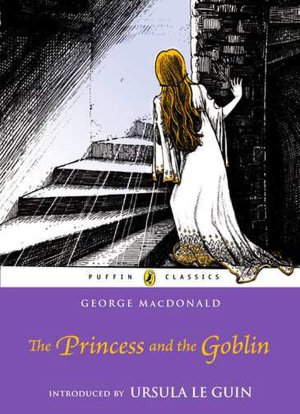
Princess and the Goblin (MG/YA)

The Princess and the Goblin. George MacDonald. 1872. 259 pages.

There was once a little princess whose father was king over a great country full of mountains and valleys. His palace was built upon one of the mountains, and was very grand and beautiful. The princess, whose name was Irene, was born there, but she was sent soon after her birth, because her mother was not very strong, to be brought up by country people in a large house, half castle, half farmhouse, on the side of another mountain, about half-way between its base and its peak. 

I just LOVED The Princess and the Goblin by George MacDonald. I'm not sure if I could say I loved it more than A Light Princess, but, I'm not sure I could say I loved it less either!!! George MacDonald is just pleasing me these days! I would definitely recommend this one to just about everyone!

It isn't the easiest novel in the world to describe, but, I'll do my best to do it justice. Princess Irene is the heroine. She lives a very, very sheltered life. She hardly ever goes outside the safety of the castle, but, when she does she often stumbles across Curdie, a young boy with hero-potential. If the castle and/or the kingdom is at risk, if their peace is threatened, they are unaware of it. But Curdie stumbles into danger and unveils a plot. GOBLINS. Goblins set on revenge, goblins who want war, goblins who want to overthrow the kingdom and perhaps steal the princess.

Here's the introduction to goblins:
Now in these subterranean caverns lived a strange race of beings, called by some gnomes, by some kobolds, by some goblins. There was a legend current in the country that at one time they lived above ground, and were very like other people. But for some reason or other, concerning which there were different legendary theories, the king had laid what they thought too severe taxes upon them, or had required observances of them they did not like, or had begun to treat them with more severity, in some way or other, and impose stricter laws; and the consequence was that they had all disappeared from the face of the country. According to the legend, however, instead of going to some other country, they had all taken refuge in the subterranean caverns, whence they never came out but at night, and then seldom showed themselves in any numbers, and never to many people at once. It was only in the least frequented and most difficult parts of the mountains that they were said to gather even at night in the open air. Those who had caught sight of any of them said that they had greatly altered in the course of generations; and no wonder, seeing they lived away from the sun, in cold and wet and dark places. They were now, not ordinarily ugly, but either absolutely hideous, or ludicrously grotesque both in face and form. There was no invention, they said, of the most lawless imagination expressed by pen or pencil, that could surpass the extravagance of their appearance. But I suspect those who said so had mistaken some of their animal companions for the goblins themselves—of which more by and by. The goblins themselves were not so far removed from the human as such a description would imply. And as they grew misshapen in body they had grown in knowledge and cleverness, and now were able to do things no mortal could see the possibility of. But as they grew in cunning, they grew in mischief, and their great delight was in every way they could think of to annoy the people who lived in the open-air storey above them. They had enough of affection left for each other to preserve them from being absolutely cruel for cruelty's sake to those that came in their way; but still they so heartily cherished the ancestral grudge against those who occupied their former possessions and especially against the descendants of the king who had caused their expulsion, that they sought every opportunity of tormenting them in ways that were as odd as their inventors; and although dwarfed and misshapen, they had strength equal to their cunning. In the process of time they had got a king and a government of their own, whose chief business, beyond their own simple affairs, was to devise trouble for their neighbours. It will now be pretty evident why the little princess had never seen the sky at night. They were much too afraid of the goblins to let her out of the house then, even in company with ever so many attendants; and they had good reason, as we shall see by and by.
 The story is essentially told through two perspectives that of Curdie, who overhears the plotting and later stumbles into the goblins' realm or kingdom--where he is imprisoned underground; and that of Princess Irene who is a lonely child who likes to explore the castle. One day she discovers her great-great-great-great-great grandmother. An old woman named Irene. The two become good friends, great friends, but the truth of the matter is that NO ONE believes in the existence of this old woman, no one believes that Irene has found a woman living up high in one of the now-forgotten castle rooms. Irene visits her a time or two, Irene listens carefully to every word, every instruction. And Irene is happy to be a believer even if it means her nurse laughs at her for her overactive imagination, even if it means her father chuckles at his little girl's dreams, even if it means Curdie calls her a fool.

What makes this book so wonderful is the writing. My description of it may not do it justice...at all...it may not sound like it would be a good story, a charming and delightful story. But MacDonald is such a great writer, that it just works. His writing reminds me of E. Nesbit, C.S. Lewis, J.R.R. Tolkien. For example, this story is sprinkled--liberally--with poems and songs. And the book does have this adventuresome spirit to it. It's just a lively, delightful story. I think it's a must for those that enjoy fairy tales and fantasy stories.

Favorite quotes:
All mothers are nice and good more or less, but Mrs. Peterson was nice and good all more and no less. (99)
But that is the way fear serves us: it always sides with the thing we are afraid of. (112)
It is when people do wrong things willfully that they are the more likely to do them again. (120)
The right old age means strength and beauty and mirth and courage and clear eyes and strong painless limbs. (129)
People must believe what they can, and those who believe more must not be hard upon those who believe less. (187)
Seeing is not believing--it is only seeing. (190)
"We are all very anxious to be understood, and it is very hard not to be. But there is one thing much more necessary."
"What is that, grandmother?"
"To understand other people."
"Yes, grandmother. I must be fair--for if I'm not fair to other people, I'm not worth being understood myself." (191)
 Read The Princess and the Goblin
  • If you love fantasy
  • If you love adventure
  • If you love fairy tales
  • If you love old-fashioned stories with lots of description and detail
  • If you love good storytelling 
© 2012 Becky Laney of Becky's Book Reviews

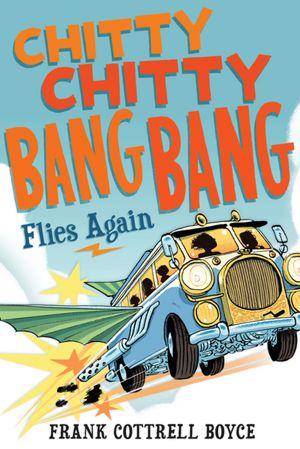
Chitty Chitty Bang Bang Flies Again (MG)

Chitty Chitty Bang Bang Flies Again. Frank Cottrell Boyce. 2012. Candlewick Press. 192 pages.

Most cars are just cars. Four wheels. An engine. Some seats. They take you to work. Or to school. They bring you home again. But some cars--just a few--are more than cars.
Some cars are different.
Some cars are amazing.
And the Tooting family's car was absolutely definitely not one of those.
Not amazing.
Not different.
It was so undifferent and so unamazing, in fact, that on the last day of the summer term when Lucy and Jem strolled out of the school gates and into the holidays, they walked straight past it. They didn't even notice it was there until their father popped his head out of the window and shouted, Lucy! Jem! Jump in! I'm giving you a lift!"

 Did I love Chitty Chitty Bang Bang Flies Again? Not really. Not love. It's not that kind of book, at least not for me. Did I like it? Yes! Not that I'd go so far as to say I really, really, really liked it. But. It was definitely a fun, silly, predictably over-the-top adventure story--the sort that's perfect for family read alouds. The family is just wonderfully silly. There's a clever Dad who loves to invent or tamper with things. A cleverer Mom who thinks its a great idea if Dad tampers with a camper van instead of the house. And three children: Jem, Lucy, and Little Harry. Each has their role to play in the novel, as you might expect, but don't expect brilliant, amazing characterization. These characters feel like humorous character sketches created for our amusement. Jem was fun because as he worked with his Dad, his confidence grew and grew. And soon we have our own hero in the making. Lucy was also fun. You might think you know what Lucy does in her black bedroom, but, trust me, you don't know the half of it. Little Harry, well, no one takes him as seriously as they should. And he does provide the twist at the end!

If you enjoy adventure-fantasies that are completely over-the-top, then Chitty Chitty Bang Bang Flies Again is just the novel for you. I do think it would make a good read aloud. I do think it's a fun, playful, enjoyable read.

Read Chitty Chitty Bang Bang Flies Again
  • If you enjoy fantasy-adventure novels 
  • If you love humorous adventure stories that aren't quite believable but are oh-so-fun in the moment
  • If you love family books
  • If you are looking for books with biracial characters
© 2012 Becky Laney of Becky's Book Reviews

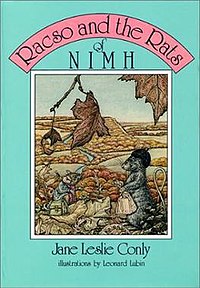
Rasco and the Rats of NIMH (MG)

Rasco and the Rats of NIMH. Jane Leslie Conly. 1986. HarperCollins. 280 pages.

Mrs. Frisby, a brown field mouse, hummed softly to herself as she folded her son Timothy's clothing: a sweater, a jacket, a red scarf. 

I really LOVED Mrs. Frisby and the Rats of NIMH. Which is why I was so excited to discover there was a sequel written by the author's daughter. I'm not sure I loved Rasco and the Rats of NIMH more than the original novel--it's been too many years since I first read it. But I definitely loved it. I just LOVE the world she has created. I loved the community--society--they've built in Thorn Valley.


This book just made me happy. It was purely satisfying. Granted, not everything that happens in this one is happy. There is a problem to be solved, a crisis to be averted. It will take a community working together--thinking together--to save Thorn Valley from a very human threat: progress. But. It was just a great little novel to spend an afternoon with.

Read Rasco and the Rats of NIMH
  • If you love animal fantasies
  • If you love stories starring mice and/or rats
  • If you love Mrs. Frisby and the Rats of NIMH
  • If you want to revisit the 80s--through a rat's perspective!
  • If you love adventure stories

© 2012 Becky Laney of Becky's Book Reviews

Dominic (MG)

Dominic. William Steig. 1972. FSG. 150 pages.

Dominic was a lively one, always up to something. One day, more restless than usual, he decided there wasn't enough going on in his own neighborhood to satisfy his need for adventure. He just had to get away. 
He owned an assortment of hats which he liked to wear, not for warmth or for shade or to shield him from rain, but for their various effects--rakish, dashing, solemn, or martial. He packed them, together with his precious piccolo and a few other things, in a large bandanna which he tied to the end of a stick so it could be carried easily over a shoulder.

Read this book. Trust me. It's worth it. It is such a delightful book. It's got adventure and charm. And it's full of quirky characters. And the writing, well, it's just SO enjoyable! So unique!

Dominic wanted more from life, so this dog sets out to have quite an adventure. He knows he made the right decision when he encounters an alligator-witch soon after leaving home. He does NOT want to have his fortune told to him, however. But he does choose to listen to her advice on taking the road to the left...

Who will he meet on the way? Who doesn't he meet?! This is quite a fun little story. A very quick read that just worked really well for me!

Read Dominic
  • If you love delightful children's books; quirky books with plenty of heart
  • If you love adventure stories
  • If you love animal-fantasies
  • If you love satisfying, feel-good stories
  • If you usually hate dog stories because you're worried that the dog will die
  • If you love books with happy endings

© 2012 Becky Laney of Becky's Book Reviews
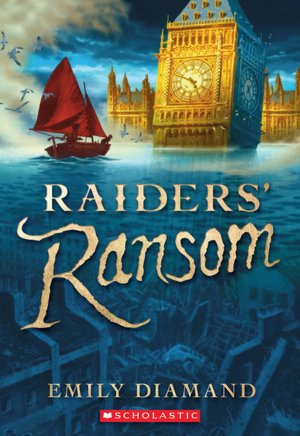
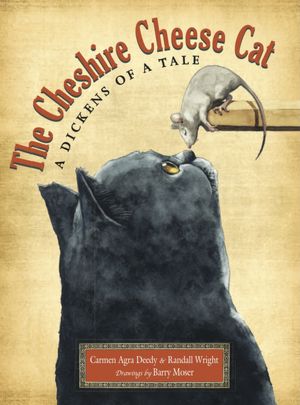
The Cheshire Cheese Cat: A Dickens of A Tale (MG)

The Cheshire Cheese Cat: A Dickens of a Tale. Carmen Agra Deedy and Randall Wright. Illustrated by Barry Moser. 2011. Peachtree Publishers. 228 pages. 

He was the best of Toms. He was the worst of toms. Fleet of foot, sleek and solitary, Skilley was a cat among cats. Or so he would have been, but for a secret he had carried since his early youth. A secret that caused him to live in hidden shame, avoiding even casual friendship lest anyone discover--

I loved this one. I just LOVED, LOVED, LOVED it. I loved Skilley the cat. I did. I loved his secret. I loved the mice in the book. I especially loved Pip. I loved the adventure in this book. How Skilley and the mice worked together to save Maldwyn. And I loved the occasional appearances of humans in their lives--particularly that of Charles Dickens and Wilkie Collins!

The Cheshire Cheese Cat: A Dickens of a Tale is a fun, charming children's book. It's such an enjoyable read. I definitely recommend it!!!

Read The Cheshire Cheese Cat: A Dickens of a Tale
  • If you like OR love cats
  • If you like stories starring mice
  • If you like animal fantasies
  • If you like funny, charming, cute children's books
  • If you like Charles Dickens
© 2012 Becky Laney of Becky's Book Reviews

The Secret History of Tom Trueheart (MG)

The Secret History of Tom Trueheart. Ian Beck. 2006. HarperCollins. 345 pages.

Once upon a time, long ago, near the Land of Stories, lived young Tom Trueheart. He was the youngest of the famous Trueheart family of adventurers. 

I liked this one. I even really liked this one! I'm just not sure it's love for me.

Tom is the youngest in a long line of adventurers. All of his older brothers have already had plenty of adventures in the Land of Stories. All of his older brothers regularly are sent on missions by the Story Bureau. But for Tom, well, he's always the one left behind. True he isn't quite old enough, he hasn't had 'the birthday' yet. (I believe it's 12?) But his birthday is fast approaching. All of his brothers have promised--their mother--to be back in time for Tom's birthday. That will give them several weeks at least to finish the stories and report everything so that it can be written down and enjoyed by one and all. But Tom's birthday comes and goes, and there is still no word on his brothers. What could have kept them in their stories so long? Should they be worried?!

In this first adventure, Tom Trueheart receives his FIRST assignment. Enter the Land of Stories and find out what happened to his older brothers--I believe there are six brothers. It's not an easy mission, for something must be seriously wrong to keep all six brothers away from home so long. Does the Trueheart family have an enemy?!

As I said, I really really liked this one. I thought it was fun. Perhaps not quite as fun and clever as A Tale Dark and Grimm by Adam Gidwitz. Perhaps not quite as funny as the first few books in  The Sisters Grimm series by Michael Buckley. But I think the book is a fun treat all the same.

© 2011 Becky Laney of Becky's Book Reviews

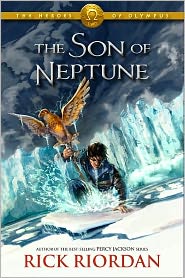
The Son of Neptune (Heroes of Olympus #2)

The Son of Neptune (Heroes of Olympus #2). Rick Riordan. 2011. Hyperion. 525 pages.

The snake-haired ladies were starting to annoy Percy. They should have died three days ago when he dropped a crate of bowling balls on them at the Napa Bargain Mart. They should have died two days ago when he ran over them with a police car in Martinez. They definitely should have died this morning when he cut off their heads in Tilden Park.  

I loved this book. I just LOVED, LOVED, LOVED this book. The Son of Neptune is the sequel to The Lost Hero. In the first book, a new hero, Jason Grace, is introduced to readers. He with two other newbies (Piper and Leo) are trying to reach the relative safety of the Camp Half Blood, the Greek camp. They arrive, of course, meet everyone--including some characters that we know and love--and are sent on a big, big, big mission of their own.

The second book stars Percy Jackson. He is trying to make his way to camp--but not the Greek camp that is his home away from home. No, when readers meet Percy he can't remember who he is--not really. Though he has a very strong but very vague memory of Annabeth. No, he's on his way to the Roman camp for demi-gods.

This book is all about Roman mythology. We see how the sons and daughters of Roman gods and goddesses do things. Is this Roman camp anything like Camp Half-Blood?! Percy becomes close with two campers in particular Frank and Hazel. In fact, the story is told in alternating perspectives of the three.

I really, really, really loved reading all three perspectives. I loved the new characters, the new mythologies, the new stories. I loved the action and adventure of it. I thought it was an exciting read. It was just a great, great book!

I would definitely recommend this one. But I'd start with the first book of the first series, The Lightning Thief, and go from there.

© 2011 Becky Laney of Becky's Book Reviews
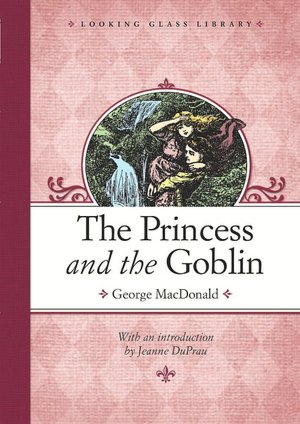
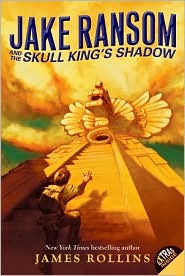
Jake Ransom and the Skull King's Shadow (MG)

Jake Ransom and the Skull King's Shadow. James Rollins. 2009. HarperCollins. 400 pages.

First sentence of prologue: The man fled down the steep slope of the jungle mountain.

By the second page of the prologue, I was hooked. He had me with: "Few people had ever set eyes on the giant mountain; even fewer had ever walked its slopes. And only one man knew its secret. He had learned the truth. The Mountain of Bones...was no mountain." Even before the real story of this one started, I just had to know what happened next.

First sentence chapter one: From his school desk, Jake Ransom willed the second hand on the wall clock to sweep away the final minutes of his sixth period history class.

This fantasy novel stars Jake Ransom and his sister, Kady. Their parents were great adventurers, great archaeologists, but they've been missing (and presumed dead) for just over three years. The novel opens with the two children being invited to a museum exhibit (in London) featuring some of their parents' last finds. Jake definitely wants to go; in fact, he feels he NEEDS to go. Kady, well, she isn't sure how she feels about it. She isn't sure if seeing the exhibit will make her feel better or worse about her parents deaths.

But this is no ordinary exhibit, it holds great excitement, great danger, for the two...it is the beginning of all their adventures...

I really, really enjoyed this fantasy novel. I thought it was very compelling, very exciting, very difficult to put down. It so easily could have been a premise-driven novel with underdeveloped characters, but, for me, I thought the characters were done nicely. It's still a plot-driven novel--very action-packed with danger and thrills--but the characters do matter.

© 2011 Becky Laney of Becky's Book Reviews