Tampilkan postingan dengan label adult romance. Tampilkan semua postingan

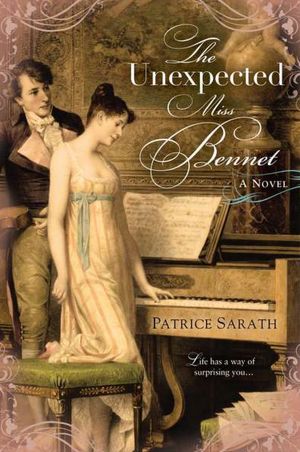
The Unexpected Miss Bennet

The Unexpected Miss Bennet. Patrice Sarath. 2011. Penguin. 304 pages.

It is a comforting belief among much of society, that a plain girl with a small fortune must have no more interest in matrimony than matrimony has in her. 

I loved this one. I just LOVED, LOVED, LOVED it. Set several years perhaps after the events of Pride and Prejudice, this novel shows the transformation of Mary Bennet. And the transformation is both believable and giddy-making. 

One day at a Lucas party, Mary is playing the piano. A young gentleman asks her to dance with him, before she can even start a reply someone cuts in and tells him that she is just Mary, she just plays the piano so others can dance, she isn't there to dance. Mary is puzzled at how this makes her feel. The fact that a man noticed her and wanted to dance with her, the fact that everyone assumed that Mary wouldn't want his attention or to dance, the fact that he took this answer and left to dance with someone else. Mary realizes that everyone has an idea of WHO Mary is and WHAT Mary does, and the ideas are very fixed. Mary wants to change that--one of the first things she does is to give up playing or practicing the piano. She starts taking more walks, she starts reflecting more on who she is and what she wants.

Around this same time, Jane starts worrying about her younger sister, Mary. She's already invited Kitty to spend some time with her and Bingley, so while she's not able to entertain her sister at this time, she's hoping that Elizabeth will be able to invite Mary to Pemberley.

At first, Mary accepts the invitation because she thinks Elizabeth is homesick and in need of one of her sisters, and she's happy to do her duty. But it doesn't take long for Mary to realize that Elizabeth is very happy indeed. For the first time, Mary sees what it would be like to live away from Mr. and Mrs. Bennet. For the first time, Mary reads a novel--or two or three. For the first time, Mary is happy. So when she gets a second opportunity with a certain gentleman who just happens to be an acquaintance of Mr. Darcy, she knows she'll dance. Of course, that's only a hint of what this one is about...

I enjoyed this one. I enjoyed what Sarath did with all the characters! Including Mr. and Mrs. Collins, Catherine de Bourgh and her daughter, Anne, etc. I definitely liked Mr. Aikens, the love interest of Mary, and I thought their courtship was just about right.

Read The Unexpected Miss Bennet
  • If you enjoy Jane Austen
  • If you love Pride and Prejudice
  • If you want Mary Bennet to have a happily ever after
  • If you like clean, historical romance 

© 2012 Becky Laney of Becky's Book Reviews

To Die For

To Die For: A Novel of Anne Boleyn. Sandra Byrd. 2011. Howard Books. 332 pages.

There are many ways to arrive at the Tower of London, though there are few ways out. 

Sandra Byrd's To Die For is an excellent historical romance novel. The narrator is Meg Wyatt, sister to Thomas Wyatt; she is best friends with Anne Boleyn. While I've read plenty of historical fiction set during this time period, it's rare for Anne Boleyn to be presented so sympathetically. I really came to care for both Meg and Anne. The novel begins in 1518 and ends soon after Anne's death. While the focus is definitely on life in the court of Henry VIII, one can also see it as a novel about the English Reformation. It highlights that while for some the Reformation was a convenient way for the King to get his own way all the time, that there were many, many people in England who were true Reformers, and genuinely believed in the Reformation and were eager to get their hands on an English Bible and read the Scriptures for themselves.

In addition to the "romance" between Anne Boleyn and Henry VIII (he is not presented sympathetically), the novel tells Meg's story. Her life being as good an example as any as to what a woman might expect from life at this time.

This historical romance was very enjoyable. Loved the writing, loved the characterization, loved the setting. It felt very personal, in a way, getting a glimpse of the close friendship between two women. For example, Meg being there for her during the birth of her daughter, Elizabeth, and for her two miscarriages. This was a very emotional novel for me, and I definitely wasn't expecting to feel such a strong connection with the heroines.

Read To Die For
  • If you are interested in the Tudors; in Henry VIII and his six wives
  • If you enjoy historical fiction/historical romance
© 2012 Becky Laney of Becky's Book Reviews

Captain Wentworth's Diary

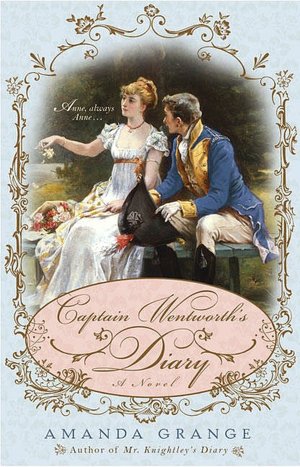
Captain Wentworth's Diary. Amanda Grange. 2007. Penguin. 304 pages.

Thursday 5 June
At last I am on my way to Somerset!

I do like Amanda Grange's series, and, sometimes I really LOVE her books. But I didn't quite love Captain Wentworth's Diary. Persuasion is one of my favorite books, and definitely my favorite Jane Austen novel. I think I prefer the story from Anne's perspective.

Captain Wentworth's diary begins before he first meets Anne Elliot. The book portrays the courtship of the two, the sweet proposal, the bitter disappointment after she changes her mind. The novel then jumps ahead to Wentworth's successful return. Readers then see the events and scenes of Persuasion through Wentworth's eyes, for the most part. Though it's just a fraction of the story.

I liked this one. I felt Grange got the characters right, for the most part. And it was interesting to see their first meeting. Their first conversation was something. But. It just wasn't as amazing as Austen's original.

Read Captain Wentworth's Diary
  • If you're a fan of Amanda Grange 
  • If you're a fan of Jane Austen
  • If you like historical romances told in diary format 

© 2012 Becky Laney of Becky's Book Reviews

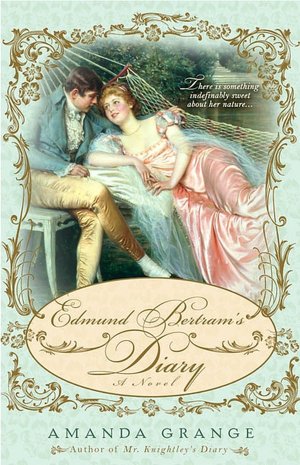
Edmund Bertram's Diary

Edmund Bertram's Diary. Amanda Grange. 2007/2008. Penguin. 304 pages.

Tuesday 8 July
Tom was eager to try out his new horse's paces and so we rode out together this morning, jumping walls and hedges, until he was satisfied he had made a good bargain.

I enjoyed Amanda Grange's retelling of Mansfield Park through the diary of Edmund Bertram. Edmund Bertram isn't always the wisest or brightest hero, but, his genuine friendship for Fanny Price is clear throughout the novel. The romance between Fanny Price and Edmund Bertram has always bothered me slightly. At least in Austen's novel, perhaps because Edmund Bertram's reformation or change of heart was so rushed, the "romance" being almost an afterthought thrown into the last few pages of the novel.

I thought Amanda Grange did a good job with in in this adaptation. For readers see that the love and affection is genuine, sincere. That Edmund does truly care for Fanny Price in that way, and that she feels exactly the same way about him. That he isn't marrying her out of duty or desperation, that Fanny is the one for him, and that he should have been miserable without her by his side.

Grange also did a good job with the other characters, particularly with Mary Crawford and Fanny Price. It would have perhaps been difficult to create a sympathetic Henry Crawford within this novel or adaptation. Though I would LOVE to see her try in another book--diary or not.

I love Amanda Grange's novels. I love her adaptations. While I've loved others a bit more, I still really enjoyed this one and would recommend it.

Read Edmund Bertram's Diary
  • If you liked Mansfield Park by Jane Austen OR even if you didn't particularly "like" it (the change of perspective might make it easier for you to enjoy)
  • If you are a fan of Jane Austen and/or Amanda Grange
  • If you like novels in diary format
  • If you like historical romance

© 2012 Becky Laney of Becky's Book Reviews

Mansfield Park Revisited

Mansfield Park Revisited. Joan Aiken. 1985/2005. Sourcebooks. 201 pages.

The sudden and unexpected death of Sir Thomas Bertram, while abroad engaged on business relating to his various properties in the West Indies, could be a cause of nothing but sorrow, dismay, and consternation to the baronet's friends in England.

I just LOVE, LOVE, LOVE Joan Aiken's Mansfield Park Revisited. I do. I love the characters, the story, and most of all the redemption. Susan Price, Fanny's younger sister, is the heroine of Joan Aiken's Mansfield Park Revisited. When the novel opens, Edmund and Fanny are on their way to the West Indies with their youngest child.
Susan's day are soon brightened up by the arrival of two people to the neighborhood. A sadder-but-wiser, Mary Crawford, whose health is in decline, and her ever-faithful brother, Henry. Though Susan never knew either Crawford personally, she can't help but be drawn to them--particularly Mary. She knows the two have history with those she loves best--Fanny, Edward, Tom, etc., but she can't help believing that these two have changed for the better through the years. These two are not seeking society in the neighborhood, just a quiet, peaceful place to simply be.

Aiken is great at relationships, and I definitely enjoyed seeing Susan interact with Mary Crawford, Henry Crawford, Tom Bertram, Lady Bertram, Julia Yates, etc. Readers don't know much about Susan from Austen's novel, but, Aiken did a great job giving her life in this sequel. While readers do know more about Mary and Henry Crawford from Austen's Mansfield Park, I can't help believing that Henry Crawford has been misunderstood until Aiken set the story straight. (I do LOVE Henry Crawford.) Mary's redemption was a beautiful thing as well. Aiken did not rewrite the past--or try to justify it exactly--but she has through circumstance after circumstance brought Mary to a reflective, repentant place and given her an opportunity to blossom into a sensitive, perceptive, loving person. 

I loved every page of this one. I loved spending time with these characters. It was just a wonderful treat.

My first review

Read Mansfield Park Revisited
  • If you love Mansfield Park, if you like Mansfield Park; even if you were bored with it, you may just find something to love in this historical romance
  • If you love Jane Austen
  • If you like historical romance

© 2012 Becky Laney of Becky's Book Reviews

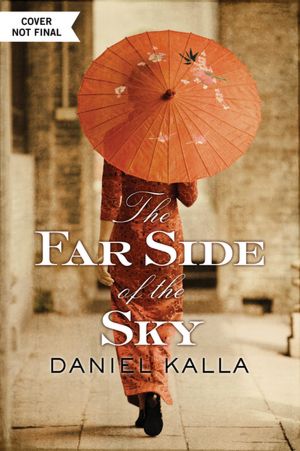
The Far Side of the Sky

The Far Side of the Sky. Daniel Kalla. 2012. Tom Doherty Associates. 464 pages.

The shadow still swayed over the pavement. Franz Adler tried to blink away the memory of his brother's dangling corpse and the silhouette it cast across the sidewalk, but the image looped over and over in his head.

The Far Side of the Sky provides a unique look at World War II. Franz Adler is able to flee Vienna, Austria, after Kristallnacht with his young daughter, Hannah, and his sister-in-law, Esther. Also accompanying them is an artist Ernst Muhler who fears persecution as well. (He joins them at the very last minute when his boyfriend decides to join the Nazis.) Their destination is Shanghai, one of the few places welcoming Jewish refugees.

The Far Side of the Sky is about the Jewish refugee community in Shanghai. Readers get glimpses of refugee life in 1938-9, 1940, 1941, 1942. (For example, the narrative might cover one or two months in a given year, and then jump to the next year.)

The main characters are:

Franz Adler, a Jewish doctor who divides his time between two hospitals in Shanghai, one of the hospitals is for Jewish refugees.

Soon Yi Mah (Sunny) a biracial (American/Chinese) nurse who divides her time between two hospitals. Her father was a doctor, and, she too has a gift for doctoring. But Dr. Reuben, one of the surgeons at the other hospital absolutely hates her and feels she doesn't know her place. She's intelligent, resourceful, courageous.

Of course there are dozens and dozens of minor characters of many ethnicities. 

The story was very fascinating. The author note reveals that much is based on fact, that he spent a great deal of time researching the Jewish refugee experience in Shanghai. And since this was the first I've heard of it, it was definitely fascinating to me. However. I was disappointed in the distant characters. Though readers follow the stories of these characters, I personally never felt connected with them. I knew enough about them to care about their fates, what happened next, etc. But I never felt like I knew them.

I'm not sure this book did a good job with relationships between characters either. For example, readers know that Franz is a father, but, except for two or three scenes, we don't really see Hannah interacting with Franz. We know that Hannah provides motivation for Franz--that his concern for Hannah moves the plot forward, but as for knowing Hannah, that just doesn't happen. We don't get the details of his personal life outside the hospital very often. Again, we know that Franz is taking care of Esther, his sister-in-law, but as for his sister-in-law having any character of her own, I just don't see it. There are a handful of scenes now and then. But even in those scenes she seems one-dimensional and just there. So many of the characters seem one-dimensional. The story itself is fascinating enough--the action, the danger, the uncertainty--but the characters just don't seem to match that.

The setting is unique and interesting. The story is fascinating and compelling. The characters, well, they disappointed me. But. I think there is enough to enjoy this one that I'd definitely still recommend it.

Read The Far Side of the Sky
  • If you are interested in the 1930s and 1940s, particularly the war years
  • If you are interested in reading books set in Shanghai, in China
  • If you are interested in reading a Jewish refugee book in a very different setting
  • If you are interested in doctors, nurses, surgeons, hospitals, etc. 

© 2012 Becky Laney of Becky's Book Reviews

Lorna Doone

Lorna Doone. R.D. Blackmore. 1869. 658 pages.

If anybody cares to read a simple tale told simply, I, John Ridd of the parish of Oare, in the county of Somerset, yeoman and churchwarden, have seen and had a share in some doings of this neighborhood, which I will try to set down in order, God sparing my life and memory. 

Lorna Doone was a classic that I almost almost loved. However, while I didn't "love" it, I certainly liked it. What I liked best about Lorna Doone was the romance. There were a few love scenes in this one--scenes where John Ridd is wooing Lorna Doone and professing his unending love for her. And those scenes work the best of any in the novel. But those scenes make up just a fraction of the novel, and to be honest I found most of this one to be boring. Now, I enjoy a rambling novel, I do. I love Anthony Trollope, Charles Dickens, and Wilkie Collins. I don't mind an author that takes his time telling a story--so long as the asides are written in a charming, entertaining way. But I didn't feel that was the case in Lorna Doone.

This historical romance is set in Exmoor (Devon and Somerset England) in the 17th Century) during the reigns of King Charles II and James II. John Ridd falls in love with Lorna Doone, but there are a few big obstacles standing in the way of their true love. First, she is a Doone. The Doone clan murdered John's father. John himself forgives this flaw easily since Lorna is so incredibly beautiful. The rest of his family may not be eager to welcome a woman from the outlaw clan. And the Doone clan, well, they are definitely not wanting to lose "their" Lorna to John Ridd. Second, Lorna's mysterious past. She doesn't remember a time before the Doones, but, that doesn't mean there wasn't one. And this big reveal causes some to believe that John Ridd isn't good enough--worthy enough-- for her. I will not say more than that. Third, the general times in which they lived: the political mess of the battle for the kingdom between James II and the Duke of Monmouth. John is mistakenly taken for a soldier on Monmouth's side--that is not the case, but it does pose some problems. Fourth, the pure evil that is Carver Doone.

Favorite scenes:
I would have leaped into the valley of the shadow of death (as described by the late John Bunyan), only to hear her call me "John"; though Apollyon were lurking there, and Despair should lock me in.
She stole across the silent grass; but I strode hotly after her; fear was all beyond me now, except the fear of losing her. I could not but behold her manner, as she went before me, all her grace, and lovely sweetness, and her sense of what she was.
She led me to her own rich bower, which I told of once before; and if in spring it were a sight, what was it in summer glory? But although my mind had notice of its fairness and its wonder, not a heed my heart took of it, neither dwelt it in my presence more than flowing water. All that in my presence dwelt, all that in my heart was felt, was the maiden moving gently, and afraid to look at me.
For now the power of my love was abiding on her, new to her, unknown to her; not a thing to speak about, nor even to think clearly; only just to feel and wonder, with a pain of sweetness. She could look at me no more, neither could she look away, with a studied manner—only to let fall her eyes, and blush, and be put out with me, and still more with herself.
I left her quite alone; though close, though tingling to have hold of her. Even her right hand was dropped and lay among the mosses. Neither did I try to steal one glimpse below her eyelids. Life and death to me were hanging on the first glance I should win; yet I let it be so.
After long or short—I know not, yet ere I was weary, ere I yet began to think or wish for any answer—Lorna slowly raised her eyelids, with a gleam of dew below them, and looked at me doubtfully. Any look with so much in it never met my gaze before.
"Darling, do you love me?" was all that I could say to her.
"Yes, I like you very much," she answered, with her eyes gone from me, and her dark hair falling over, so as not to show me things.
"But do you love me, Lorna, Lorna; do you love me more than all the world?"
"No, to be sure not. Now why should I?"
"In truth, I know not why you should. Only I hoped that you did, Lorna. Either love me not at all, or as I love you for ever."
"John I love you very much; and I would not grieve you. You are the bravest, and the kindest, and the simplest of all men—I mean of all people—I like you very much, Master Ridd, and I think of you almost every day."
"That will not do for me, Lorna. Not almost every day I think, but every instant of my life, of you. For you I would give up my home, my love of all the world beside, my duty to my dearest ones, for you I would give up my life, and hope of life beyond it. Do you love me so?"
"Not by any means," said Lorna; "no, I like you very much, when you do not talk so wildly; and I like to see you come as if you would fill our valley up, and I like to think that even Carver would be nothing in your hands—but as to liking you like that, what should make it likely? (214-5)
and
She made for awhile as if she dreamed not of the meaning of my gaze, but tried to speak of other things, faltering now and then, and mantling with a richer damask below her long eyelashes.
"This is not what I came to know," I whispered very softly, "you know what I am come to ask."
"If you are come on purpose to ask anything, why do you delay so?" She turned away very bravely, but I saw that her lips were trembling.
"I delay so long, because I fear; because my whole life hangs in balance on a single word; because what I have near me now may never more be near me after, though more than all the world, or than a thousand worlds, to me." As I spoke these words of passion in a low soft voice, Lorna trembled more and more; but she made no answer, neither yet looked up at me.
"I have loved you long and long," I pursued, being reckless now, "when you were a little child, as a boy I worshipped you: then when I saw you a comely girl, as a stripling I adored you: now that you are a full-grown maiden all the rest I do, and more—I love you more than tongue can tell, or heart can hold in silence. I have waited long and long; and though I am so far below you I can wait no longer; but must have my answer."
"You have been very faithful, John," she murmured to the fern and moss; "I suppose I must reward you."
"That will not do for me," I said; "I will not have reluctant liking, nor assent for pity's sake; which only means endurance. I must have all love, or none, I must have your heart of hearts; even as you have mine, Lorna."
While I spoke, she glanced up shyly through her fluttering lashes, to prolong my doubt one moment, for her own delicious pride. Then she opened wide upon me all the glorious depth and softness of her loving eyes, and flung both arms around my neck, and answered with her heart on mine,—
"Darling, you have won it all. I shall never be my own again. I am yours, my own one, for ever and for ever."
I am sure I know not what I did, or what I said thereafter, being overcome with transport by her words and at her gaze. Only one thing I remember, when she raised her bright lips to me, like a child, for me to kiss, such a smile of sweet temptation met me through her flowing hair, that I almost forgot my manners, giving her no time to breathe.
"That will do," said Lorna gently, but violently blushing; "for the present that will do, John. And now remember one thing, dear. All the kindness is to be on my side; and you are to be very distant, as behoves to a young maiden; except when I invite you. But you may kiss my hand, John; oh, yes, you may kiss my hand, you know. Ah to be sure! I had forgotten; how very stupid of me!"
For by this time I had taken one sweet hand and gazed on it, with the pride of all the world to think that such a lovely thing was mine; and then I slipped my little ring upon the wedding finger; and this time Lorna kept it, and looked with fondness on its beauty, and clung to me with a flood of tears.
"Every time you cry," said I, drawing her closer to me "I shall consider it an invitation not to be too distant. There now, none shall make you weep. Darling, you shall sigh no more, but live in peace and happiness, with me to guard and cherish you: and who shall dare to vex you?" But she drew a long sad sigh, and looked at the ground with the great tears rolling, and pressed one hand upon the trouble of her pure young breast.
"It can never, never be," she murmured to herself alone: "Who am I, to dream of it? Something in my heart tells me it can be so never, never." (261-2)
Isn't the "I love you more than tongue can tell, or heart can hold in silence" lovely?

Lorna Doone isn't just a romance, however; John Ridd has a few adventures all his own, including more than a few fight/battle scenes.

Read Lorna Doone
  • If you like classics
  • If you like historical romances

© 2012 Becky Laney of Becky's Book Reviews

The Lost Wife

The Lost Wife. Alyson Richman. 2011. Penguin. 352 pages.

New York City
2000
He dressed deliberately for the occasion, his suit pressed and his shoes shined. While shaving, he turned each cheek carefully to the mirror to ensure he hadn't missed a single whisker. 

The Lost Wife, at least at first glance, does not appear to be your traditional Holocaust novel. True, both hero and heroine are Jewish. True, over half of the novel is about what happened to them as a result of the Nazis invading their country and bringing the war all too close to home. But the way this story is told sets it a bit apart. For one, the framework of the story is NOT chronological. It begins and ends on the very same day, it begins with a reunion decades in the making. It begins with the grandfather of the groom meeting the grandmother of the bride and realizing their shared past. Their tragically-brief past.

Lenka, the heroine, perhaps has the greater task. Her narrative focuses on the past, for the most part. From her childhood to her teen years to her relationship with a young man, Josef. It covers the happy years, the anxious years, the joyful moments, the heartbreaking moments. Her time with Josef does seem brief--their marriage consisting of mere weeks when it was meant to last a lifetime. But war has a way of wrecking things.

Josef, the hero, balances out Lenka's story. His role in the novel is to relate to readers the post-war present. The focus is on his life in America. The war has cost him much, much, much more than just a wife. And so he does have to find a way to go on, and that includes marrying someone (another broken person forever changed and haunted by war, by what might have been, what should have been) and having a family. We catch glimpses of his home life through the decades. We see him as a husband, a father, a grandfather, a friend. He has never forgotten Lenka. Never.

Though the novel does jump around in time, I didn't find it confusing. I cared about both stories, though, I perhaps cared about hers a bit more. Both Josef and Lenka endured losses--great losses--and both witnessed things that were traumatic, I think her story is more compelling because of the duration. We see Lenka in two concentration camps. And we endure with Lenka. Or at least that is how it felt to me.

The way this story is told does take a good bit of suspense out of it, but I didn't mind because to me it was all about the journey. 

Read The Lost Wife
  • If you want to read an amazing, heartbreaking-yet-hopeful love story
  • If you are interested in reading about the Holocaust
  • If you are interested in Terezin and Auschwitz 
  • If you want a little art appreciation; this one has a definite art theme to it.
  • If you're looking for a compelling read that's almost impossible to put down

© 2012 Becky Laney of Becky's Book Reviews

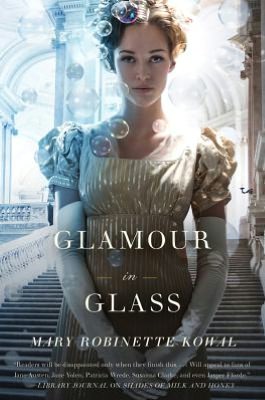
Glamour in Glass

Glamour in Glass. Mary Robinette Kowal. 2012. Tor. 336 pages.

Finding oneself a guest of honor only increases the presentiment of anxiety, should one be disposed to such feelings. Jane Vincent could not help but feel some measure of alarm upon hearing her name called by the Prince Regent, for though she fully expected to be escorted into dinner by someone other than her husband, she had not expected to accompany His Royal Highness and to be seated at his right hand.

 Sequel to Shades of Milk and Honey.

How much should you know going into a book? On the one hand, I had a difficult time getting into Glamour in Glass and just a hint of what it was REALLY about would have helped me so much. On the other hand, would knowing have taken out all the suspense and tension?

I enjoyed quite a few things about Glamour in Glass. I liked that it was a clean read, for the most part. It is so refreshing to read a honeymoon book that is not graphic in detail. I know that wouldn't be a plus for every reader, but, for me, it worked out well. And while this one is a 'honeymoon' book--meaning that everyone is waiting to see *when* the honeymoon would be over, when the couple would start fighting and getting annoyed with one another--it isn't just that though. If the real drama had not started, I might have given up on this one. If the book had just been about the tension between these two as business partners--as glamour partners--or if the book had just been about her getting annoyed with her husband for not sharing enough about his feelings, his memories, his doubts, his dreams, etc., then I would have probably given up on it.

S
P
O
I
L
E
R

But this book is set in Europe during a dangerous but exciting time (exciting to read about perhaps, not exactly exciting to live through). Napoleon's threatening return. And since this honeymoon just happens to be in his path--well, things get a bit exciting.

What I didn't exactly love in this one was all the talk about glamour, about *how* glamour worked, about the new experiments in glamour, about all the rules of glamour and what that meant for married women in particular. In some ways the talk was just too much, but in other ways even with all this talk, not enough was clearly said. For example, we're told that pregnant women could never, ever, ever, ever, ever, ever use glamour. Ever. But we're not told why really. We're not told how using glamour effects the unborn baby, and what risks would be involved if a woman dared to break the rules.

Read Glamour in Glass
  • If you enjoy Regency romances, particularly clean romance
  • If you enjoy historical fiction
  • If you enjoy fantasy (though this is more alternate history...what if magic/glamour were real)
  • If you enjoy Jane Austen or other classic authors

© 2012 Becky Laney of Becky's Book Reviews

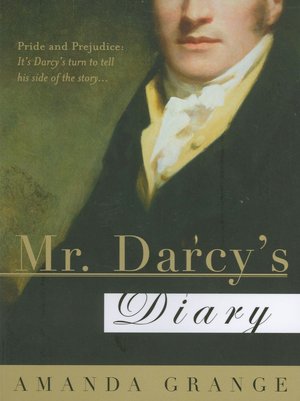
Mr. Darcy's Diary

Mr. Darcy's Diary. Amanda Grange. Sourcebooks. 2007. 320 pages.

Monday, 1st July
Have I done the right thing in establishing Georgiana in London, I wonder? The summer is proving to be very hot, and when I visited her this morning, I found her lacking her usual energy. I think I will send her to the coast for a holiday.

Do I have a favorite Amanda Grange novel? I'm not sure. I definitely LOVED this one, Mr. Darcy's Diary!!! The first Amanda Grange "diary" I read was Colonel Brandon's Diary.  I've since read Mr Knightley's Diary, Wickham's Diary, and Henry Tilney's Diary. (I'd love to make time to read Captain Wentworth's Diary and Edmund Bertram's Diary.)

I also JUST discovered there will be *new* Amanda Grange this year!!! Pride & Pyramids: Mr. Darcy in Egypt which releases in July. Also Dear Mr. Darcy: A Retelling of Pride and Prejudice which releases in August. I believe this gives an insider's look on Darcy's correspondence (as opposed to his diaries).

So I have high expectations for Amanda Grange. And she has never once disappointed me!!! She gets her Austen characters just right. True, I don't love *all* her books equally. But that is in part because I don't love  all of Jane Austen's characters equally. And since her characters are so very true-to-the-book and yet so vividly brought to life all at the same time, it is only natural that I have a similar reaction. At least to a certain degree. I will say this, she can make me appreciate characters that I have been indifferent to in the past. And she can make me appreciate even more characters that I already love and adore.

I loved many, many things about Mr. Darcy's Diary. The thing I love most is how it gives a new perspective on Darcy's relationship with Charles Bingley. In Jane Austen's Pride and Prejudice, readers don't really get a chance to know--really know--Charles Bingley all on his own. I loved reading the scenes with Charles Bingley and Mr. Darcy. You really do get an impression of him, a clearer impression of him. And even though Bingley is far, far from perfect, I can't help smiling at his scenes. As for Mr. Darcy, well, that's only to be expected that there's a high degree of charm to be found. True, he can be smug and arrogant, a bit blinded to reality, but, his transformation is all that much more wondrous as seen slowly through the course of these diary entries.

Read Mr. Darcy's Diary
  • If you love Jane Austen
  • If you love Austen's characters, if you want to spend more time with them, if you want newer, fresher perspectives on their inner lives
  • If you enjoy clean Austen retellings/adaptations
  • If you're a fan of Amanda Grange
  • If you love the book or movie, Pride and Prejudice

© 2012 Becky Laney of Becky's Book Reviews

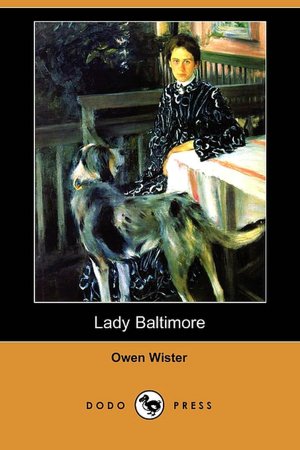
Lady Baltimore

Lady Baltimore. Owen Wister. 1906. 272 pages.

Like Adam, our first conspicuous ancestor, I must begin, and lay the blame upon a woman; I am glad to recognize that I differ from the father of my sex in no important particular, being as manlike as most of his sons. Therefore it is the woman, my Aunt Carola, who must bear the whole reproach of the folly which I shall forthwith confess to you, since she it was who put it into my head; and, as it was only to make Eve happy that her husband ever consented to eat the disastrous apple, so I, save to please my relative, had never aspired to become a Selected Salic Scion. I rejoice now that I did so, that I yielded to her temptation. Ours is a wide country, and most of us know but our own corner of it, while, thanks to my Aunt, I have been able to add another corner. This, among many other enlightenments of navel and education, do I owe her; she stands on the threshold of all that is to come; therefore I were lacking in deference did I pass her and her Scions by without due mention,—employing no English but such as fits a theme so stately. Although she never left the threshold, nor went to Kings Port with me, nor saw the boy, or the girl, or any part of what befell them, she knew quite well who the boy was. When I wrote her about him, she remembered one of his grandmothers whom she had visited during her own girlhood, long before the war, both in Kings Port and at the family plantation; and this old memory led her to express a kindly interest in him. How odd and far away that interest seems, now that it has been turned to cold displeasure! 

Last year I read Owen Wister's The Virginian and just loved it. Surprisingly loved it since I am NOT by any stretch of the imagination a fan of westerns. I knew I wanted to read a second book by Owen Wister this year, and I chose Lady Baltimore. Trying to compare Lady Baltimore and The Virginian would be a mistake because they are two entirely different books. Different styles, different genres.

Lady Baltimore is one part social commentary, one part romance, one part comedy. Set in South Carolina at the turn of the century, it dramatically and comically shows the tension of a town and ultimately a nation. What kind of tension? Well, tensions between generations, regions, races, and social classes.

(We see domineering aunts, for example, from both North and South, who want to "rule" over their nephews and nieces.) There is a generation (probably those fifty and up) who CANNOT for one minute put the Civil War behind them, and there is a generation (especially those in their twenties and late teens) who don't quite understand why it still has to be such a big deal, who'd like to see some change or progress at least. There's definitely still tension between North and South as well. Our narrator is a "Yankee" visiting a Southern town. His "Yankee" aunt warns him throughout not to be too influenced by the Southerners. She doesn't want him to like or love his travels too much. And the people of the town, especially the Somebodies of the town, find it hard to open up with any Yankee no matter how seemingly charming. From the narrator's viewpoint, readers see the tension between these two sides is still very much alive. Race. This is a BIG, BIG, BIG issue in the novel. For better or worse. On one hand, it could always allow for discussion and critical thinking on the part of the reader. But on the other hand, it might make some very uncomfortable in the process. Because whether the "racism" is just racism by condescension or racism by pure ugliness and hatred, it is still very present in this novel. (Let's just say that the narrator and almost every single person in the novel does NOT believe in equality of the races, and most certainly does not believe that they should have the right to vote or hold any sort of political office.) Social class also plays a role in this one. We've got the tension between people who once had money but now only have class, manners, and pride. And the newly rich who many view as having NO class, and low morals.

Augustus is our young narrator. He is visiting King's Port, South Carolina, at the request of his Aunt Carola. (She is, in fact, paying for his trip. He's supposed to be diligently researching genealogies and records to see if he can find the "proof" he needs to join her oh-so-exclusive club. Those men and women supposedly descended from royalty. Does he stay on task? What do you think?!) While there, he becomes entangled in a love affair. I'll clarify. He joins a gossip-y group of women who are focusing their attention on John Mayrant. Augustus first impression of John Mayrant is quite interesting. (It is readers' first impression as well.) He is ordering his own wedding cake, a Lady Baltimore cake. He is a bit anxious, a bit shy, a bit nervous. He even forgets to tell the woman at the counter, the baker, the date of his wedding, the date he needs the cake. He has to run back to tell her. Just as she is running to catch him to tell him he's forgotten. As you might guess, as you might imagine, readers see some potential here! The woman is Eliza La Heu. His fiance, Hortense Rieppe, is seen as less than desirable. She's not from the right kind of people, and if she has any money of her own, it's the wrong sort of money. She mixes with the wrong crowds, vacations the wrong places, and smokes! Is this young couple in love? Well, that's the big question, I suppose. And it seems to be everybody's business. Even with this newcomer Augustus getting in the middle of it. Should the engagement be broken? How should it be broken? When should it be broken? Would everyone be better off if it was broken?

So Lady Baltimore is just as much about the break up of a relationship (though readers may have a hard time believing it was love) as it is the start of a new relationship (Eliza and John).

There were many things I found enjoyable in Lady Baltimore. The writing was delightful-and-pleasant. For the most part. When the narrator is discussing race, well, it would be difficult to find charm in that...at all...but when the focus is on society, on social issues, on manners and traditions, courtship, etc., then it is a great way to spend a week. (When it comes to observation and characterization, think Austen or Trollope.)

I was always happy to pick this one back up, yet, there are not any scenes in particular that I can say I loved or loved, loved, loved. (I can still think of some from The Virginian.)


Read The Lady Baltimore
  • If you're looking for fiction set in the South at the turn of the century
  • If you're looking for a little social commentary with your romance
  • If you enjoy slower paced novels with some charm; this one is NOT full of action; it's mostly dialogue. So it might not be for everyone.
  • If you loved The Virginian, yet, are willing to give the author a chance to write a completely different kind of book.

© 2012 Becky Laney of Becky's Book Reviews

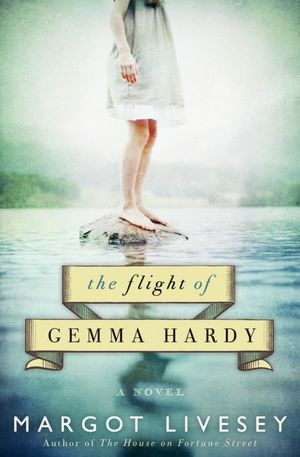
The Flight of Gemma Hardy

The Flight of Gemma Hardy. Margot Livesey. 2012. HarperCollins. 447 pages.

We did not go for a walk on the first day of the year. 

Have you read this "modern" retelling of Charlotte Bronte's Jane Eyre? If you have, I'd love to know what you thought of it.

Personally, I was disappointed with it. Don't get me wrong, I am glad I read it. It was a risk worth taking--at the library, at least! Because a book like this definitely has potential. The description alone is enough to make one curious. A modern Jane Eyre set in the 1960s in Scotland and Iceland.

I do think this will be a hit or miss book though. For me it was a miss mainly because I did NOT feel the romance or connection between Gemma Hardy and Mr. Sinclair, her employer.

I'll be honest, the book had a chance with me up until the big reveal. After the big reveal that was anything but big--you'll just have to trust me, it was a flop, but I don't want to spoil the book in my review--the book just continued to go downhill.

To focus on the positive, this book did start strong. The time spent with Gemma as a child--the time spent with her aunt and mean cousins, the time spent at boarding school, her making her first 'best' friend, etc--was time well spent. (Some time is also spent with her memories of her uncle and what little she knew about her parents.) Initially I thought the book would be one I'd like. I couldn't wait for her to meet her employer; I wanted the romance to begin. But I kept waiting and waiting and waiting, and I never once felt any magic between Gemma and Mr. Sinclair. The very thing that makes Jane Eyre oh-so-magical, oh-so-perfect, was missing in The Flight of Gemma Hardy. The romance is in the small things, the small details, the conversations between the two, the scenes between the two.

Gemma was NOT by any stretch of imagination as engaging as Jane. She just wasn't. I wasn't able to live in her head like I am able to live in Jane's. I wasn't able to make a strong, emotional attachment to Gemma. There were a couple of scenes that are convincing or believable in Jane Eyre that just AREN'T convincing or believable in The Flight of Gemma Hardy. 

I am a bit surprised that The Flight of Gemma Hardy didn't work for me. I wanted to like it at least as much as Jane Slayre by Sherri Browning Erwin. (I was very surprised at how much Jane Slayre worked for me. She got many things right in that adaptation!) 


Read The Flight of Gemma Hardy
  • If you are curious about how Jane Eyre can be modernized and adapted. You may not like it or love it, but sometimes you just have to see for yourself and give it a try. (I do recommend the library for this, or waiting until it's available in paperback).
  • If you are a forgiving fan of Jane Eyre who is oh-so-eager to have more Jane that you're willing to see the plot and characters played around with. For those who love, love, love, absolutely love the original and who are quick to find fault with movie adaptations of the novel, this might not be for you.
  • If you have never read Jane Eyre and are not likely to ever read Jane Eyre because you're intimidated because it's a classic, and yet you're hesitant to try Jane Slayre because you don't like paranormal fiction, but you're still wanting to know what Jane Eyre is all about...then this one may be worth your time.


© 2012 Becky Laney of Becky's Book Reviews

Henry Tilney's Diary

Henry Tilney's Diary. Amanda Grange. 2011. [December 2011] Penguin. 288 pages.

Wednesday 14 April 1790
No lessons, no tutors, no Latin, no Greek! How glad I am to be home again, with time to spend with my horses and dogs, my brother and sister, my mother and father. No more school for a month! Instead time to wander the abbey and roam the grounds.

Out of all the Austen heroes, Henry Tilney is probably my favorite and best. "Even more than Captain Wentworth?!" you might ask...
Well, that's like deciding between chocolate cake and chocolate cheesecake. Both are too good, too satisfying, too giddy-making to resist. Why would anyone ever even try...

So. Henry Tilney is a swoon-worthy Austen hero, in my opinion. His strength is his charm, his wit, his friendliness, his teasing-manner. He has a way of making people feel at ease, of making people feel good about themselves. I'm not even sure he has a weakness. He's not proud or anti-social. He's not insincere or deceitful or manipulative. He doesn't flirt with (other) women for fun or sport, or to make anyone jealous. He's not a bore. He's just a fun-loving, novel-loving, light-hearted guy. Who wouldn't want to spend time with him?!

So Henry Tilney's Diary presents his side--and to some extent his sister's side--of the story found in Jane Austen's Northanger Abbey. Half of the novel takes place before he travels to Bath and meets Catherine Morland. Readers learn about his relationship with his sister, Eleanor, his father and mother, and his older brother. (Does Amanda Grange try to redeem this bad-boy brother? Well, she gives just enough background that empathetic readers can put together an argument of sorts. But is it enough for your average reader? Well, I'm not sure that it is. Not that that matters horribly to the enjoyment of the novel.)

Henry Tilney spends MUCH of his time reading aloud to his sister, Eleanor. Both just LOVE Ann Radcliffe. Both just LOVE novels--gothic novels, in particular. Amanda Grange gives us multiple reading scenes. In fact, some might say too many reading-together scenes. On the one hand, she's definitely showing instead of telling. These two love to read. And since these two will in a period of time be meeting Catherine Morland, a heroine who LOVES, LOVES, LOVES to read, it makes a certain amount of sense to show that Henry Tilney is the oh-so-perfect match for her.  On the other hand, by quoting so much from a gothic novel--it appears to be the actual text of A Sicilian Romance--it just made this reader want to pick up the original.

The strength of this one is the background it provides readers. It doesn't add to Austen's Northanger Abbey, that is it doesn't improve it. As far as building his relationship with Catherine Morland. It doesn't make the story, the romance, 'better.' Tilney isn't more swoon-worthy or giddy-making in Grange's retelling. Neither is he less swoon-worthy. Where it adds to the enjoyment of Northanger Abbey is in its imagining of the close, caring relationship between brother and sister.

I liked this one. I definitely liked it. It made me want to spend time with the original. It even made me want to pick up an Ann Radcliffe novel.

Read Henry Tilney's Diary
  • If you're a fan of Amanda Grange
  • If you're a fan of Jane Austen
  • If you like historical romance
  • If you like gothic romance

© 2012 Becky Laney of Becky's Book Reviews

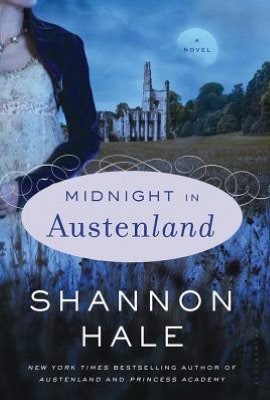
Midnight in Austenland

Midnight in Austenland. Shannon Hale. 2012. Bloomsbury. 288 pages.

No one who knew Charlotte Constance Kinder since her youth would suppose her born to be a heroine.

While I didn't love this one, I certainly liked it. Charlotte Kinder ("Mrs. Cordial") is a divorced mom of two. She's got a very successful business, but her husband left her for another woman, a woman named Justice, and her two children just don't appreciate her at all. Especially her fourteen-year-old daughter. Her personal life is anything but successful. She's even resorted to stalking her daughter's boyfriend because she doesn't trust him not to break her daughter's heart. So a two-week vacation could be just what she needs to gain a little perspective on her life...
And vacationing Austen style, well, it may change her life completely. By adding in some unexpected thrills. She expected a phony romance, a suitor all her own, a Regency gentleman, who knows all the ways to flatter a woman and make her feel giddy. But what she didn't expect was an all-too-real dead body in a secret room. What she didn't expect was to fall in all-too-real love with her "brother," the actor posing as her brother, that is!

I liked this one. It is equal parts romance and mystery. It is definitely seeking to pay tribute to Northanger Abbey. But this modern romance doesn't really have a proper Mr. Henry Tilney, a giddy-making, witty, oh-so-charming, just-can't-help-but-loving-him hero.

Read Midnight in Austenland
  • If you are a fan of Shannon Hale, particularly Austenland
  • If you are a fan of Jane Austen
  • If you are a fan of mysteries with a touch of romance
© 2012 Becky Laney of Becky's Book Reviews

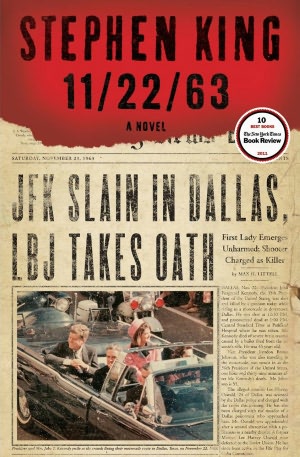
11/22/63

11/22/63. Stephen King. 2011. Scribner. 864 pages.

I have never been what you'd call a crying man. 

This is the second Stephen King novel I've read, and honestly I'm not sure how I'd compare the two I've read: Under the Dome and 11/22/63.

In Under the Dome, the violence is graphic, and the bad language proved problematic...for me. But, oh, the tension. It was such a compelling read. The pacing was amazing. It really was. It was a page-turner. I didn't like the characters particularly. I hated some of them--granted, some of them were evil incarnate. But I HAD TO KNOW what happened next. The premise, well, it was horrifying and intriguing all at the same time.

11/22/63 was in many ways a tamer novel. Less violence, less bad language (though it's still there to a certain degree. I am NOT claiming this is a clean read.) But. Well, how can I say this? For me at least it lacked tension. The premise of time travel should have been wowing me from start to finish. But it didn't. The only one that had to deal with consequences--in my opinion--was the narrator Jake Epping who time-traveled under the name George Amberson. So long as he remained alive and able to return to 2011 through the time-bubble, all other mistakes, all other consequences just didn't matter at all. Not really. Sure, they mattered to him. He, personally, felt those mistakes and had his struggles and doubts. But no one else could ever know the difference between worlds and alternate realities.

I'm not sure how I really felt about the narrator, Jake/George. On the one hand, his "good angel" intentions of playing God and determining the future and making the world a better place by preventing a handful of tragedies were understandable. I mean if you could prevent a death by time-travel, shouldn't you? Jake knew one person whose life was forever-changed one Halloween night when his drunken father came home and murdered his mother, his two brothers, and his sister. He was the only one to survive--and only because he was in the bathroom when the killing spree began. But he saw too much--much too much--and his father tried and failed to kill him too. So when Jake discovers this time-travel-bubble that automatically sends you to September 1958--almost a full month before this tragedy--he feels like he has to "fix" things. He has to test time-travel to see if he can change things...for the better.

But Jake/George's main goal, his main mission, is not to save his friend from a horrible childhood, but to save "the world" or "the nation" from experiencing the tragedy of Kennedy's assassination. A world where Kennedy continued his term (and was reelected) as president would have to be a better world than the one we now live in, right? Especially if you're tempted to think he was the best human, best leader, best politician, best president ever, ever, ever. To think that he was the best, smartest, wisest, kindest, strongest.

So that is his mission: prevent JFK from being assassinated. And, to a certain degree, King stays on task. But his idea of staying "on task" isn't the most thrilling way to spend your time. Readers are treated to five years (at least) of Jake/George living in the past. And part of the focus is on his mission, but much of it is not. Part of it is focused on his career as a teacher/mentor. Part of it is focused on his 'career' as a writer as he prepares a manuscript or two. Part of it--a large part of it--is focused on his finding his one, true love. Yes, a good part of 11/22/63 is a romance novel with focus on feelings, dancing, and secret weekend hideaways. 

While many elements of the story are nice enough in their own way, they don't necessarily add up to the most compelling, most page-turning read ever. I suppose there are several questions that could keep you reading--Will he successfully stop the assassination? (Hint: Don't look at the back cover.) Will he get to stay with his one, true love? Will he stay with her in the past? Or will she go with him to the future? Will this divorced teacher find his happily ever after? But none of those were quite enough for me.

The one area this novel worked for me--and I'm not even sure if this was the intent--was seeing this novel as a test for one man, to see how selfish or selfless one man could be. I can't say more without spoiling it. But essentially he's asked to choose between his own happiness and the greater good of the world at large.

I suppose this one also treats morality and ethics. Do two wrongs make a right? Does shooting a murderer before he's murdered anyone make your murder moral? I also saw this one as dealing with humans playing God. Here we have one man who is determined to remake the world into a "better" place. But what he didn't take into account is how tragedy shapes us. How tragedies and sorrows and struggles shape our character and develop us. I thought of so many scenes from Orson Scott Card's Worthing Saga.

Part of me really, really wishes that more time had been spent on alternate presents. The ending felt incredibly rushed and not completely believable.

Read 11/22/63
  • If you're interested in time travel, in science fiction
  • If you're interested in history, particularly history/culture of the late 1950s to early 1960s
  • If you're interested in politics and issues (Vietnam war, communism, civil rights, etc.) of the times
  • If you're interested in teachers and librarians (our hero and heroine)

© 2012 Becky Laney of Becky's Book Reviews

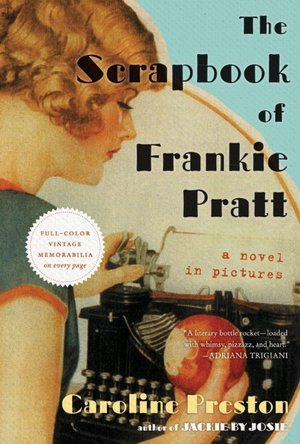
The Scrapbook of Frankie Pratt

The Scrapbook of Frankie Pratt. A Novel in Pictures. Full-Color Vintage Memorabilia On Every Page. Caroline Preston. 2011. HarperCollins. 240 pages.

The Girl Who Wants To Write
A Corona at last --
I've always wanted one!


How this story begins...
Scrapbook was a high school graduation present from mother.
I found Daddy's old Corona portable in the cellar. Mice had chewed the case but it still works.
I sent away for a free instruction booklet on how to type. I will type one page every day.

I don't think I've ever read a novel quite like this one. This 'scrapbook' tells the story of one young woman's life in the 1920s. It starts with her high school graduation and ends with her marriage...almost a decade later. It follows her from her small town to New York...and later Paris. It is a novel about family, friendship, love, and expectations. What does Frankie really want from life? Who does she want to be? What pressures does she face? What obstacles must she overcome...

Read The Scrapbook of Frankie Pratt
  • If you're a fan of historical fiction
  • If you're a fan of romance
  • If you're a fan of graphic novels
  • If you're looking for a good, quick read
The book trailer:


© 2012 Becky Laney of Becky's Book Reviews
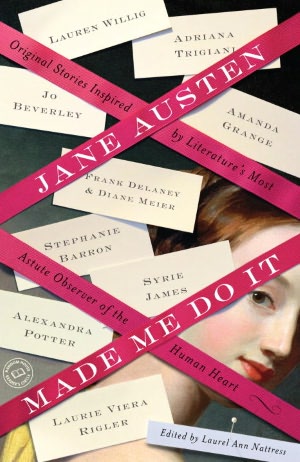
Jane Austen Made Me Do It

Jane Austen Made Me Do It. Edited By Laurel Ann Nattress. 2011. Random House. 464 pages. Featuring stories by Lauren Willig • Adriana Trigiani • Jo Beverley • Alexandra Potter • Laurie Viera Rigler • Frank Delaney & Diane Meier • Syrie James • Stephanie Barron • Amanda Grange • Pamela Aidan • Elizabeth Aston • Carrie Bebris • Diana Birchall • Monica Fairview • Janet Mullany • Jane Odiwe • Beth Pattillo • Myretta Robens • Jane Rubino and Caitlen Rubino-Bradway • Maya Slater • Margaret C. Sullivan • and Brenna Aubrey, the winner of a story contest hosted by the Republic of Pemberley

Jane Austen Made Me Do It is a great, great short story collection!!! While I didn't LOVE each and every story in this one--some I merely liked--there were so many good stories in it, that it is definitely worth reading!!! This isn't one of those short story collections with one or two or even three good stories worth your time. No, this collection has MANY good stories to offer Austen fans. Granted, your favorites may not be my favorites, and my favorites may not be your favorites. There's just enough diversity in these stories to please everyone.

The collection begins strong with Syrie James' Jane Austen's Nightmare. In this story, Jane awakes from a nightmare. She shares it, of course, with her dearest companion. In her dream almost all of her characters were confronting her, challenging her. None of her characters were happy with how they'd been presented. Of course, not all of her characters were complaining--Jane, Elizabeth, Darcy, and Bingley have more than enough reason to thank their creator. But for readers who dare to question the text, this story is playful and fun. Was Jane Austen 'too mean' to some of her characters? Should some of her bad boys have been reformed? Were some of her heroines too good to be true? Did any of her characters deserve different fates?

"Waiting," "Heard of You," and "Love Letter" relate to Persuasion, my favorite Austen novel. "Waiting" by Jane Odiwe stars Anne and Captain Wentworth. "Heard of You" by Margaret C. Sullivan imagines the love story of Wentworth's sister, Sophy, and Admiral Croft. And "Love Letter" by Brenna Aubrey uses a page ripped from a novel--the novel--to reunite a couple after years apart.

"Nothing Less Than Fairy-land"  by Monica Fairview imagines just how tricky a happy marriage might prove to be for Emma and Mr. Knightley. How her father won't be the easiest person in the world to live with, and how their happily ever after will have to be fought for day by day, not that it's not possible to love someone, to stay in love with someone. But that it takes work, it isn't effortless by any stretch of the imagination.

"Jane Austen and the Mistletoe Kiss" by Jo Beverley is a nice addition to this collection because for once it is the mother (the widow with grown daughters) who wins the guy...

"Mr. Bennet Meets His Match" by Amanda Grange imagines the courtship of Mr. and Mrs. Bennet.

"Jane Austen's Cat" by Diana Birchall is a quirky story, it's true, it may not be for everyone, but it's fun for cat lovers.

But my favorite story, my FAVORITE, FAVORITE, FAVORITE story from the collection is "Intolerable Stupidity" by Laurie Viera Rigler. This story is amazing, witty, clever, joyful. It is a true must read!!! Every page of has sparkle, has wit. It just begs to be read aloud so the giggles can be shared. In this story, the authors who have dared to touch the Creator's works have been put on trial. For any author who has dared to adapt, retell, modify, etc. This includes those who have filmed adaptations--the wet Mr. Darcy scene, for example. This includes those who have dared to add vampires, zombies, mummies, and sea monsters. To those who have dared enter the bedroom... This is very much a trial--and it features many characters from the novels! Including Mr. and Mrs. Darcy, of course. And Lady Catherine!!! Anyway, it's a true delight!!!! I just LOVED it.

© 2012 Becky Laney of Becky's Book Reviews

Beneath the Night Tree

Beneath the Night Tree by Nicole Baart. 2011. Tyndale. 400 pages.

Daniel hummed in his sleep. It was an unconscious song, a midnight lullaby, as familiar to me as the sigh of my own breath. I fell asleep at night listening to the cadence of his dreams, and when I woke in the morning, his quiet melody was a prelude to birdsong. 

Julia DeSmit, our heroine, is a single mom essentially raising two kids. One, Simon, is her half-brother, who's now ten. The second, Daniel, is her son. She isn't all on her own. She lives with her grandmother--the woman who raised her.

Julia DeSmit is used to feeling a bit lost, a bit of a wanderer--though that isn't really the case. She has strong family roots and unlike her mother she knows how to be responsible and loving and compassionate. Still, she has certain dreams of her own, a vague idea on how she wants her life to go. And so when one of those dreams seemingly starts to come true--a marriage proposal from Michael, her boyfriend, well, you'd think she'd be happier.

But Julia is learning that love isn't always simple, that some people are worth giving second chances. Parker, the biological father of her son, contacts her and wants to know if their one night together resulted in a child. And slowly--one or two words at a time--she catches him up on all he's been missing. But the decision to allow him into their son's life isn't automatic.

Parker may be just what Simon and Daniel need. A strong, smart father figure who gives his time and attention...he is the exact opposite of Michael in oh-so-many ways.

And that's just the beginning...

This is the third novel in the series and I enjoyed it very much. The first two are After the Leaves Fall and Summer Snow.

© 2011 Becky Laney of Becky's Book Reviews

The Doctor's Lady

The Doctor's Lady. Jody Hedlund. 2011. Bethany House. 384 pages.


"Indians!"

The Doctor's Lady is a fictionalized account of a missionary couple. The hero/heroine of this one is based on Marcus and Narcissa Whitman. Some of the names have been changed--though not all according to the author's note--but many of the events of the novel really happened.

The Doctor's Lady stars Priscilla White a woman oh-so-eager to be a missionary--to India--who is very reluctant to marry anyone. But when she learns that she won't be able to serve as a missionary--anywhere--if she remains single, she accepts the marriage proposal of a man in somewhat similar circumstances. Dr. Eli Ernest longs to return to Oregon territory to start a mission. But he's just learned that he'll need to take a wife. To answer God's call, these two may just have to wed...

The Doctor's Lady is a detailed accounting of the wagon trip west. For those that love pioneer stories, it's a good read! I definitely enjoyed it.

© 2011 Becky Laney of Becky's Book Reviews
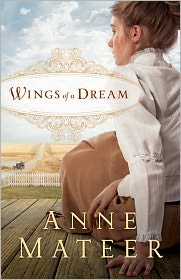
Wings of A Dream

Wings of a Dream. Anne Mateer. 2011. Bethany House. 319 pages.

"Rebekah Grace, if you don't hurry we'll be late for the lecture."

 I had my doubts about Wings of a Dream after reading the first chapter. But. I kept reading. And it didn't take me long to realize that I had judged it much, much too soon. This one hooked me. I ended up loving this sweet historical romance. Was it predictable? Yes. I won't lie. If you demand that your romance, your historical romance, be absolutely original and unpredictable...then you may be disappointed with this one. But if what you're looking for is a feel-good story, a satisfying read that is oh-so-cozy, then Wings of a Dream may just be for you.

This historical romance is set in Texas in 1918 during the last months of World War I. Our heroine, Rebekah Grace, travels to a small Texas town to care for her sick aunt. She arrives just in time--to meet the woman she barely knew, to make a difficult promise, to care for the children in her aunt's care. Rebekah is forced to grow up as she becomes the caregiver of four young children--one just a baby. (Their father is in the army, their mother is dead.)

There is plenty of drama in Wings of a Dream, and I must say that I liked it much more than I thought I would. I wouldn't say it is the best, best book I've ever read. But it was certainly enjoyable!

© 2011 Becky Laney of Becky's Book Reviews