Much Ado About Nothing. William Shakespeare. 1599.
This "review" assumes you know the story, I provide no summary. These are just my ever-rambling thoughts on rereading my most-favorite-and-best Shakespeare play.
Much Ado About Nothing has to be my favorite, favorite, favorite Shakespeare play! Why? Well, it's not exactly because of Claudio and Hero, the young couple whose courtship and marriage we're supposed to be celebrating merrily. Hero just isn't as interesting a character as her cousin, Beatrice. And Claudio, well, Claudio is a little clumsy. I'm thinking not only of the fact that he believes the worst of Hero and plays a big, big role in slandering her. Though, of course, that might be what first comes to mind. But I'm thinking of the fact that he's easily led by others. First, he's seeking approval for making the match, wanting--needing--to have everyone tell him and reassure him that Hero is a good woman, that the match would be a good one, that marriage would be good for him. So with the full approval of his superior (superior in many ways, I imagine) Don Pedro, the proposal is arranged. But while Claudio is waiting and waiting and anxiously waiting to hear her answer, he listens to Don John. And in an instant he thinks the worst of his friend. Yes, as Beatrice points out, Claudio controls his jealousy, his temper, being merely "civil." But still, you can tell he's struggling to keep composed. When he learns the truth, all is well again, crisis averted, normalcy returned. With sweet, sweet Hero by his side, Claudio becomes merry-hearted once again. But the next time Don John comes whispering in his ear, what happens again? Does he trust sweet, sweet Hero? No. Now, in his defense, Don John did arrange things cleverly. So it's not like Claudio is completely, completely, completely an idiot for falling into this trap. For acting on it in the way he did, perhaps. Could he have handled things better? Definitely! The non-wedding screaming match can be a little too much. With practically every character having a temper tantrum all at once. While we're considering different options, Margaret could have told someone, anyone--either privately or publicly--the truth. Granted, she was probably humiliated and ashamed and wanting to hide until the storm passed. But still. She knew the truth and did nothing. And I do have a hard time with Leonato and his response to the big reveal. Seriously. She's your own daughter and you automatically assume the worst and side with Claudio, Don Pedro, and Don John?! Really?! After knowing her all those years, those many many years. After knowing how sweet and gentle and passive and obedient and silent she is, was it in her nature at all to suddenly act so contrary? I mean it's one thing for other people to think the worst of you when they hear the worst of you, but for your very own father to act in such a way, it's just insane. No wonder Hero fainted away. I do have to admire Beatrice, not to mention the friar, for being the only logical, sane people at the affair. Both know that Hero is innocent, truly innocent, that it would be impossible for Hero to be other than what she is. Now, Beatrice is more fiery about defending her, but, I can't say that I exactly blame her. Because that's who Beatrice is.
I think I've talked about Hero and Claudio enough. The heart of Much Ado About Nothing, of course, is Beatrice and Benedick. I love, love, love this couple. In fact, I'm not sure three loves are enough. They are truly one of my most favorite couples ever. I just LOVE and ADORE them both. I love their scenes. I love their banter. I love what they bring out in each other. Their scenes definitely are giddy-making. And their scenes are so joyful, so wonderfully and perfectly joyful. I love how their "courtship" is carried out. And part of me wishes to know more about their past. Because I have suspicions that she's loved him a good long time. When she says, "I know thee of old." I believe her, I do. I think she's had her heart broken by him, whether he knew it or not, in the past. And I think she's doing the best she can to hide how she *really* feels about him.
Much Ado About Nothing is a play that I just LOVE. It's one of those practically-perfect-in-every-way plays. And while I don't love each and every scene, some being quite tedious, if you've read it or watched it, you can probably guess which scenes, but it is because of the foolish obnoxious characters or "guards" or "watchmen" that Hero's reputation is saved, so I can't complain too much.
© 2012 Becky Laney of Becky's Book Reviews
Tampilkan postingan dengan label Shakespeare. Tampilkan semua postingan
Much Ado About Nothing
Diposting oleh
Unknown
on Jumat, 15 Juni 2012
Label:
1599,
Books reviewed in 2012,
plays,
Shakespeare
/
Othello
Diposting oleh
Unknown
on Kamis, 14 Juni 2012
Label:
1603,
Books reviewed in 2012,
classics,
plays,
Shakespeare
/
Othello. William Shakespeare. 1603.
This "review" assumes you know the story. I did not include any summary. Just my rambling thoughts on rereading this play.
I happened to read Othello and Much Ado About Nothing within days of each other. Both plays are rereads for me, though, I admit it has been years since I read them. One thing that I do get each time I read or reread Shakespeare are how similar his plays are to one another. In the case of Othello and Much Ado About Nothing, both are about jealousy--though in different degrees, of course. Claudio jumps to the conclusion that Hero is unfaithful, unchaste, unworthy, etc. Claudio at least sees with his own eyes a woman he believes to be Hero caught in the act with another man. Othello, well, a mere flimsy suggestion will do to enrage him to the point where he kills. Of course, the difference between the two plays are night and day. Much Ado About Nothing has mirth, joy, pure delight, pure comedy. It has two strong, very strong, romances at its core. Yes, it has its dark moments, it has moody moments, moments where it could technically go either way--tragedy or comedy. One other small observation, Iago is jealous in Othello, obviously, every scene he's in drips with it really. But I think Much Ado About Nothing has that as well, though we don't know the details exactly, Don John being only newly "reconciled" to his brother Don Pedro. It doesn't take anyone very long to realize that this reconciliation is a joke. Don John's hostility barely being concealed at any moment in time. Iago definitely, definitely has the better lines and makes for a much better villain.
I am going to try to focus more on Othello now, I promise. So what did I think of Othello? Well, what I noticed this time was how doomed Desdemona was practically from the start. Which dared me to consider was her father right for half a minute? Was the marriage unwise on her part? Was marrying Othello the biggest mistake of her life? Did it *have* to be? Or did it just turn out that way? Lest you think that I have any liking for her father, I don't, I really don't. Because he plants a seed in Iago's favor. He TELLS his new son-in-law, DON'T TRUST MY DAUGHTER FOR HALF A MINUTE. She's not trustworthy. She's not worthy. She's a liar. She may outwardly show obedience for a time, but don't let that fool you. Of course, he didn't exactly use those words, but the point is the same. He told Othello that Desdemona would do wrong by him, that it was just a matter of time before he came to regret this marriage. He slanders his daughter, ruthlessly slanders his daughter. And though Othello doesn't seem to take this "advice" seriously, you add in another person with the same kind of "advice," the same kind of "wisdom," the same kind of lies, and Desdemona is doomed. Because Othello apparently trusts Iago five-hundred-times more than he'll ever trust his wife. Why? Well, who knows?! Iago's just good like that. Iago can say anything, do anything, and people just love and adore him and think he's telling the truth. Of course, the audience isn't fooled because Iago is transparent with them. (Much like Don John is transparent to the audience.) So is there a person Iago doesn't manipulate in this play? I'm not sure there is. Iago uses his wife to help condemn Desdemona (much like Margaret unknowingly helps condemn her mistress, Hero). By giving her husband the handkerchief, by giving it to him without considering what he'll use it for, she sets in place her mistresses downfall. For Iago will plant the handkerchief on Cassio and use it as the primary evidence against Desdemona. Though if Emilia hadn't given him that, he'd have been resourceful in coming up with plan B, I'm sure.
So how do I feel about Othello as a person? Well, I can't really sympathize with him. Maybe I should, maybe I'm supposed to, but, really I just see him as a jerk with a quick temper, a dark, dark, very-dark violent side. I see him quick in his judgments. I see him as a person with big, big issues. Why doesn't he trust his wife? Is there any reason in the world that she has given him? Other than the fact that she doesn't volunteer forth the information, hey, by the way, dear, I lost the handkerchief you gave me when we first started courting, could you help me find it? I don't know where it's gotten to. Othello just strikes me as too moody, too mentally-unstable to ever be a good husband.
But I don't doubt for a second that Desdemona *did* love him in spite of his flaws. And if she could talk beyond the grave, I'm sure she'd forgive him for killing her. She's just like that. She doesn't care how Othello treats her really, he's just her everything.
So while I don't necessarily "like" any of the characters in this one, well, like in the traditional sense. I do think it's got some great, great lines in it. I think Shakespeare did a good job with it.
© 2012 Becky Laney of Becky's Book Reviews
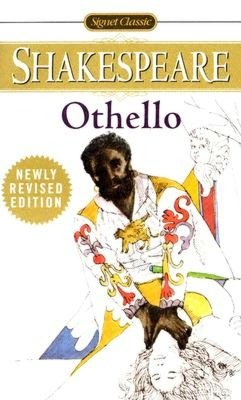
This "review" assumes you know the story. I did not include any summary. Just my rambling thoughts on rereading this play.
I happened to read Othello and Much Ado About Nothing within days of each other. Both plays are rereads for me, though, I admit it has been years since I read them. One thing that I do get each time I read or reread Shakespeare are how similar his plays are to one another. In the case of Othello and Much Ado About Nothing, both are about jealousy--though in different degrees, of course. Claudio jumps to the conclusion that Hero is unfaithful, unchaste, unworthy, etc. Claudio at least sees with his own eyes a woman he believes to be Hero caught in the act with another man. Othello, well, a mere flimsy suggestion will do to enrage him to the point where he kills. Of course, the difference between the two plays are night and day. Much Ado About Nothing has mirth, joy, pure delight, pure comedy. It has two strong, very strong, romances at its core. Yes, it has its dark moments, it has moody moments, moments where it could technically go either way--tragedy or comedy. One other small observation, Iago is jealous in Othello, obviously, every scene he's in drips with it really. But I think Much Ado About Nothing has that as well, though we don't know the details exactly, Don John being only newly "reconciled" to his brother Don Pedro. It doesn't take anyone very long to realize that this reconciliation is a joke. Don John's hostility barely being concealed at any moment in time. Iago definitely, definitely has the better lines and makes for a much better villain.
I am going to try to focus more on Othello now, I promise. So what did I think of Othello? Well, what I noticed this time was how doomed Desdemona was practically from the start. Which dared me to consider was her father right for half a minute? Was the marriage unwise on her part? Was marrying Othello the biggest mistake of her life? Did it *have* to be? Or did it just turn out that way? Lest you think that I have any liking for her father, I don't, I really don't. Because he plants a seed in Iago's favor. He TELLS his new son-in-law, DON'T TRUST MY DAUGHTER FOR HALF A MINUTE. She's not trustworthy. She's not worthy. She's a liar. She may outwardly show obedience for a time, but don't let that fool you. Of course, he didn't exactly use those words, but the point is the same. He told Othello that Desdemona would do wrong by him, that it was just a matter of time before he came to regret this marriage. He slanders his daughter, ruthlessly slanders his daughter. And though Othello doesn't seem to take this "advice" seriously, you add in another person with the same kind of "advice," the same kind of "wisdom," the same kind of lies, and Desdemona is doomed. Because Othello apparently trusts Iago five-hundred-times more than he'll ever trust his wife. Why? Well, who knows?! Iago's just good like that. Iago can say anything, do anything, and people just love and adore him and think he's telling the truth. Of course, the audience isn't fooled because Iago is transparent with them. (Much like Don John is transparent to the audience.) So is there a person Iago doesn't manipulate in this play? I'm not sure there is. Iago uses his wife to help condemn Desdemona (much like Margaret unknowingly helps condemn her mistress, Hero). By giving her husband the handkerchief, by giving it to him without considering what he'll use it for, she sets in place her mistresses downfall. For Iago will plant the handkerchief on Cassio and use it as the primary evidence against Desdemona. Though if Emilia hadn't given him that, he'd have been resourceful in coming up with plan B, I'm sure.
So how do I feel about Othello as a person? Well, I can't really sympathize with him. Maybe I should, maybe I'm supposed to, but, really I just see him as a jerk with a quick temper, a dark, dark, very-dark violent side. I see him quick in his judgments. I see him as a person with big, big issues. Why doesn't he trust his wife? Is there any reason in the world that she has given him? Other than the fact that she doesn't volunteer forth the information, hey, by the way, dear, I lost the handkerchief you gave me when we first started courting, could you help me find it? I don't know where it's gotten to. Othello just strikes me as too moody, too mentally-unstable to ever be a good husband.
But I don't doubt for a second that Desdemona *did* love him in spite of his flaws. And if she could talk beyond the grave, I'm sure she'd forgive him for killing her. She's just like that. She doesn't care how Othello treats her really, he's just her everything.
So while I don't necessarily "like" any of the characters in this one, well, like in the traditional sense. I do think it's got some great, great lines in it. I think Shakespeare did a good job with it.
© 2012 Becky Laney of Becky's Book Reviews
Twelfth Night
Diposting oleh
Unknown
on Rabu, 30 Mei 2012
Label:
1601,
1602,
book I bought,
Books reviewed in 2012,
classics,
humor,
plays,
Shakespeare
/
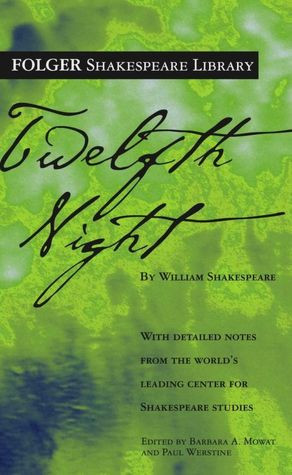
Twelfth Night. William Shakespeare. 1601-02. 272 pages.
If music be the food of love, play on;
I recently treated myself to a reread of Shakespeare's play Twelfth Night. Now Twelfth Night is not one of my favorite, favorite Shakespeare comedies. (That would be Much Ado About Nothing followed by A Midsummer Night's Dream.) But it is one I have read several times before. And it does have some GREAT scenes in it. (It is also the only Shakespeare I've seen performed on stage.)
Viola and Sebastian are brother and sister. Each think the other has perished in the shipwreck. Viola arrives in Illyria and decides to disguise herself as a young man taking the name Cesario. She enters the service of the Duke (Orsino). One of her tasks is to woo a young woman still in mourning, Olivia. Cesario delivers Orsino's messages just as he asks, but her heart isn't exactly in it. For she has fallen for the Duke herself, a matter only complicated by the fact that Olivia has fallen in love with her. Not that Olivia knows she's fallen in love with a woman-in-disguise. (I'm reminded of a Dorothy Sayers quote!!!) But still. Meanwhile, the audience becomes aware that Sebastian is very much alive and is also in Illyria. He has become friends with Antonio. That covers the "romance" of the play. (I'll leave it up to you to decide if it's truly-truly romance.) The comedy, for the most part, focuses on a cast of side characters mostly attached to Olivia's household. These include Malvolio, Maria, Sir Toby Belch, Sir Andrew Aguecheek, and Feste. Essentially, a group of people team up to make a big, big fool of Malvolio.
Read Twelfth Night
If music be the food of love, play on;
I recently treated myself to a reread of Shakespeare's play Twelfth Night. Now Twelfth Night is not one of my favorite, favorite Shakespeare comedies. (That would be Much Ado About Nothing followed by A Midsummer Night's Dream.) But it is one I have read several times before. And it does have some GREAT scenes in it. (It is also the only Shakespeare I've seen performed on stage.)
Viola and Sebastian are brother and sister. Each think the other has perished in the shipwreck. Viola arrives in Illyria and decides to disguise herself as a young man taking the name Cesario. She enters the service of the Duke (Orsino). One of her tasks is to woo a young woman still in mourning, Olivia. Cesario delivers Orsino's messages just as he asks, but her heart isn't exactly in it. For she has fallen for the Duke herself, a matter only complicated by the fact that Olivia has fallen in love with her. Not that Olivia knows she's fallen in love with a woman-in-disguise. (I'm reminded of a Dorothy Sayers quote!!!) But still. Meanwhile, the audience becomes aware that Sebastian is very much alive and is also in Illyria. He has become friends with Antonio. That covers the "romance" of the play. (I'll leave it up to you to decide if it's truly-truly romance.) The comedy, for the most part, focuses on a cast of side characters mostly attached to Olivia's household. These include Malvolio, Maria, Sir Toby Belch, Sir Andrew Aguecheek, and Feste. Essentially, a group of people team up to make a big, big fool of Malvolio.
Read Twelfth Night
- If you enjoy a light blend of romance and comedy; the language is very beautiful in places--love the opening line!!! And some of the scenes are just very funny!
- If you're a fan of William Shakespeare