Love From Your Friend, Hannah

Love From Your Friend, Hannah. Mindy Warshaw Skolsky. 1998. DK. 246 pages.

September 27, 1937
Dear Edward,
I got your name and address from a piece of paper I picked out of a box that says Pen Pals on a corner of my teacher's desk. I've never done this before and I don't know exactly what to say. So I'll just pretend I'm talking. 

Hannah Diamond is the heroine of Mindy Warshaw Skolsky's Love From Your Friend, Hannah, a historical novel set in Grand View, New York in the 1930s. What should you know about Hannah? Well, she's a young girl who is missing her best friend, Aggie, who moved away. She's part of her classroom's pen pal program, but, she has DRAWN THE NAME OF A BOY! And since the teacher saw her draw his name, she can't put that piece of paper back to draw another name--no matter how much she wants to. Since her first letter to him is a total disaster, she decides to focus her energy on writing letters to other people. Surely she'll be able to find someone who wants to be friends...

Here is the disastrous reply from Edward:
Dear Hannah,
I haven't got a mountain.
I have a cow.
Edward Winchley
P.S. I don't like to read books. I don't like to write letters either. My teacher made me put my name on that piece of paper.
So who does Hannah decide to write? Well, her grandma, her aunt Becky, her best friend Aggie, and the President of the United States--Franklin D. Roosevelt, for starters...

The novel is composed of her letters to other people, and the letters she receives from other people.

I loved this one. I just LOVED, LOVED, LOVED it. I loved Hannah so very, very much!!! And I ended up just LOVING Edward!!!!

Hannah on reading:
My favorite thing in the world to do is read a book. I read Heidi, which I love, then I read another book, then I read Heidi again. If I stopped reading Heidi in between the other books, I'd be able to read twice as many books, but the thing is I like reading Heidi. So I do. (93)
Edward on reading:
Guess what I read for the second book the teacher said I had to read? Don't laugh. I read that one that you said you like so much. Heidi. Even though Heidi was a girl, you said there was a boy in it too. Peter. But you know what boy I liked the best? He wasn't a boy anymore. He was a grandfather--Heidi's grandfather. I would like to have Heidi's grandfather for a grandfather. I don't think he would bother me about talking or reading--or anything. (161)
Hannah on writing a book report:
Now, about the book report. I can't write it for you because your teacher would know just like you couldn't do my arithmetic because then my teacher would know. Teachers are like mothers--they always know!
But I can help give you some tips...
Tell the name of the book. Tell the name of the author. The Wizard of Oz was written by L. Frank Baum. Tell if you think he's a good writer. Tell the names of all the characters in the book. Tell what they did. Tell where they went. Tell who they were looking for. Tell what they finally found. Tell how they treated one another. Tell about their feelings. Tell that you read some to your sister. Tell that she liked it. Read some to a friend. Then you can even tell that your friend liked it. By that time, Edward, you'll have so many lines your teacher will leave you alone. (113)
Hannah to her Aunt Becky:
About finding me a present to make up for missing the movie, that was very nice of you. My mother said it'll be a consolation prize. But you don't have to bother knitting me any clothes because I already have so many clothes you knitted me. I have sweaters, jackets, scarves, and mittens. I even still have the red-and-white stocking cap that matches Skippy's jacket and that I wore up to the top of the mountain the time we had the big snow. And when my one galosh came off and I couldn't find it under the snow, I walked down the mountain with your stocking cap on my foot.
One thing about your knitting, Aunt Becky, it never wears out, so you see, you don't really have to knit me anything new. (74)
Read Love From Your Friend, Hannah
  • If you like historical fiction set in the 1930s
  • If you're looking for a great book set during the Depression
  • If you're looking for a book-loving heroine
  • If you're looking for a book about friendship, about pen pals, about school
  • If you're looking for a family-friendly children's book 

© 2012 Becky Laney of Becky's Book Reviews

Earth Unaware: The First Formic War

Earth Unaware. Orson Scott Card and Aaron Johnston. The First Formic War. 2012.  Tor. 368 pages.

Victor didn't go to the airlock to see Alejandra leave the family forever, to marry into the Italian clan.

Earth Unaware is an experience. Orson Scott Card is as wonderful as always. In fact, I'd say this may just be my most favorite Card novel of recent years. His characters are so incredibly human, so very, very flawed. Because of their complex relationships with one another, there is a genuineness to them. That doesn't mean readers will connect with each and every character. In fact, this novel has a character I loathe more than any other Card creation: Lem Jukes. Since this novel rotates narrators (or main characters), every Jukes chapter was painful. I was just SO VERY VERY VERY ANGRY at him. I reacted very strongly to him. But that isn't really a big surprise. I reacted strongly to so many characters in this one. Major and minor characters that I just CARED for. Which made almost every loss something to be FELT.

There are essentially "three" big stories being told in Earth Unaware. Two of the stories happen in space. El Calvador is an asteroid mining ship--a family-owned free mining ship. Victor's story, for the most part, occurs on El Calvador. This is the ship that first spots the Formics; well, they are the first to notice that an alien ship is heading towards Earth at faster than light speed. Lem Jukes is captain of a corporation ship. His interest in asteroids isn't quite like El Calvador's. Jukes is working on an invention with a lot of potential--something having to do with a gravity laser. After a successful test or two, he's ready to try the glaser on a bigger object. The object he has in mind happens to be the asteroid that El Calvador is mining at the moment. He decides to "bump" them--destroying their laserline communications--long range communicator--in the process.

The third story is, in a way, the lesser of the three stories. It is set on Earth and involves the military. It centers on a man, Wit O'Toole, forming a special military unit, Mobile Operations Police. One of the recruits is Mazer Rackham. But this isn't his story just yet. He's still undergoing testing, at this point. And the war has not begun. So while he will be very important in the other books in this series, this isn't his time just yet.

Earth Unaware is an exciting, suspenseful science fiction novel. I found the pacing to be just right. (True, some of the chapters seemed like a bit of an interruption, especially close to the end, but for the most part, the book was incredibly INTENSE, painfully INTENSE.) Readers learn about the ship who first spotted the Formic ship--the alien ship. Readers witness the destruction of the first encounter between humans and Formics. And anxiously readers wait and hope that one of the ships who know about the coming aliens will be able to send news to Earth.

This was an incredible reading experience--very emotional. It's a novel to be felt as well as read. The characterization was great. The storytelling and pacing was great too. I just loved it. This is one I'll definitely want to reread. 

Read Earth Unaware
  • If you're a fan of Orson Scott Card
  • If you're a fan of Ender's Game--even if you're not a fan of the other books in the series
  • If you enjoy science fiction
© 2012 Becky Laney of Becky's Book Reviews

Gods and Warriors (MG)

Gods and Warriors. Michelle Paver. 2012. Penguin. 320 pages.

The shaft of the arrow was black and fletched with crow feathers, but Hylas couldn't see the head because it was buried in his arm. 

 If you love action and adventure, you should really consider picking up Michelle Paver's new book, Gods and Warriors. This middle grade novel is set in ancient Greece during the Bronze Age. It stars a young boy, Hylas, who may or may not fulfill prophecy. But he isn't the only one readers will meet, two other (human) characters have a role to play: Telamon, the son of a chieftain and Hylas' best friend at the start of the novel, and Pirra, a young girl betrothed to Telamon against her wishes. The other star of this one is not human, she is a dolphin named Spirit.

I loved this one!!! I just loved it! I loved learning about Hylas, Telamon, and Pirra; but especially about Hylas and Pirra. It was very interesting to see this relationship develop. For they are thrown together in desperation. Both needing the other to survive, both having strengths and weaknesses, both uncertain about so many things. It was interesting to see how circumstances helped them come to trust one another, to become friends despite their differences. I also loved Spirit, the dolphin, who has a very significant role in the novel!

Action, adventure, and drama!!! This one has it all. I'd definitely recommend it!

Read Gods and Warriors
  • If you like action/adventure stories with light touches of fantasy and mythology
  • If you like plot-driven stories with fast pacing
  • If you are looking for a new series to begin

© 2012 Becky Laney of Becky's Book Reviews

Clocks

Clocks. Jerome K. Jerome. 1891. 10 pages.

 There are two kinds of clocks. There is the clock that is always wrong, and that knows it is wrong, and glories in it; and there is the clock that is always right--except when you rely upon it, and then it is more wrong than you would think a clock could be in a civilized country.

This is an extremely short essay on clocks, exaggeration, keeping up appearances, and Time. It was an enjoyable read; perhaps it isn't as WONDERFUL as some of Jerome K. Jerome's other works, but, it was worth the few minutes it took to read.

The second type of clock:
The man who can live in the same house with one of these clocks, and not endanger his chance of heaven about once a month by standing up and telling it what he thinks of it, is either a dangerous rival to that old established firm, Job, or else he does not know enough bad language to make it worth his while to start saying anything at all. The great dream of its life is to lure you on into trying to catch a train by it. For weeks and weeks it will keep the most perfect time. If there were any difference in time between that clock and the sun, you would be convinced it was the sun, not the clock, that wanted seeing to. You feel that if that clock happened to get a quarter of a second fast, or the eighth of an instant slow, it would break its heart and die. It is in this spirit of child-like faith in its integrity that, one morning, you gather your family around you in the passage, kiss your children, and afterward wipe your jammy mouth, poke your finger in the baby's eye, promise not to forget to order the coals, wave at last fond adieu with the umbrella, and depart for the railway-station. I never have been quite able to decide, myself, which is the more irritating to run two miles at the top of your speed, and then to find, when you reach the station, that you are three-quarters of an hour too early; or to stroll along leisurely the whole way, and dawdle about outside the booking-office, talking to some local idiot, and then to swagger carelessly on to the platform, just in time to see the train go out!
On his own "special" clock:
But the great charm about my clock is its reliable uncertainty. It works on no method whatever; it is a pure emotionalist. One day it will be quite frolicsome, and gain three hours in the course of the morning, and think nothing of it; and the next day it will wish it were dead, and be hardly able to drag itself along, and lose two hours out of every four, and stop altogether in the afternoon, too miserable to do anything; and then, getting cheerful once more toward evening, will start off again of its own accord. I do not care to talk much about this clock; because when I tell the simple truth concerning it, people think I am exaggerating. It is very discouraging to find, when you are straining every nerve to tell the truth, that people do not believe you, and fancy that you are exaggerating. It makes you feel inclined to go and exaggerate on purpose, just to show them the difference. I know I often feel tempted to do so myself--it is my early training that saves me.

On society:
Truth and fact are old-fashioned and out-of-date, my friends, fit only for the dull and vulgar to live by. Appearance, not reality, is what the clever dog grasps at in these clever days. We spurn the dull-brown solid earth; we build our lives and homes in the fair-seeming rainbow-land of shadow and chimera.

© 2012 Becky Laney of Becky's Book Reviews

Lady Audley's Secret

Lady Audley's Secret. Mary Elizabeth Braddon. 1862/1998. Oxford World's Classic. 496 pages.  

It lay low down in a hollow, rich with find old timber and luxuriant pastures; and you came upon it through an avenue of lines, bordered on either side by meadows, over the high hedges of which the cattle looked inquisitively at you as you passed, wondering, perhaps, what you wanted; for there was no thoroughfare, and unless you were going to the Court you had no business there at all. At the end of this avenue there was an old arch and a clock-tower, with a stupid, bewildering clock, which had only one hand; and which jumped straight from one hour to the next, and was therefore always in extremes. Through this arch you walked straight into the gardens of Audley Court.

I definitely enjoyed this one! I thought it was a GREAT read. I'm not sure it is a great book, but, it offers entertainment and thrills. I personally liked the writing style of this one, I found it very suspenseful and satisfying. If possible, it's best not to know Lady Audley's "secret" before reading. I'd say avoid reading too much detail about this one. I am going to try my best not to give away any details that are best left as surprises. But I do want to introduce you to the characters...

People you'll meet:

Michael Audley, a widower with a near-grown daughter, Alicia, who falls madly, deeply in love with a younger woman, Lucy Graham, who is employed as a governess by one of his friends.

Lady Audley, a young woman with a secret; It was almost too easy for Lucy Graham to agree to become Lady Audley. He's a rich man, a man with status, and he wants HER, a nobody. Who could say no?! Especially if you don't have your heart set on marrying for love.

Alicia Audley, a young woman too close in age to Lady Audley; she is NOT happy to have a new stepmother. She is not happy that her new stepmother is oh-so-gorgeous and that men seem to see only her. She's also suspicious and distrustful. Granted, she would probably be distrustful of ANY woman in that situation. And the fact that Lady Audley does in fact have a secret shouldn't be taken as proof that she has great instincts.

Robert Audley, a nephew of Michael Audley; Alicia really, really WISHES that Robert would pay attention to her. She really is hoping that he will notice that she is all grown up and ready to be proposed to. When we first meet Robert, you might say that he completely lacks ambition and gumption. In other words, he doesn't do much at all. This doesn't remain the case.

George Talboys, a friend of Robert Audley. He is newly returned to England, he's now got some money. He could potentially have been a very very happy man if he'd found his wife and son alive and waiting for him. Unfortunately, soon after his return, he learns that his wife has died. His son is being cared for by his father-in-law. He's too shocked to really take care of the boy himself, and, he feels perhaps its best not to disturb the boy too much. After all, his mother has died, and the boy's grandfather has been a part of his life from the start.

Phoebe and Luke Marks, Phoebe serves as Lady Audley's maid, Phoebe and her husband are the first to discover her secret.

I would definitely recommend this one!!! This would make a great companion read to The Suspicions of Mr. Whicher by Kate Summerscale, but, do try to read this one FIRST. 

Read Lady Audley's Secret
  • If you want to read one of the first sensation novels
  • If you enjoy suspense and mystery and detective stories
  • If you like classics, Victorian classics
  • If you are interested in reading women writers of the nineteenth century


© 2012 Becky Laney of Becky's Book Reviews

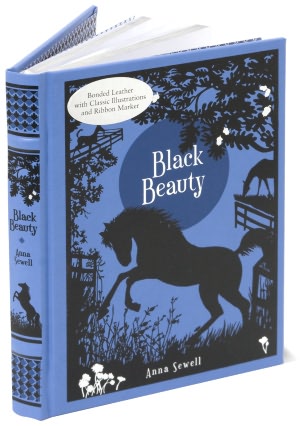
Black Beauty

Black Beauty. Anna Sewell. 1877. 245 pages.

The first place that I can well remember was a large pleasant meadow with a pond of clear water in it. Some shady trees leaned over it, and rushes and water-lilies grew at the deep end. Over the hedge on one side we looked into a plowed field, and on the other we looked over a gate at our master's house, which stood by the roadside; at the top of the meadow was a grove of fir trees, and at the bottom a running brook overhung by a steep bank.

Black Beauty is such a GREAT book. I really LOVED, LOVED, LOVED it. Which surprises me, I must admit since I generally don't like animal stories, and I'm even more reluctant to read horse books than dog books. But. I loved it. There was something timeless and wonderful about it. I can see why it became a classic, I hope it remains a beloved classic. 

Black Beauty is a great narrator, a great character. I really came to care for this horse right from the start. I had a feeling that life wouldn't always be so easy and gentle for him. I knew that they'd be dark days and nights ahead. And that proved true. As he is sold from one owner to another to another to another to another and so on. But he's so very, very, very good and understanding and wise. There were so many times he proved himself noble and worthy. And Black Beauty wasn't the only character I loved. I loved so many of the human characters too! John Manly, for example, comes to mind, as does James Howard, Joe Green, Jerry Barker, Farmer Grey, Farmer Thoroughgood, etc. Ginger's story is touching, as well, Ginger being one of many horses Black Beauty befriends.

Black Beauty also had a LOT to say about society, about virtues and vices. It had a LOT to say in regards to how animals should be treated--with respect, kindness, understanding, with dignity. It had a LOT to say about how humans should treat one another too. I was surprised at how deep this book was, how wise.

My favorite quotes:
“There is no religion without love, and people may talk as much as they like about their religion, but if it does not teach them to be good and kind to man and beast, it is all a sham.”
“Only ignorance! only ignorance! how can you talk about only ignorance? Don't you know that it is the worst thing in the world, next to wickedness? -- and which does the most mischief heaven only knows. If people can say, `Oh! I did not know, I did not mean any harm,' they think it is all right.”
“My doctrine is this, that if we see cruelty or wrong that we have the power to stop, and do nothing, we make ourselves sharers in the guilt.”
 “If a thing is right it can be done, and if it is wrong it can be done without; and a good man will find a way.”
“We call them dumb animals, and so they are, for they cannot tell us how they feel, but they do not suffer less because they have no words.” 

Read Black Beauty

    •    If you want to read one of the best children's books ever
    •    If you're a fan of animal stories, horse stories,
    •    If you enjoy historical fiction
    •    If you enjoy classics


© 2012 Becky Laney of Becky's Book Reviews

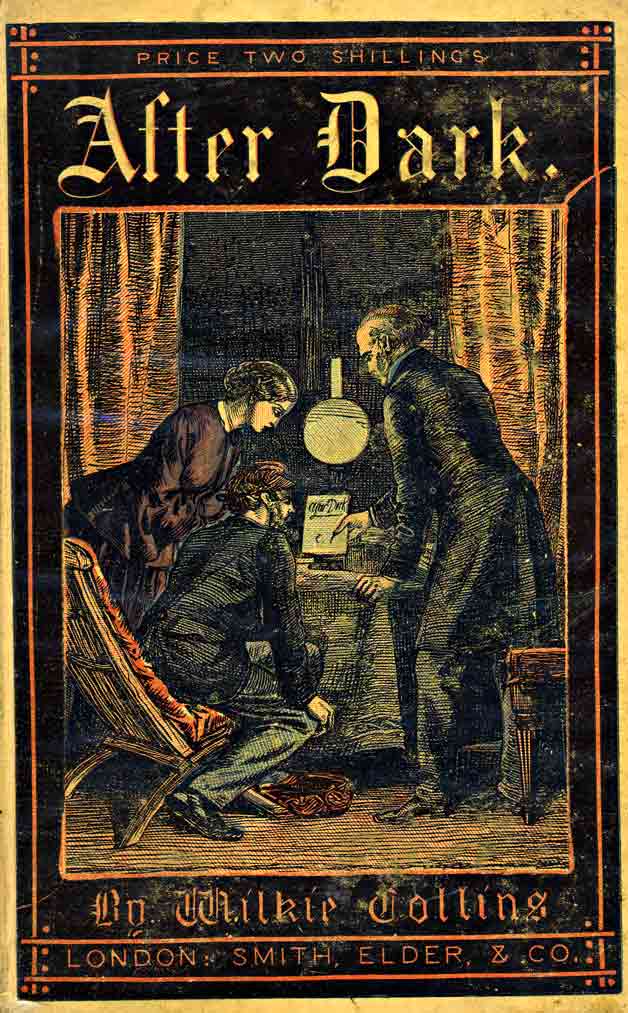
After Dark

After Dark. Wilkie Collins. 1856. 404 pages.

From "Leaves From Leah's Diary"
26th February, 1827.—The doctor has just called for the third time to examine my husband's eyes. Thank God, there is no fear at present of my poor William losing his sight, provided he can be prevailed on to attend rigidly to the medical instructions for preserving it. These instructions, which forbid him to exercise his profession for the next six months at least, are, in our case, very hard to follow. They will but too probably sentence us to poverty, perhaps to actual want; but they must be borne resignedly, and even thankfully, seeing that my husband's forced cessation from work will save him from the dreadful affliction of loss of sight. I think I can answer for my own cheerfulness and endurance, now that we know the worst. Can I answer for our children also? Surely I can, when there are only two of them. It is a sad confession to make, but now, for the first time since my marriage, I feel thankful that we have no more.
I tend to love Wilkie Collins. And I did enjoy his short story collection, After Dark. But I didn't find all six of the short stories equally compelling. And while I *loved* some of the stories in this book, I didn't love them all. I found them all worthwhile, all entertaining.

There's a framework to After Dark. A portrait-painter, William, suffers damage to his eyesight, the doctor tells him he needs LOTS of time to recuperate if he hopes to be able to see again. He can no longer count on his painting to bring in the income and take care of his family, so, the family is forced to come up with plan B. Plan B just happens to be writing and publishing a book of stories. These are stories that have been told to the painter--usually while his subject is being painted--through the years. He will now recollect the best stories he's ever heard and relate them to his wife, Leah, who will write them down each night...after dark. (That is after her long day's work is through.)

The six stories are:

  • The Traveller's Story of a Terribly Strange Bed (1852)
  • The Lawyer's Story of a Stolen Letter (1854)
  • The French Governess's Story of Sister Rose (1855)
  • The Angler's Story of The Lady of Glenwith Grange (new for After Dark)
  • The Nun's Story of Gabriel's Marriage (1853)
  • The Professor's Story of the Yellow Mask (1855)
Five of the six short stories were reprints, only one story was brand new and written especially for this book.

In my opinion, the best, best, best short story in this collection is The French Governess's Story of Sister Rose. This story has DRAMA and action. It is set during the French Revolution. And in my opinion, this story is a MUST read. Not only if you're a fan of Victorian literature OR a fan of Wilkie Collins, but if you're a fan of historical fiction set during the French Revolution, you should really consider reading this novella. (In my opinion, it is closer to a novella than a proper short story. It has parts and chapters.) So Louis Trudaine made a deathbed promise to his mother to always be there for his sister, Rose, and protect her. Rose has fallen in love with a man Louis feels is unworthy of her, a Charles Danville. The marriage does happen, though not without some unpleasant exchanges on the eve of the wedding. But he never feels quite sure of his sister's husband, and so he chooses to remain nearby even if it means passing up a job opportunity. Years pass--we learn from the narrator--and the Revolution comes. And with it danger, drama, action, betrayal, and so much more. This story is so very, very, very good. It's quite intense and I loved every minute of it.

The Traveller's Story of a Terribly Strange Bed is actually Wilkie Collins first published short story. It is quite creepy! It also happens to be set in Paris, by the way, anyway, the narrator is a young man named Faulkner. His good luck at a gambling house almost proves fatal. For a very, very friendly man convinces him that it is much too risky to leave the house at that time of night and wander the streets carrying his winnings. No, no, it would be much much safer to stay there for the night. But is that the truth? Well, his insomnia may just be a lifesaver!

The Nun's Story of Gabriel's Marriage is another story set in France during the French Revolution. While it isn't as good as The French Governess's Story of Sister Rose, in my opinion, it was interesting to get another story set in France--in Brittany--from Collins. The theme of this one is forgiveness and reconciliation. If you want a story with a couple of BIG twists, this one may prove satisfying.

The Angler's Story of The Lady of Glenwith Grange is another story with a BIG, BIG twist. Ida has promised to always, always, always take care of her younger sister, Rosamond. (Their mother died when Rosamond was a baby.) So when Rosamond marries, it's agreed that Ida will always live with them. The marriage, as you might expect, does not exactly exactly go as planned. And readers...along with Ida...learn why.

The Professor's Story of the Yellow Mask is set in Italy, I believe. It has a larger cast of characters than some of the other stories in the collection. And it has its own share of drama. It is a darker story balanced perhaps in a way by a love story with many, many obstacles. It also has lots of twists and turns and such. That being said, I wasn't thrilled with it.

The Lawyer's Story of a Stolen Letter is a detective story. It was a nice enough story, I suppose, but I wasn't wowed by it. Still, it's enjoyable enough. 


Read After Dark
  • If you're a fan of Wilkie Collins
  • If you're a fan of Victorian literature
  • If you're a fan of mystery, suspense, detective, or sensation stories
  • If you like short stories
  • If you like "shocking" stories with plenty of drama and twists and turns
© 2012 Becky Laney of Becky's Book Reviews