Tempest (YA)

Tempest. Julie Cross. 2012. St. Martin's Press. 352 pages. 


Saturday, April 11, 2009,
Okay, so it's true. I can time-travel. But it's not as exciting as it sounds. I can't go back in time and kill Hitler. I can't go to the future and see who wins the World Series in 2038. So far, the most I've ever jumped is about six hours in the past. Some superhero, right?

Tempest is a great example of why you should never judge a book by its cover. For me this cover just doesn't work, it doesn't shout out time-traveling-spies, does it? And with a premise as appealing as time travel (in general) AND featuring mysterious secret agents fighting evil-time-travelers, it should have an awesome cover.

Jackson Meyer is our time-traveling hero with a girlfriend named Holly. But within chapters, Holly's life is in danger--she's dying before his eyes--and Jackson does the only thing he can do: panic as he jumps backwards in time. Because of the traumatic events leading to the jump, Jackson does something he's never done before which traps him in the past--in the year 2007. Once there, he'll have plenty of time to find out who he is, who his father is--why his Dad is so very, very weird and out-of-touch with him, and much much more. He has tons of questions, and he wants some answers at least. Mainly: can he change the future, is there anything he can do to prevent the tragic events leading up to Holly's (alleged) death? Also: can he find a way to jump back to the future, or is he stuck in 2007? Will he have to relive two years of his life? And then there's all the super-super mysterious stuff about himself, his father, his mother, his abilities, etc.

So how does he spend his time? Well, he a) time-travels back and forth in his own past trying to piece together clues b) meets his girlfriend, Holly, years before he "really" meets her c) meets his best friend, Adam, years before he's supposed to really meet him d) confronts his Dad with some super-tough questions.

This one has dangers, thrills, mysteries, secrets, lies, spies, and time-travel. What is NOT to love?! Seriously!!! The book has a GREAT premise. Jackson is a fully developed character whom we get to know surprisingly well considering how this is an action/plot/premise-driven book. Loved the emotional range we get, not only all the scenes about Holly or with Holly, but all the scenes about his twin-sister, Courtney. There was even a great heart-to-heart with his Dad towards the end. The book has a quite a few complex relationships, and I appreciated how they were developed. I loved also the exploration of consequences. I really appreciated the ending, I thought it was just right.

Read Tempest
  • Time travel
  • Good vs. Evil
  • Secret Agents/Secret Agencies
  • Romance from a guy's perspective


© 2012 Becky Laney of Becky's Book Reviews

The Sunday Salon: Watching Jane Eyre (2006)

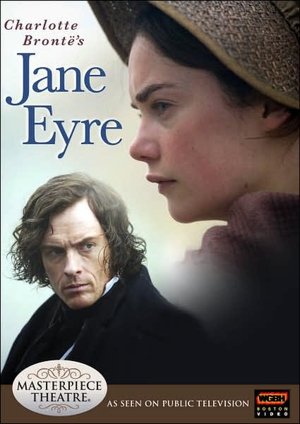
Last Sunday, I reviewed my favorite adaptation of Jane Eyre starring Zelah Clarke and Timothy Dalton. This Sunday, I am ready to discuss the 2006 adaptation of Jane Eyre starring Ruth Wilson and Toby Stephens. This was the first time I've seen this adaptation since discovering the other one. And it had been a good two years since I'd seen this adaptation, so I was more than happy to reacquaint myself with this film!!!

So, you already know that this one isn't my favorite, favorite, favorite Jane Eyre. But I thought I would share specifically what I liked and didn't like about this adaptation.

I loved Georgie Henley as the young Jane Eyre. I just LOVED her! This adaptation hardly spends time on Jane's childhood, but for what we do see in those short minutes it was love. Granted, I will always see her as Lucy (from The Lion, The Witch, and The Wardrobe), and so that does bias me a little in her favor. But I thought they included just enough of her childhood to flavor the movie.

I loved Christina Cole as Blanche Ingram. Out of all the Jane Eyre adaptations I've ever seen--four or five at this point?--she is the BEST Blanche I've ever seen. The scenes with Blanche and the other house guests worked so incredibly well. Viewers know that Mr. Rochester is just using Blanche to make Jane Eyre jealous, that he is manipulating both women. But we also get a sense that Blanche is using him as well, that she sees him purely as status and wealth. And so it's easy to excuse Mr. Rochester perhaps. Still, he's technically in the wrong.

There were a few scenes that I liked (a little) better in this adaptation. For example, when Jane Eyre "saves" Mr. Rochester when his bed curtains are on fire. The aftermath of that fire when they're talking and he holds her hand. It is in the 1983 adaptation too, of course. But in this movie, viewers see Jane Eyre go back to bed. And the emotion she conveys actually reminds me a bit of "I Could Have Danced All Night" from My Fair Lady. Viewers catch a glimpse of Jane Eyre's love for Mr. Rochester, and how she holds him dear, and how she is treasuring up his touch of her hand. It could be viewed as silly, I suppose, but I think it's heartfelt too.

Adele. The scene where we first meet Adele was nicely done. I liked meeting her in this way, with her singing and "performing" in French. The subtitles translating the song were quite effective. They conveyed to the viewers part of Adele's tragic background. And I think we do catch glimpses of her neediness, her desperation for love and acceptance and family. True, she may appear a brat, a horribly spoiled brat, but, I think there is something more that could be there. But this isn't Adele's story, and, it's easy to forget about her completely.

Her cousins. Well, in this adaptation St. John Rivers does not come across as a horrible-horrible-horrible man. For better or worse depending on how you read Bronte's novel! And his sisters do have a young, vibrant feel about them in this adaptation. In the 1983 adaptation, they appear much older, much more settled, content with what little they have and not expecting life to offer them any entertainment or thrills. 

I do think this adaptation does a better job with ambiance, capturing the gothic elements of the novel, and the movie is more sophisticated and polished in terms of sets, scenery, costumes, soundtrack, etc. 

But. This movie does take liberties with the story and the characters. Mr. Rochester's scenes with Jane Eyre aren't necessarily going to be from the book, or true to the book, or true to the spirit of the book. In some scenes, yes, they are similar enough that it works...especially if it's been a few years since you've last read the book. The fuzzier your memory is, the better. And some scenes do feel like they could be authentic enough to the book because they get the characterization right. But. In other scenes, well, liberties were taken.

There were two scenes that bothered me in this adaptation, the two scenes with the most liberties taken. One scene was the "after wedding" scene, but, really it is the after-the-non-wedding scene. It is very sensual, too sensual in my opinion. Jane Eyre and Mr. Rochester on a bed kissing and caressing while he tries to make excuses for his having kept his mad-wife a secret AND trying to convince Jane that he wouldn't try to tempt her if only she would consent to travel with him and go far away, they could live as brother-and-sister. I didn't buy that argument for a second, if, he truly respected her and wanted to be completely honorable he wouldn't have her on a bed right then and there trying to use his kisses to convince her to stay. This scene is completely wrong for a couple of reasons. One, it is NOT true to the book, not true to the characters, not true to Charlotte Bronte. You'd never find the scene written out like that in Charlotte Bronte's novel. The novel uses words, charismatic words spoken by a passionate Mr. Rochester, to try to convince Jane to stay, to try to help her understand. Read the scene from the book and it is SO MUCH BETTER. The second scene that bothers me is the near-ending where Jane and Mr. Rochester agree to marry and live happily ever after. The book is SO MUCH BETTER. And the changes they made just didn't sit well with me.

So what did I think of Toby Stephens as Mr. Rochester? Well, I thought he did a good job in some parts, in some ways, in some scenes. Some of his scenes worked better than others. But. He did a good job. He was likable. He was charismatic. He was passionate. You could tell *why* Jane Eyre would be drawn to him. And the film does a good job in building their relationship. But he isn't Timothy Dalton. And he's not completely true to the book, true to the spirit of the book.

I did like Ruth Wilson as Jane Eyre. I  thought she did a good job in her role as Jane. But I'm not sure I like her better than Zelah Clarke. But she's definitely one of the reasons why this adaptation works so well and has so many fans.

Watch Jane Eyre
  • If you love Jane Eyre
  • If you love period dramas
  • If you love historical romances
  • If you love good drama 
ETA: Other Jane Eyre (movie) reviews
Coming soon:
1996
1997

    © 2012 Becky Laney of Becky's Book Reviews

    Library Loot: Fifth Trip in June

    New Loot:
    • Bon Appetit! The Delicious Life of Julia Child by Jessie Hartland
    • The Bite-Sized Bard Presents Shakespeares Seasons created by Miriam Weiner
    • Howards End is on the Landing: A Year of Reading from Home by Susan Hill
    • The Long Earth by Terry Pratchett
    • Under the Greenwood Tree by Thomas Hardy
    • Chained by Lynne Kelly
    • The Summer of the Gypsy Moths by Sara Pennypacker
    • Double Dog Dare by Lisa Graff
    Leftover Loot:
    • Wastelands: Stories of the Apocalypse edited by John Joseph Adams
    • The End of the World: Stories of the Apocalypse edited by Martin H. Greenberg
    • The Yard by Alex Grecian
      Ripper by Amy Carol Reeves 
    • Princess Academy by Shannon Hale
    • Bliss by Kathryn Littlewood
    • The Gallery of Regrettable Food by James Lileks
    • The Rise and Fall of Mount Majestic by Jennifer Trafton
      The Willoughbys by Lois Lowry
    • The Dead Witness: A Connoisseur's Collection of Victorian Detective Stories edited by Michael Sims The No. 1 Ladies' Detective Agency by Alexander McCall Smith
    • We Two: Victoria and Albert by Gillian Gill.
    • Triumph: The Untold Story of Jesse Owens and Hitler's Olympics by Jeremy Schaap 
    • The No. 1 Ladies' Detective Agency by Alexander McCall Smith

    Library Loot is a weekly event co-hosted by Claire and Marg that encourages bloggers to share the books they’ve checked out from the library. If you’d like to participate, just write up your post-feel free to steal the button-and link it using the Mr. Linky any time during the week. And of course check out what other participants are getting from their libraries.   


    © 2012 Becky Laney of Becky's Book Reviews

    Watching Dickens


     In June I was able to watch two movies adapted from Dickens' novels.

    The first movie I watched was Pickwick Papers. I watched the BBC miniseries done in 1985. It stars Nigel Stock as Mr. Pickwick, Clive Swift as Mr. Tupman, Alan Parnaby as Mr. Snodgrass, Jeremy Nicholas as Mr. Winkle, Phil Daniels as Sam Weller, and Patrick Malahide as Mr. Jingle. To name a few. What can I say about this one? Well, the watching experience matches the reading experience. In other words, I was equally bored and amused. For example, some of the adventures of the Pickwick Club bored me in the book, and they likewise bored me in the dramatization. Not all of the adventures are boring, mind you, some are quite funny--very funny. But don't expect each episode of the miniseries to be oh-so-thrilling or laugh out loud funny. What I found was that the miniseries could be just as charming and delightful as the book. A great example would be the characterization of Sam Weller and Mr. Pickwick. Sam Weller is one of the BEST characters in Pickwick Papers. Once he's introduced into the narrative, it's like a brand new book, a much better book! Same with the drama!!! I don't think it would be an easy role to play either! But Phil Daniels does a WONDERFUL job with it!!! I also think Patrick Malahide made an excellent Mr. Jingle. Here is a character that made me want to boo, hiss every time he made an appearance; he was a true villain. Yet. By the end when he's had a transformation thanks to the mercy of Mr. Pickwick, I am able to believe it. Which really, really surprised me. Any actor that can pull off villainy and repentance must be good, right?


    I definitely am glad I made time to watch The Pickwick Papers. There were things that I noticed for the first time in the drama. For example, when I was reading the book, I was so caught up in loving Sam Weller that I neglected the characterization of Mr. Pickwick, I didn't realize how much he changes throughout the novel (and the drama). I was so busy laughing with Sam Weller that I missed the heart and soul of a great man, Mr. Pickwick. It is something that I probably would have caught if I had revisited the novel too--but I'm glad I don't have to wait that long. (While I do plan on rereading Dickens, I hope to read every novel at least once before I start indulging in rereads.)

    The second adaptation I watched was Our Mutual Friend (1998). Our Mutual Friend is my favorite, favorite, favorite Dickens. I just LOVE the book so much. In fact, if I was tempted to reread Dickens, Our Mutual Friend would be the one I'd most want to indulge in. I just love, love, love Lizzie and Bella and John and Eugene and Mr. and Mrs. Boffin. So I was very, very happy to watch this film. It stars Keeley Hawes as Lizzie Hexam, Paul McGann as Eugene Wrayburn, Anna Friel as Bella Wilfer, and Steven Mackintosh as John Rokesmith. (I recognized "Bella" from A Midsummer's Night Dream and Pushing Daisies. I recognized "Lizzie" from Wives and Daughters and Under the Greenwood Tree. I recognized "John" from The Muppet Christmas Carol.) So was this film giddy-making? Yes and no. It was giddy making except for when it wasn't. The romantic stories following the two couples could be pure giddy-making at times. I just LOVE, LOVE, LOVE both couples (Lizzie and Eugene; Bella and John). But there were many dark elements in this one. Some very dark, very creepy, very unpleasant elements in this one. For example, Silas Wegg (played by Kenneth Cranham) and Mr. Venus (played by Timothy Spall, whom I recognized from Oliver Twist and Enchanted) were faithful to the book (as far as I can recall) but not exactly thrilling. I do think David Morrissey did a fantastic job of being Bradley Headstone!!! Generally speaking, I think this was a wonderful, wonderful production. Thought it was really well done, thought the portrayals were just about perfect. And I loved so many scenes in this movie!!!

    Watch Pickwick Papers

    • If you're a fan of Charles Dickens
    • If you are a fan of his first novel, The Pickwick Papers
    • If you're curious to see how Mr. Pickwick, Sam Weller, etc. are portrayed on film
    • If you enjoy Dickens' humor and are patient

    Watch Our Mutual Friend

    • If you're a fan of Charles Dickens
    • If you are a fan of the novel, Our Mutual Friend
    • If you enjoy romance, drama, and suspense (this one has quite a few dead bodies)
    • If you enjoy period dramas

    © 2012 Becky Laney of Becky's Book Reviews

    Jane in the Seventies

    Today I'll be sharing my thoughts on TWO adaptations of Charlotte Bronte's Jane Eyre, both adaptations are from the 1970s, but they are so DIFFERENT from one another. One I'd definitely recommend, the other, well, not so much.

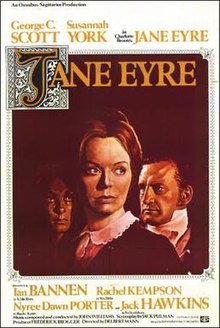
    I'll start with the one I wouldn't really recommend, the 1970 adaptation starring George C. Scott and Susannah York. The only thing that *may* save this one from being the worst Jane Eyre ever it is my recent discovery of the 1949 TV episode adaptation of Jane Eyre starring Charlton Heston and Mary Sinclair. And then there is always the 1934 adaptation with Colin Clive and Virginia Bruce. So it would not be an easy automatic decision.

    What can I say about this adaptation of Jane Eyre? Susannah York did NOT make a convincing Jane Eyre. While this couple managed to still have a twelve year age difference, it wasn't because she was so young, quite the reverse. She was over thirty and trying to play a young woman of eighteen, nineteen, or twenty. It did NOT work well. In my opinion. She was not convincing in her role as a young, plain governess. And I had a hard time believing in the romance of this couple. George C. Scott, likewise, did not make a convincing Mr. Rochester. In fact, none of the actors--at least the human ones--were quite believable in their roles in this movie. (The horses and Pilot did okay for the most part.) Now, some did better than others. I won't lie. Not everyone was equally horrible. And part of the trouble could have been the script. (The Rivers family are not her cousins, she doesn't receive an inheritance, etc. Also the Reed family does not appear at all.)

    I believe there are some issues with some DVD productions being extremely low quality--in terms of picture quality, sound quality, etc. And I do believe that played a role in why I found this one so painful to watch. But only partly. Because better sound quality wouldn't necessarily have made me appreciate the score to this film any better. I found it very intrusive. It just didn't feel like it was written for this movie. 

    The second adaptation I will be discussing is the BBC adaptation of 1973. This adaptation is shorter than the 1983 adaptation starring Timothy Dalton and Zelah Clarke. But. It is faithful--quite faithful--to the book. A few might even say more faithful. Then again a few might say it wasn't as faithful as it might first appear to be. (For example, this one does have Mr. Rochester dressing up as a gypsy and telling fortunes! However, this Jane is not fooled for even half a second. Before she even goes to see the gypsy, before she even hears him speak, she claims to have known it was Mr. Rochester all along. He's not able to really talk with her in disguise at all. The scene is not as vulnerable perhaps. So on the one hand, Jane's "cleverness" is maintained and she never loses control, but, is that a good thing? Is this interpretation the best one? Here's the 1983 one for comparison.)

    Is this adaptation for every viewer? Probably not. It is just over four hours in length. For viewers unfamiliar with other BBC adaptations from the 1970s and 1980s, the production quality may seem low. It doesn't necessarily feel like a proper movie. It doesn't have this grand, sophisticated, polished feel to it. The sets, the scenery, the costumes, the landscapes, the filming isn't as grand. Don't be surprised to find reviews calling it boring and unwatchable. It's all a matter of taste and preference. For viewers who are READERS, for viewers who LOVE, LOVE, LOVE the novel, Jane Eyre. For viewers who passionately care for Bronte's novel and hold Bronte's words in high esteem, it doesn't really get any better than this. (Same with the 1983.) I read a review of the 2011 movie that said it [the 2011 movie] was better because it didn't try to read the book to viewers. And it made me smile a little. It's all a matter of taste. Faithfulness--particularly faithfulness in dialogue between Jane and Edward--is SO VERY VERY VERY important to me. And this one has it, for the most part.

    I will say that this adaptation was heavy in narration. And that sometimes the narration was intrusive. The narrator stating what was so clearly obvious to one and all. In a few scenes, this bothered me a lot. I kept thinking it would be near-perfect if the narrator would quiet down and let me watch in peace. But. For the most part. I did like this adaptation.

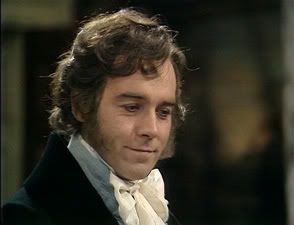
    It stars Sorcha Cusack as Jane Eyre and Michael Jayston as Edward Rochester. While I didn't love, love, love Cusack as Jane Eyre (I liked her well enough but didn't quite love her), I absolutely LOVED, LOVED, LOVED Michael Jayston as Mr. Rochester. With each episode, I came to love him more. And by the time he proposed, well, I was extremely giddy to say the least.

    This adaptation got many things right. I loved the romance of this one. They make a very good couple. And while this Jane smiled a little too much, I loved the twinkle in Rochesters eyes.

    First Conversation, part one, part two
    Second Conversation, part one, part two
    Third Conversation
    Guests at Thornfield
    The Proposal
    Conversation After The Proposal (Next Day)
    Mr. Rochester as Gypsy
    Meeting Mr. Rochester
    Fire Scene
    After the Big Reveal

    © 2012 Becky Laney of Becky's Book Reviews
    Watching Jane Eyre (2011)

    Do I have thoughts and opinions on the newest adaptation of Jane Eyre? Of course, I do!!! But they have calmed down a little since my first viewing of the film last fall.  My first impression was that it was a horrible adaptation. It felt like they shuffled the pages of the script and didn't care to sort them out properly again. I just didn't understand why anyone would want to play around with the timeline and pacing. Why start the movie with Jane Eyre on the run? Why put viewers on the same page with the Rivers family? Why start there?! If you've never read Jane Eyre--never seen a movie version--it could prove VERY confusing to say the least. And I can only guess that it would influence one's impression of Mr. Rochester when we do finally meet him. Knowing from the start that this love story ends badly--with tears, angst, desperation, she's RUNNING away, etc.

    Would this movie make any sense at all if you'd never read Jane? Is there enough of a story there for viewers to piece together the proper story? I can never answer that because I've read Jane Eyre and I've seen Jane Eyre countless times. I didn't necessarily find it confusing--in terms of story--more puzzling in terms of WHY did they choose to interpret it this way? The two are not the same, I know!!! The story does feel rushed, in a way, especially if you're more accustomed to a longer adaptation (2006, 1983, 1973). But it doesn't feel AS rushed as it used to feel to me since I've seen other adaptations that were comparable in length (1944, 1996, 1997, 1970). And compared to the hour-long adaptations I've seen (1934, 1949) this one was so much better.

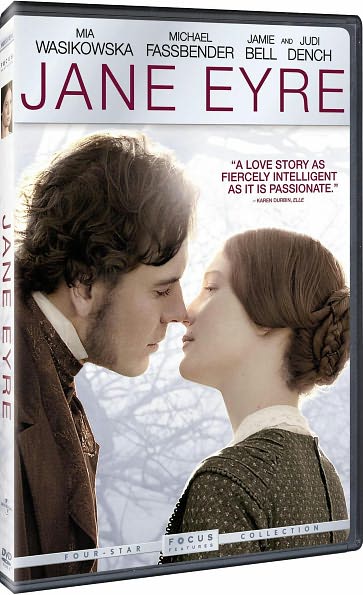
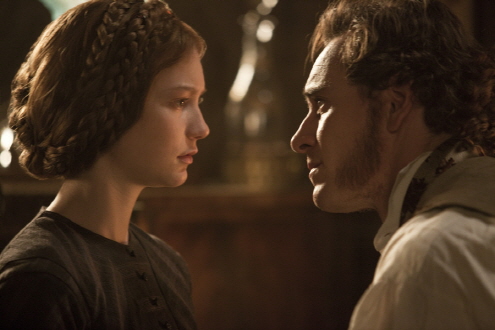
    My first impression of Michael Fassbender in the role of Mr. Rochester was not favorable. Seeing it again, I've softened a little. At first, I thought he got so little time on screen that it would be absolutely impossible to like him--or love him--for his character, personality, charisma, whatever you want to call it. But. Now that I've seen some other (shorter) Jane Eyre adaptations, I realize that it's not so horrible after all. Other adaptations--longer adaptations--give you MORE to love, perhaps. They may add different dimensions to the character of Mr. Rochester--for better or worse--and have their own way of interpreting Mr. Rochester, bringing him to life from the pages of a novel. But I think he does try. One reason why I had such a strong dislike for this portrayal was in how he chose to "react" to Jane's resolution to leave. His anger, his violence, his temper was SO out of control, so over the top. But having seen the 1997 film starring Ciaran Hinds, I have a different perspective. His rage doesn't seem as over-the-top to me because Hinds performance was even worse. Granted, I still don't "like" this scene; it still makes me uncomfortable. But I've seen worse now.

    My first impression of Mia Wasikowska in the role of Jane Eyre was not the best either. I didn't dislike her by any means. The problem was that she didn't leave much of an impression at all--either good or bad. She just left me indifferent. How do I feel now? Well, I can say with absolute confidence that she is so much better (or better suited) in the role than Susannah York, Mary Sinclair, and Virginia Bruce. She at least feels like she belongs to this story. And while she may not have amazed me with her performance, she does a good job. Nothing in her portrayal of Jane is unbelievable or out of character. Nothing she adds to the role offends in any way.

    © 2012 Becky Laney of Becky's Book Reviews

    Dombey and Son

    Dombey and Son. Charles Dickens. 1846-1848. 880 pages.


    DOMBEY sat in the corner of the darkened room in the great arm-chair by the bedside, and Son lay tucked up warm in a little basket bedstead, carefully disposed on a low settee immediately in front of the fire and close to it, as if his constitution were analogous to that of a muffin, and it was essential to toast him brown while he was very new. Dombey was about eight-and-forty years of age. Son about eight-and-forty minutes. Dombey was rather bald, rather red, and though a handsome well-made man, too stern and pompous in appearance, to be prepossessing. Son was very bald, and very red, and though (of course) an undeniably fine infant, somewhat crushed and spotty in his general effect, as yet. On the brow of Dombey, Time and his brother Care had set some marks, as on a tree that was to come down in good time--remorseless twins they are for striding through their human forests, notching as they go--while the countenance of Son was crossed and recrossed with a thousand little creases, which the same deceitful Time would take delight in smoothing out and wearing away with the flat part of his scythe, as a preparation of the surface for his deeper operations.

    I definitely enjoyed reading Charles Dickens' Dombey and Son. While I can't say that it's my new favorite Dickens novel, we had a lovely time together. Reading Dickens requires a time commitment, for the most part. While it's true that Oliver Twist is a quick and relatively easy read, the same can't exactly be said for Dickens' other novels. (Of course, excusing The Christmas Carol which is so easy to read it almost doesn't feel like a proper Dickens novel.) I don't mind committing my time, energy, effort to Dickens because I know that in the end it will prove worth it. He may take a couple of hundred pages to get going strong, but by the end, every little detail will come together and magic will happen. Such was the case with Dombey and Son.

    How do I feel about Paul Dombey? If I had to choose just one word it would be infuriating. He's so proud, arrogant, narrow-minded, egotistical, pompous, cold-hearted, and cruel. He should not be allowed anywhere near women or children. It's no surprise that his first wife didn't "try" very hard to live. True, I'm speaking in jest for the most part, but Mrs. Chick, Dombey's sister, is not. The opening chapters provide ample opportunities for her to chastise her sister-in-law for dying. And Mrs. Chick does feel it was a weakness in her character that she allowed herself to die.

    Dombey has a newborn son, named Paul, of course, what did you expect? He also has a daughter, Florence. It is in his relationship with Florence that the man's true weakness is revealed. For he is a horribly neglectful, sometimes cruel Father who takes great pride in the fact that his daughter is a nobody. That is in his eyes he has no daughter, a girl-child is of no conceivable use to him, so she just doesn't exist to him. He doesn't want anyone around him to act as if she exists either. She's not to be mentioned certainly, and not to be loved either, at least not in a way that's visible to him. For if he sees that someone else is loving and kind to her, it makes him who has no feelings (supposedly) feel guilty for not being a decent human being.

    Florence is the heroine of this novel. She may be a little too good to be true--she's practically flawless. But she's good at providing contrast for every other character in the novel. Because without a doubt almost everyone else who plays a role in this thick novel is very flawed and very human. If Florence has a fault it is in being too kind, too forgiving, too selfless. She makes excuses for her father's defects for almost all of the novel. No matter how he treats her, no matter how heartless he is, no matter what he decrees or sets in place, she's in the background trying to make it work out. She's almost blinded by hope that one day surely she'll be loved and accepted by her father.

    Florence is beloved by so many people! Her younger brother, Paul, loves and adores her until the very end. Her brother's friend, Mr. Toot, loves and adores her too. And then there's Walter Gay. He may be of a different class than Florence, but, he's THE HERO. And it's so very easy to fall in love with Walter. Walter first meets Florence when they're children. He saves her when she's lost--she'd been kidnapped--and restores her to her family. She remains ever-thankful and full of kindness for him, and not only for him but for his uncle and his friend too. (Uncle Sol, Captain Cuttle). Walter works as a lowly clerk for Mr. Dombey; he's completely beneath the notice of Mr. Dombey.

    I won't go into the details of this one--it covers at least a decade if not two--but it was such a treat of a novel! It was a nice blend of light and dark; at times very serious and emotionally compelling but at other times quite comedic. The style is rambling. Readers get plenty of descriptions, details, asides, etc. I always enjoy Dickens' creative names and characterizations. He can be so very quirky!!! In other words, typical Dickens.

    Read Dombey and Son
    • If you're a fan of Charles Dickens
    • If you love literature and classics
    • If you're a fan of the Victorian period
    • If you enjoy long novels
    © 2012 Becky Laney of Becky's Book Reviews