The Princess and Curdie (MG)

The Princess and Curdie. George MacDonald. 1883. 272 pages.

Curdie was the son of Peter the miner. He lived with his father and mother in a cottage built on a mountain, and he worked with his father inside the mountain.

The Princess and Curdie is the sequel to George MacDonald's The Princess and the Goblin. It is set several years after the events of the first book. And those are years that Curdie has spent away from Princess Irene--the young princess and the great-great-great-great-grandmother Irene. He hasn't completely forgotten the Princess and her father, the King. But he's a growing boy, a busy boy, and well, he needs a bit of a wake up call perhaps.

He has his own encounter with the old woman--the grandmother Irene. And it changes EVERYTHING. For she gives him a very unique gift--with the touch of his hand, he can know what a man or woman truly is: if they are truly human, or if there is a "beast" inside. If it sounds confusing, well, it is in a way. It definitely requires you to suspend your disbelief, to fully engage in this FANTASY world. This one excerpt will do a better job than I ever could in describing what this book is like, and what to expect from this adventure-fantasy-quest.
'Curdie,' she said in answer to his eyes, 'you have stood more than one trial already, and have stood them well: now I am going to put you to a harder. Do you think you are prepared for it?'
'How can I tell, ma'am,' he returned, 'seeing I do not know what it is, or what preparation it needs? Judge me yourself, ma'am.'
'It needs only trust and obedience,' answered the lady.
'I dare not say anything, ma'am. If you think me fit, command me.'
'It will hurt you terribly, Curdie, but that will be all; no real hurt but much good will come to you from it.'
Curdie made no answer but stood gazing with parted lips in the lady's face.
'Go and thrust both your hands into that fire,' she said quickly, almost hurriedly.
Curdie dared not stop to think. It was much too terrible to think about. He rushed to the fire, and thrust both of his hands right into the middle of the heap of flaming roses, and his arms halfway up to the elbows. And it did hurt! But he did not draw them back. He held the pain as if it were a thing that would kill him if he let it go—as indeed it would have done. He was in terrible fear lest it should conquer him.
But when it had risen to the pitch that he thought he could bear it no longer, it began to fall again, and went on growing less and less until by contrast with its former severity it had become rather pleasant. At last it ceased altogether, and Curdie thought his hands must be burned to cinders if not ashes, for he did not feel them at all. The princess told him to take them out and look at them. He did so, and found that all that was gone of them was the rough, hard skin; they were white and smooth like the princess's.
'Come to me,' she said.
He obeyed and saw, to his surprise, that her face looked as if she had been weeping.
'Oh, Princess! What is the matter?' he cried. 'Did I make a noise and vex you?'
'No, Curdie, she answered; 'but it was very bad.'
'Did you feel it too then?'
'Of course I did. But now it is over, and all is well. Would you like to know why I made You put your hands in the fire?' Curdie looked at them again—then said:
'To take the marks of the work off them and make them fit for the king's court, I suppose.'
'No, Curdie,' answered the princess, shaking her head, for she was not pleased with the answer. 'It would be a poor way of making your hands fit for the king's court to take off them signs of his service. There is a far greater difference on them than that. Do you feel none?'
'No, ma'am.'
'You will, though, by and by, when the time comes. But perhaps even then you might not know what had been given you, therefore I will tell you. Have you ever heard what some philosophers say—that men were all animals once?'
'No, ma'am.'
'It is of no consequence. But there is another thing that is of the greatest consequence—this: that all men, if they do not take care, go down the hill to the animals' country; that many men are actually, all their lives, going to be beasts. People knew it once, but it is long since they forgot it.'
'I am not surprised to hear it, ma'am, when I think of some of our miners.'
'Ah! But you must beware, Curdie, how you say of this man or that man that he is travelling beastward. There are not nearly so many going that way as at first sight you might think. When you met your father on the hill tonight, you stood and spoke together on the same spot; and although one of you was going up and the other coming down, at a little distance no one could have told which was bound in the one direction and which in the other. Just so two people may be at the same spot in manners and behaviour, and yet one may be getting better and the other worse, which is just the greatest of all differences that could possibly exist between them.'
'But ma'am,' said Curdie, 'where is the good of knowing that there is such a difference, if you can never know where it is?'
'Now, Curdie, you must mind exactly what words I use, because although the right words cannot do exactly what I want them to do, the wrong words will certainly do what I do not want them to do. I did not say you can never know. When there is a necessity for your knowing, when you have to do important business with this or that man, there is always a way of knowing enough to keep you from any great blunder. And as you will have important business to do by and by, and that with people of whom you yet know nothing, it will be necessary that you should have some better means than usual of learning the nature of them.
'Now listen. Since it is always what they do, whether in their minds or their bodies, that makes men go down to be less than men, that is, beasts, the change always comes first in their hands—and first of all in the inside hands, to which the outside ones are but as the gloves. They do not know it of course; for a beast does not know that he is a beast, and the nearer a man gets to being a beast the less he knows it. Neither can their best friends, or their worst enemies indeed, see any difference in their hands, for they see only the living gloves of them. But there are not a few who feel a vague something repulsive in the hand of a man who is growing a beast.
'Now here is what the rose-fire has done for you: it has made your hands so knowing and wise, it has brought your real hands so near the outside of your flesh gloves, that you will henceforth be able to know at once the hand of a man who is growing into a beast; nay, more—you will at once feel the foot of the beast he is growing, just as if there were no glove made like a man's hand between you and it.
'Hence of course it follows that you will be able often, and with further education in zoology, will be able always to tell, not only when a man is growing a beast, but what beast he is growing to, for you will know the foot—what it is and what beast's it is. According, then, to your knowledge of that beast will be your knowledge of the man you have to do with. Only there is one beautiful and awful thing about it, that if any one gifted with this perception once uses it for his own ends, it is taken from him, and then, not knowing that it is gone, he is in a far worse condition than before, for he trusts to what he has not got.'
'How dreadful!' Said Curdie. 'I must mind what I am about.'
'Yes, indeed, Curdie.'
'But may not one sometimes make a mistake without being able to help it?'
'Yes. But so long as he is not after his own ends, he will never make a serious mistake.'
'I suppose you want me, ma'am, to warn every one whose hand tells me that he is growing a beast—because, as you say, he does not know it himself.'
The princess smiled.
'Much good that would do, Curdie! I don't say there are no cases in which it would be of use, but they are very rare and peculiar cases, and if such come you will know them. To such a person there is in general no insult like the truth. He cannot endure it, not because he is growing a beast, but because he is ceasing to be a man. It is the dying man in him that it makes uncomfortable, and he trots, or creeps, or swims, or flutters out of its way—calls it a foolish feeling, a whim, an old wives' fable, a bit of priests' humbug, an effete superstition, and so on.'
'And is there no hope for him? Can nothing be done? It's so awful to think of going down, down, down like that!'
'Even when it's with his own will?'
'That's what seems to me to make it worst of all,' said Curdie.
'You are right,' answered the princess, nodding her head; 'but there is this amount of excuse to make for all such, remember—that they do not know what or how horrid their coming fate is. Many a lady, so delicate and nice that she can bear nothing coarser than the finest linen to touch her body, if she had a mirror that could show her the animal she is growing to, as it lies waiting within the fair skin and the fine linen and the silk and the jewels, would receive a shock that might possibly wake her up.'
'Why then, ma'am, shouldn't she have it?'
The princess held her peace.
'Come here, Lina,' she said after a long pause.
From somewhere behind Curdie, crept forward the same hideous animal which had fawned at his feet at the door, and which, without his knowing it, had followed him every step up the dove tower. She ran to the princess, and lay down flat at her feet, looking up at her with an expression so pitiful that in Curdie's heart it overcame all the ludicrousness of her horrible mass of incongruities. She had a very short body, and very long legs made like an elephant's, so that in lying down she kneeled with both pairs. Her tail, which dragged on the floor behind her, was twice as long and quite as thick as her body. Her head was something between that of a polar bear and a snake. Her eyes were dark green, with a yellow light in them. Her under teeth came up like a fringe of icicles, only very white, outside of her upper lip. Her throat looked as if the hair had been plucked off. It showed a skin white and smooth.
'Give Curdie a paw, Lina,' said the princess.
The creature rose, and, lifting a long foreleg, held up a great doglike paw to Curdie. He took it gently. But what a shudder, as of terrified delight, ran through him, when, instead of the paw of a dog, such as it seemed to his eyes, he clasped in his great mining fist the soft, neat little hand of a child! He took it in both of his, and held it as if he could not let it go. The green eyes stared at him with their yellow light, and the mouth was turned up toward him with its constant half grin; but here was the child's hand! If he could but pull the child out of the beast! His eyes sought the princess. She was watching him with evident satisfaction.
'Ma'am, here is a child's hand!' said Curdie.
'Your gift does more for you than it promised. It is yet better to perceive a hidden good than a hidden evil.'
Curdie sets out on his mission/quest to visit the city of Gwyntystorm--where the King and Princess Irene live. He doesn't know exactly why he's going--what the desired outcome is. But he trust that he's been sent for a reason, for a higher purpose and that is more than enough for him.

I will warn you that Irene, the heroine from The Princess and the Goblin, does not appear until the novel is halfway over. This isn't her story, this isn't her adventure. The adventure belongs more to Curdie and Lina than anyone else. 

This is more fantasy than fairy tale. There is definitely a struggle between good and evil. But I definitely liked it. At times I even loved it.


Read The Princess and Curdie
  • If you're a fan of George MacDonald
  • If you enjoy children's classics
  • If you enjoy children's fantasy
  • If you enjoy C.S. Lewis and J.R.R. Tolkien
  • If you enjoy adventurous fantasy novels with quests; the ongoing struggle between good and evil
© 2012 Becky Laney of Becky's Book Reviews

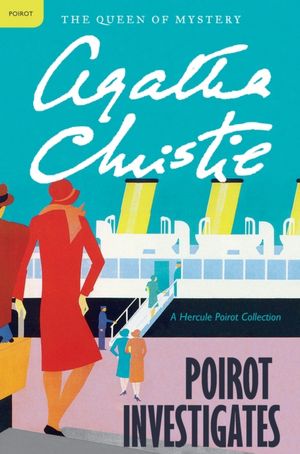
Poirot Investigates

Poirot Investigates. Agatha Christie. 1924/2011. HarperCollins. 256 pages.

I loved Poirot Investigates. Perhaps because I had low expectations? This was my first experience reading Christie's short stories. And since I'm not generally a fan of short stories, I didn't have great expectations for enjoying these fourteen stories. Each story is narrated by Captain Hastings. And he is a character that I tend to love and adore. I've found that Hercule Poirot needs a little help either from Hastings or Ariadne Oliver to help tame his arrogance. I have definitely come to love Hercule Poirot through the mysteries I've read, but, it was a long road for me. It wasn't instantaneous like it was with Miss Marple.

This collection of short stories was originally published in 1925. So it is "early" Poirot. The short stories in this collection are:

The Adventure of the Western Star
The Tragedy at Marsdon Manor
The Adventure of the Cheap Flat
The Mystery of Hunter's Lodge
The Million Dollar Bond Robbery
The Adventure of the Egyptian Tomb
The Jewel Robbery at the Grand Metropolitan
The Kidnapped Prime Minister
The Disappearance of Mr. Davenheim
The Adventure of the Italian Nobleman
The Case of the Missing Will
The Veiled Lady
The Lost Mine
The Chocolate Box

It's not that any one story is amazing or incredible. That's not why I loved this collection. For me it is all about the relationship between Poirot and Hastings. Their conversations. Their friendship. Seeing these two together. There is just something DELIGHTFUL about spending time in their company. 

© 2012 Becky Laney of Becky's Book Reviews

Library Loot: First Trip in July

New Loot:
  • A Midsummer Tights Dream by Louise Rennison
  • Gilt by Katherine Longshore
  • Good night, Mr. Holmes by Carole Nelson Douglas
  • Code Name Verity by Elizabeth Wein
  • The Disappearance of Georgiana Darcy by Regina Jeffers

Leftover Loot:
  • The Stories of Ray Bradbury
  • The Unseen Guest by Maryrose Wood
  • Alphabet of Thorn by Patricia A. McKillip
  • Amped by Daniel H. Wilson
  • Welcome to Heartlake City by Helen Murray
  • Friends Forever by Helen Murray
  •  Crime and Punishment by Fyodor Dostoevsky
  • The Tuesday Club Murders by Agatha Christie
  • A Tale of Two Cities by Charles Dickens
  • Death by Dickens by Anne Perry
  • Princess Academy by Shannon Hale
  • The Rise and Fall of Mount Majestic by Jennifer Trafton
  • The Willoughbys by Lois Lowry  
  • We Two: Victoria and Albert by Gillian Gill.
  • Triumph: The Untold Story of Jesse Owens and Hitler's Olympics by Jeremy Schaap 
  • The No. 1 Ladies' Detective Agency by Alexander McCall Smith
  • Chained by Lynne Kelly
Library Loot is a weekly event co-hosted by Claire and Marg that encourages bloggers to share the books they’ve checked out from the library. If you’d like to participate, just write up your post-feel free to steal the button-and link it using the Mr. Linky any time during the week. And of course check out what other participants are getting from their libraries.     


© 2012 Becky Laney of Becky's Book Reviews

Favorite Books Published in 2012 (So Far)

These are my favorite books published in 2012, representing my reading January through June.

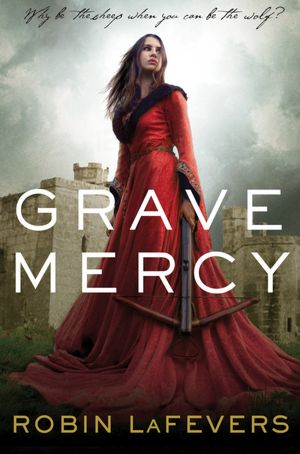
Grave Mercy. Robin LaFevers. 2012. Houghton Mifflin Harcourt. 560 pages.

I chose Grave Mercy because it's rare to meet a five hundred page novel that you just *have* to finish in one sitting because you just cannot fathom putting it down. This one is complex in that it has a little something for every reader: political intrigue, dysfunctional families, suspense, drama, and romance. It is historical fiction with a drop of supernatural--the heroine's father is the god, Death. I just LOVE, LOVE, LOVE the hero, Duval. And in case you don't trust my opinion, read Leila Roy's review, or LizB's review, or Melissa's review.

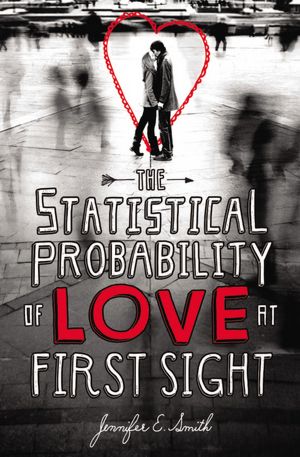
The Statistical Probability of Love at First Sight. Jennifer E. Smith. 2012. Little, Brown. 236 pages.

The Statistical Probability of Love at First Sight has to be one of the best, best YA romances I've read in years. This one is seriously giddy-making. It was practically perfect in every way. If you love romances where it is all about the dialogue, then this one will make you oh-so-happy. So much is revealed about both Oliver and Hadley through their conversations. The whole novel just covers a little over twenty-four hours. And these two are sitting side-by-side on an airplane, so that is just one reason why there is so much conversation in this one...

A Diamond in the Desert. Kathryn Fitzmaurice. 2012. February 2012. Penguin. 256 pages.


Kathryn Fitzmaurice is such a great writer, and if you haven't read her yet--you really should!!! I just loved this book that was about so much more than baseball. I felt for so many of the characters. And the story itself was just wonderfully compelling. A Diamond in the Desert is set in a Japanese internment camp in Arizona during World War II.

Crow. Barbara Wright. 2012. Random House. 304 pages. 

Crow by Barbara Wright is a book that I could gush on and on and on about. Because it is just that wonderful. Because the characterization was amazing. Because the narrative voice was so strong. Because the story was incredibly compelling. Because the drama was so intense. Because it is a story that NEEDS to be told. Because it is so heartbreaking. I mean this book just keeps tugging and tugging and tugging at your heart.

Wonder. R. J. Palacio. 2012. Random House. 320 pages.

Oh how I loved, loved, loved R.J. Palacio's novel Wonder. I just LOVED, LOVED, LOVED it. While it would have been a great novel if it had just been told by Auggie (August), I think it's an even better novel because it is told through multiple points of view which gives readers insight into how others see Auggie--and treat Auggie. But. At the same time reminding us all that we ALL have issues.

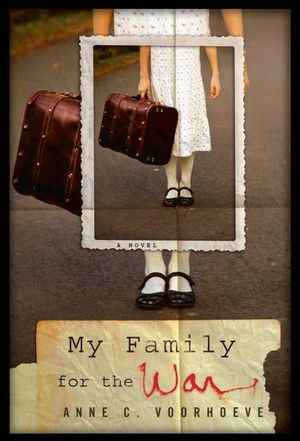
My Family for the War. Anne C. Voorhoeve. Translated by Tammi Reichel. 2012. February 2012. Penguin. 412 pages.  

I wish more people knew about this book. For me, it was definitely wow-worthy! I just loved the characters, the characterization. And the story was so compelling. It made me want to find out more about the kindertransport program.

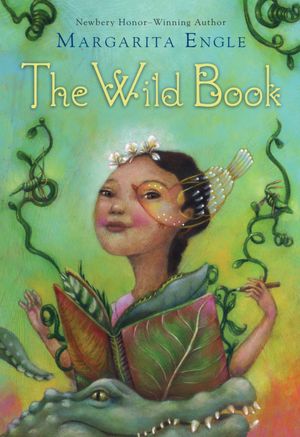
 The Wild Book. Margarita Engle. 2012. Harcourt. 144 pages.

This is another book that I wished more people knew about, that I wish more people were reading. I just LOVE, LOVE, LOVE Margarita Engle's verse novels set in Cuba--and this was no exception. This is a beautiful book, the writing is incredible.

May B. Caroline Rose. 2012. Random House. 240 pages.

While not every reader will find pioneer stories equally appealing, this one is just oh-so-good! For historical fiction fans, this one may just be a must read!!!

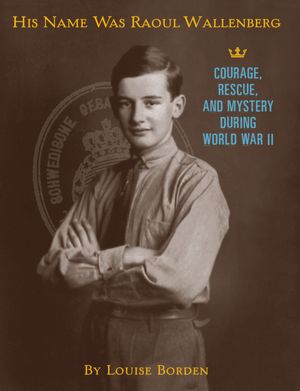
His Name Was Raoul Wallenberg: Courage, Rescue, and Mystery During World War II. Louise Borden. 2012. Houghton Mifflin Harcourt. 144 pages.

I always intend to read more nonfiction than I actually do. This nonfiction Holocaust book is in verse. It is such a compelling story--well researched, well written. And it is a story WORTH telling. I wish  had known Raoul Wallenberg's story sooner. 

If I was including series books:

My Extra Best Friend. Julie Bowe. 2012. Penguin. 224 pages. 
Insurgent. Veronica Roth. 2012. HarperCollins. 525 pages.
Out of Sight, Out of Time. Ally Carter. 2012. Hyperion. 304 pages. 


If I was including almost-almost books:

Irises. Francisco X. Stork. 2012. Scholastic. 304 pages. 
Partials. Dan Wells. 2012. HarperCollins. 480 pages.
Cinder. (The Lunar Chronicles #1). Marissa Meyer. 2012. Feiwel & Friends. 400 pages. 
Tempest. Julie Cross. 2012. St. Martin's Press. 352 pages.  
Kepler's Dream. Juliet Bell. 2012. Penguin.  256 pages. 


And now to turn to PICTURE BOOKS AND EARLY READERS!!!

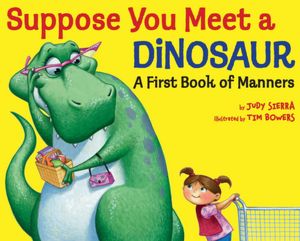
Suppose You Meet a Dinosaur: A First Book of Manners. Judy Sierra. Illustrated by Tim Bowers. 2012. Random House. 40 pages

Zoe Gets Ready. Bethanie Murguia. 2012. Scholastic. 40 pages.


My Heart Will Not Sit Down. Mara Rockliff. Illustrated by Ann Tanksley. 2012. Random House. 40 pages.  

The Lonely Book. Kate Bernheimer. Illustrated by Chris Sheban. 2012. Random House. 40 pages. 


The Duckling Gets a Cookie. Mo Willems. 2012. Hyperion. 40 pages.


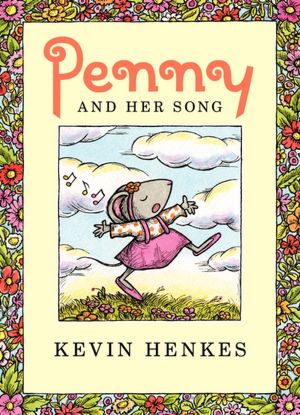
Penny and Her Song. Kevin Henkes. 2012. HarperCollins. 32 pages.


Listen to My Trumpet. An Elephant & Piggie Book. Mo Willems. 2012. Hyperion. 64 pages.
 

© 2012 Becky Laney of Becky's Book Reviews

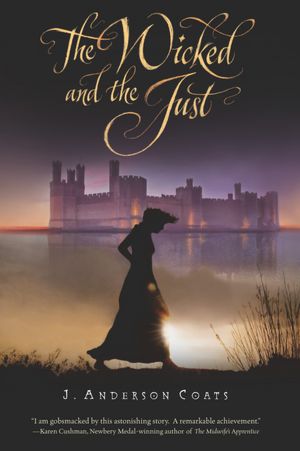
The Wicked and The Just (YA)

The Wicked and The Just. J. Anderson Coats. 2012. Houghton Mifflin Harcourt. 352 pages. 


Tonight at supper, over capon and relish, my father ruined my life. He smiled big, scrubbed his lips with the end of his cloak, and said, "We're moving house." 

I think there is a good chance you will like The Wicked and the Just more than I did. I seem to be in the minority on this one. Apparently I liked all the wrong characters, disliked all the wrong characters, and got my sympathies misplaced. If you happen to believe that there is one right way to read a novel. (I'm not saying that I do, just that some do.)

The Wicked and the Just is set in Wales in 1294. One of our narrators is Cecily, who provides the "English" perspective; the other narrator is Gwenhwyfar, who provides the Welsh perspective. I think I might be the only reader who sympathized more with Cecily and preferred her narrative. Did I love Cecily? No, not exactly. Did I like her? A little. Do I find her perfect and without fault? Hardly! How did I feel about Gwen? Well, I'm in the minority, but I did NOT like her at all, not even a little bit. I really, really, really did not like her narrative. Especially towards the end, after IT happens. I really HATED her. I did.

The King is encouraging the English to move to Wales and settle it. Cecily's father feels his chances are better in Wales than England--he can live cheaper, have better status and opportunity, etc. (He does not have his own estate to inherit or manage because he is a younger son.) The Welsh are not happy to be "managed" or "governed" by the English. They do not "enjoy" the rules and regulations the English put in place. They do not like the added-burden of having the English around. The past few years have been hard ones--famine, I believe--and having the English around telling them how to sell and trade, when to sell and trade, and deciding what is "fair" is too much. The English have the first and last word on what justice looks like, and there are differences depending on if you're Welsh or English. The English are treated preferentially. No doubt about it.

S
P
O
I
L
E
R

The novel is working towards a VIOLENT response to the injustice. There will be blood spilled. A LOT of blood. For the Welsh "rebels" will band together, form an uprising, and slaughter the English. Yes, slaughter. There will be bodies everywhere. Not just a few of the leaders, not just the government, not just the men. But of everyone. Why did they have to die? Because they were there, because they were English. Did it matter how they lived? What kind of person they were? No. Of course not. Everyone must die. The English must be "taught" a lesson. Cecily witnesses the violent slaughter of her father. It is horrific. And by my reckoning, that was not JUSTICE. The slaughter of a whole town is NOT JUSTICE. It is murder. How do two wrongs make a right? Ever?!  So what does this mean for Cecily? Don't expect mercy or compassion from the so-called heroine, Gwen. You won't find it. 

The character I happened to like best of all--better than Cecily, better than Gwen--is Gruffydd.

Read The Wicked and the Just
  • If you enjoy historical fiction set in medieval times
  • If you enjoy reading about peasant revolutions and uprisings
  • If you are looking for fiction set in Wales
© 2012 Becky Laney of Becky's Book Reviews

Austen in August Event!!!!


So excited to be joining Adam (Roof Beam Reader) for Austen in August!!! Ideally, I will be reading a balanced blend.

Amanda Grange:
  • Pride & Pyramids
  • Edmund Bertram's Diary
  • Captain Wentworth's Diary
  • Dear Mr. Darcy* (I would LOVE it if I could get a review copy of this!)
Nonfiction:
  • All Roads Lead to Austen by Amy Elizabeth Smith
  • Jane's Fame: How Jane Austen Conquered the World by Claire Harman
  • Jane Austen: A Life Revealed by Catherine Reef
Jane Austen
  • Emma
  • Mansfield Park 
  • Persuasion
Other fiction:
  • Jane Vows Vengeance by Michael Thomas Ford
  • Mansfield Park Revisted by Joan Aiken
  • Emma Watson: The Watsons Completed by Joan Aiken
  • Lady Vernon and Her Daughter by Jane Rubino and Caitlen Rubino-Bradway
  • Suspense and Sensibility by Carrie Bebris
  • The Deception at Lyme by Carrie Bebris
  • The Disappearance of Georgiana Darcy by Regina Jeffers
  • Murder at Mansfield Park by Lynn Shepherd
 I'll stop there. The truth is I could probably list fifty or so books that relate in one way or another to Jane Austen or her characters.


© 2012 Becky Laney of Becky's Book Reviews

Grave Mercy (YA/Adult)

Grave Mercy. Robin LaFevers. 2012. Houghton Mifflin Harcourt. 560 pages.
Brittany 1485
I bear a deep red stain that runs from my left shoulder down to my right hip, a trail left by the herbwitch’s poison that my mother used to try to expel me from her womb. That I survived, according to the herbwitch, is no miracle but a sign I have been sired by the god of death himself.
I am told my father flew into a rage and raised his hand to my mother even as she lay weak and bleeding on the birthing bed. Until the herbwitch pointed out to him that if my mother had lain with the god of death, surely He would not stand idly by while my father beat her.
I risk a glance up at my husband-to-be, Guillo, and wonder if my father has told him of my lineage. I am guessing not, for who would pay three silver coins for what I am? Besides, Guillo looks far too placid to know of my true nature. If my father has tricked him, it will not bode well for our union. That we are being married in Guillo’s cottage rather than a church further adds to my unease.
I feel my father’s heavy gaze upon me and look up. The triumph in his eyes frightens me, for if he has triumphed, then I have surely lost in some way I do not yet understand. Even so, I smile, wanting to convince him I am happy—for there is nothing that upsets him more than my happiness.
Wow. If you're looking for two words: assassin nuns. Of course, our heroine, Ismae isn't a nun in the Catholic church. No, she's in a special nunnery, the nuns live to serve Death whom they call St. Mortain, and she's received very special training. They've taught her to kill, to be an assassin. The nuns are loyal to the Duchess of Brittany, and the victims are often her political enemies--foreign or domestic--those that pose the greatest threat to Brittany's independence.

While we do see her first few jobs carried out, most of the novel focuses on one job in particular. The abbess wants her to team up with Duval, the Duchess' older brother and her most trusted friend and advisor. She's to pose as his mistress, and travel with him to the Duchess' household. There she will "help him" find any possible traitors. He doesn't exactly trust her, he knows exactly what she's capable of, and who she serves. He knows that if given orders, she'd kill him to please her Lord. She doesn't exactly trust him either. Though the marque hasn't appeared on him yet--the special sign or symbol that she sees on her victims before they're killed--she knows that he could be lying to her, that his loyalty to the Duchess could be an act. But both know that it is of the utmost importance to protect the Duchess, and to find any traitors and uncover any conspiracies, if that means working together, so be it. Of course, this means spending a LOT of time with one another...

...the time will come when Ismae must choose who to trust and who to believe...

Politics. Romance. Drama. Dysfunctional Families. Poison. Murder. Betrayal. Mystery. Suspense.

This one probably won't please every reader. Some may not be able to get past the premise of old or ancient religions continuing to exist under the guise of Christianity. And this one isn't squeaky clean. For those that have no tolerance whatsoever when it comes to sensuality. (I would consider it mild up until the very end when their relationship changes.) But. For those that can, well, this is one COMPELLING read. My favorite character happens to be Duval. I just LOVED him. I did. He was such a swoon-worthy hero!!! And our heroine, Ismae, is quite strong and resourceful. I loved the drama. I loved the history. I loved seeing the court life and family drama play out. I enjoyed the setting, the characters, the writing. It worked really well for me.

Favorite quotes:
"Are you drunk?" I try to put as much scorn into my words as he did.
"No. Yes. Perhaps a little. Definitely not enough." The bleakness is back and he turns to stare into the flames.
I am torn between wanting to leave him to wallow in his despair and wanting to rush to his side and chase that look from his eyes. That I long to do this appalls me, sets panic fluttering against my ribs.
"I suggest you return to your room," Duval says, his gaze still fixed woodenly on the fire. "Unless you have come to practice your lessons of seduction on me?" His mouth twists in bitter amusement. "That could well entertain me till sunrise."
I jerk my head back as if I have been slapped. "No, milord. I had thought only to pray for your soul if Madame Hivern had seen fit to poison you. Nothing more." And with that, I turn and flee the room, then bolt the door against the disturbing glimpse of both his soul and mine. Whatever games are being played here, he is master at them, and I will do well to remember that. (155)
"What is my fair assassin so afraid of? I wonder."
"I'm not afraid."
Duval tilts his head to the side. "No?" He studies me a long moment, then rises out of his chair. I hold my breath as he crosses to my bed. "Are you afraid I will draw closer, perhaps?" His voice is pitched low, little more than a purr. My breath catches in my throat, trapped by something I long to call fear but that doesn't feel like fear at all. (174)
His smile flashes, quick and surprising in the darkness. "When one consorts with assassins, one must expect to dance along the edge of a knife once or twice. I bid you good night." (218)
Read Grave Mercy
  • If you're a fan of Robin LaFevers
  • If you're a fan of historical romance, with a fantasy feel to it (mythology/supernatural)
  • Also if you're a fan of mystery/suspense/political thrillers

© 2012 Becky Laney of Becky's Book Reviews