Ten Stories by Ray Bradbury

A few years ago I made a good attempt to read The Stories of Ray Bradbury. This collection of short stories is over 1,100 pages!!! I did manage to read just over 400 pages. But. It wasn't until his death that I decided I really needed to make a second attempt. Here are the three posts that cover the first attempt: first twelve, next twenty-six, next three. 

"The Man Upstairs"
He remembered how carefully and expertly Grandmother would fondle the cold cut guts of the chicken and withdraw the marvels therein; the wet shining loops of meat-smelling intestine, the muscled lump of heart, the gizzard with the collection of seeds in it. 
My thoughts: While this one wouldn't normally ever be listed among my favorites, viewed solely in terms of the ten stories I'm sharing today, it would probably be among the best. It is creepy, odd, and the details are, well, disgusting. But it actually made sense, a twilight zone kind of sense, but sense. You knew what the beginning, middle, and end all meant. As for what it is about, well, let's just say something not quite human moves into Grandma's boarding house, and, Douglas, the young hero of the story, sees it for what it is.

"Touched With Fire"
They stood in the blazing sunlight for a long while, looking at the bright faces of their old-fashioned railroad watches, while the shadows tilted beneath them, swaying, and the perspiration ran out under their porous summer hats.
My thoughts: This one would be among my favorites--viewed solely in terms of this ten. This story is about two men who try their very best to warn a cranky old woman to watch her attitude. Why? Well, they know HOW VERY HOT it is, and how the heat is getting to everyone, and they have a theory that 92 degrees is the perfect degree for murder.
More murders are committed at ninety-two degrees Fahrenheit than any other temperature. Over one hundred, it's too hot to move. Under ninety, cool enough to survive. But right at ninety-two degrees lies the apex of irritability, everything is itches and hair and sweat and cooked pork. The brain becomes a rat rushing around a red-hot maze. The least thing, a word, a look, a sound, the drop of a hair--and irritable murder. Irritable murder, there's a pretty and terrifying phrase for you. (422)
Will she listen? Will the thermometer make it that fatal degree?

"The Emissary"
Martin knew it was autumn again, for Dog ran into the house bringing wind and frost and a smell of apples turned to cider under trees.
My thoughts: Not a favorite, but it gets worse. Martin LOVES his Dog because Dog always brings back visitors to visit Martin. He does have a favorite visitor, Miss Haight. When Miss Haight dies, Martin gets lonely, then, Dog disappears too...will he ever get visitors again... This one is creepy, and would be perfect for the R.I.P challenge, and it does still make sense. It's a creepy story that won't necessarily be for everyone. But I still knew what happened in it.

"The Jar"
It was one of those things they keep in a jar in the tent of a sideshow on the outskirts of a little, drowsy town. 
My thoughts: Didn't like this one. I'm not sure I hated it, but I didn't care for it. Every one sees something different in this jar--one sees a dead baby, one sees a dead kitten, one sees a dead jellyfish, etc. So what is really in the jar? Well, no one knows...for sure...and would knowing be a good thing or a bad thing?

"The Small Assassin"
Just when the idea occurred to her that she was being murdered she could not tell. 
My thoughts: For the first two or three pages, I thought, well, this might be a good companion piece to "The Yellow Wallpaper." A few more pages, and I thought THIS IS THE WORST STORY EVER. I seriously hate this one. HATE, HATE, HATE. It is about a woman who thinks her newborn baby is trying to KILL her. I won't spoil this one, I won't. But believe me it is AWFUL.

"The Next in Line"
It was a little caricature of a town square.
My thoughts: I'm not sure I understood enough of this one to actually hate it. I'm not sure if it's just unreliable narrators at work, if there's a thread of insanity at play, or, if it's meant to be one of those bizarre Twilight-Zone type stories where there is no explanation, but, by the end of the story I was very confused and a bit annoyed. It appears to be about a couple on vacation in Mexico, and the woman keeps getting more and more anxious because they seem "trapped" in this town--their car broke down and the mechanic is supposed to be fixing it.

"Jack in the Box"
He looked through the cold morning windows with the Jack-in-the-Box in his hands, prying the rusted lid.
My thoughts: Does this story make sense to anyone? Am I the only one who is confused? This story is 90% nonsense, the only paragraphs that make sense are the last two or three. The only thing that has changed is the narrator--we go from a child to an outsider adult perspective. But I couldn't say exactly what this one is about.

"The Leave-Taking"
She was a woman with a broom or a dustpan or a washrag or a mixing spoon in her hand.
My thoughts: I liked this one. It's not that I love it exactly, though it is perhaps the most normal, most sane of the ten I'm discussing today. This story is about the death of a great-grandmother and how she gathers her family around her, talks to them, passes along words of wisdom, and welcomes death.

"Exorcism"
She came out of the bathroom putting iodine on her finger where she had almost lopped it off cutting herself a chunk of coconut cake.
My thoughts: I believe this one is supposed to be a comedy! I certainly read it that way. A rivalry gone wrong between two women who want to be president of the same club. One woman, the narrator, is the clumsiest woman in town. She's accusing her neighbor and fellow club-member of being a witch and using witchcraft to keep her from winning the election. (She always has only one vote--her own.) She also writes out a list of every "accident" and illness she's had in the past year. (She totals it all up and says that this other woman is responsible for $98 worth of medicine.) No one is taking her seriously, which, is a good thing I suppose. It ends in laughter and tears.

"The Happiness Machine"
On Sunday morning Leo Auffmann moved slowly through his garage, expecting some wood, a curl of wire, a hammer or wrench to leap up crying, "Start here!" But nothing leaped, nothing cried for a beginning.
My thoughts: The story of a man obsessed with building a "happiness machine" doesn't realize that happiness is made of of small passing moments, that happiness isn't something that you can program into a machine, it isn't something that can be bought or manufactured. He is driving his family--particularly his wife--CRAZY with his obsession to build this machine. He just doesn't get it...will he ever?

Current Progress: 540/1112

© 2012 Becky Laney of Becky's Book Reviews

The Sunday Salon: Watching Jane Eyre (1997)

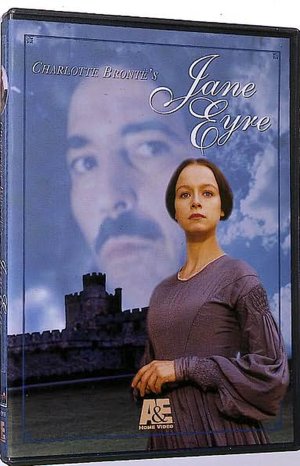
Today I'm sharing my thoughts on the 1997 adaptation of Charlotte Bronte's Jane Eyre. This film stars Samantha Morton and Ciaran Hinds.

Was it faithful to Charlotte Bronte's novel? No and Yes. OR, if you prefer, yes and no. Did every character from the book make it into the film? NO. Did every scene from the book make it into the film? NO. Did every important character and every important scene make it into the film? Well? I don't know how to answer that.

For example, in this adaptation, Jane does NOT learn that the Rivers are her cousins, and she does NOT inherit the money from her dead uncle. Rosamond Oliver and Mary Rivers have both disappeared from this adaptation. But how important are the Rivers to the story as a whole? Do people love Jane Eyre because she runs away and spends time with cousins she didn't even know she had? Or is the romance itself most important to readers and viewers?

Another example, in this adaptation, Jane does leave Thornfield Hall to visit her dying aunt, but, if you blink you'll miss it. Because within seconds of her leaving she's returned. We're told she spent a month there, but, we don't see a minute of it. You have to ask yourself if you love Jane Eyre because of those scenes, that time spent with her dying aunt, and her Reed cousins, or do you love Jane Eyre because of the main story with Mr. Rochester and his mad wife. 

Was it faithful to the book where it counted the most? Was it faithful in the character of Jane Eyre? Was it faithful in the character of Mr. Rochester? Did it do justice to their romance? Were the scenes between Jane and Edward done properly? Did the actors interpret the characters in a way that was true to the book? Did anything feel off? 

I happened to enjoy Samantha Morton as Jane Eyre. I really, really liked her in this role. I thought she did a great job being Jane. I loved her narration, for example. I thought she did a good job with getting the character right. She is definitely a good reason to watch this adaptation.

As for Ciaran Hinds, well, it's hard for me to say. For one thing, a couple of his scenes made me want to cringe. Truly. I did not like the way he portrayed Mr. Rochester. There were a couple of scenes I thought he was TOO angry, TOO violent, TOO forceful, TOO scary, TOO intimidating, TOO dramatic. Particularly the oh-so-crucial after-the-non-wedding, post-big-reveal scene. His temper tantrum is just so out of character. He's way too physical, too physically abusive--bordering on it anyway. And the whole scene just makes me cringe. That is NOT the way it's supposed to go, that is NOT how it was handled in the book.

And at times I felt Hinds' Mr. Rochester was not dimensional enough, sure, he got a few of the emotions down, but, did he capture the full complexity of Bronte's hero?! I'm not sure he did. Also, on a more personal note, the mustache and sideburns bothered me. From certain angles, I kept seeing Tennessee Ernie Ford. (When I wasn't thinking of this animated villain.)

Was this adaptation faithful when it comes to portraying the relationship between Jane and Edward? I think it was. I think the dialogue between them worked. I think many of their scenes were faithful to the book--for the most part. 

I thought this was a very comfortable Jane Eyre to watch. It was just around two hours. You could sit and watch it comfortably all at once. Yes, it condensed things, yes, certain things were missing from this adaptation. But it made sense, it flowed smoothly. I found many, many things delightful about it. I enjoyed many of the scenes, of course, I had issues with a couple of scenes. I didn't particularly love the first meeting between Jane Eyre and Mr. Rochester, I thought it was way too dramatic, definitely over-the-top. But other scenes made up for it, in my opinion.

I did think the film did a good job creating ambiance--at capturing the gothic elements of this one. There were scenes that captured the mystery, suspense, and horror of the original.

I thought Abigail Cruttenden brought something unique to Blanche Ingram--for better or worse. In this film, she was portrayed sympathetically, or more sympathetically than in other adaptations. While we're still told that she was mainly after Mr. Rochester's money, she's not portrayed one-dimensionally as vain and haughty. While she may not be exactly friendly towards "the governess." She doesn't come across as mean and deserving of what she gets. (That is Mr. Rochester using and manipulating her, leading her to believe one thing, but in all truth just trying to make Jane jealous.) Is that a good thing? Well, I suppose that depends on your perspective. Would a nice Caroline Bingley work in Pride and Prejudice? Are people so determined to not like Blanche Ingram that this slightly modified Blanche would offend? I'm not sure.

 St. John Rivers is likewise portrayed sympathetically. He doesn't come across as offensively as he does in other adaptations. He actually seems quite nice, quite pleasant, as someone who actually has people-skills.

Have you seen this adaptation? What did you think of it?

Watch Jane Eyre
  • If you're a fan of the book
  • If you're a fan of Victorian period dramas 
Other Jane Eyre (movie) reviews


    © 2012 Becky Laney of Becky's Book Reviews
    June Reflections

    In June I read 53 books!!! And this may just be my most balanced month so far--look, I read picture books, YA books, adult books, graphic novels, nonfiction, and poetry! That doesn't happen very often!

    My favorite picture book about books: Miss Dorothy and Her Bookmobile. Gloria M. Houston. OR The Lonely Book. Kate Bernheimer.
    My favorite concept book: Into the Outdoors by Susan Gal.
    My favorite classic fantasy: The Light Princess. George MacDonald. 1864. 110 pages.
    My favorite children's book: My Extra Best Friend. Julie Bowe. 2012. Penguin. 224 pages.

    My favorite MG: Kepler's Dream. Juliet Bell. 2012. Penguin.  256 pages.
    My favorite YA: Insurgent. Veronica Roth. 2012. HarperCollins. 525 pages.
    My favorite science fiction: Fahrenheit 451. Ray Bradbury.
    My favorite classic: Dombey and Son. Charles Dickens.
    My favorite mystery: The Seven Dials Mystery. Agatha Christie.
    My favorite nonfiction: Becoming Queen Victoria: The Tragic Death of Princess Charlotte and the Unexpected Rise of Britain's Greatest Monarch. Kate Williams.
    My favorite picture book biography:  Here Come the Girl Scouts!: The Amazing All-True Story of Juliette "Daisy" Gordon Low and Her Great Adventure. By Shana Corey.
    My favorite historical romance: Short-Straw Bride. Karen Witemeyer.
    My favorite play: Much Ado About Nothing. William Shakespeare.
    My favorite short story: "The Fire Balloons" or "The Wilderness" from Martian Chronicles. Ray Bradbury.
    My favorite poetry book: Out of This World: Poems and Facts About Space. Amy Sklansky.

    Board Books, Picture Books, Early Readers:
    1. Green. Laura Vaccaro Seeger. 2012. Roaring Brook Press. 40 pages.
    2. Jonathan and Martha. Petr Horacek. 2012. Phaidon Press. 32 pages.
    3. A Hen For Izzy Pippik. Aubrey Davis. Illustrated by Marie Lafrance. 2012. Kids Can Press. 32 pages.
    4. Good Night, Laila Tov. Lauren Snyder. Illustrated by Jui Ishida. 2012. Random House. 32 pages.
    5. Miss Dorothy and Her Bookmobile. Gloria M. Houston. Illustrated by Susan Condie Lamb. 2011. HarperCollins. 32 pages.
    6. Into the Outdoors by Susan Gal. 2011. Random House. 40 pages.
    7. The Lonely Book. Kate Bernheimer. Illustrated by Chris Sheban. 2012. Random House. 40 pages.
    8. The Smiley Book of Colors. Ruth Kaiser. 2012. Random House. 32 pages. 
    9. A Book of Cheerful Cats and Other Animated Animals. J.G. Francis. 1879/1903* Century Co. New York. 45 pages**
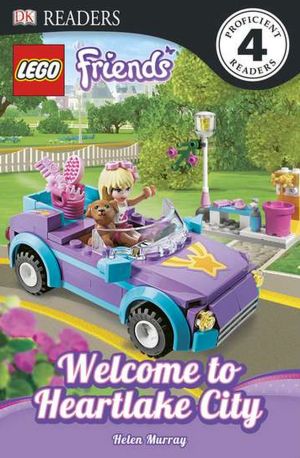
    10. LEGO FRIENDS: Welcome to Heartlake City. Helen Murray. 2012. DK Readers, 48 pages.  
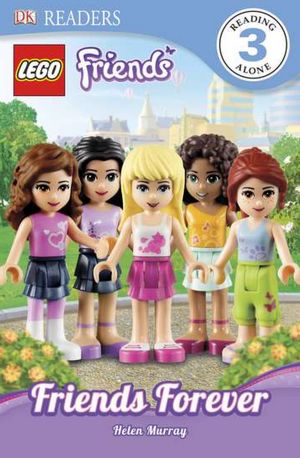
    11. LEGO Friends: Friends Forever. Helen Murray. 2012. DK Readers. 48 pages. 


    Middle Grade and Young Adult Novels:
    1. The Princess and the Goblin. George MacDonald. 1872. 259 pages. 
    2. The Light Princess. George MacDonald. 1864. 110 pages. 
    3. My Extra Best Friend. Julie Bowe. 2012. Penguin. 224 pages. 
    4. The Great Cake Mystery. Alexander McCall Smith. Random House. 96 pages.    
    5. No Safety in Numbers. Dayna Lorentz. 2012. Random House. Penguin. 288 pages.   
    6. Insurgent. Veronica Roth. 2012. HarperCollins. 525 pages. 
    7. Unbreak My Heart. Melissa Walker. 2012. Bloomsbury. 240 pages. 
    8. Irises. Francisco X. Stork. 2012. Scholastic. 304 pages.
    9. Tempest. Julie Cross. 2012. St. Martin's Press. 352 pages.  
    10. Kepler's Dream. Juliet Bell. 2012. Penguin.  256 pages.
    Adult Books:
    1. Cousin Henry. Anthony Trollope. 1879. 336 pages. 
    2. Diary of a Pilgrimage. Jerome K. Jerome. 1891. 192 pages.
    3. Dombey and Son. Charles Dickens. 1846-1848. 880 pages.
    4. Fahrenheit 451. Ray Bradbury. 1953/2003. Random House. 190 pages.
    5. Lin McLean. Owen Wister. 1898/1998. Forge. 230 pages.
    6. The Lost Wife. Alyson Richman. 2011. Penguin. 352 pages.
    7. The Man in the Brown Suit. Agatha Christie. 1924/2012. HarperCollins. 320 pages.
    8. The Mystery of the Blue Train. Agatha Christie. 1928/2011. HarperCollins. 320 pages.
    9. Martian Chronicles. Ray Bradbury. HarperCollins. 1997 edition. 288 pages.
    10. Mrs. McGinty's Dead. Agatha Christie. 1952/2011. HarperCollins. 272 pages.
    11. Much Ado About Nothing. William Shakespeare. 1599.
    12. Othello. William Shakespeare. 1603.
    13. One, Two Buckle My Shoe. Agatha Christie. 1940/2011. HarperCollins. 240 pages.
    14. The Secret Adversary. Agatha Christie. 1922/2012. HarperCollins. 352 pages.
    15. The Seven Dials Mystery. Agatha Christie. 1929/2012. HarperCollins. 304 pages.
    16. Smuggled. Christina Shea. 2011. Grove/Atlantic. 256 pages.
    Graphic Novels: 
    1. Ray Bradbury's Something Wicked This Way Comes, The Authorized Adaptation. Ron Wimberly. Introduction by Ray Bradbury. 2011. FSG. 144 pages.  
    2. Ray Bradbury's The Martian Chronicles, The Authorized Adaptation. Dennis Calero. Introduced by Ray Bradbury. 2011. FSG. 160 pages.
    Nonfiction Books:
    1. Magnificent Obsession: Victoria, Albert, and the Death that Changed the British Monarchy. Helen Rappaport. 2012. St. Martin's Press. 352 pages.
    2. Becoming Queen Victoria: The Tragic Death of Princess Charlotte and the Unexpected Rise of Britain's Greatest Monarch. Kate Williams. 2010. Random House. 464 pages.  
    3. Murder in the First-Class Carriage. The First Victorian Railway Killing. Kate Colquhoun. 2011. Overlook Press. 352 pages.  
    4. Here Come the Girl Scouts!: The Amazing All-True Story of Juliette "Daisy" Gordon Low and Her Great Adventure. By Shana Corey. Illustrated by Hadley Hooper. 2012. Scholastic. 40 pages.
    5. Those Rebels, John and Tom. By Barbara Kerley. Illustrated by Edwin Fotheringham. 2012. Scholastic. 48 pages.
    6. Just Behave, Pablo Picasso! By Jonah Winter. Illustrated by Kevin Hawkes. Scholastic. 48 pages.
    7. Bon Appetit! The Delicious Life of Julia Child. Jessie Hartland. 2012. Random House. 48 pages.   
    Poetry:
    1. Out of This World: Poems and Facts About Space. Amy Sklansky. Illustrations by Stacey Schuett. 2012. Random House. 40 pages.
    2. Bug Off! Creepy, Crawly Poems. Jane Yolen. Photographs by Jason Stemple. 2012. Boyds Mill Press. 32 pages.
    Christian Fiction and Nonfiction:
    1. Jesus Is Victor: A Fresh Perspective on the Book of Revelation. A.W. Tozer. Compiled and Edited by Gerald B. Smith. 1989/2007. WingSpread Publishers. 143 pages. 
    2. Short-Straw Bride. Karen Witemeyer. 2012. Bethany House. 368 pages. 
    3. Mary Magdalene. Diana Wallis Taylor. 2012. Revell. 304 pages. 
    4. The Tozer Pulpit*. Volume 1. A.W. Tozer. 140 pages.
    5. The Gift. (Chiveis Trilogy #2) Bryan Litfin. 2011. Crossway. 416 pages.

    © 2012 Becky Laney of Becky's Book Reviews

    Library Loot: Sixth Trip in June

    New Loot:
    • The Stories of Ray Bradbury
    • The Unseen Guest by Maryrose Wood
    • Alphabet of Thorn by Patricia A. McKillip
    • Amped by Daniel H. Wilson
    • Grave Mercy by Robin LaFevers
    • Welcome to Heartlake City by Helen Murray
    • Friends Forever by Helen Murray
    • Castle Rouge by Carole Nelson Douglas
    • Crime and Punishment by Fyodor Dostoevsky
    • The Tuesday Club Murders by Agatha Christie
    • A Tale of Two Cities by Charles Dickens
    • The Trail of the Serpent by Mary Elizabeth Braddon
    • Death by Dickens by Anne Perry
    • Oscar Wilde and a Game Called Murder by Gyles Brandreth
    • Oscar Wilde and the Dead Man's Smile by Gyles Brandreth

    Leftover Loot:
    • Princess Academy by Shannon Hale
    • The Rise and Fall of Mount Majestic by Jennifer Trafton
      The Willoughbys by Lois Lowry  
    • We Two: Victoria and Albert by Gillian Gill.
    • Triumph: The Untold Story of Jesse Owens and Hitler's Olympics by Jeremy Schaap 
    • The No. 1 Ladies' Detective Agency by Alexander McCall Smith
    • Chained by Lynne Kelly
    Library Loot is a weekly event co-hosted by Claire and Marg that encourages bloggers to share the books they’ve checked out from the library. If you’d like to participate, just write up your post-feel free to steal the button-and link it using the Mr. Linky any time during the week. And of course check out what other participants are getting from their libraries.    

    © 2012 Becky Laney of Becky's Book Reviews

    Lin McLean

    Lin McLean. Owen Wister. 1898/1998. Forge. 230 pages.

    In the old days, the happy days, when Wyoming was a Territory with a future instead of a State with a past, and the unfenced cattle grazed upon her ranges by prosperous thousands, young Lin McLean awaked early one morning in cow camp, and lay staring out of his blankets upon the world. 

    It helped me tremendously to know that this was Owen Wister's first novel. (I am even tempted to say "novel" just because this book feels more like a short story collection than a cohesive novel.) Unfortunately, I didn't learn that this was his first novel until after I read it and had been disappointed. Last year, I read and LOVED, LOVED, LOVED Owen Wister's novel The Virginian. It was a complete surprise to me because I am allergic to westerns. I wanted to find another Wister novel that compared to The Virginian, and I didn't find it in Lin McLean. (Though the Virginian makes a couple of appearances in the stories within Lin McLean.) But is that fair to expect Lin McLean to be as good, as great as The Virginian? Probably not.

    The stories found in Lin McLean are
    • How Lin McLean Went East
    • The Winning of the Biscuit-Shooter
    • Lin McLean's Honey-Moon
    • A Journey In Search of Christmas
    • Separ's Vigilante
    • Destiny at Drybone
    • In the After-Days (a poem, not a story)
    If I had to sum up the book, sum up the stories, I would say Lin McLean was about a cowboy who was good at losing his money gambling, a man easily distracted by women and cards and booze, a man who despite his shortcomings found the love of a young boy and a good woman.

    My favorite stories were, without a doubt, "Lin McLean's Honey-Moon," "Separ's Vigilante," and "Destiny at Drybone."

    Read Lin McLean
    • If you like westerns
    • If you're looking to catch early glimpses of the man who would become THE VIRGINIAN
    • If you like western short stories
    © 2012 Becky Laney of Becky's Book Reviews

    Lego Friends Chapter Books

    LEGO FRIENDS: Welcome to Heartlake City. Helen Murray. 2012. DK Readers, 48 pages. 

    Welcome to Heartlake City! There is always something fun and exciting to do here. You could explore the boutiques and cafes downtown, or enjoy an open-air concert in the park. Perhaps you might like to go to the pool to sunbathe and chat with friends, or catch a boat to Lighthouse Island to search for buried treasure? Anything is possible in Heartlake City. 

    This DK Reader stars Olivia, Emma, Stephanie, Andrea, and Mia. Characters some may know from a line of Lego products, Lego Friends. This book introduces the five characters, sharing what makes each girl unique, and also introduces readers to Heartlake City. The book uses photographs throughout the chapters. Each chapter highlights a specific Lego set. For example, "A Fun Place To Work" features "City Park Cafe," and "A Girly Day Out" features, "Butterfly Beauty Shop." So is there a story to this reader? Yes and no. The writing is not wonderful. But it makes some effort to be descriptive, I think.
    Andrea works at the cafe with Marie, the owner. Marie is a great cook and a wonderful boss. For years, Marie's friends told her that she should open a cafe so the whole of Heartlake City could sample her food--so one day she did! Marie bakes cakes and pies before the cafe opens. Her favorite moment of the day is when she pulls out a tasty cake from the oven. The wonderful smell that greets her makes all the hard work worthwhile. The cafe stays busy all day. Andrea and Marie rush around taking orders and delivering tasty food to eager customers. Andrea is an amazing singer and is always dreaming about becoming a pop star, even at work! Fortunately for Andrea, Marie encourages her to perform for customers at the cafe. With Marie's fantastic baking and Andrea's incredible singing, the cafe draws in customers from all across Heartlake City! (8-9)
    and
    There's so much to see and do in Heartlake City, but sometimes there's no place like home. And Olivia's house is one of the coolest in the city. The girls like to head to Olivia's house to spend time together. Olivia, Andrea, Mia, Emma, and Stephanie have many choices about where to go in the beautiful house. They can watch movies in the comfortable living room, cook together in the spacious kitchen, and stargaze at night from the roof terrace. The friends also enjoy spending time with Olivia's parents. Anna and Peter are always there with a sympathetic ear whenever the girls have any worries. (16-17)
    Some of the descriptions are too much, in my opinion. It doesn't sound completely natural. 

    And the chapters, in my opinion, are more scenarios than actual stories, almost suggestions in how to play. And the stories are definitely directed by the product. (Does the set come with a glass? Better mention that Andrea gets thirsty while playing music.)

    But. The photographs are enjoyable. The photographs make the sets look like a lot of fun.

    LEGO Friends: Friends Forever. Helen Murray. 2012. DK Readers. 48 pages. 

    Heartlake City is a wonderful place to live. Whether you love nature, relaxation, shopping, or going to cool parties and events, you are sure to find lots to do in this beautiful city. For one lucky girl, Heartlake City has just become her new home. Her name is Olivia and she is looking forward to all the fun and excitement the city promises. Olivia can't wait to plan an outdoor adventure in the mountains, take a boat out onto Lake Heart, and go to open-air concerts in the park. But, most of all, Olivia is excited to make lots of new friends. With all the cool things to do in her new city, that should be no problem at all!

    Friends Forever is a DK Reader starring Olivia, Mia, Stephanie, Emma, and Andrea. The first chapter or two introduce Olivia as a newcomer to the city, but, within a few chapters, she's definitely settled in and the center of a circle of friends. All the friends, of course, are super-super-talented and quite unique. Each has a long, long list of hobbies; each is confident.
    Olivia is a clever, hardworking student and she is looking forward to studying at Heartlake School. Her favorite subjects are science, art, and history. Olivia is a practical person who loves to solve problems. She likes to make and fix things. One day she hopes to be a scientist, inventor, or engineer. Olivia enjoys nature and hiking and she is eager to explore the beautiful woods, coastline, and mountains of Heartlake City. Unfortunately, this will have to wait because Olivia's parents have told her that she must unpack all of the boxes in her room first! (6-7)
    This one is a chapter book. There's a chapter devoted to each character, Olivia, Mia, Stephanie, Emma, and Andrea. And two chapters are devoted to describing how these five friends are the best, best friends ever. I must admit that this book, Friends Forever, does a better job at story than Welcome to Heartlake City. Not that the writing is wonderful. It doesn't exactly sound natural.

    But the photographs are fun, they make the toys look fun.

    Read Friends Forever and Welcome to Heartlake City
    • If your child LOVES LEGO Friends
    © 2012 Becky Laney of Becky's Book Reviews

    Murder in The First-Class Carriage

    Murder in the First-Class Carriage. The First Victorian Railway Killing. Kate Colquhoun. 2011. Overlook Press. 352 pages. 

     Murder in the First-Class Carriage is a nonfiction account of "the first Victorian railway killing." The murder occurred in July of 1864. The victim, Mr. Briggs, was found after the discovery of the hat and all the blood. (His body was found on the railway tracks). The railway car--he'd been supposedly alone in the car--was covered in blood, and one of the only clues was a hat that didn't belong to the victim. It wasn't the only clue--a watch chain, I believe, was missing as well.

    Money was offered as a reward for information, and many, many, many people came to share information. But most turned out to be false information or irrelevant information. But. Eventually the detectives were satisfied with a suspect, they chose to follow a particular lead ignoring all others that didn't quite match up. This took them on a little chase across the Atlantic. The alleged murderer having bought passage on a ship to the United States. So the detectives followed him, and arrested him in America. And this story captured attention in America as well even after the suspect returned to England to await his trial.

    For me the most interesting aspect of the novel was the trial itself, the book focuses on the three days of trial and the oh-so-short jury deliberation. Readers get to view the legal system of the time, and get a unique perspective on the court system. Readers can "hear" the prosecutor and defense attorney make their cases and arguments. Readers can "hear" the witnesses on the stand. The last chapter or perhaps the last two chapters focus on the pros and cons of capital punishment, or at the very least the pros and cons of public execution versus private execution.

    While this one did prove compelling--in places--I wouldn't say that it was that fascinating or compelling throughout the whole book. It worked, in places, but in other places it dragged a bit.

    Read Murder in The First-Class Carriage
    • If you're a fan of mystery novels
    • If you're interested in true crime, true court cases, etc.
    • If you're interested in this time period--the Victorian era, the 1860s
    • If you're a fan of nonfiction

    © 2012 Becky Laney of Becky's Book Reviews