Return of the King

The Return of the King. J.R.R. Tolkien. 1955/1965. Houghton Mifflin. 311 pages.

Pippin looked out from the shelter of Gandalf's cloak. 

I have definitely enjoyed reading Lord of the Rings. You can see reviews of the first two books: The Fellowship of the Ring and The Two Towers.

There is something so compelling about most of The Return of the King. In book five, readers see a couple of great battles being fought. Most of the characters that we've come to know and love are right there in the middle of the action. Even Pippin has his own little private war to fight. There is so much drama, so much action, so much going on. In book six, the 'action' returns to Sam and Frodo. Readers see them reach the end of their journey together. The moment of truth that we've been waiting for all along comes...and goes. The Return of the King spends almost as much time in resolution as it does building up the action and suspense. Which isn't a bad thing. I mean if you've come to CARE about these characters, it's not like a hasty "the end" would necessarily satisfy. It's just The Return of the King features many long-and-slow goodbyes. A gradual letting go, you might say. On the one hand, it's great to see the characters reunite afterwards. It's great to see the celebrations. It's even great to know that life goes on. That there are other problems to solve, other things to take care of. That all of life isn't one big adventure.

I'm not sure I loved The Return of the King more than I loved The Two Towers. But I can easily say that I loved all three books, that I enjoyed all three books. I loved so many things about the trilogy. The characters. The setting. The action. The language, the style. It's just a great series of books.

"Do not spoil the wonder with haste!" (49)

"There go three that I love, and the smallest not the least," he said. "He knows not to what end he rides; yest if he knew, he still would go on." (53)

"Yet it is not our part to master all the tides of the world, but to do what is in us for the succour of those years wherin we are set, uprooting the evil in the fields that we know, so that those who live after may have clean earth to till. What weather they have is not ours to rule." (155)

"No more debates disturbed his mind. He knew all the arguments of despair and would not listen to them." (217) 


© 2011 Becky Laney of Becky's Book Reviews

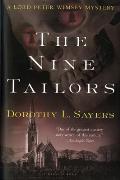
The Nine Tailors

The Nine Tailors. Dorothy L. Sayers. 1934. 312 pages.

"That's torn it!" said Lord Peter Wimsey.

While I enjoyed The Nine Tailors--in some places really loved it--I can't say that The Nine Tailors is my favorite Lord Peter mystery by Dorothy L. Sayers. I do love the series. I have enjoyed the time I've spent in each and every book. And I definitely see myself rereading these in the future. But. This one, for me, had such a slow start!

Last year before I "discovered" how much I love mysteries--vintage mysteries, cozy mysteries--I tried The Nine Tailors. But the slow start didn't quite work for me. I decided I should start at the beginning of the series. Which ended up being THE BEST decision I could have made.

So Lord Peter Wimsey (and Bunter) have a small car accident over winter holidays that leaves them stranded in the country. They're taken in by the vicar, I believe, who is just delighted with the company. (Who wouldn't be?! It's LORD PETER WIMSEY!) His accident is providential because he can ring one of the bells in the church tower for an oh-so-special service or observation. (All the bell-ringing, well, it BORED me. That could be just me. And I am not saying you'll be bored by the focus of this one.) Of course, that's just the beginning of this one.

It will be months before the real action begins, months before Lord Peter Wimsey's real services are needed. For it is in this quiet country community that a body is discovered in a grave. An extra body is discovered in a grave that is. Who was he?

There are actually a few mysteries for Lord Peter to solve in this novel, and once the body is discovered, well, this book just keeps getting better and better and better. When Lord Peter is busy on a case, well, he's irresistible.

So there is much to love in this one....after the first fifty pages. It is possible that this one will improve upon rereading. Because I am guessing that if you read it knowing how it all comes together, it may prove interesting...

Lord Peter to Bunter:

"I am always so delighted to find that there are things you cannot do." (15)

About the bells...

The art of change-ringing is peculiar to the English, and, like most English peculiarities, unintelligible to the rest of the world. (17)


Lord Peter to Hilary:

"If that's the way your mind works, you'll be a writer one day."
"Do you think so? How funny! That's what I want to be. But why?"
"Because you have the creative imagination, which works outwards, till finally you will be able to stand outside your own experience and see it as something you have made existing independently of yourself. You're lucky."
"Do you really think so?" Hiilary looked excited.
"Yes--but your luck will come more at the end of life than at the beginning, because the other sort of people won't understand the way your mind works. They will start by thinking you dreamy and romantic, and then they'll be surprised to discover that you are really hard and heartless. They'll be quite wrong both times--but they won't ever know it, and you won't know it at first, and it'll worry you."
"But that's just what the girls say at school. How did you know?...Though they're all idiots--mostly that is."
"Most people are," said Wimsey, gravely "but it isn't kind to tell them so. I expect you do tell them so. Have a heart; they can't help it." (106)

Lord Peter on Uncle Edward...

"Frightful blithering ass. Handy thing to be, sometimes. Easily cultivated. Five minutes' practice before the glass every day, and you will soon acquire that vacant look so desirable for all rogues, detectives, and Government officials." (121)

Lord Peter on gossip...

"In a quiet place like this, if one doesn't talk about one's neighbors, what is there to talk about?" (140)

Mr. Blundell on his witnesses...

"I don't like witnesses to be so damned particular about exact truth. They get away with it as often as not, and then where are you?"

Lord Peter being Lord Peter...

"My family," observed Lord Peter, "have frequently accused me of being unrestrained and wanting in self-control. They little know me. Instead of opening this letter at once, I reserve it for Superintendent Blundell. Instead of rushing off at once to Superintendent Blundell, I remain quietly at Walbeach and eat roast mutton. It is true that the good Blundell is not at Leamholt today, so that nothing would be gained if I did rush back, but still, it just shows you. (153)

A good example Sayer's writing style:

There are harder jobs in detective work than searching a couple of French departments for a village ending in "y," containing a farmer's wife whose first name is Suzanne, whose children are Pierre, aged nine, Marie and a baby of unknown age and sex, whose husband is an Englishman. All the villages in the Marne district end, indeed, in "y," and Suzanne, Pierre and Marie are all common names enough, but a foreign husband is rarer. (161)

Others in the series:


© 2011 Becky Laney of Becky's Book Reviews
The Fat Man

The Fat Man: A Tale of North Pole Noir. Ken Harmon. 2010. Penguin. 275 pages.

The straight dope is that you don't want to get on the Naughty List. It's my job to make sure you don't want your moniker anywhere near it. And brother, I like my job. I like it a lot.

While I didn't love this one, I certainly liked it. It won't be for everyone. Noir typically isn't for everyone. You have to have a certain sense of humor to appreciate all the places this one goes. But for anyone looking for a fun, playful MYSTERY starring some beloved and not-so-beloved Christmas characters, it may be just the treat you're looking for. It actually reminded me of Shrek, in a way.

Gumdrop Coal is an elf with a touch of dark side to him. That's why he's good at his job--he's the one who decides who gets coal in their stockings. He can spot a bad kid for sure. And what he's noticed is that bad kids typically are bad because of bad parenting. But what can he do? really? It's not like he can teach parents how to parent, right? Well, when Gumdrop Coal loses his job, he may decide to do something Santa would NEVER approve of...

But his actions may have unintended consequences...because soon he finds himself the prime suspect in a murder!

As I said, I liked this one because it was a quick read. I didn't love it. Some of the humor didn't quite work for me, but overall I liked its quirkiness.


© 2011 Becky Laney of Becky's Book Reviews
Library Loot: First Trip in December

New Loot:

Mr. Midshipman Hornblower by C.S. Forester
In A Dark Wood Wandering by Hella S. Haasse
Fall of Giants by Ken Follett
Pride and Prejudice by Jane Austen
Death by Dickens edited by Anne Perry
Bleak House by Charles Dickens
Blackout by Connie Willis
All Clear by Connie Willis
The Project by Brian Falkner
The Jewel and the Key by Louise Spiegler
The Road to Jerusalem by Jan Guillou, translated from the Swedish by Steven T. Murray
A Tournament of Murders by P.C. Doherty
How To Save A Life by Sara Zarr
Three Men In A Boat To Say Nothing of the Dog by Jerome K. Jerome
How To Live Safely in a Science Fictional Universe by Charles Yu
Daily Life in Medieval Europe by Jeffrey L. Singman
Canterbury Tales by Geoffrey Chaucer, translated and adapted by Peter Ackroyd
Charles Dickens A Life by Claire Tomalin
Inside Out & Back Again by Thanhha Lai
The Queen's Man by Sharon Kay Penman
The Humming of Numbers by Joni Sensel
The Nun's Tale by Candace Robb
Our Mutual Friend by Charles Dickens
Prisoners in the Palace by Michaela MacColl
The Always War by Margaret Peterson Haddix
The Apothecary by Maile Meloy
Between Shades of Gray by Ruta Sepetys
The Time Traveler's Guide to Medieval England by Ian Mortimer


Leftover Loot:

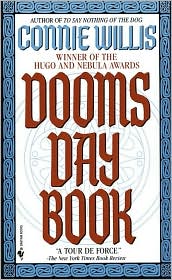
Doomsday Book by Connie Willis
To Say Nothing of the Dog by Connie Willis
A Christmas Carol and Other Stories by Charles Dickens
Robinson Crusoe by Daniel Defoe
The Eerie Adventures of the Lycantrope Robinson Crusoe
Little Women by Louisa May Alcott
The Life and Times of Charles Dickens by Peter Ackroyd

Library Loot is a weekly event co-hosted by Claire and Marg that encourages bloggers to share the books they’ve checked out from the library. If you’d like to participate, just write up your post-feel free to steal the button-and link it using the Mr. Linky any time during the week. And of course check out what other participants are getting from their libraries.    

© 2011 Becky Laney of Becky's Book Reviews

Sunday Salon: Week in Review #48

This week at Becky's Book Reviews:

Jane Eyre. Charlotte Bronte. 1847.  300 pages.
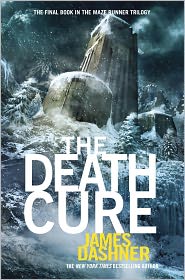
The Death Cure. James Dashner. 2011. Random House. 324 pages.
A Shilling for Candles. Josephine Tey. 1936. 240 pages. 

And just in case you missed this little announcement, I am hoping to have people join me in reading OR rereading Connie Willis' Doomsday Book this December! Here is how I described the book in my first review:
It was incredibly compelling. It was intense, emotional, and impossible to put down. The writing was as great as I expected. Willis does a wonderful job with her characters. They feel very real--very human. The setting--the world building--is also amazing. She does a great job building the past--the fourteenth century--and the "present" which is a time-traveling future. (The story alternates between past and present.) She blends mystery, science fiction, and historical fiction--and blends them well!
 

© 2011 Becky Laney of Becky's Book Reviews
A Shilling for Candles

A Shilling for Candles. Josephine Tey. 1936. 240 pages.

First sentence: It was a little after seven on a summer morning, and William Potticary was taking his accustomed way over the short down grass of the cliff-top. Beyond his elbow, two hundred feet below, lay the Channel, very still and shining, like a milky opal.
A man discovers the body of an actress...and it is up to Inspector Grant to find her murderer.

This is the third Josephine Tey mystery novel I've read, and, it happens to be my least favorite. And I'm not even sure why I found it so disappointing. Inspector Grant has charmed me in the past, and I've appreciated the way he's gone about solving mysteries or crimes. In this one, he didn't seem to shine. In fact he seemed to disappear for chapters a time.  I don't know if I was just imagining that or if it  was really the case. There was just a great  disconnect in this one. I didn't find it satisfying at all.

I did love Daughter of Time. And I enjoyed The Man in the Queue.


© 2011 Becky Laney of Becky's Book Reviews

The Death Cure (YA)

The Death Cure. James Dashner. 2011. Random House. 324 pages.

It was the smell that began to drive Thomas slightly mad. Not being alone for over three weeks. Not the white walls , ceiling, and floor. Not the lack of windows or the fact that they never turned off the lights. None of that. 

The Death Cure concludes James Dashner's Maze Runner trilogy. The first two books are The Maze Runner and The Scorch Trials.

What can I say? I would NOT recommend beginning any trilogy with the last book, the books MUST be read in order. And anything I say here about the third book would spoil the first two in the series!

Like the previous books in the series, it is compelling and action-packed. It is also very complex. It's not enough to have two or three twists and turns. It always, always, always keeps you guessing. If you want all the answers neatly given to you, then this one won't be for you.

It had only been a year since I read the previous books, but, I think I would have appreciated this one more if I'd taken the time to reread the books. I think the books may work best if they are read close together. Which is only natural. Since they're so intense, since you're left wanting more, wanting answers, needing to know what happens next...


© 2011 Becky Laney of Becky's Book Reviews